
Wednesday 15 October 2025
Ankara, Türkiye

Above: Fountain of the Nymphs in Kızılay Square in Ankara (1930)
Reading about René Daumal’s Le Mont Analogue has led my mind to consider –

Above: French writer René Daumal (1908 – 1944)
Let us call it an idea, for lack of a better word –

The quest for enlightenment, but in my, perhaps unromantic, POV, “enlightenment” meaning “education“.

A number of thoughts collide this morning –
A trio of friends and I once conceived of an idea of opening a school on Heybeliada (off the coast of Istanbul, one of the Princes’ Islands) with, perhaps, the name “The Academy of Joy“.

Above: Naval Cadet School, Heybeliada, Istanbul, Türkiye
The trio had been inspired by an employer’s success at founding a élite private high school, so perhaps the idea of founding a school is possible.

The second stimulus is the present dilemma I have in assisting a university mathematics professor in teaching calculus in English at an Ankara university.
Mathematics has never been either suited to my abilities nor my interest.

It is a problem that Rudolf Arnheim suggests is common where the artist cannot see joy and passion in the realm of pure reason, as found in studies such as mathematics.

Above: German writer/psychologist Rudolf Arnheim (1904 – 2007)
The third stimulus is the modern high school.
The students, albeit said to be successful entrants to universities of their choosing, complain of how restrictive and joyless their time at school is in a place with no creative outlets and strict discipline and supervision.

The fourth stimulus is the idea inspired by Daumal’s Mount Analogue….

Along with Jonathan Swift’s Gulliver’s Travels where Gulliver visits a magician’s island where it is possible to converse with the dead.
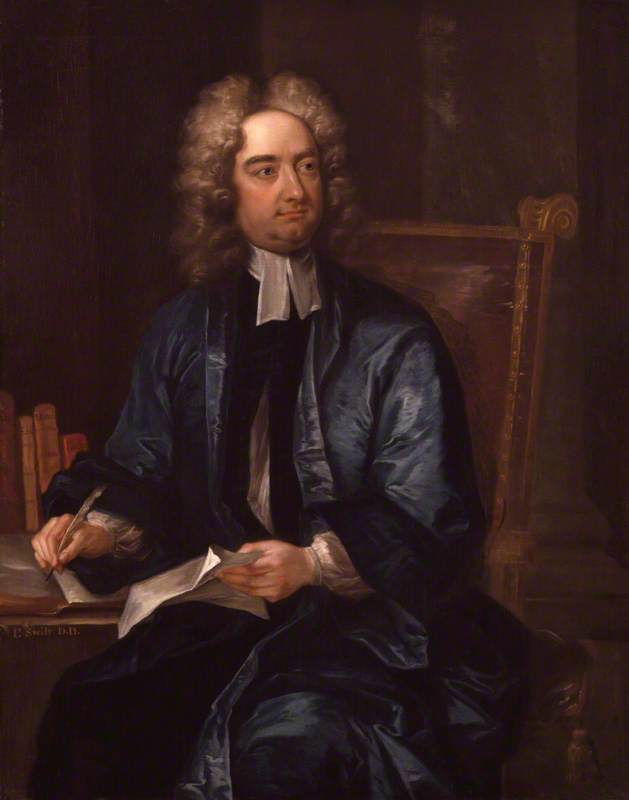
Above: Irish writer Jonathan Swift (1667 – 1745)
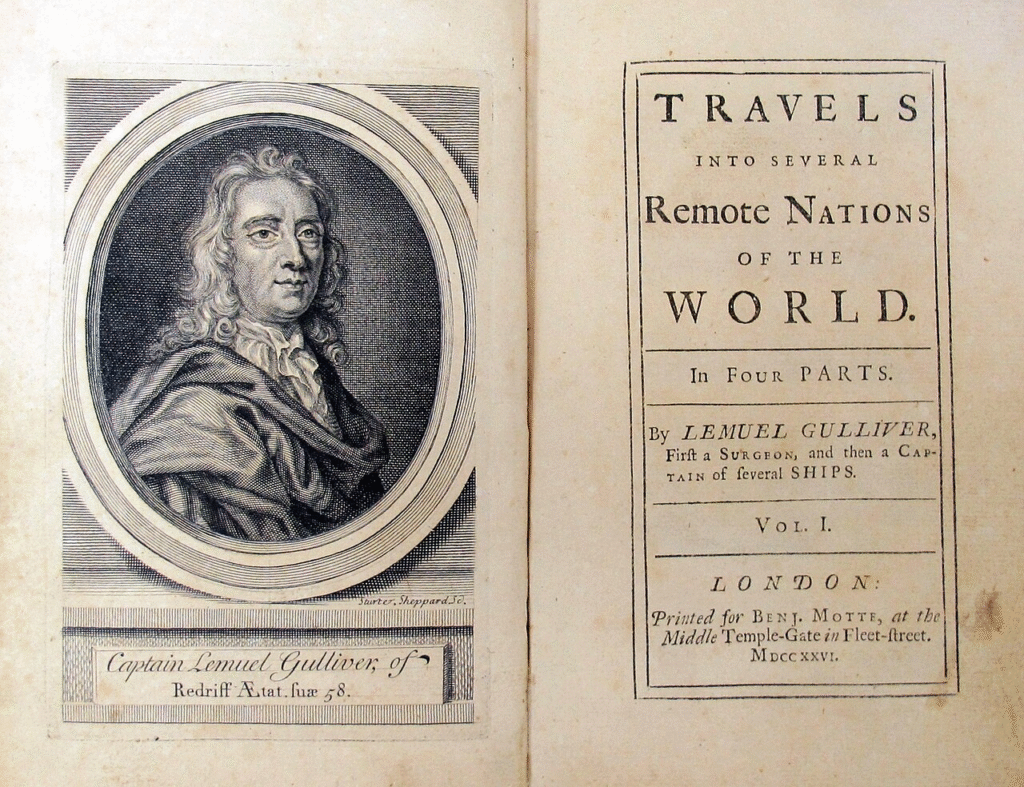
Above: First edition of Gulliver’s Travels
Lastly, I am reminded of a university in America, St. John’s College in Annapolis and Santa Fe where the students learn directly from the classics.


Above: Annapolis, Maryland, USA
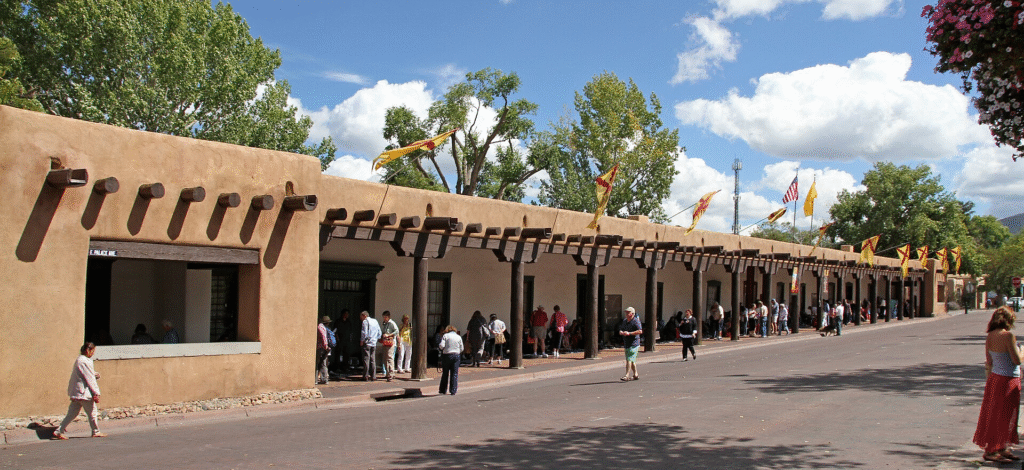
Above: Palace of the Governors, Santa Fe, New Mexico, USA
Which leads to the notion of teachers at an Academy of Joy where they discover the joy of the subjects they seek to teach.

I am circling, perhaps with poetic precision, around one of humanity’s most enduring questions:
How can knowledge be both illumination and delight?
How can education, in its truest sense, be a joyful ascent rather than a weary climb?
Let us gather the strands, so that the idea may begin to take its form.

René Daumal’s Mount Analogue is not merely a metaphor for spiritual enlightenment, but for the discipline of wonder — the union of imagination and rigor.
Its climbers are seekers, not escapists.
Their mountain is the bridge between matter and spirit, science and art.

The Academy of Joy echoes this:
Not a retreat from reason, but a place where reason itself is redeemed by beauty —

Where mathematics is not a “cold subject” but a living rhythm.

Where art and intellect meet like the slopes and sky of Daumal’s invisible mountain.

Observation about current schools — successful, yet sterile — points to the industrial malaise of modern education.
Students “achieve” but do not awaken.
The system trains, but does not transform.

In contrast, an Academy of Joy would stand as a sanctuary for curiosity.
A place where:
- Mathematics could be seen as “the poetry of pattern” (to borrow from Bertrand Russell).

Above: British philosopher Bertrand Russell (1872 – 1970)
- Literature could awaken empathy and imagination.

- Science could be taught not as mastery of nature but as communion with it.

- Art, music and movement could serve as vital languages of understanding.

The idea recalls Pestalozzi, Montessori, and even Dewey —

Above: Swiss educational reformer Johann Heinrich Pestalozzi (1746 – 1827) –
“The real object of education is to give a man the unity of truth, and the love which springs from it.“
Pestalozzi was a Romantic who felt that education must be broken down to its elements in order to have a complete understanding of it.
Based on what he had learnt by operating schools at Neuhof, Stans, Burgdorf and Yverdon, Pestalozzi emphasized that every aspect of the child’s life contributed to the formation of the child’s personality, character, and capacity to reason.

Above: Burgdorf Castle, Canton Bern, Switzerland – where Pestalozzi ran his institute from 1800 to 1804
His educational methods were child-centered and based on individual differences, sense perception, and the student’s self-activity.
He worked in Yverdon to “elementarize“ the teaching of ancient languages, principally Latin, but also Hebrew and Greek.

Above: Yverdon les Bains, Canton Vaud, Switzerland
In 1819, Stephan Ludwig Roth came to study with Pestalozzi, and his new humanism contributed to the development of the method of language teaching, including considerations such as the function of the mother tongue in the teaching of ancient languages.
Pestalozzi and Niederer were important influences on the theory of physical education.
They developed a regimen of physical exercise and outdoor activity linked to general, moral and intellectual education that reflected Pestalozzi’s ideal of harmony and human autonomy.
Pestalozzi’s philosophy of education was based on a four-sphere concept of life and the premise that human nature was essentially good.
The first three “exterior” spheres — home and family, vocational and individual self-determination, and state and nation — recognized the family, the utility of individuality, and the applicability of the parent-child relationship to society as a whole in the development of a child’s character, attitude toward learning, and sense of duty.
The last “exterior” sphere — inner sense — posited that education, having provided a means of satisfying one’s basic needs, results in inner peace and a keen belief in God.
Pestalozzi was a Swiss educator who believed that love is the beginning of all education.
He sought to teach poor and orphaned children not merely facts, but humanity —
To “educate the whole man: head, heart and hand”.

Above: Pestalozzi with the orphans in Stans, Konrad Grob (1879)
Core Ideas:
Education is Natural:
Learning should follow the child’s natural development —
Not imposed from outside, but grown from within.
Head, Heart, and Hand:
True education unites thinking, feeling and doing.
Home and Affection:
A warm, nurturing environment is essential for moral and intellectual growth.
Learning by Doing:
Before abstract knowledge, the child must observe, handle and experience.

Above: Pestalozzi monument, Bahnhofstrasse, Zürich, Switzerland

Above: Italian educator Maria Montessori (1870 – 1952) –
“The greatest sign of success for a teacher is to be able to say: The children are now working as if I did not exist.”
Her insight was revolutionary:
The child is not an empty vessel but an active builder of self.
The teacher’s task is to prepare the environment, not to impose control.
Core Ideas:
Prepared Environment:
Classrooms should be beautiful, orderly and rich in materials that invite exploration.
Freedom within Structure:
Children choose their activities, but within limits that encourage concentration and responsibility.
Sensitive Periods:
Children pass through natural stages of development — each with distinct needs and aptitudes.
Auto-education:
The best learning is self-directed.
The teacher observes rather than lectures.
Grace and Courtesy:
Education includes social harmony, self-respect, and respect for others.

The Montessori Method is now global.
Its success lies in trusting the child’s inner teacher and linking freedom with discipline.

One of Montessori’s many accomplishments was the Montessori method.
This is a method of education for young children that stresses the development of a child’s own initiative and natural abilities, especially through practical play.
This method allowed children to develop at their own pace and provided educators with a new understanding of child development.
Montessori’s book, The Montessori Method, presents the method in detail.
Educators who followed this model set up special environments to meet the needs of students in three developmentally-meaningful age groups:
2 – 2.5 years
2.5 – 6 years
6 – 12 years.
The students learn through activities that involve exploration, manipulations, order, repetition, abstraction, and communication.
Teachers encourage children in the first two age groups to use their senses to explore and manipulate materials in their immediate environment.
Children in the last age group deal with abstract concepts based on their newly developed powers of reasoning, imagination, and creativity.


Above: American philosopher John Dewey (1859 – 1952) –
“If we teach today’s students as we taught yesterday’s, we rob them of tomorrow.”
An American philosopher and reformer, John Dewey transformed education by insisting that it is not preparation for life, but life itself.
He believed that schools should mirror a democratic society, where students learn through experience, cooperation and critical inquiry.
Core Ideas:
Learning by Doing:
Knowledge arises through action, experimentation, and reflection.
Education as Social:
The classroom is a miniature society where students learn responsibility and collaboration.
Democracy and Inquiry:
Education fosters critical thought, preparing citizens to think freely and act ethically.
Continuity of Experience:
Learning grows out of lived experience, connecting past, present, and future understanding.
Teacher as Facilitator:
The teacher organizes experiences that promote growth rather than dictating content.
Dewey’s Lab School at the University of Chicago embodied these ideas.
His influence still shapes progressive education, experiential learning, and civic-minded curricula worldwide.

Above: University of Chicago shield
We seek to add a metaphysical sweetness — the scent of meaning itself, a quiet joy of being — that those reformers, bound by pragmatism, often missed.
We reach for something like a School of Being.
Perhaps Pestalozzi would have smiled at the way the students could learn through care, not correction.
Maybe Montessori would have approved of their independence.
Doubtless Dewey, ever the democrat of ideas, might have walked among us thinking this little island a living laboratory of joy.
That teachers must rediscover the joy of their own subjects is crucial.
Too often educators become translators of systems rather than explorers of ideas.
In an Academy of Joy, every teacher would be a pilgrim-guide, climbing their own Mount Analogue — not dispensing information, but demonstrating love of learning.

One might even imagine a yearlong “Sabbatical of Wonder”, during which teachers reengage with what first called them to their discipline:
An artist studying the geometry of Gothic cathedrals.

A mathematician reading Pythagoras as philosophy.

Above: Bust of Greek philosopher Pythagoras (570 – 495 BCE)
A linguist tracing the poetry of etymology.

Above: Etymologicum Teutonicae Linguae (1777), Cornelius Kiliaan
St. John’s College (Annapolis and Santa Fe, sister campuses) teaches through the “Great Books” —
Students spend four years reading original texts from Homer to Einstein.

Above: Greek poet Homer (8th century BCE)

Above: German theoretical physicist Albert Einstein (1879 – 1955)
But even there, joy is often assumed rather than cultivated.
Our vision extends further:
Not only learning from the great works, but living their spirit — “Mount Analogue” meets Plato’s “The Republic.

Above: Bust of Greek philosopher Plato (428 – 347 BCE)
There’s something almost mythic about founding such a place on Heybeliada —
An island that invites reflection, halfway between East and West, tradition and modernity.
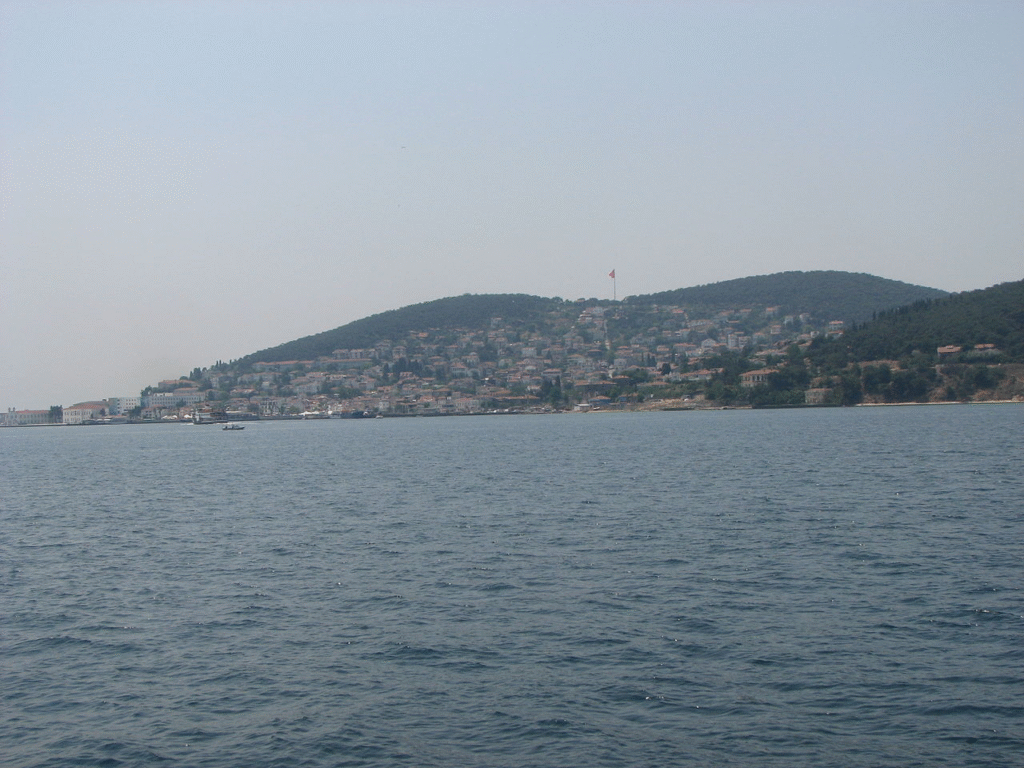
Above: Heybeliada
It could become a modern Delphi, a Mount Analogue rising from the Sea of Marmara.
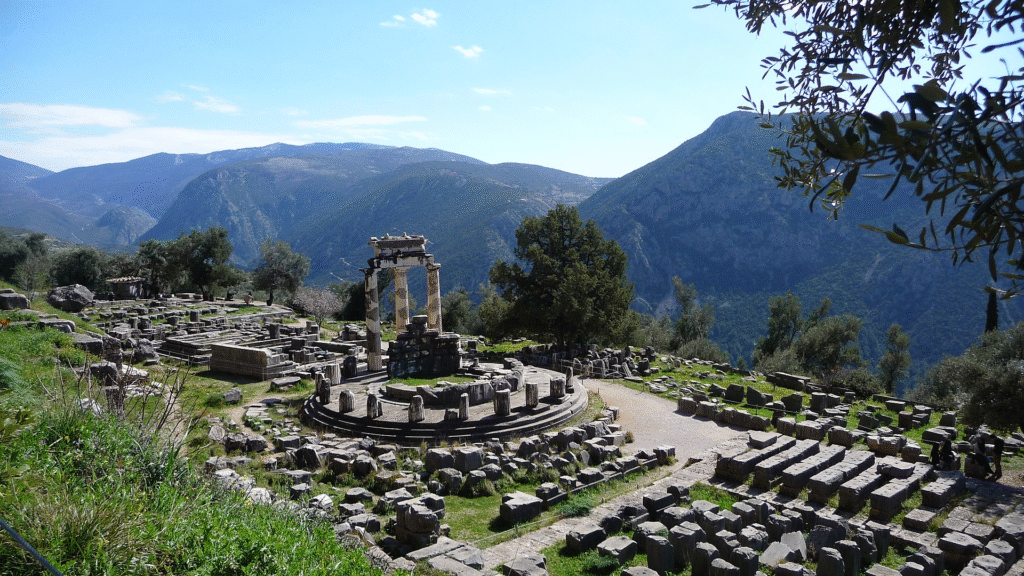
Above: Delphi, Greece
The very geography suggests retreat and revelation —
A school not isolated from the world, but offering a vantage point above it.
If we were to inscribe a motto at its gates, it might be:
“To learn is to love the world more deeply.”
or perhaps,
Joy is the natural state of an awakened mind.”

Above: Heybeliada
Let us begin. —
A first draft of the founding philosophy and curriculum outline for The Academy of Joy, inspired by Daumal’s invisible mountain, Swift’s imaginative reason, and a humane vision of education as illumination rather than indoctrination.

The Academy of Joy
A Prospectus for an Education Worth Climbing Toward
Founding Philosophy
“Joy is the natural state of an awakened mind.”
The Academy of Joy exists to restore the sacred bond between knowledge and wonder.
It is founded upon a simple conviction:
That learning, pursued in freedom and love, leads to joy.
That joy is not the opposite of discipline, but its flowering.
Whereas modern education too often measures success by compliance, credentials and competition, The Academy of Joy measures by curiosity, clarity and compassion.
It holds that education is not the accumulation of facts, but the cultivation of consciousness —
The ascent of each mind toward its own Mount Analogue, where imagination and reason finally embrace.

Each student and teacher is a climber on a shared ascent —
A journey demanding humility, cooperation and courage.
The summit is never reached, for knowledge is infinite.
Yet each step taken with awareness is itself a kind of arrival.
Our pedagogical creed:
- Clarity of thought is the path.
- Creativity is the compass.
- Compassion is the altitude that sustains us.

At the Academy, teachers are not dispensers of information but companions in discovery.
Each and everyone must be a seeker in their own right —
Someone who studies what they love, loves what they teach.
They are encouraged to:
- Continually rediscover the beauty within their discipline.
- Design lessons that reveal connections across fields.
- Pursue personal “ascent projects” — a work of art, a research paper, a performance, or an experiment that expresses the living joy of their subject.

The curriculum is structured like a mountain: concentric layers of depth and height.
The Base Camp —
Wonder and Foundation
In the first year, students are taught how to learn, why to question, and how to see.
Courses include:
- The Art of Attention (observation, mindfulness, and creative journaling)
- The Story of Numbers (mathematics as language and art)
- The Living Word (language, poetry, philosophy)
- Nature as Teacher (biology, ecology, outdoor study)
- Music and Movement (the body as instrument of thought)

Dialogue and Discovery
In these years, students engage directly with great works and living problems.
The Great Conversation:
Reading primary texts from Homer, Plato, Euclid, Shakespeare, Darwin, and Einstein — but always in dialogue, not lecture.

Above: Greek mathematician Euclid (circa 300 BCE), Jusepe de Ribera (2001)
Crossroads Seminars:
Interdisciplinary courses linking science and art, reason and myth.

Above: English writer William Shakespeare (1564 – 1616)
Creative Practice:
Each student must pursue an artistic craft — music, painting, writing, or performance — as a means of expression and reflection.

Above: English scientist Charles Darwin (1809 – 1882)
Service and Stewardship:
Real world projects emphasizing empathy, sustainability, and social contribution.

Synthesis and Self
In the final stage, students design their own Ascent Project:
A thesis, creation, or expedition that unites the intellect and the heart.
Examples:
- A mathematical model inspired by nature’s patterns.
- A novella exploring moral philosophy.
- A research trip comparing ancient pilgrimage routes.
- A musical composition interpreting the Fibonacci sequence.
Graduation is not a ceremony of completion but an invitation to continue climbing —
The moment one becomes a lifelong learner.
Heybeliada as Living Symbol
Heybeliada, the “island of sweetness” offers more than scenery.
It is geography as philosophy.
Surrounded by the Marmara Sea, close to Istanbul yet apart from its haste, the island embodies the Academy’s ethos:
To be in the world but not consumed by it.

Above: Heybeliada, Istanbul Province, Türkiye
The sea becomes a natural classroom.
The hills, a place for meditation.
The old houses, studios of thought and conversation.
In this environment, the artificial barriers between subjects dissolve — science and poetry, reason and myth, teacher and student.

Above: Heybeliada, Istanbul Province, Türkiye
The Spirit of the School
Every day begins in silence and gratitude —
A moment to greet the dawn, the self and the day’s lesson.

The rhythm of study alternates between intense focus and joyful leisure, between the classroom and the open air, between individual reflection and communal dialogue.
The goal:
To awaken the joy of understanding.
To cultivate minds that think, hearts that feel and hands that serve.

Mottoes and Maxims
To learn is to love the world more deeply.
Discipline is the rhythm of freedom.
The summit is in every step.
Joy is not the reward of study —
It is the method.
Here, then, is a Founders’ Manifesto for The Academy of Joy:
Written in a voice both visionary and grounded, as though signed by you and your companions on Heybeliada’s quiet shore.
May it serve as the school’s moral charter, a statement to guide future teachers, benefactors, and dreamers.

“Education is not the filling of a vessel, but the lighting of a flame.”
Plutarch

Above: Bust of Greek philosopher Plutarch (40 – 129), Delphi, Greece
The Island and the Idea
We stand on the shore of Heybeliada, watching the light tremble across the water — the mainland glimmering in the distance, like another world.
Here, between sea and sky, we conceive a school.
Not a fortress of exams nor a factory of ambition, but a living sanctuary of curiosity.
We call it The Academy of Joy.
Our dream is not born of rebellion but of renewal — the renewal of learning as a human art, where knowledge and wonder walk hand in hand.

Above: Heybeliada, Istanbul Province, Türkiye
Why We Begin
We begin because the world has forgotten that joy and education are twins.
We begin because too many young hearts, pressed beneath the weight of grades and timetables, no longer see beauty in the act of understanding.
We begin because teaching has become a burden rather than a calling.
And yet we have seen — in moments, in faces, in words — that the spark still lives.
It only needs air.

What We Believe
We believe that education is the ascent of the soul toward clarity — not an ascent toward power or prestige, but toward seeing more truthfully and loving more deeply.
We believe:
- That joy is not an indulgence but a discipline — the mind’s natural state when it meets the world with openness.
- That art and science are not rivals but reflections of the same yearning to understand.
- That silence and play are as necessary as study.
- That teachers are guides, not gatekeepers.
- Students are pilgrims, not products.
- The highest test of education is kindness.

The Vision
The Academy of Joy shall be a community of learning where each subject is taught in its living essence.
Mathematics will be approached as a music of form.
Literature as the conversation of souls.
Science as the poetry of the real.
Philosophy as the art of asking finer questions.
Read the great works not to repeat them, but to rejoin them —
To keep their wisdom alive.
We will paint, walk, debate, and meditate.
We will study under trees, beside the sea, and sometimes in silence.
Our walls will be porous to the world.
Our classrooms open to the elements.

The Teacher’s Oath
Every teacher who joins us shall take this simple oath:
I will teach not what I must, but what I love.
I will awaken curiosity, not conformity.
I will see each student as a whole being,
and in teaching others, I will continue to learn.”
For the greatest lesson we can give is the sight of a teacher still climbing their own mountain.

The Student’s Promise
Our students shall not promise perfection, only presence.
I will bring my questions honestly.
I will climb not to surpass others, but to see more clearly.
I will respect silence, laughter, and effort.
I will seek to learn not only what the world is,
but what I might give to it.”

The Spirit of the Island
Heybeliada is our compass.
Its stillness reminds us that joy grows in quiet soil.
Its nearness to Istanbul reminds us that learning must speak to the world, not escape it.
We will be an island only in geography — not in spirit.
From here, we send out ripples of joy that reach every classroom, every weary teacher, every student who has forgotten why they began.

Above: Heybeliada, Istanbul Province, Türkiye
The End That Is a Beginning
We do not found this Academy to be perfect.
We found it because it must exist.
Because every age needs a refuge where joy is treated as a form of wisdom.
Because there are still those who believe that learning can make us not just smarter, but more human.
To these we say:
Come climb with us.
The summit is not far.
It rises in every heart that remembers how to wonder.
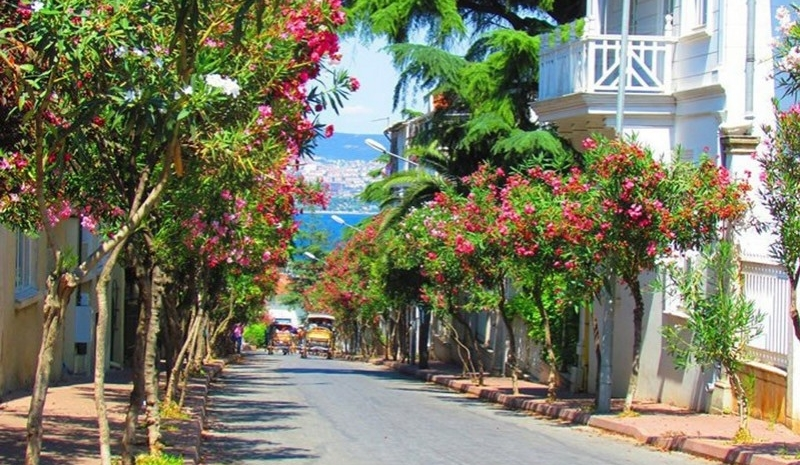
Above: Heybeliada, Istanbul Province, Türkiye
What Is the Academy of Joy?
A school founded on the belief that learning and joy belong together.

A Vision Reborn
The Academy of Joy is not a school in the ordinary sense.
It is a living ascent —
A place where curiosity climbs, imagination breathes, and knowledge becomes delight.
Founded on the island of Heybeliada, it invites students and teachers alike to rediscover the art of learning as the art of living.

Our Purpose
We believe that education is not the pursuit of success, but the discovery of meaning.
To learn is not to fill the mind, but to light it from within.
Every subject — mathematics, literature, science, philosophy, art — is approached as a pathway toward deeper awareness and compassion.
At the Academy, joy is not a distraction from study.
It is the method of study.

Above: Heybeliada, Istanbul Province, Türkiye
How We Learn
Our students learn directly from the world and its great works — reading, building, performing and reflecting.
They move between silence and dialogue, thought and action, solitude and community.
Each year is an ascent:
Wonder — learning to see.
Dialogue — learning to think.
Synthesis — learning to create.
By graduation, every student completes an Ascent Project —
A personal work that unites knowledge, creativity and purpose.
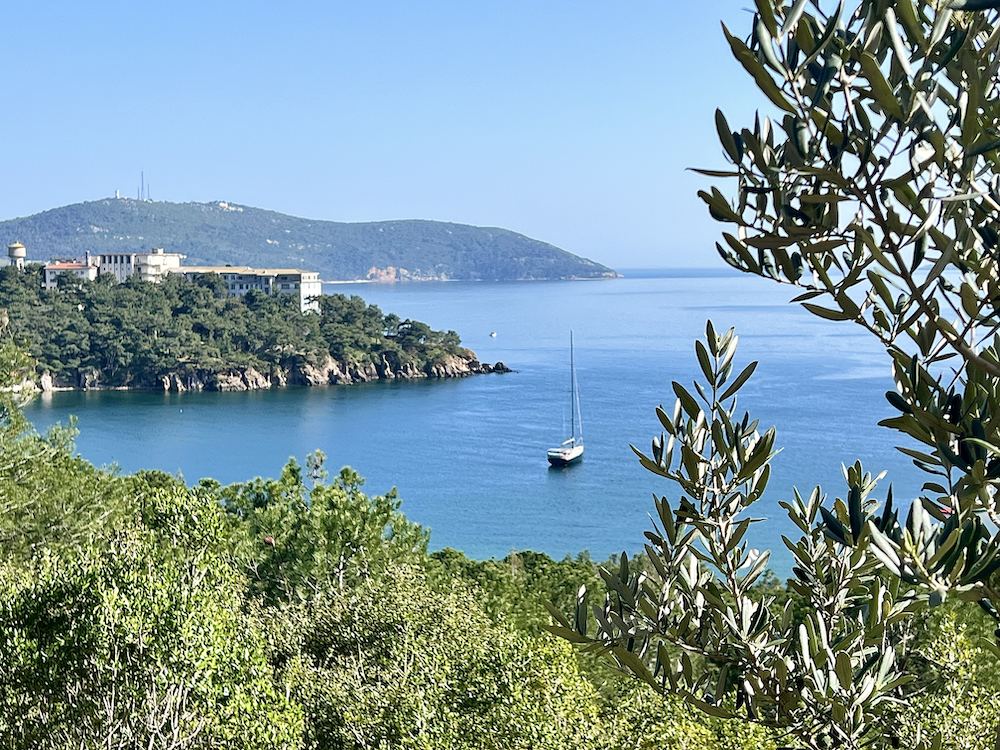
Above: Heybeliada, Istanbul Province, Türkiye
The Teachers
Our teachers are seekers as well as guides.
They teach what they love.
They continue to learn as they teach.
Their classrooms are not ruled by tests, but animated by questions.

What does this mean?
What connects us to it?
What does it reveal about being alive?

The Island and Its Spirit
Heybeliada, surrounded by the quiet sea, is the Academy’s living metaphor.
Here, one is close enough to the city to feel its pulse, yet far enough to hear one’s own heart.
Our campus is not a fortress but a garden —
A place where minds grow in light.
A haven where ideas can breathe.

Above: Heybeliada, Istanbul Province, Türkiye
Our Belief
To learn is to love the world more deeply.
To teach is to share in that love.
To be educated is to awaken to joy.

An Invitation
The Academy of Joy is for those who believe that education can still be a pilgrimage of the soul.
For the curious, the weary, the seekers, and the teachers who wish to feel alive again in their calling —
Come climb with us.
The summit is joy.

Here, then, is the Charter of Principles — the moral and philosophical backbone of The Academy of Joy.
I have written it as a living document, something that could be recited or displayed prominently on the island campus.
It has the tone of a creed, half educational philosophy and half poetic testament — much like Daumal’s blend of metaphysics and mountaineering.

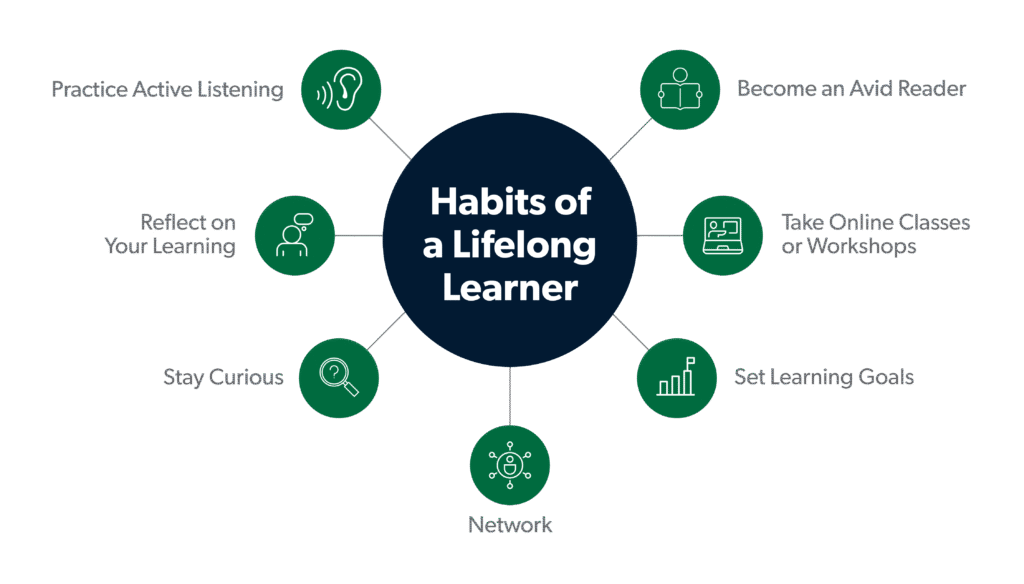
The Ten Articles of Joy

Preamble
We, the Founders and Companions of The Academy of Joy, believe that learning is the natural expression of the soul’s desire to awaken.
We hold that knowledge without wonder is barren, and wonder without knowledge is fleeting.
Therefore, we join them — as light joins warmth — to guide every student and teacher toward the summit where understanding becomes love.
These are the Ten Articles of Joy, the guiding principles of our ascent.

Article I — The Sacredness of Joy
Joy is not a distraction from learning.
It is its purest form.
To learn joyfully is to participate in the universe’s delight in its own existence.
Every act of discovery, no matter how small, is a celebration of life itself.

Article II — The Unity of Knowledge
No discipline stands alone.
Mathematics speaks the language of art.
Literature reveals the rhythm of science.
All subjects are threads in the single tapestry of understanding, woven by the hand of curiosity.

Above: French philosopher Simone Weil (1909 – 1943)
Article III — The Teacher as Seeker
A teacher is not a transmitter but a traveller.
They guide by example —
Teaching not only what they know, but how they wonder.
In every lesson, they too must ascend.
Article IV — The Student as Pilgrim
The student is not a vessel to be filled, but a pilgrim to be awakened.
Their destination is not perfection, but presence —
The ability to see, to feel, and to think freely.
Each question asked in sincerity is already a step up the mountain.

Above: John Bunyan’s The Pilgrim’s Progress
Article V — The Discipline of Freedom
True freedom is not license, but responsibility born of understanding.
At the Academy, structure exists not to restrain joy, but to sustain it.
Discipline is the rhythm that keeps freedom in tune.

Article VI — The Living Dialogue
Learning is a conversation across time.
Every book, experiment and song is a voice in that dialogue.
To listen deeply is to join the chorus of minds that have sought truth before us.
Article VII — The Harmony of Mind, Body, and Spirit
Knowledge must pass through the hands and the heart as well as the intellect.
Movement, music, silence and craft are as vital as reading or reasoning.
A balanced mind dwells in a joyful body.

Article VIII — The Environment as Teacher
The earth, sea and sky are not backdrops but classrooms.
Heybeliada is our living text —
The island teaches patience, rhythm, and renewal.
Every walk, every breeze, is part of the curriculum.

Above: Heybeliada, Istanbul Province, Türkiye
Article IX — Service as Enlightenment
Learning reaches its summit when it descends into compassion.
Knowledge that does not serve life is incomplete.
We climb not to escape the world, but to return to it with clearer eyes and kinder hearts.
Article X — The Endless Ascent
Education is not preparation for life.
It is life.
Graduation marks not an ending, but a threshold.
Each of us is forever both student and teacher, forever on the path toward the joy of understanding.
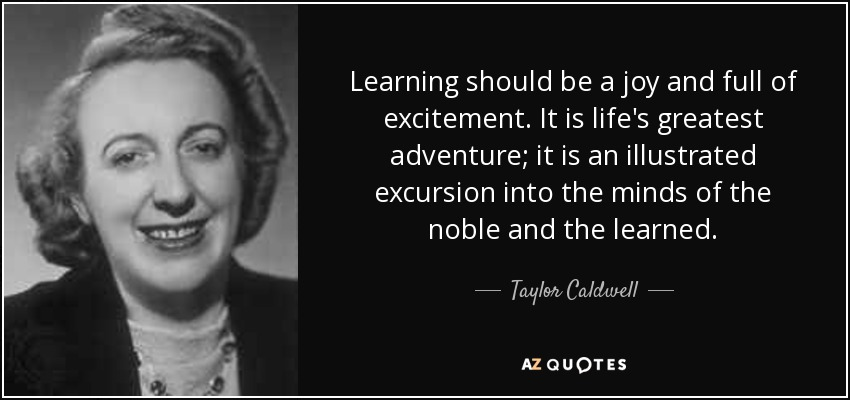
Above: American novelist Taylor Caldwell (1900 – 1985)
Epilogue
Let these principles be our compass and our covenant.
Let every classroom, garden, and corridor resound with the laughter of learning.
And may all who pass through The Academy of Joy carry its light onward —
So that the world itself becomes our wider school.

Here, then, is The Teacher’s Guide: Pedagogy for the Joyful Mind — a companion text to The Charter of Principles, meant to serve as both compass and consolation for the educators of The Academy of Joy.
It blends practicality with poetics, philosophy with method — a handbook for those who would teach as seekers, not bureaucrats, and who see each lesson as an act of faith in the human spirit.

The Teacher’s Guide
Pedagogy for the Joyful Mind
Prologue:
The Teacher as Pilgrim
To teach is to climb beside another.
The teacher is not a keeper of knowledge but a fellow traveler who lights the way by walking.
At The Academy of Joy, every teacher must guard one sacred flame: the joy of curiosity — for when that goes out, no method, no curriculum, no brilliance of intellect can bring true learning to life.
Our pedagogy is not built on control, but on communion.
We teach so that others may awaken — and so that we may remain awake ourselves.

The Three Pillars of Joyful Teaching
Presence
Teaching begins not with content, but with presence.
To be truly present is to meet students not as abstractions, but as beings with stories, moods and questions.
A teacher must enter each class as one enters a chapel —
In quiet attention.
The students’ energy is not an obstacle.
It is the material from which the lesson must be shaped.
Practice:
Begin each lesson with a breath, a silence, a gesture of arrival —
A way to remind yourself:
I am here to meet minds, not to manage them.

Wonder
All genuine learning begins in wonder.
The teacher’s role is to protect wonder from erosion.
When curiosity appears, however small, it must be noticed, named and nourished.
Practice:
Ask more questions than you answer.
Praise curiosity before correctness.
Let silence hang long enough for thought to deepen.

Connection
Joy is born in the recognition that knowledge connects everything.
The teacher’s art lies in drawing invisible threads between subjects, senses and selves.
Practice:
In mathematics, show beauty:
Patterns, proportion, music in number.
In literature, show structure:
Rhythm, logic and the geometry of language.
In science, show poetry:
The humility of discovery.
In art, show reason:
The discipline that makes expression meaningful.
Every discipline is a dialect of the same universal language —
The desire to understand.

The Classroom as a Living Ecosystem
A joyful classroom is not a hierarchy but an ecology.
Each participant — teacher, student, subject, and environment — affects the others in unseen ways.
The teacher’s role is to keep the ecosystem balanced:
Structured yet spontaneous.
Guided yet open.

Guiding principles:
Space matters.
A room should invite light, movement and imagination.

Time breathes.
Alternate between rigor and rest between analysis and play.

Community learns.
Encourage dialogue among students as equals.
The best ideas are born in conversation, not monologue.

The Practice of Joyful Discipline
At the Academy, discipline is not enforcement —
It is alignment.
Joy demands form, just as music requires measure.
A teacher leads not through authority, but through the clarity of purpose.

Practices:
Replace punishment with reflection —
Ask the student to articulate the cause and effect of their action.
Replace reward with recognition —
Celebrate effort, attention and courage.
Replace fear with trust —
For trust is the soil where joy grows.

The Art of Listening
To teach is to listen deeply —
To hear both the question spoken and the one beneath it.
A student’s confusion is not failure.
It is the birthplace of understanding.
Listen also to silence:
It tells you when the soul is working.
Practice:
End each lesson with an open question rather than a summary.
Let mystery linger.
Learning continues long after the bell.

The Teacher’s Renewal
Joyful teaching cannot survive on duty alone.
Every teacher must climb their own mountain to stay alive.
Each year, teachers are invited to undertake a Personal Ascent Project —
Something that reconnects them with their love of learning:
A painting, a thesis, a walk across Anatolia, a musical composition, a garden, a book.
The best teachers are those who are still students in something they love.”
The Academy supports this through sabbaticals, shared exhibitions and communal reflection.

The Rhythm of the Day
The school day itself is a work of art —
A rhythm between effort and ease:
Dawn Gathering:
A moment of silence, reflection, or poetry read aloud.
Morning Ascent:
Core learning blocks.
Intellectual engagement at its height.

Midday Release:
Physical activity, outdoor study or creative workshop.

Afternoon Dialogue:
Interdisciplinary seminars or personal study.

Evening Reflection:
Journaling, mentorship meetings, music or open forums.

In this rhythm, no hour is wasted.
Even rest becomes preparation for understanding.

The Ethic of Service
The teacher’s joy is fulfilled in service —
To students, to colleagues, to the community beyond the island.
Teaching is not self-expression.
It is self-giving.
Each act of patience, each spark of understanding, adds to the invisible architecture of a better world.

The Closing Reflection
To teach joyfully is to teach twice —
Once through knowledge, and once through love.
The true measure of a teacher at The Academy of Joy is not how much their students remember, but how much light remains in their eyes when they leave the classroom.
That light is the teacher’s legacy.

The Academy of Joy — Campus Design on Heybeliada
A vision for a place where the architecture itself becomes a teacher.
The Setting:
Between Sea and Cypress
Heybeliada, the “Saddle Island” gently rises and dips like a contemplative breath between the Marmara and the sky.
The Academy would be built on its quieter slopes — far enough from the ferry and the day-trippers to allow solitude, yet close enough for accessibility.
No cars, only bicycles and horse-drawn carriages —
The very absence of engines becomes the first lesson in serenity.

The Campus as a Living Metaphor
The campus is circular, modeled on the mandala — not for religion, but for harmony.
Each structure radiates from a central courtyard called The Agora of Wonder, where students and teachers gather at dawn and dusk.
In the centre:
A compass rose of mosaic tiles representing the four cardinal joys —
Curiosity
Creativity
Compassion
Contemplation.

The Buildings and Their Spirit
The House of Letters:
A sunlit library and reading hall inspired by St. John’s College’s Great Books tradition.
Books in many languages, open shelves and reading alcoves facing the sea.

The House of Reason:
Where mathematics and the sciences are taught through observation, experiment, and story.
Equations and metaphors coexist on the blackboard.

The House of Creation:
Studios for music, painting, sculpture and theatre.
Wide windows open to the pine woods.

Above: Saugatuck Art Colony, 1949
The House of Dialogue:
Seminar rooms built in circles, without podiums —
The teacher’s voice mingling with the students’, not rising above them.

The Garden of Silence:
A cloister-like path around a pool of still water.
Each student must walk it at least once daily, a few minutes of interior peace.

Above: Garden of Silence, Sukhna Lake, Chandigahr, India
The Observatory:
A modest tower with telescopes, symbolic of Daumal’s Mount Analogue —
For the joy of seeing what lies beyond.

Above: Sydney Observatory, New South Wales, Australia
The Refectory:
Meals taken communally, without phones or screens.
On Sundays, students serve one another —
To learn gratitude in motion.

The Architecture:
Simplicity and Light
Buildings of stone and cedar, echoing Byzantine monasteries and Japanese simplicity.
No unnecessary ornamentation.
Beauty arises from proportion, light and silence.
Classrooms have windows opening onto trees or sea —
Every view a quiet reminder that knowledge is never divorced from nature.

The Rhythm of the Day
The school day would follow the rhythm of nature:
Morning:
Contemplation and Study
Midday:
Creation and Dialogue
Evening:
Reflection and Celebration
Music, poetry or communal walks along the shore.

The Sea as Mentor
Once a week, all students and teachers cross to the smaller islands or swim in the sea.
These excursions — “the pilgrimages of joy” — remind them that all learning is a voyage, and all voyages end where they began, only deeper.

The Motto upon the Gate
Let no one enter here who has forgotten how to wonder.

We now ascend the Fourth Ascent:
The Admission Philosophy and the Student Journey.
This will articulate not only who enters the Academy, but how their experience is structured as a meaningful, transformative voyage, in harmony with the Charter, the Teacher’s Guide, and the campus itself.

Admission Philosophy:
Seeking the Pilgrim, Not the Product
The Academy does not seek students by test scores alone, nor by conventional “talent”.
We seek pilgrims of curiosity, hearts attuned to wonder and minds eager for discovery.
Entrance is not a gatekeeping ritual but an invitation to begin a lifelong ascent.

Qualities We Seek in Students:
Curiosity:
A desire to know, to ask, to explore.
Courage:
The willingness to risk thought, expression and self-reflection.
Openness:
Receptivity to ideas, dialogue and collaboration.
Persistence:
Patience for the ascent, recognizing that deep understanding takes time.
Joy in Discovery:
An appreciation that learning can be its own reward.
Application Process:
Essay of Wonder:
A short, reflective essay on a personal experience of curiosity or beauty.
Conversation with Guides:
A dialogue with current teachers, not an interview, but a shared exploration of questions and interests.
Creative Expression:
A small project or demonstration of creative thought —
It may be a sketch, a musical fragment, a poem or a simple experiment.
No single test or grade will determine eligibility.
Admission is holistic, personal and oriented toward potential, not conformity.

The Student Journey:
An Ascent of the Self
The Academy’s journey is designed as three stages, each echoing the mountain metaphor and the Charter of Principles:
Base Camp —
Wonder and Foundation (Year 1)
- Students acclimate to the rhythm of the Academy.
- They explore multiple disciplines, discovering which ignite passion.
- Practices include journaling, mindfulness, group dialogue and exploration of the natural environment.
- Teachers guide students gently, emphasizing questions over answers.
Goal:
Students discover themselves as learners, and joy as a method of engagement.

Above: Mount Everest
Middle Slopes —
Dialogue and Discovery (Years 2–3)
- Students dive deeply into the great works and living problems of humanity.
- They begin interdisciplinary projects connecting math, science, art, literature and philosophy.
- Collaborative seminars allow students to teach and learn from peers, while teachers serve as mentors.
- Regular creative practice is required: painting, music, theatre or invention.
Goal:
Students develop a personal vision of knowledge as a coherent, meaningful web.

Above: Mount Everest
Summit Stage —
Synthesis and Ascent Project (Final Year)
- Each student undertakes an Ascent Project, an individual or collaborative work that synthesizes learning, creativity and reflection.
- Projects may include research papers, artistic creations, experimental science, musical composition or social initiatives.
- Students mentor younger peers, sharing their discoveries and modeling joyful learning.
- Reflection on ethical, social, and personal responsibilities of knowledge is emphasized.
Goal:
Students leave not merely with skills, but with the ability to navigate life as curious, compassionate, self-aware individuals.

Above: View northward of Nuptse, Mt. Everest and Lhotse in the early morning, in the foreground Thamserku (left) and Kangtega (right of center) and Ama Dablam right behind the latter.
Community and Beyond
Students participate in communal work, service projects, and environmental stewardship —
Learning that knowledge is lived in relation to others.
The Academy encourages travel, observation, and pilgrimage: excursions to nearby islands, historical sites or natural reserves.
Graduates are seen as ambassadors of joy, capable of carrying the Academy’s principles into the wider world.

Lifelong Pilgrimage
Graduation is not a conclusion but a threshold:
- Students are invited to return as teachers, mentors or collaborators.
- Alumni maintain ties to the Academy, creating a network of learning, creativity and service.
- The journey continues, for curiosity, wonder and joy are infinite.

Let us climb the final, luminous slope of this ascent:
The Curriculum of Joy, the living embodiment of all our previous vision.
Think of it as a map of Mount Meru itself, where each step and plateau is designed to awaken curiosity, wonder and mastery in every student.
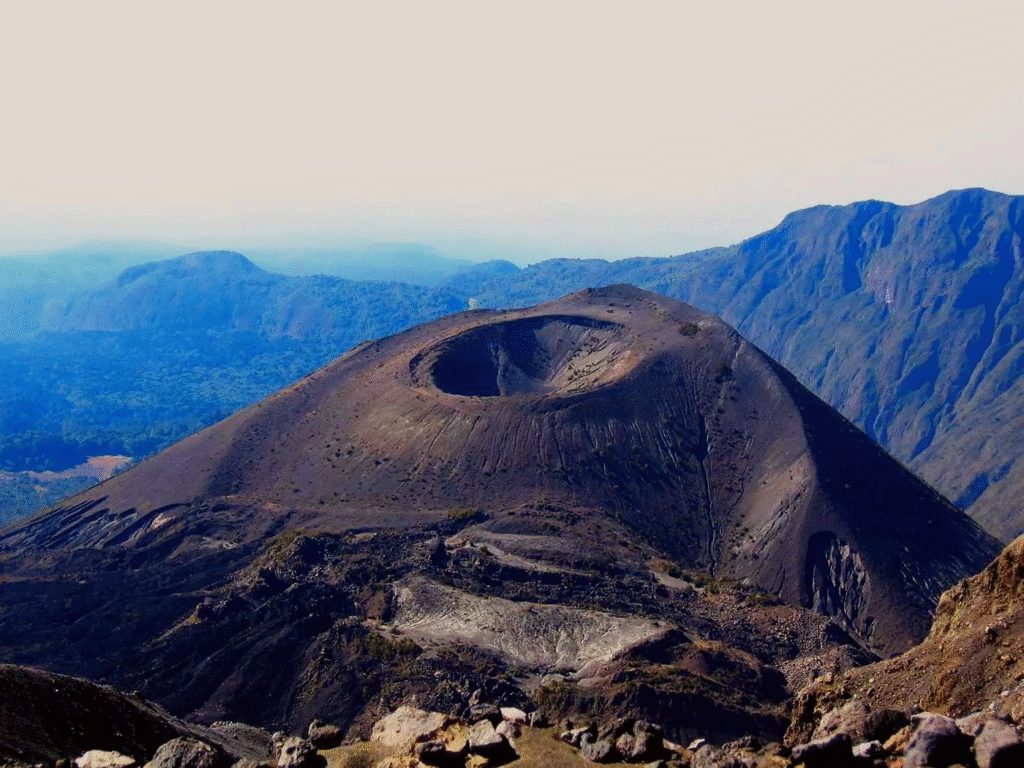
Above: Mount Meru, Tanzania
The Curriculum of Joy
Guiding Principles
The curriculum is spiral, not linear:
- Students revisit ideas at increasing depth, connecting disciplines and reflecting on personal growth.
- Every subject is taught as a living practice, where theory and experience meet.
- Creativity, reflection, dialogue and service are woven into every lesson.
- Assessments measure growth, insight and effort, not rote memorization.
These are demonstrated through portfolios, performances, reflective essays, and mentorship feedback, rather than standardized testing.

The Three Stages of Ascent
Base Camp —
Wonder and Foundation (Year 1)
Objective:
Cultivate curiosity, observation, and mindful engagement with the world.
Core Modules:
The Art of Seeing:
Observation exercises, drawing, and nature journaling.
Number as Music:
Introductory mathematics through patterns, rhythm and storytelling.
The Living Word:
Language, poetry and storytelling emphasizing personal expression.
Science in Action:
Experiments grounded in daily phenomena, ecological awareness.
Movement and Mind:
Music, dance and physical practice as instruments of thought.
Reflection Workshop:
Journals, guided meditation and ethical questioning.
Weekly Practices:
- Nature walks on Heybeliada
- Group discussions on observed phenomena
- Short creative projects in art, writing, or music
Outcome:
Students discover joy in learning itself and begin to see connections between disciplines.
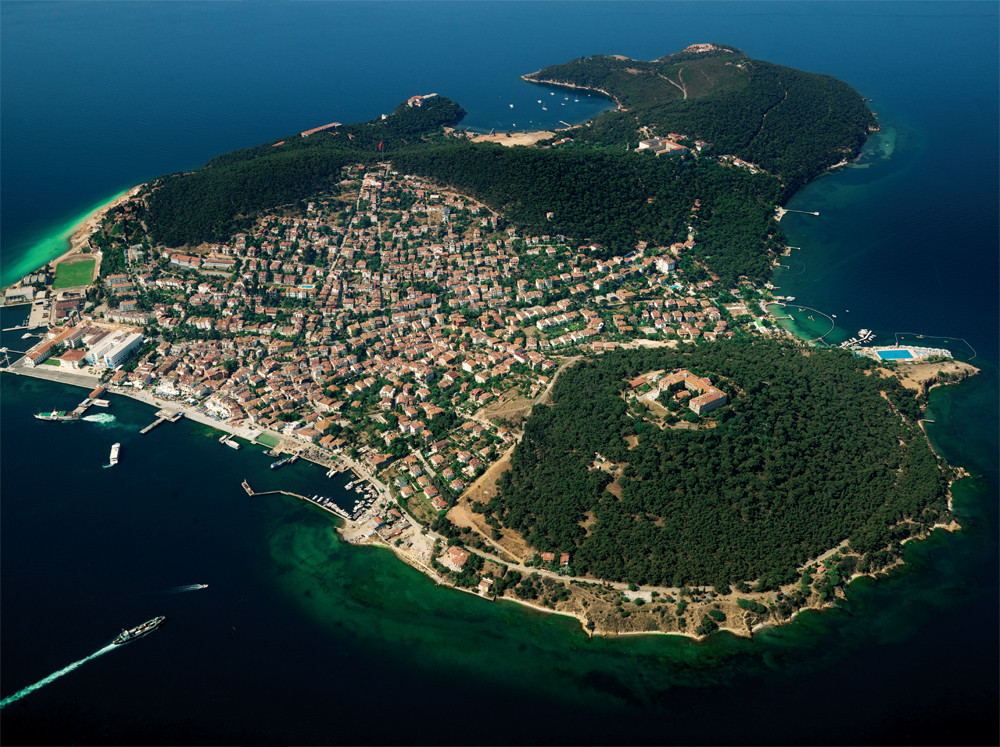
Above: Heybeliada, Istanbul Province, Türkiye
Middle Slopes —
Dialogue and Discovery (Years 2–3)
Objective:
Deepen understanding, develop interdisciplinary thinking and cultivate personal passion.

Core Modules:
The Great Conversation:
Study of classics in literature, philosophy, and science.
Patterns of Thought:
Mathematics, logic and scientific method explored through real-world phenomena.
Creative Practice:
Music, theatre, visual art — weekly studio hours.
Ethics and Action:
Community service projects, reflection on social responsibility.
Exploratory Seminars:
Students design small research projects or creative endeavors.
Dialogue Circles:
Student-led discussion groups guided by teacher mentors.
Annual Traditions:
- Pilgrimages to nearby islands or historical sites
- Group exhibitions and performances
- Collaborative problem-solving challenges

Outcome:
Students synthesize knowledge, creativity and social awareness into an integrated personal vision.

Summit Stage —
Synthesis and Ascent Project (Final Year)
Objective:
Integrate learning, creativity and reflection into a capstone experience.

The Ascent Project:
Students undertake an individual or collaborative project reflecting their passion and learning.
Examples include:
- Scientific research with artistic interpretation
- A musical or theatrical composition
- A novella, poem sequence or visual art series
- Social initiatives or environmental projects on the island
- Students present their project publicly, mentoring younger students in the process.

Capstone Seminars:
Ethics, philosophy and global perspectives
Interdisciplinary synthesis:
Connecting math, science, art and literature
Reflection on personal growth and the next stage of life

Celebratory Practices:
The Summit Walk:
A symbolic island journey marking the completion of formal study
A communal feast and festival of creativity and learning

Outcome:
Students graduate as curious, compassionate and self-aware citizens of the world, capable of continuing their ascent in any domain.

Weekly and Daily Rhythm (Across All Years)
Daily:
- Morning reflection / silent reading
- Core lessons / workshops
- Movement / physical practice / outdoor exploration
- Creative studio / seminar dialogue
- Journaling and reflection
Weekly:
- Community service
- Teacher-guided discussion circles
- Creative project milestones
- Pilgrimages and environmental engagement
Yearly:
- Public performances or exhibitions
- Student-led conferences
- Pilgrimage excursions
- Review and reflection on growth and contributions

Integration Across the Curriculum
- Every course connects to joy, curiosity and service.
- Mathematics is linked to music and architecture.
- Literature and philosophy inform ethical decision-making.
- Science is explored through observation, experimentation, and storytelling.
- Artistic practice is used to communicate discoveries and reflections.
In this curriculum, the student climbs the mountain by walking across it, touching all sides, seeing from all angles —
Arriving at understanding through experience, wonder and joyful effort.

Above: Julie Andrews, The Sound of Music (1965)
The Academy of Joy — Vision Summary
Our Purpose
The Academy of Joy exists to reclaim learning as a pilgrimage of the soul.
We believe that education is not the filling of a vessel, but the lighting of a flame.
Our mission is to nurture curious, compassionate and self-aware individuals who experience knowledge as joy, wonder and service.

Charter of Principles – The Ten Articles of Joy
The Sacredness of Joy:
Learning is most profound when joyful.
Unity of Knowledge:
All disciplines are threads in a single tapestry.
Teacher as Seeker:
Guides must continue to climb alongside their students.
Student as Pilgrim:
Learning is an ascent, not a performance.
Discipline of Freedom:
Structure sustains joy.
Freedom is cultivated, not granted.
Living Dialogue:
Knowledge grows in conversation across time and minds.
Mind, Body and Spirit:
Learning is holistic, integrating thought, action and feeling.
Environment as Teacher:
Nature and place shape understanding.
Service as Enlightenment:
Knowledge is meaningful only when applied for good.
Endless Ascent:
Education is life.
Graduation is a threshold, not an end.

Above: Charlton Heston, The Ten Commandments (1956)
Teacher’s Guide: Pedagogy for the Joyful Mind
Presence, Wonder, Connection:
Core principles for engaging students.
Classroom as Ecosystem:
Balance structure, spontaneity, dialogue, reflection.
Joyful Discipline:
Alignment through clarity, recognition, and trust.
Listening and Reflection:
Students’ questions, silence and curiosity guide the lesson.
Teacher Renewal:
Personal Ascent Projects sustain inspiration and love of learning.
Rhythm of the Day:
Alternating periods of contemplation, creation, dialogue, and reflection.

Above: Teacher-Student Monument, Rostock, Germany
Invitation
The Academy of Joy is a school where learning and life, wonder and work, play and reflection, meet.
We invite teachers and students alike to climb with us:
To discover knowledge through joy, creativity and service.
To ascend not for fame or wealth, but for understanding and humanity itself.
Come climb with us.
The summit is joy.

