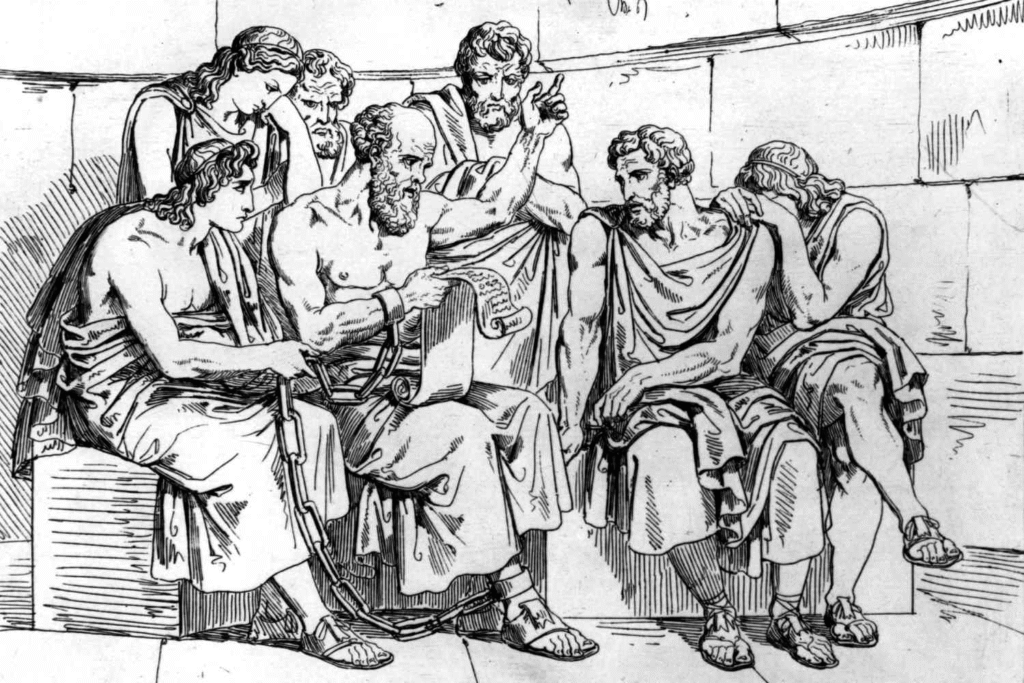
Above: Socrates teaching
Sunday 19 October 2025
Ankara, Türkiye
Education as Power
Throughout history, the most dangerous person to any oppressive system has not been the warrior or the rebel — but the teacher.
Throughout history, great thinkers have recognized that education is not merely about learning facts —
It is about shaping the mind and, ultimately, society itself.

Socrates (470 – 399 BCE) walked the agora questioning the powerful assumptions of his day — and was executed for “corrupting the youth”.

Above: Socrates in the agora
Augustine saw education as a journey of the soul seeking truth beyond worldly powers.
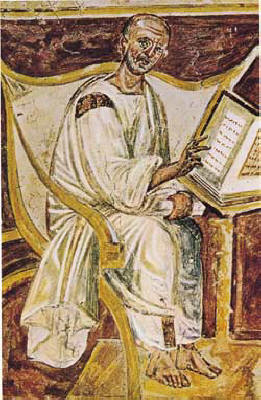
Above: Augustine of Hippo (354 – 430)
Karl Marx argued that the ruling class controls the means of mental production just as surely as it controls the means of material production.
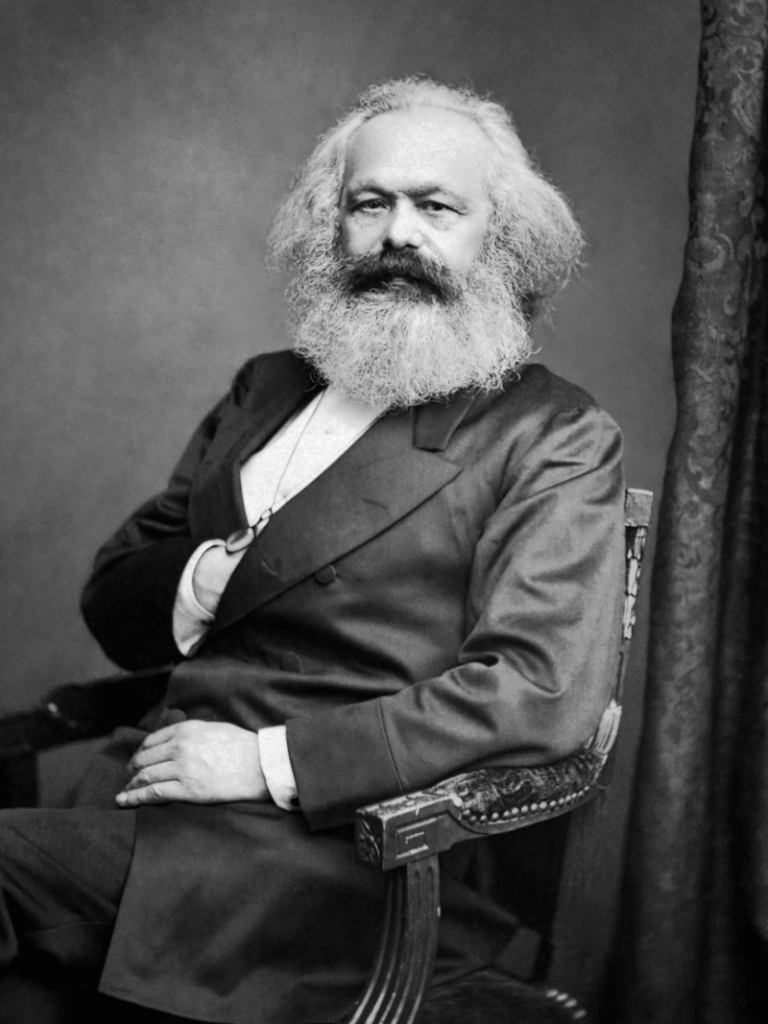
Above: German philosopher Karl Marx (1818 – 1883)
Horace Mann, the father of American public education, called schooling “the great equalizer of the conditions of men”.

Above: American reformer Horace Mann (1796 – 1859)
John Dewey declared that democracy is not a system of government —
Democracy is a way of thinking, cultivated through education.

Above: American philosopher John Dewey (1859 – 1952)
These thinkers understood a truth that remains as urgent today as it was in any age:
To control education is to control the future.
The classroom is not a neutral space.
It is the battleground for the human mind.
It is where individuals either learn to question the world or to accept it as it is handed to them by those in power.
Education molds the way people see reality.
It determines whose stories are told, whose voices are heard, and more crucially — whose interests are served.

The Human Problem and Dehumanization
At the heart of the human experience is the quest for identity and dignity.
To be human is to be conscious, to reflect upon existence, to question, to dream, to become.
Oppression, therefore, is not merely political or economic — it is ontological.
It is a war against our very being.
It seeks to turn living souls into obedient instruments.
At the heart of this struggle lies the central human problem, as Paulo Freire described it:
The quest for humanization —
The affirmation of one’s identity as a human being with agency, dignity and voice.
Oppression is not merely political or economic —
It is psychological and spiritual.
It dehumanizes individuals, transforming them from subjects of history into objects of control.
Injustice, exploitation, and fear conspire to strip individuals of the ability to name their world, to interpret their condition, to imagine alternatives.
As Paulo Freire writes:
“Dehumanization marks not only those whose humanity has been stolen, but also (though in a different way) those who have stolen it.”
The oppressed are reduced to objects — managed, manipulated, instructed what to believe rather than taught how to think.
Yet the oppressor is also deformed by power, conditioned to fear the awakening of those they dominate.
Education, when controlled by the oppressor, becomes an instrument of silence.
But when reclaimed by the people, it becomes the key to liberation.
The struggle over education is not abstract.
It is written in blood and exile.

Historical Attacks on Education
History does not merely remember wars of weapons.
It remembers wars of ideas —
And the first strike in every battle for power is the seizure of education.

China: The Cultural Revolution (1966 – 1976)
During the Cultural Revolution in Maoist China, universities were shut down, professors were beaten in the streets, and students were turned into ideological weapons against their own teachers.
The goal was clear:
To erase independent thought and replace it with unquestioning loyalty to the state.

In 1966, Mao Zedong unleashed the Cultural Revolution, not with tanks or bombs, but with textbooks and slogans.
He declared war on China’s own memory.
Schools and universities were shuttered.
Professors — guardians of knowledge — were labeled “bourgeois enemies of the state”.
They were denounced by their own students, paraded through streets wearing dunce caps, beaten, humiliated, or forced into labor camps.
In some regions, entire libraries were burned, and ancient texts lost forever.
Why?
Because history threatens ideology.
Because independent thought threatens absolute power.

To control China’s future, Mao had to erase China’s past.
By turning students into militants, Mao succeeded in transforming the classroom into a political tribunal.
The question was no longer “What is true?” but “What is permitted?”
Knowledge ceased to be a search for understanding.
It became a loyalty test.
The goal was not education —
It was obedience.

Türkiye: Post-Coup Purges

Above: 2016 Turkish democracy protest, Kızılay Square, Ankara
In Türkiye, following the attempted coup of 2016, tens of thousands of educators were purged from their positions, accused not by evidence but by association.
These were not crimes of action but of thought.
Universities were not feared because of what they did…
But because of what they could inspire.
On the night of 15 July 2016, Türkiye faced a violent coup attempt.
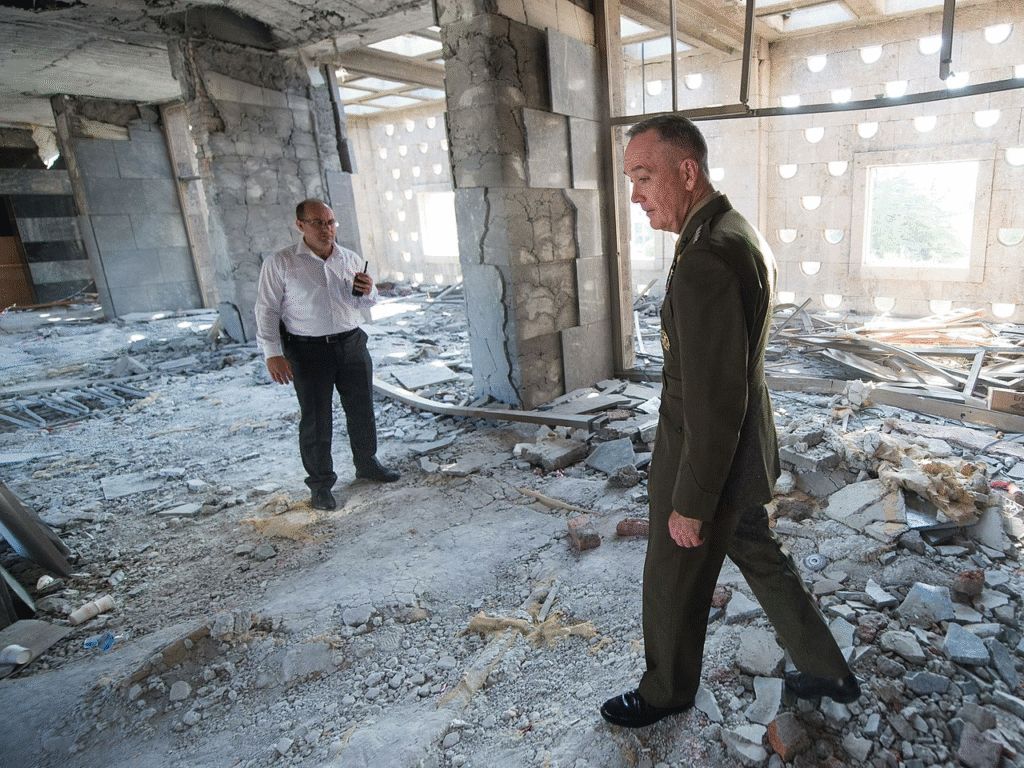
Above: Damage to the Turkish Parliament Building after the failed 2016 coup
In the days that followed, another war began —
Not against soldiers, but against educators.
Over 15,000 teachers were dismissed overnight.
More than 1,000 private schools and universities were shut down.

Academics were banned from travel.
Thousands were imprisoned or exiled.
These were not arbitrary arrests.
They were strategic.
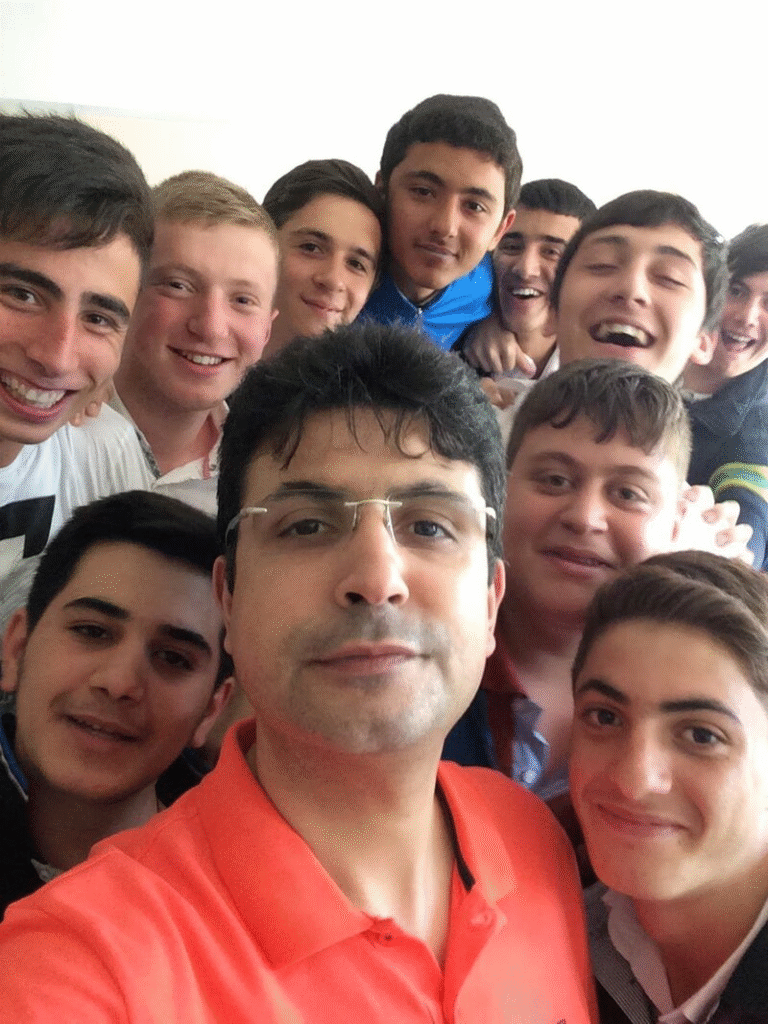
Above: Gökhan Açıkkollu (1974 – 2016), a teacher died in police custody after being imprisoned and tortured for 13 days post 2016 coup attempt
The classroom is where the future is imagined —
And the state feared an imagination it did not control.
In one decree, educators were declared “terrorists” not because they had committed acts of violence, but because they had engaged in that most subversive act:
Thinking differently.

For months, Turkish universities stood silent — not from apathy, but from fear.
The message was clear:
Knowledge is no longer a public right.
It is a state-controlled privilege.

Above: Turkish Ministry of National Education logo
United States: Threats to Academic Independence
In the United States, President Donald Trump has openly threatened to cut federal funding to universities that did not align with his vision of “patriotic education”.
This was not merely a political statement —
It was a declaration that dissenting thought is dangerous, that the purpose of education is not to pursue truth but to reinforce national ideology as defined by those in power.

Above: US President Donald Trump
Oppression is not the monopoly of dictatorships.
Even democracies can succumb to the urge to silence dissent when power feels threatened.

Donald Trump has openly vowed to reshape American education:
Threatening to cut federal funding to universities that promoted “un-American” thought.
Demanding “patriotic education” to replace critical analysis of history.
Labeling academic critique as “Marxist indoctrination”.
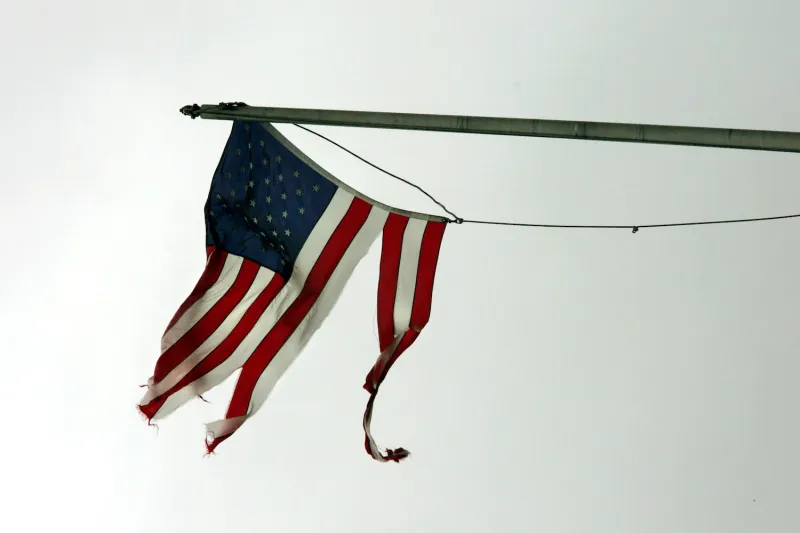
The intention was not the flourishing of knowledge, but the regulation of it.
A single narrative of history — a history free from shame, critique, or reflection — is deemed the only acceptable version.
This is not patriotism.
It is pedagogy as propaganda.
Why Oppressors Fear Education
Freire warns:
“Washing one’s hands of the conflict between the powerful and the powerless means to side with the powerful, not to be neutral.”

Above: Brazilian reformer Paulo Freire (1921 – 1997)
Neutrality is the mask oppression demands educators to wear.
Compliance is called “professionalism”.
Dissent is called “radicalism”.
But beneath the language lies the truth:
The battle is for the mind of future citizens.
In every case, the pattern is the same:
Oppressors do not fear weapons.
They fear consciousness.
A population that does not question is easy to rule.
Oppressors understand a fundamental truth:
To control the future, one must control the imagination.
And imagination is forged in the classroom.
It was why Mao launched the Cultural Revolution, sending millions of students to denounce their professors and burn libraries —
To erase China’s memory and rebuild a new consciousness in perfect conformity with the Party.
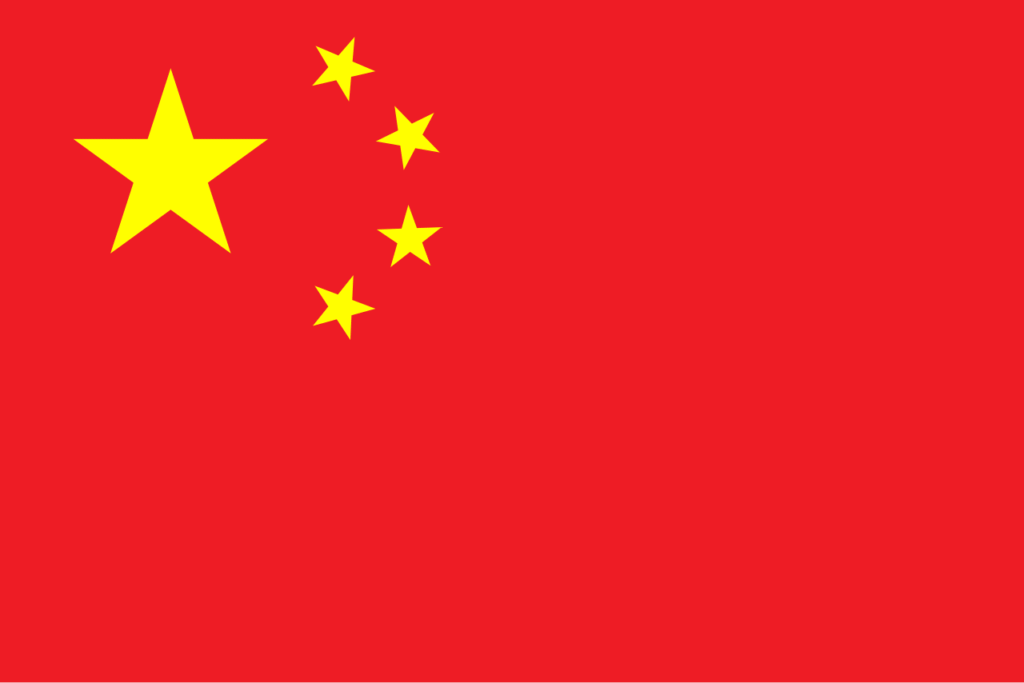
Above: Flag of China
It is why, after the failed coup attempt in Türkiye in 2016, over 15,000 teachers were dismissed and thousands of schools were closed overnight —
Not because they had committed crimes…
But because they represented independent thought.
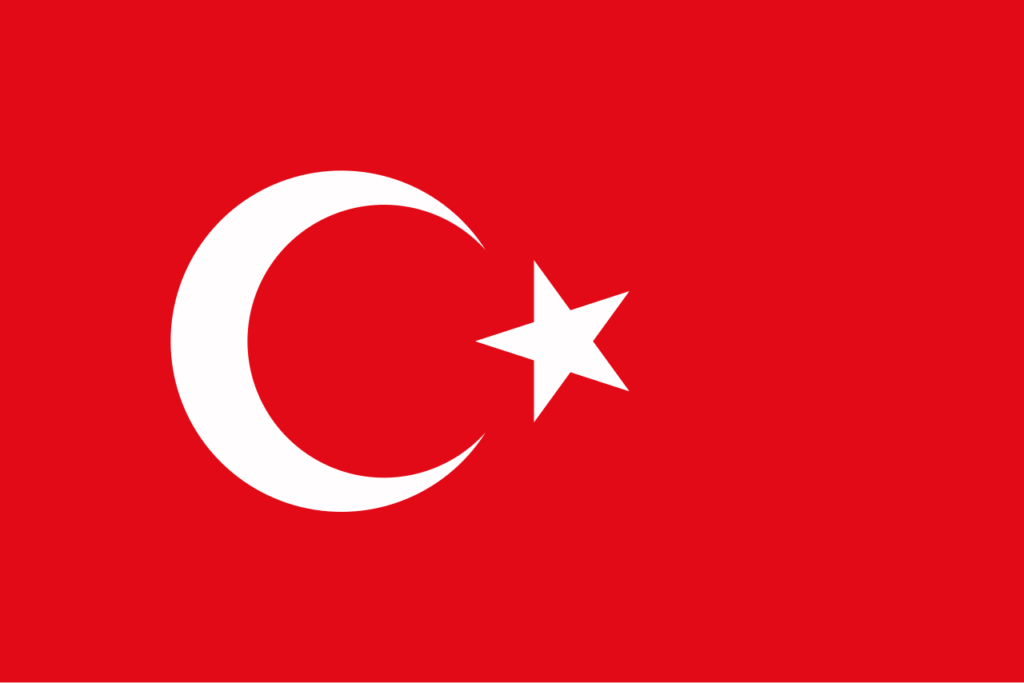
Above: Flag of Türkiye
It is why in the United States, President Donald Trump openly threatens universities with the withdrawal of federal funding if they permitted ideological dissent.
Education, he insists, must promote “patriotic values”, not critical analysis.
This fear is not new.

Above: Flag of the United States of America
Every tyrant in history has understood what Socrates knew:
To teach a person to think is to make them ungovernable by fear.

Control of education is not about improving learning outcomes or protecting national values.
It is about controlling the narratives that shape identity, loyalty, morality and imagination.
Oppression is always justified in the name of security, unity, or tradition.
But beneath these veneers lies a single motivating force:
Fear of losing power.
To the oppressor, knowledge is dangerous because it awakens critical consciousness —
The awareness that the world is not fixed, but constructed.
And that constructed realities can be transformed.

The Psychology of Control
Oppressors seek:
- Control over language (what may be said)
- Control over history (what may be remembered)
- Control over identity (who may be)

As George Carlin so accurately diagnosed:
“They don’t want people who are smart enough to sit around the kitchen table and think about how badly they’re getting screwed by a system that threw them overboard.”
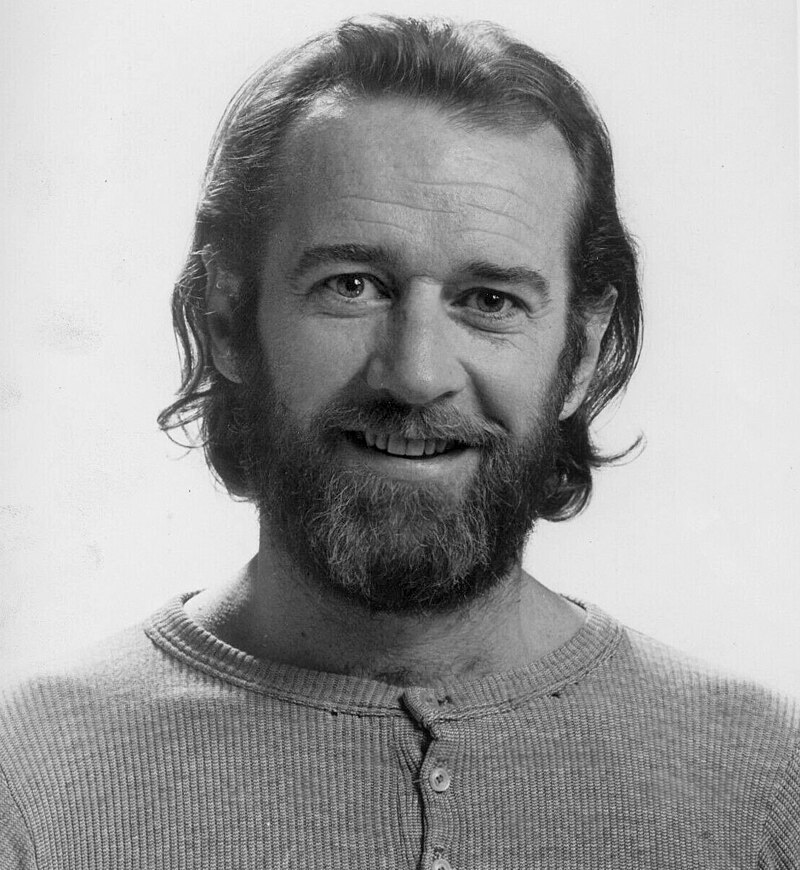
Above: American comedian George Carlin (1937 – 2008)
They want workers — compliant, predictable, replaceable.
Not citizens — questioning, participating, transforming.
Education, when true to its purpose, threatens this order.
Governments do not fear ignorance.
Ignorance is their instrument.
What they fear is a citizen who can decode propaganda, recognize injustice, and mobilize truth against tyranny.

This truth was laid bare not by a philosopher, but by an American comedian — George Carlin, a satirist who spoke with the moral clarity of a prophet:
“They don’t want well-informed, well-educated people capable of critical thinking.
That doesn’t help them.
That’s against their interests.
The real owners of this country want obedient workers — workers who are just smart enough to run the machines and do the paperwork.”
Carlin was not merely joking.
He was diagnosing.
His satire stripped away the myth of the benevolent state and exposed a chilling reality:
Education, when it is real, is a threat.

Above: George Carlin
A populace educated to question is a populace impossible to rule through fear.
Oppression is not maintained through weapons alone.
It is maintained through curriculum, media, testing systems and credential structures that reward conformity and punish dissent.
Carlin strips away the polite disguises of politics and reveals the deeper truth identified by Freire:
Oppressors reduce human beings to objects, instruments of profit or control.
They fear not rebellion of the body, but rebellion of the mind.
Education is often presented as the path to empowerment — but those who own the systems of power do not actually want an empowered populace.
They want compliance, not consciousness.
Education is the most dangerous weapon in the hands of the oppressed —
Therefore it must be controlled by the oppressors.
Oppression does not succeed simply because governments pass laws or deploy police.
It succeeds when people internalize their own powerlessness —when teachers self-censor, when students fear inquiry, when truth retreats into silence.

This is why Freire insists that education is never neutral.
It either domesticates or liberates.
To oppress is to control the imagination of others.
To resist is to awaken it.
Governments, corporations, and ideological regimes do not fear weapons nearly as much as they fear ideas that create independent thinkers.
A bullet can kill a rebel.
A free mind can inspire generations of them.
Oppression relies on deeply rooted psychological mechanisms:
- Fear – Fear of losing status, security, approval.
- Isolation – Preventing collective action and solidarity.
- Narrative control – Rewriting history to legitimize power.
- Despair – Convincing the oppressed that resistance is futile.
Every generation must decide whether education will be a tool of domestication or liberation.
The forces of oppression are relentless.
And they adapt:
Censorship, standardized testing, economic pressure, digital surveillance, ideological purges —
These are the new chains forged for the modern mind.
But resistance is equally enduring.
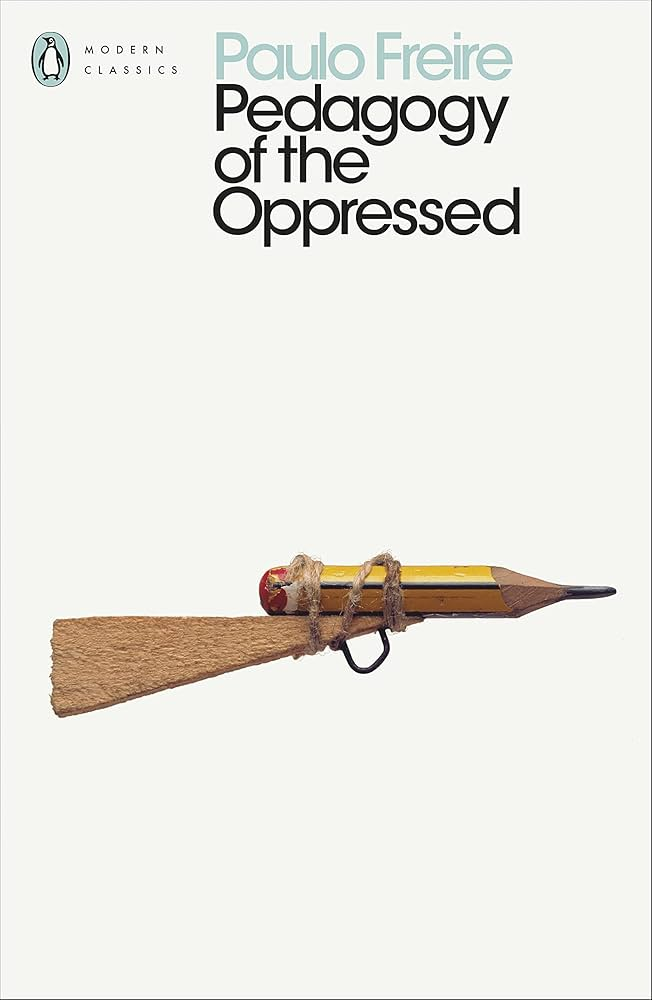
Emancipatory Pedagogy: A Moral Imperative
Emancipatory pedagogy is not an academic theory.
It is a living practice grounded in the belief that education must restore humanity, not suppress it.
It argues that the purpose of learning is not to fit into the world as it is, but to transform it into what it ought to be.
It teaches students to interrogate power, to uncover hidden structures of inequality, to reclaim their voice and to act collectively for justice.
Paulo Freire reminds us that liberation is not merely seizing power from the oppressor; it is ending the cycle of oppression altogether.
It is not enough to reverse roles.
The goal is to abolish the system that divides humanity into masters and subjects.
True education becomes an act of resistance when it reclaims the humanity of both teacher and student.

The Teacher as Catalyst
In oppressive systems, knowledge flows from the top down.
Freire proposes the opposite: a horizontal flow, where teacher and student learn with each other.
Dialogue is not merely discussion —
It is the birth of shared consciousness.
Where there is dialogue, there is no domination.
By any other name
Oppression thrives on silence.
Education breaks oppression when it teaches students to name their reality, to recognize how power operates in their lives, to see themselves not as passive objects, but as historical subjects.
This is what Freire calls critical consciousness.
The Measure of Man
Authoritarian education is transactional.
It measures outputs.
Emancipatory education is relational.
It cultivates transformation.
It links knowledge to lived experience —
Connecting literature to censorship, economics to inequality, science to ethics.
It asks not only: “What is?” but “What ought to be?”

The Light Aloft
Oppressive regimes use “cultural invasion”—
Imposing values to dominate.
Emancipatory pedagogy returns culture to the people, recognizing that students are bearers of knowledge, not empty containers.
Their languages, traditions and stories become part of the curriculum, not obstacles to it.

Above: Greek philosopher Diogenes (413 – 321 BCE) looking for an honest man
The Battlefield of the Mind
Oppressors divide to rule.
Educators unite to empower.
Universities form alliances, publish truth even when silenced domestically, use technology to bypass censorship, and cultivate global solidarity.
The resistance of education does not depend on guns, but on an unbreakable network of conscious minds refusing ignorance.
Paulo Freire and George Carlin converge in a singular truth:
Education is never neutral.
It either domesticates or liberates.
It either reproduces oppression or dismantles it.
Every classroom is a site of potential revolution – not one of violence, but words and thoughts and ideas.
From Brazil’s favelas to American campuses, from Turkish classrooms to Chinese villages, the struggle is identical because the mechanism of oppression is universal.
- In the United States, politicians attempt to ban books and rewrite history.
- In Türkiye, academics have been jailed for signing peace petitions.
- In China, teachers must pass ideological loyalty tests to teach.
- In Western Europe, “culture wars” seek to criminalize dissenting thought.
Every generation is told that obedience is order, that questioning is chaos.
Yet history proves the opposite:
Blind obedience is the midwife of tyranny.
Choosing Liberation
The teacher is not a functionary of the state, but a catalyst of consciousness.
Every lesson, every discussion, every question asked is a step toward a society more just, more awake, more human.
The oppressed pedagogy teaches not merely how to survive, but how to resist, how to reclaim destiny, how to transform reality.
To teach is to declare that humanity is not finished —
That a better world is still possible.
The classroom is not a room.
It is the frontline of freedom.
And in this sacred space, the educator must:
- Reject the objectification of students.
- Engage in thematic investigation to uncover real problems affecting society.
- Guide learners in analyzing both history and the present with critical eyes.
- Encourage dialogue—not as talk, but as a practice of liberation.
- Foster unity, compassion, and collective action.
Students are not merely preparing for the future —
They are the future being shaped.
Emancipatory education tells them:
You are not here to be trained.
You are here to be transformed.
You are not a consumer of knowledge.
You are a creator of history.
You are not an object of policy.
You are a subject of destiny.
Every question asked in a classroom is an act of rebellion against ignorance.
Every discussion that empowers students to speak truth against injustice is a blow struck for humanity.
The teacher stands not as an owner of truth, but as a midwife of consciousness.
To teach is not simply to transfer facts —
It is to ignite the human spirit.
“Education is an act of love, and thus, an act of courage.”
Paulo Freire
In times of oppression, the most radical thing a teacher can do is believe in the mind of the student.

Liberation is not individual.
It is collective.
Oppression isolates.
Education must unite.
The classroom can be a laboratory of freedom, where learners develop the knowledge, skills and courage to challenge systemic injustice.
Education is never neutral.
It either fosters liberation or perpetuates oppression.
The oppressed pedagogy teaches us that to educate is to humanize— not just ourselves, but the world we share.
Education is never neutral.
It either functions as an instrument to bring about conformity or becomes the practice of freedom, enabling people to critically engage with reality and become agents in transforming it.
The oppressors know this.
That is why they fear the teacher.
The question is not whether education will shape society —
But whose interests it will serve.
Education is never neutral.
It will either train individuals to accept the world as it is, or empower them to transform it.
Emancipatory pedagogy calls us to choose transformation —
To reclaim humanity from those who reduce it to data points, market units, or political assets.
The task of the educator is not to create obedient workers, but conscious citizens.
Not people who will merely endure the world,
but people who will renew it.

In every age, there are those who seek to control the story of humanity.
They do so not by chains or prisons alone, but by controlling what people are allowed to know, what they are permitted to question, and what they are trained to imagine.
The battle for education has always been the battle for the human soul.

From Socrates drinking hemlock for “corrupting the youth”, to Augustine framing education as the path to salvation of the soul,
to Marx arguing that the ruling ideas of any age are the ideas of its ruling class, to Mann and Dewey shaping public education as the engine of democracy —
Every great thinker has understood one eternal truth:
Education is the foundation upon which societies define what it means to be human.
And this is precisely why it is always under attack.
Dictators fear it.
Corporations manipulate it.
Politicians weaponize it.
For when the mind is liberated, the human being becomes ungovernable by deceit.
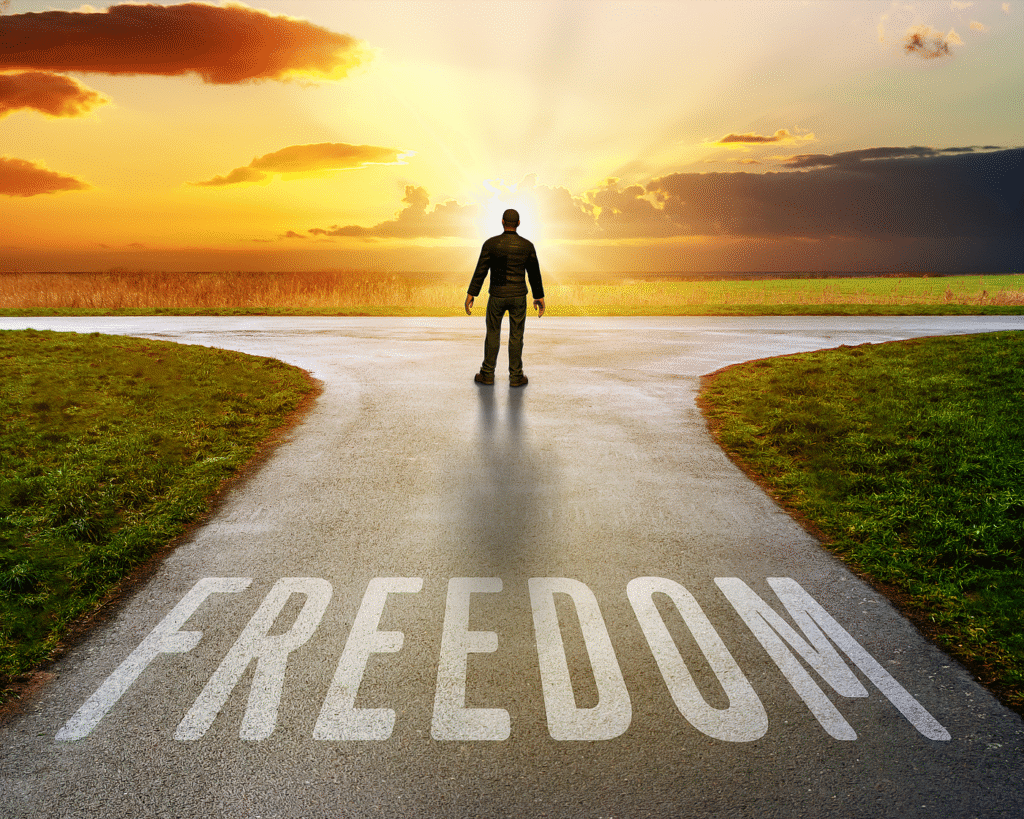
History repeats because oppression adapts.
The Cultural Revolution in China sought to erase the past to control the future.
The post-coup purges in Türkiye silenced thousands of educators in the name of “national security”.
Today, political forces in the United States openly threaten to defund universities that do not conform to ideological purity.
The goal is always the same:
To replace inquiry with obedience.

As George Carlin exposed with brutal clarity, those who hold power do not want critical thinkers.
They want compliant laborers.
They do not want liberated human beings with moral agency.
They want consumers, taxpayers and spectators.
Oppressors understand what far too many educators forget:
Education is revolutionary.
To teach someone to read history is to arm them with the tools to change it.
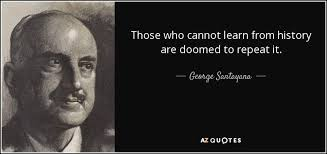
Paulo Freire did not write merely for the classroom.
He wrote for the future of humanity.
Emancipatory pedagogy is not a method —
It is a moral imperative.
It demands that education:
Unmask power, rather than disguise it.
Empower students as subjects of history, not objects of policy.
Recognize culture, language and identity as sources of strength, not obstacles to be erased.
Replace passive consumption with active participation.
Refuse neutrality in the face of injustice.
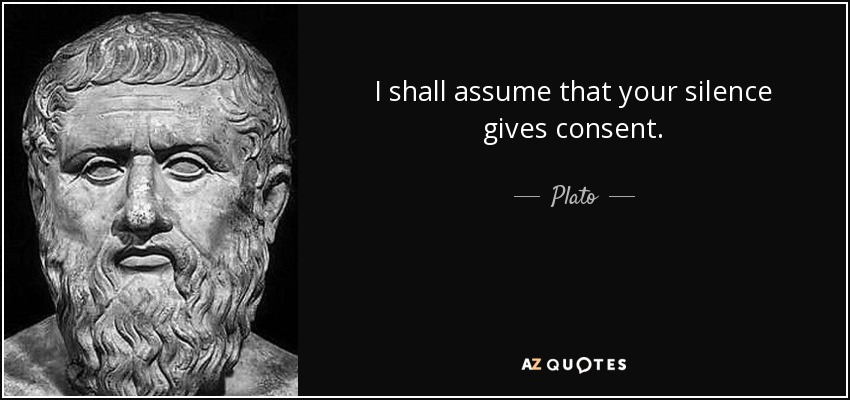
There is no neutral ground between oppression and liberation
Silence is always on the side of the oppressor.
A teacher is not a functionary of the state.
They are a guardian of human possibility.
Every time a teacher encourages a student to ask “why?”, they weaken the foundations of tyranny.
Every lesson that connects the past to the present — colonialism to capitalism, censorship to propaganda, inequality to policy — creates a citizen who cannot be easily deceived.

Every dialogue that honors a student’s lived experience restores their rightful place in the human story.
Education must not serve the interests of the powerful —
It must serve the dignity of the human person.

To educate is to resist.
To teach is to declare that:
Every student is a bearer of unrealized potential —
Not a statistic, not a cog, not a resource to be managed.

Above: Charlie Chaplin, Modern Times (1936)
But a soul capable of truth, justice and transformation.
The oppressed pedagogy does not teach people to take power.
It teaches them to dismantle the very structures that make domination possible.
It calls not for a change in rulers…
But for a change in consciousness.
It does not aspire to build a better system of obedience….
But a world where obedience to oppression is no longer thinkable.
If we do not fight for education that liberates, we will inherit education that enslaves.
The question is not:
Will education shape the world?
The question is:
Who will control that shaping — and to what end?
The time has come to reclaim education as the practice of freedom.
For where there is true learning, there is no oppression.
Where there is dialogue, there is no domination.
Where there is critical consciousness, there is hope for humanity.
This is not merely theory.
It is the duty of every educator.
The right of every student.
The destiny of every free people.
Education is either an instrument of liberation or a mechanism of control.
The oppressed pedagogy dares us to choose liberation.
Ask yourself:
Whose story will your classroom tell?
Will your classroom serve freedom — or obedience?
Choose liberation.
Teach humanity.
Ignite the mind.

[Verse 1]
Those schoolgirl days
Of telling tales and biting nails are gone
But in my mind
I know they will still live on and on, and on
[Pre-Chorus]
But how do you thank someone
Who has taken you from crayons to perfume?
It isn’t easy, but I’ll try
I’ll try
[Chorus]
If you wanted the sky
Write across the sky in letters
That would soar a thousand feet high
“To Sir, with love“
[Verse 2]
The time has come
For closing books and long last looks must end
And as I leave
I know that I am leaving my best friend
[Pre-Chorus]
A friend who taught me right from wrong
And weak from strong, that’s a lot to learn
What, what can I give you in return?
Oh, oh
[Chorus]
If you wanted the moon
I would try to make a start
But I would rather you let me give my heart
To Sir, with love
If you wanted the moon
I would try to make a start
But I would rather you let me give my heart
To Sir, with love

