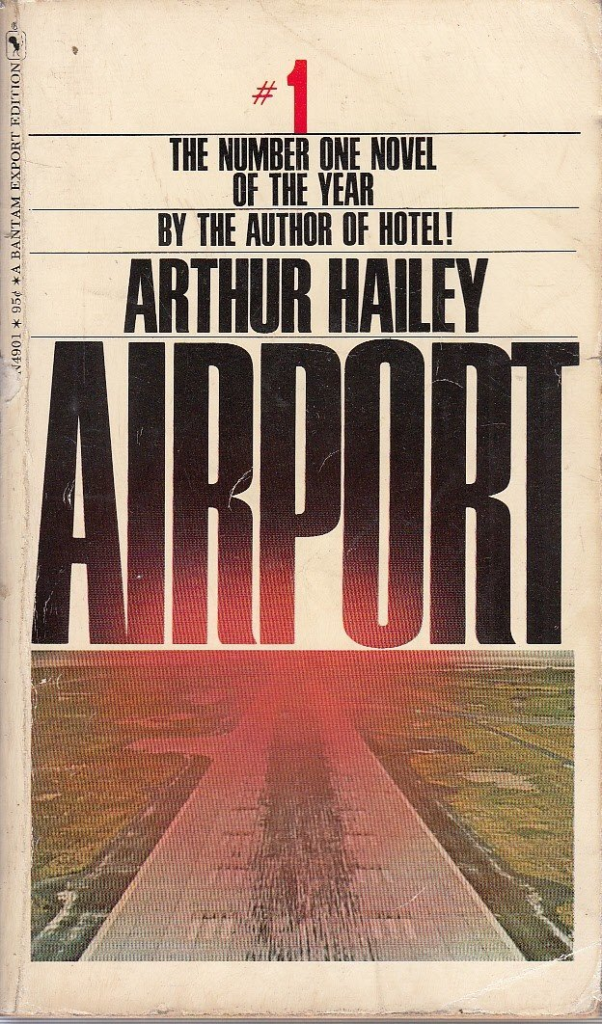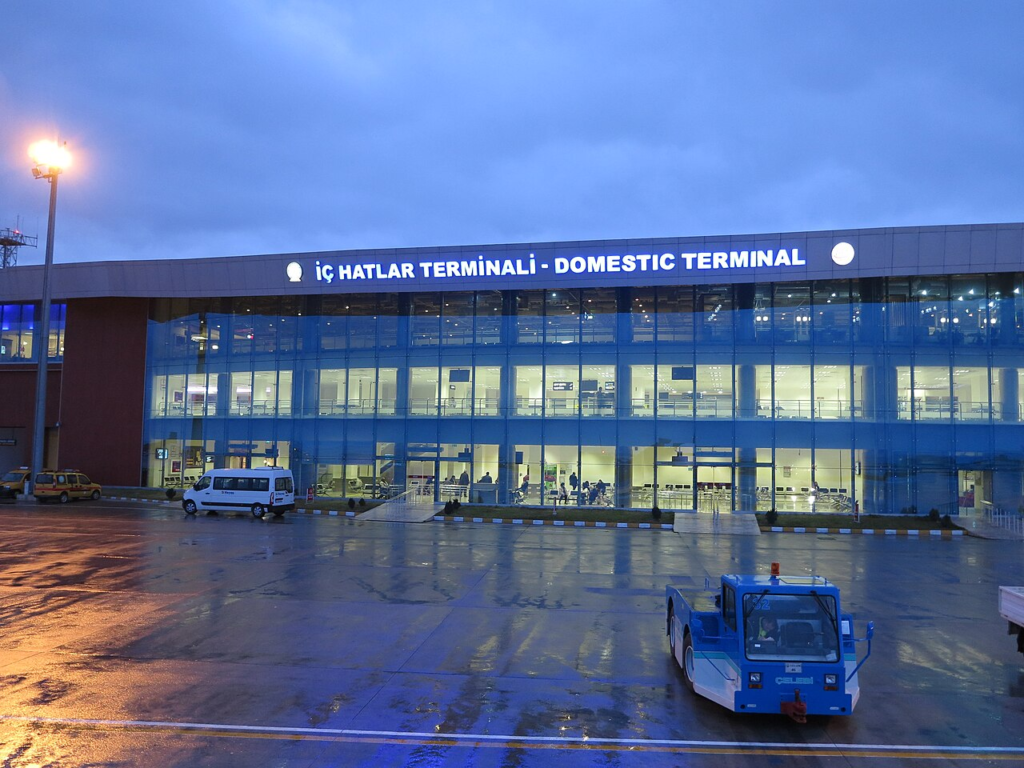
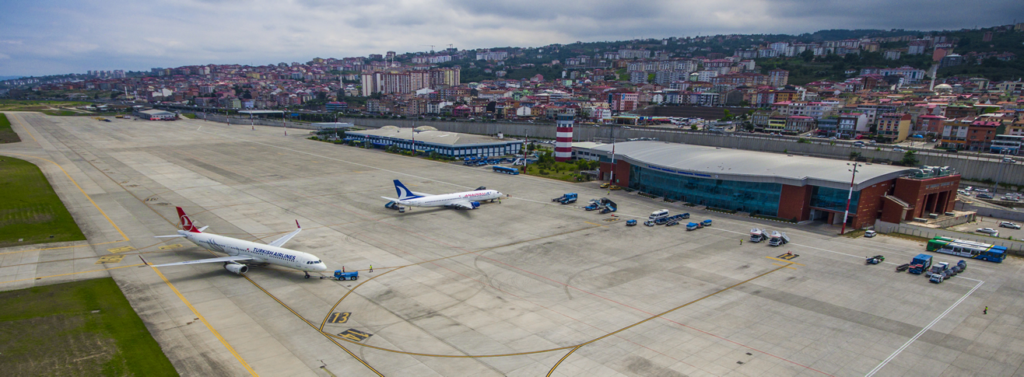
Above: Trabzon Airport
Sighnaghi, Kakheti, Georgia
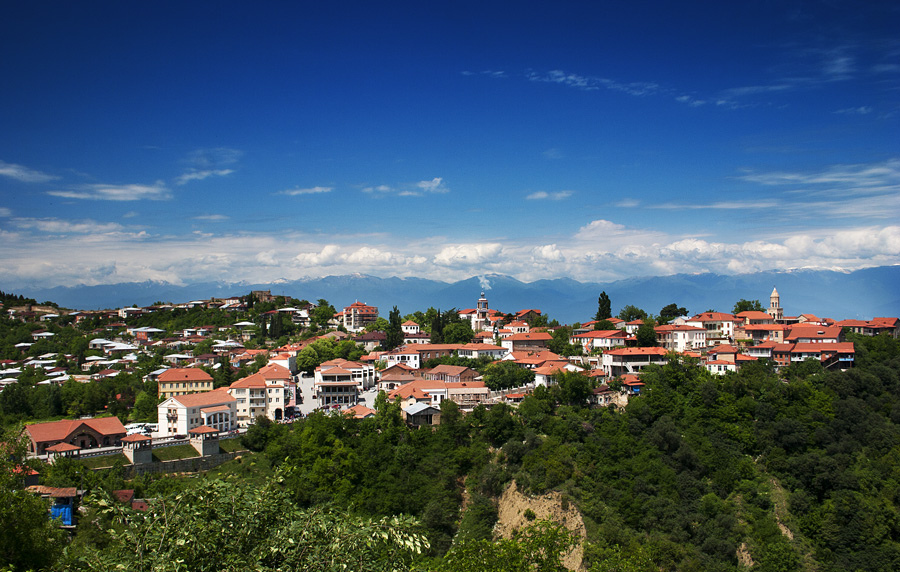
Above: The town of Sighnaghi
Sunday 5 July 2026
There is a certain irony in writing these words this morning.
In three days I shall leave Georgia by air, while describing another flight — one that carried me to Trabzon two months ago, two days before I entered Georgia overland.

Above: Flag of Georgia
Seat 28F
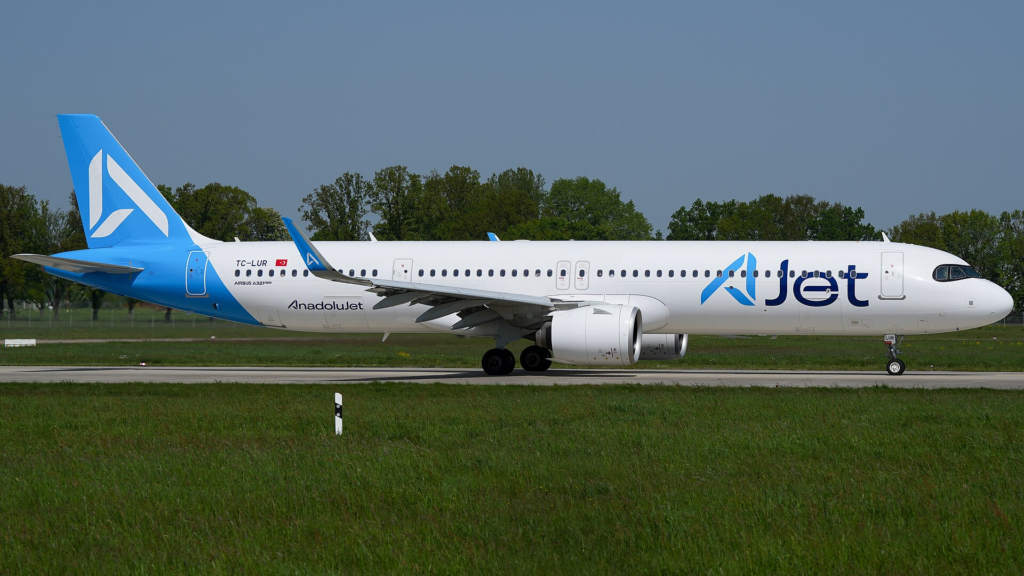
AJet Flight VF4284
Ankara – Trabzon

Sunday 10 May 2026
It had already been a punishing morning.
Not dramatic in the cinematic sense.
Simply exhausting.
The kind of day built from small defeats, poor timing and expensive inconveniences.
These are often the journeys that wear a traveller down more than genuine disasters.
I had already missed my original flight to Rize.
Fortunately, I did not make the mistake of chasing the mistake.
Panic rarely improves logistics.
Instead, I bought another ticket — to Trabzon — and accepted that the remainder of the journey would continue by Havaş shuttle to Rize.
The expensive part of the morning was already behind me.
The next objective was wonderfully uncomplicated.
Transport.
Not analysis.
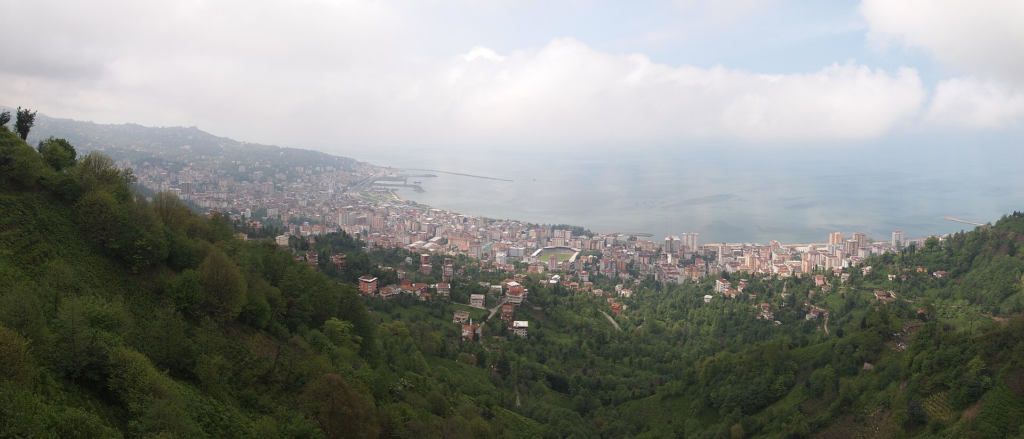
Above: Panorama of Rize, Türkiye
By the time I settled into Seat 28F beside the window, fatigue had become my constant travelling companion.
My checked suitcase had disappeared into the cargo hold—hopefully.
My carry-on bag rested in the overhead locker.
Copies of Daily Sabah and the Hürriyet Daily News waited in the seat pocket.
They would probably be the last English-language newspapers I would see for some time.


Like many nervous flyers, I looked for distraction.
Instead of watching the safety demonstration, I reached for my phone and searched for the airport waiting at the other end of the flight.
What I found surprised me.
Trabzon Airport opened in 1957 and serves Turkey’s eastern Black Sea coast.
To most travellers it is simply the gateway to tea country.
Yet beneath its ordinary appearance lies a remarkable history.
Above: Trabzon Airport
One tragedy stands above all others.
On 26 May 2003, Ukrainian-Mediterranean Airlines Flight 4230 crash struck a mountainside while attempting to land in dense fog.
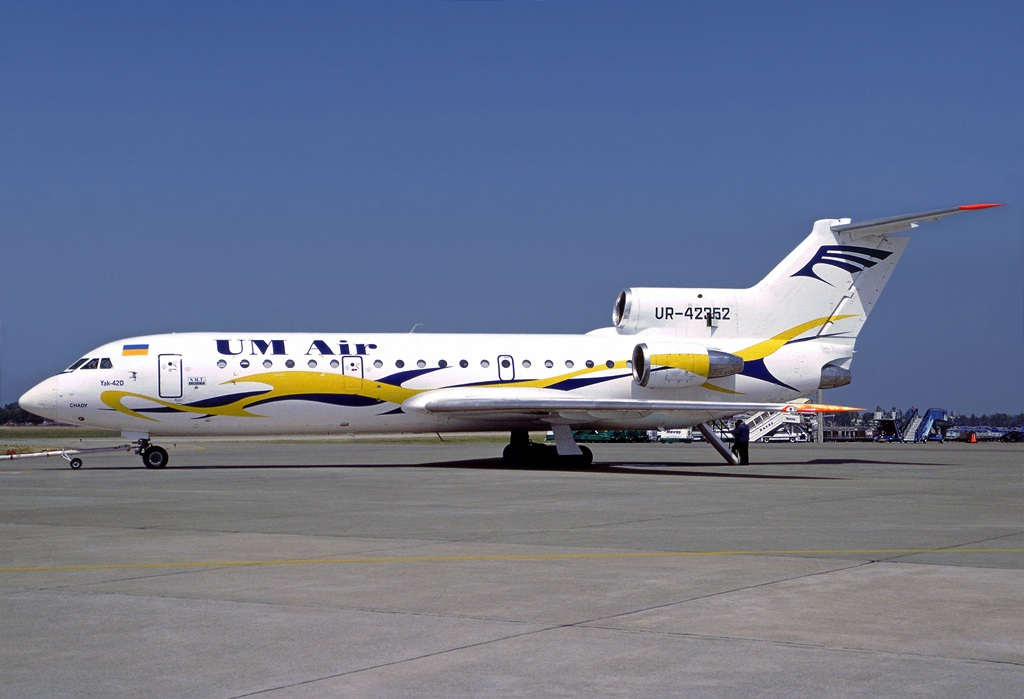
The Yakovlev Yak-42 had been carrying 62 Spanish peacekeepers home from Afghanistan together with 13 Ukrainian crew members.

Above: Seal of the International Security Assistance Force (ISAF) (2001 – 2014)

Above: Flag of Spain

Above: Flag of Ukraine

Above: Flag of Afghanistan
Visibility had fallen to less than ten metres.
After abandoning one approach, the aircraft drifted from the correct flight path during another and slammed into a mountain near Maçka.
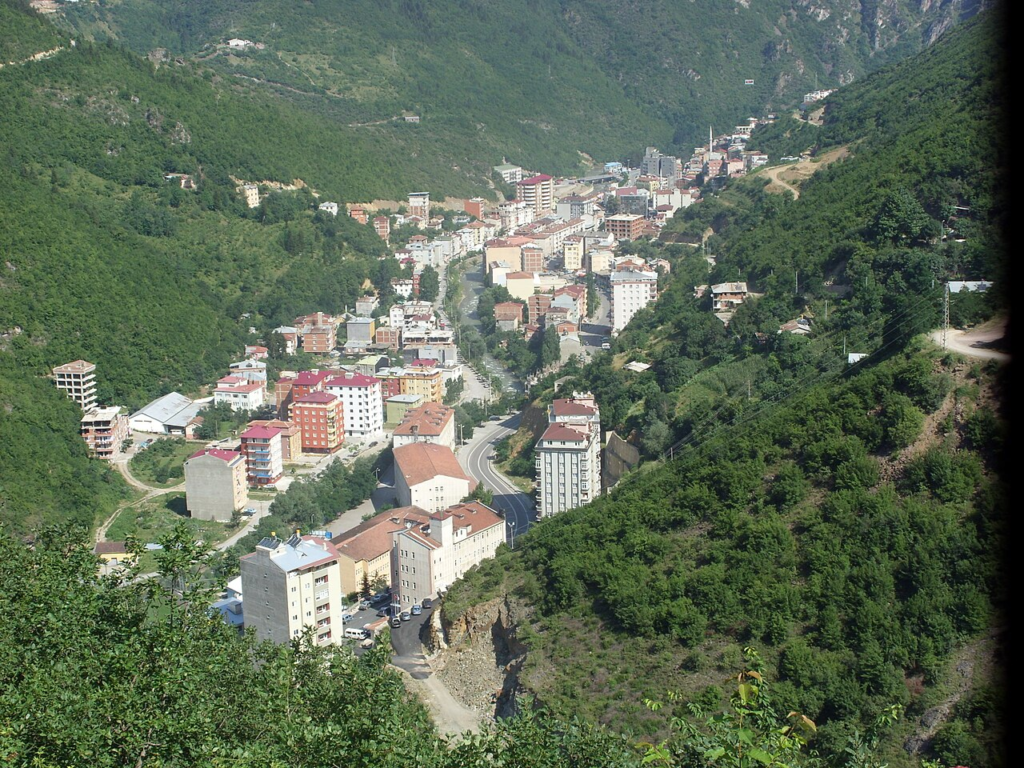
Above: Maçka, Trabzon Province, Türkiye
There were no survivors.
The soldiers had survived a war zone only to perish within sight of home.
As if that were not sorrow enough, 22 of the victims were later misidentified before being returned to the wrong families, a scandal that eventually cost three Spanish generals their careers.
Above: Emblem of the Spanish Armed Forces
History, however, is not composed entirely of tragedy.
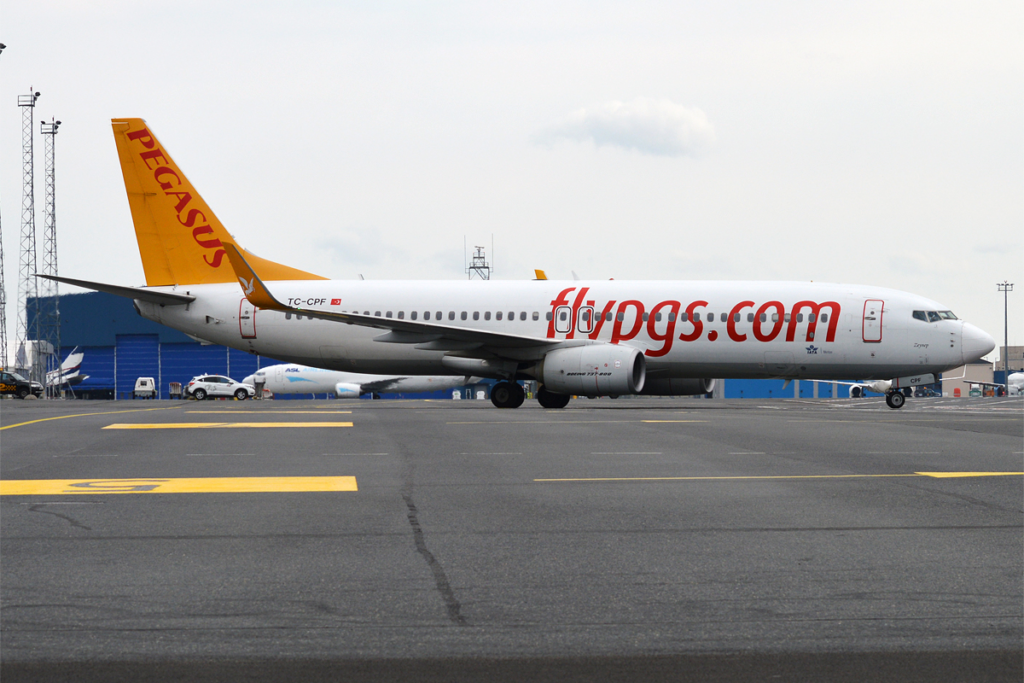
Fourteen years later, on 13 January 2018, another aircraft approached Trabzon under poor weather conditions.
Pegasus Airlines Flight 8622 runway excursion landed safely, then suddenly veered off the runway, skidding down the embankment overlooking the Black Sea.
The Boeing 737 came to rest at an astonishing angle, seemingly suspended above the water.
Rain-softened earth prevented it from sliding into the sea.
Every one of the 168 people on board escaped without serious injury, although the aircraft itself was beyond repair.
Sometimes catastrophe arrives.
Sometimes catastrophe pauses just long enough to let everyone walk away.
Trabzon has witnessed stranger stories still.
On 20 May 1989, at the height of the Cold War, Soviet fighter pilot Aleksandr Mikhailovich Zuyev drugged his fellow airmen with a cake laced with sleeping pills, cut the telephone lines at his airbase, shot and wounded a mechanic who confronted him, and escaped in a MiG-29 across the Black Sea to Trabzon.
Turkey returned the fighter aircraft to the Soviet Union in the interests of diplomacy.
It did not return the pilot.
Zuyev was eventually granted asylum in the United States, where he later wrote a memoir of his extraordinary escape.
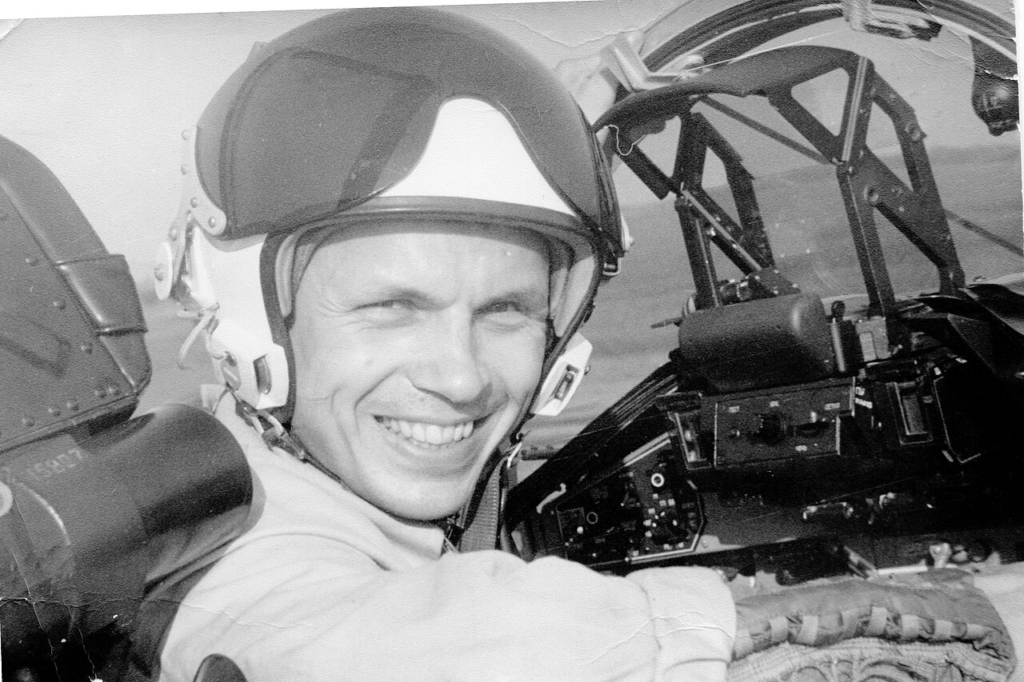
Above: Aleksandr Mikhailovich Zuyev (Russian: Александр Михайлович Зуев) (1961 – 2001)
By now I realized that my attempt to distract myself from flying had backfired spectacularly.
Instead of reading about cafés or local attractions, I had immersed myself in crashes, military defections and Cold War espionage.
Not, perhaps, the ideal reading material for a reluctant flyer.
The irony was not lost on me.

Above: Your humble blogger, Canada Slim
Yet another thought slowly emerged.
Airports occupy an unusual place in human geography.
They are places of reunion and farewell.
Of holidays and funerals.
Of homecomings and exile.
Of diplomacy, disaster and ordinary afternoons.
Most travellers know nothing of the stories that unfolded on the runways beneath their feet.
They simply board, fasten their seatbelts and hope to arrive.
That morning, so did I.