
The Road to the Big Good, Part One
Batumi to Tbilisi, Georgia
Saturday 16 May 2026
The day begins at 0500.
Pack.
Shower.
Shave.
Clothes still damp but packed nevertheless.
Laundry rack back on balcony.
Still terrifying to be out there.
Too damn high up —
43 floors.
Leave Room 4342.
Elevator down to the first floor.
Key returned to Reception.

Above: Orbi City, Batumi, Adjara, Georgia
Sit in Cork Bistro, the restaurant of my Batumi hotel.
Wolf down omelette with Parmesan cheese.
Again.

The waiter calls me Mr. Piña Colada.
My first dinner at Cork Bistro included two piña coladas.

I slowly drink my Americano, medium sweet.
Music plays, but I cannot identify the breathless songstress.
I install Shazam, an application that listens to a few seconds of music and identifies the song and artist within moments.
Yet it cannot do either.
More hopes dashed this day.

I need new shoes.
Yesterday’s rain has continued, and my feet are cold and wet.

Above: Batumi in the rain
Friday’s taxi ride to the train station cost GEL 20.
Today, for some reason, GEL 30.
I hate it when no fare is displayed inside a cab.
Very suspicious.

My train ticket specifies Seat 77, Wagon 1.
I had hoped to occupy a window seat on the recommended left side of the train, facing forwards.
None of these conditions exists.
I am on the right side, in an aisle seat, facing backwards.
There are four seats, two and two across from each other.
The lady opposite insists on keeping her bag between her legs, denying me even the illusion of extra legroom.
Across the aisle, a young couple share earbuds and sleep in synchronized collapse against one another, as if rehearsing for a modest but sincere perfume advertisement.
The carriage itself is modern enough, though already carrying the scent of damp coats, cheap coffee and humanity in transit.

The train departs Batumi beneath a ceiling of stubborn clouds.
Rain lashes the windows in erratic bursts.

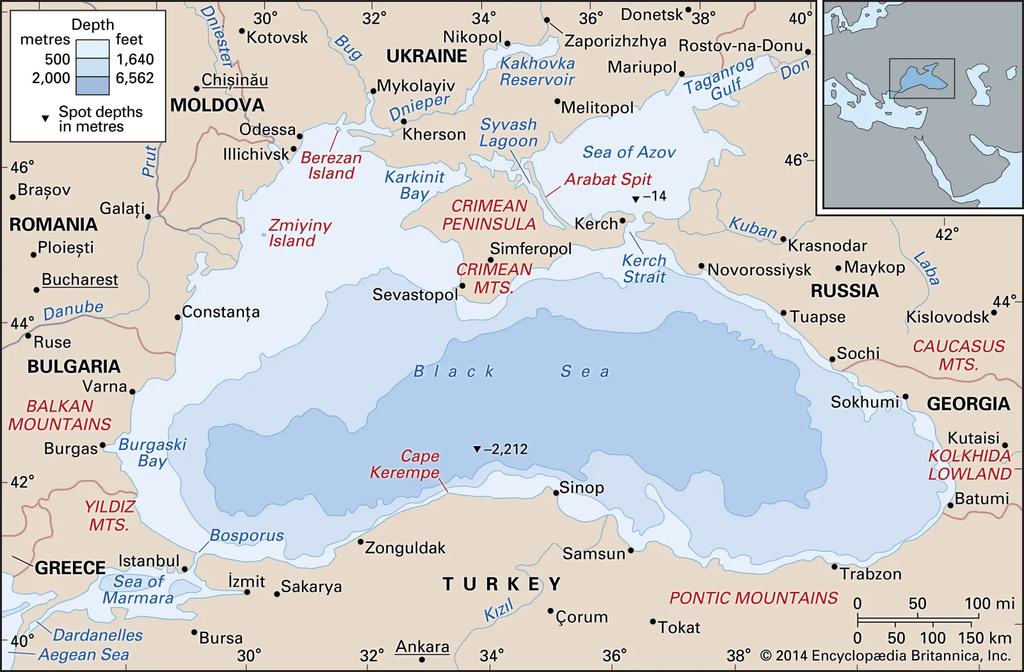
The Black Sea appears now and then like tarnished steel glimpsed between concrete and marshland.
I try to read but instead become fascinated by the rhythm of the journey.
Stations materializing from nowhere.
Old men smoking beneath leaking awnings.
Stray dogs trotting with greater purpose than most commuters.
The woman opposite me opens a container of hard-boiled eggs.
The smell settles over our section like an occupying force.

The countryside slowly changes.
Adjara’s humid green gives way to flatter lands, muddy rivers and villages of corrugated roofs and faded paint.
Freight yards.
Rusting machinery.
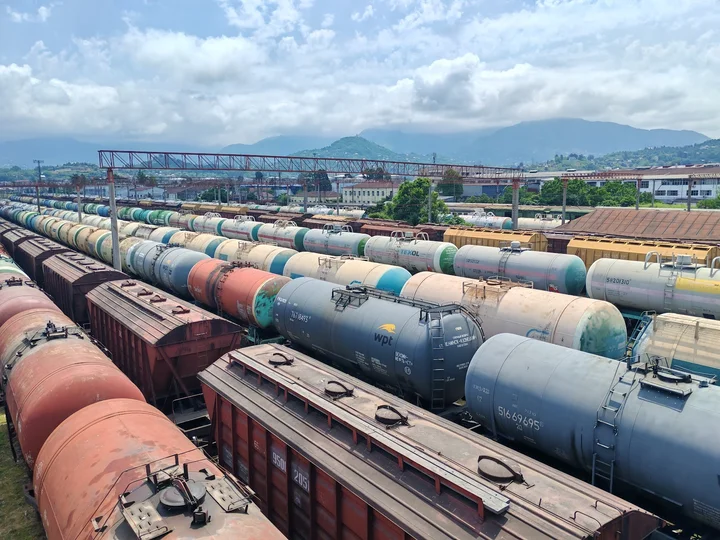
Soviet ghosts linger beside newer glass petrol stations.
Giant advertisements promising luxury apartments that look as though they belong in Dubai rather than Georgia.

Above: Dubai, United Arab Emirates
I drift in and out of sleep, facing backwards, which never quite feels natural.
I awaken disoriented, as if time itself has reversed.

The Shazam failure continues to irritate me disproportionately.
It is absurd how much power an unidentified song can wield over the mind.
A melody becomes a tiny unfinished quest.

Vendors pass periodically with coffee, pastries and water.
I buy little.
My mood is oddly suspended —
Neither sad nor hopeful.
Merely in transit.
A man between cities.
Between plans.
Between versions of self.
My body complains bitterly.
Arthritis in the knees, cramps in the legs, sweat beneath my cap and general boredom.
My bags are stowed away.
I have little view to distract me.
Cold feet alone can sour a day.
Small discomforts stop feeling small once a body is trapped with them for hours.
Frustration is real.

My last hope is that the couple across from me or the teenager wearing the Thrasher hoodie next to me will vacate the train before Tbilisi.
Not my lucky day in this regard.

I continue onwards simply because I have no other choice.
I am uncomfortable, disappointed and tired.
So far, the day has failed to match the picture I had in my mind.
Most journeys are negotiations between expectation and reality.
The rain, cramped seat, wet shoes and inflated taxi fare should not define the day, but the first impressions are not welcoming.

One consolation, albeit one rooted in Schadenfreude, is that fog has obscured most of the vista on the left side of the train.

Emotions are not always selfless and compassionate.
When a man is cramped, wet, uncomfortable and denied even small expectations, part of the mind wants the Universe to admit:
“Yes, today is objectively poor.”
If the glorious Black Sea panorama had unfolded in perfect cinematic beauty exclusively for the passengers on the other side, it would have intensified the sense of exclusion.
The fog levels the field a little.
My psyche takes its tiny compensation where it can find it.
Everyone on the correct side of the train has also received only mist and grey.
The sea exists beyond the fog whether visible or not.
Much like the better part of the day might still exist beyond this uncomfortable carriage.

Rainy train journeys through western Georgia have their own melancholic atmosphere.
Not triumphant.
Not postcard beautiful.
More introspective than scenic.
Sometimes an unpleasant journey becomes memorable precisely because it resists romance.
Tourism brochures promise revelation, freedom and panoramic beauty.
Actual travel often consists of damp socks, aching joints, stale air and the slow erosion of patience somewhere between Points A and B.
There is a peculiar honesty to these experiences.
A perfect train ride dissolves into a montage:
Nice views.
Decent coffee.
Arrived safely.
The uncomfortable ones acquire texture.
The body remembers them.
The psychology becomes strangely vivid.
There is something quintessentially Eastern European art film about this particular melancholy.
The sort where a tired protagonist stares silently through a rain-streaked window while contemplating choices both large and small.
Human beings rarely experience life philosophically in the moment.
We experience it physically first.
Cold feet become existential.
A wet shoe colonizes consciousness.
Arthritis reduces lofty reflections to the immediate politics of knees and circulation.
Yet there is a subtle dignity in continuing anyway.
Not heroism.
Not optimism.
Just endurance.
The ordinary stubbornness of remaining in the seat until the journey ends.
And sometimes that is travel.
Also life.
Momentum masquerading as purpose until eventually a station appears and one disembarks into another phase of the story.

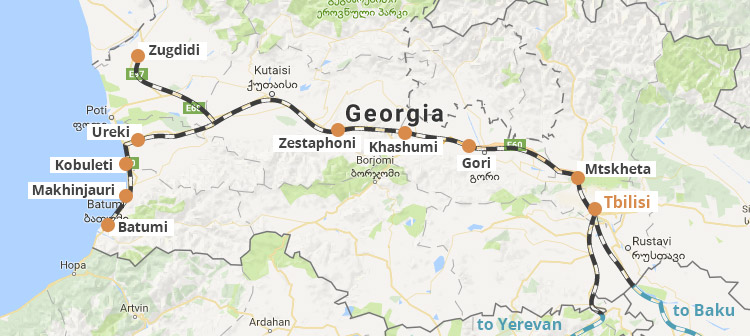
The train stops briefly at Kobuleti.
A few passengers get off, but more get on.

Above: Kobuleti Station
At least I have a seat.
The situation is uncomfortable, but not catastrophic.
Those standing envy those sitting.
This does not invalidate my discomfort, but it restores a little proportion.
Train travel becomes an exercise in accepting partial victories.
Not the ideal seat, but a seat.
Not a clear sea, but movement through the landscape.
Not comfort, but progress.
Not solitude, but temporary coexistence.
There is something oddly democratic about crowded regional trains in Georgia.
Everyone negotiates space together:
Bags and knees, raincoats and thermoses, adults and children, fatigue and impatience.
For a few hours, strangers become reluctant citizens of the same rolling republic.
I endure but remain undefeated.
There is a difference.
Discomfort expands to occupy available mental space until perspective quietly reasserts itself.
Partial victories are central not only to this train ride but to much of ordinary existence.
Rarely do we receive the full imagined version of things.
Instead:
Tolerable compromises.
Functional outcomes.
Enough.
There is wisdom in recognizing those distinctions without pretending disappointment does not exist.

Kobuleti deserves considerably more consideration than a passing glance from a train window.
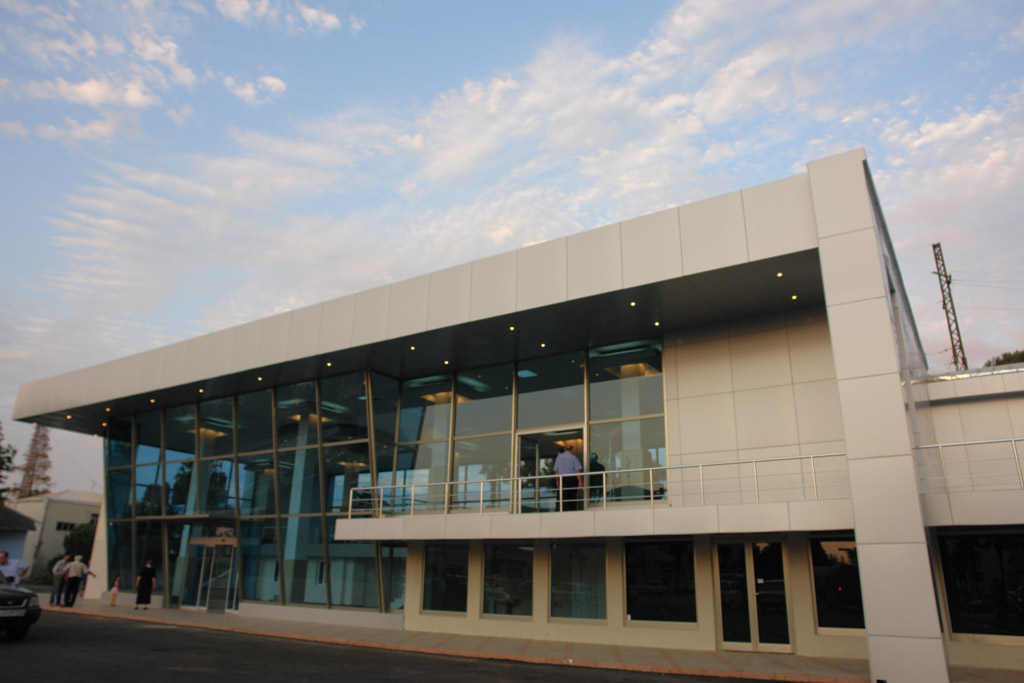
Above: Kobuleti Station
At first glance, it seems like another Black Sea resort town.
In reality, it sits at the intersection of several Georgian histories:
- the Ottoman frontier

Above: Coat of arms of the Ottoman Empire (1299 – 1922)
- Russian imperial resort culture

Above: Flag of the Russian Empire (1721 – 1917)
- Soviet sanatorium life

Above: Flag of the Soviet Union
- Subtropical tea agriculture

- Modern post-Soviet tourism

Following the Russian Empire’s acquisition of Adjara from the Ottomans in the late 19th century, the Black Sea coast developed as a destination for summer holidays.

Above: (in red) Adjara / (in yellow) Georgia
Aristocrats and military officers built villas and dachas.
The climate acquired a reputation for its supposed healing properties, particularly for respiratory ailments and nervous exhaustion.
Kobuleti was officially established as a Soviet resort in 1923 and received city status in 1944.
Its larger hotels and sanatoriums belong to a period when workers, party officials and families travelled south for state-sponsored holidays.
Across the former Soviet Union, Black Sea resorts occupied an almost mythic place in the public imagination.
These were not simply holidays but therapeutic pilgrimages sanctioned by the state.
Sea air.
Pine air.
Mineral water.
Prescribed rest.
The architecture still carries that curious mixture of optimism and institutional fatigue: enormous concrete buildings intended to heal both body and ideology.
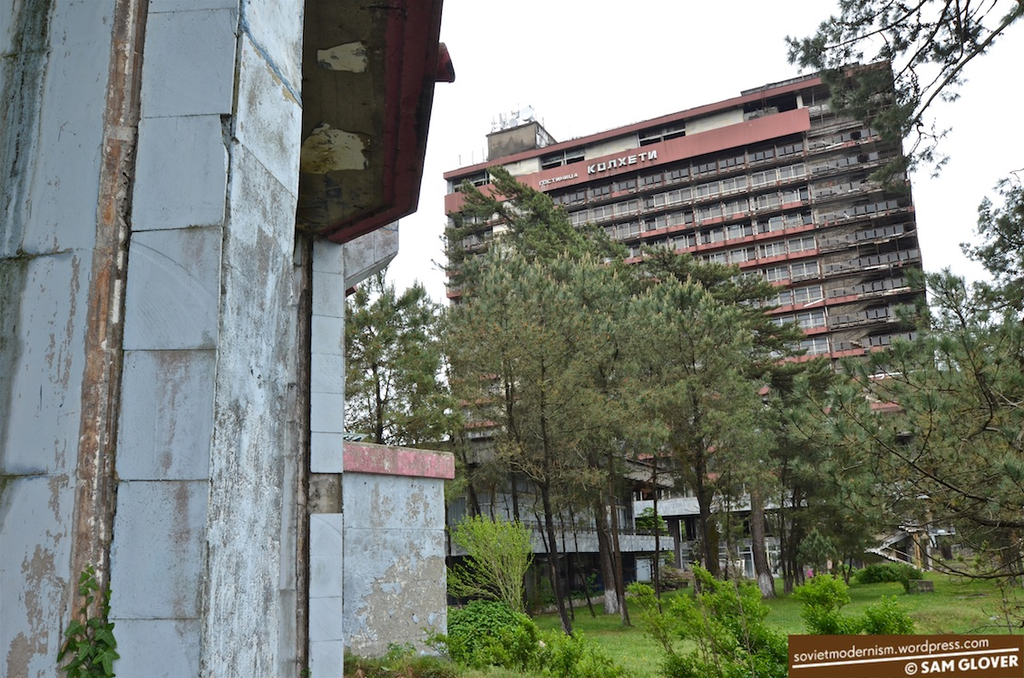
Above: Hotel Colheti, Kobuleti, Adjara, Georgia
The surrounding region was also one of the centres of Georgian tea production.
Soviet Georgia once supplied tea across much of the USSR.
Western Georgia’s humid subtropical climate proved particularly suitable for cultivation.
Georgian tea was an important symbol of domestic self-sufficiency, although its quality was sometimes mocked by connoisseurs accustomed to Indian or Ceylon varieties.

Nevertheless, the plantations transformed the landscape and economy of western Georgia for decades.
Even today, abandoned terraces and overgrown tea fields haunt parts of Guria and Adjara like agricultural ruins of another civilization.

Kobuleti’s pine groves are another local attraction.
The trees create a distinctive smell and microclimate, long associated with health cures and childhood summer holidays.

Above: Landscape, Kobuleti, Adjara, Georgia
There is a melancholic dimension to the town.
Unlike flashy modern Batumi, Kobuleti feels suspended between eras.
Abandoned Soviet hotels, fading mosaics and weathered buildings provide reminders of a different holiday culture.
Fog, wet rails, grey sea, old sanatorium silhouettes, pine trees and tea hills.

Above: Kobuleti
Western Georgia feels less like a vacation postcard and more like a Tarkovsky film.
The atmosphere is not simply picturesque melancholy.
It is something closer to metaphysical melancholy.
Fog obscures distance.
Ruins coexist with functioning life.
Time feels waterlogged.
Andrei Tarkovsky often framed landscapes as emotional states rather than merely geographical locations.
Western Georgia in the rain invites that kind of perception.
The wet rails, sanatorium skeletons and grey sea become less scenery than manifestations of fatigue, memory, endurance and longing.
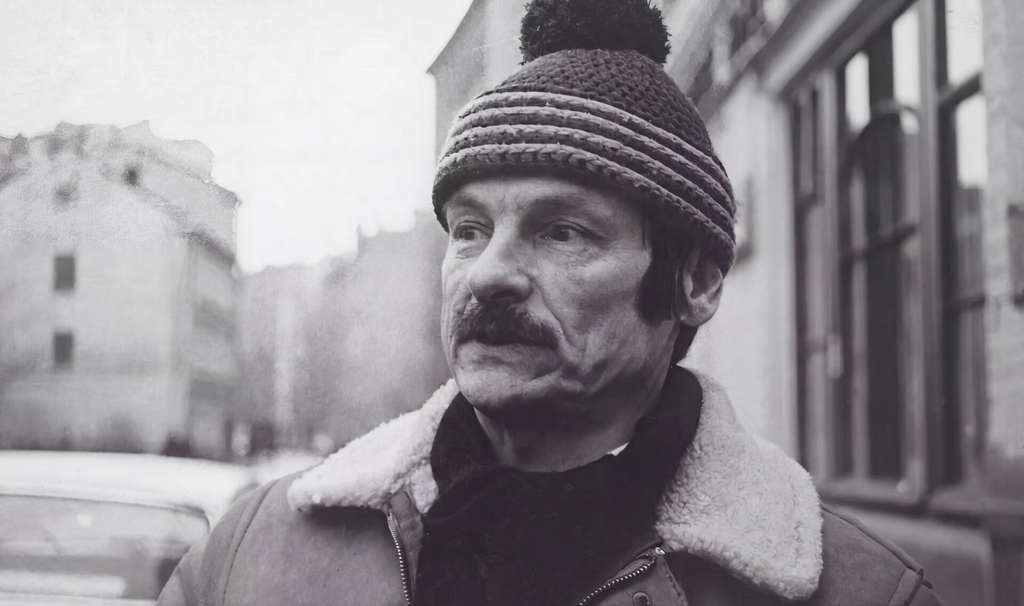
Above: Soviet film director Andrei Tarkovsky (1932 – 1986)
I am not merely passing through Kobuleti.
I am witnessing the sediment of eras layered upon one another, which is rather more interesting than simple sightseeing.

Above: Kobuleti
Batumi performs modernity loudly.
Casinos, neon, glass towers and aggressive reinvention.

Above: Batumi
Kobuleti, by contrast, feels like a place where history never fully packed its bags before the next regime arrived.
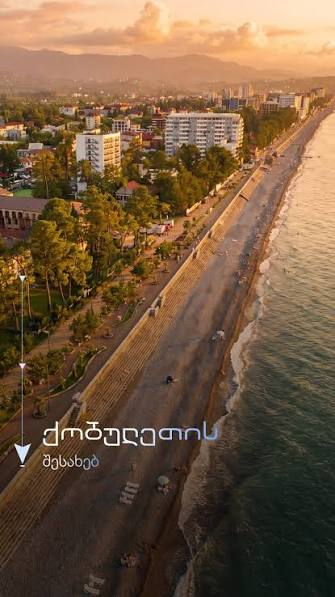
Above: Kobuleti
The Russian imperial spa dream lingered into Soviet collectivized leisure, which then decayed unevenly into post-Soviet ambiguity.
Nothing entirely disappears.
It simply weathers.

Above: Georgia Palace Hotel and Spa, Kobuleti
Kobuleti is approximately 28 kilometres north of Batumi.
Its principal attraction is undoubtedly its relationship with the Black Sea.

Above: Kobuleti Beach
The town has a long shoreline, a more open and less metropolitan atmosphere than Batumi and a beach culture that can appeal to visitors seeking time beside the water without participating in the full apparatus of a resort city.
There is something appealing about a place whose principal attraction is simply the sea.
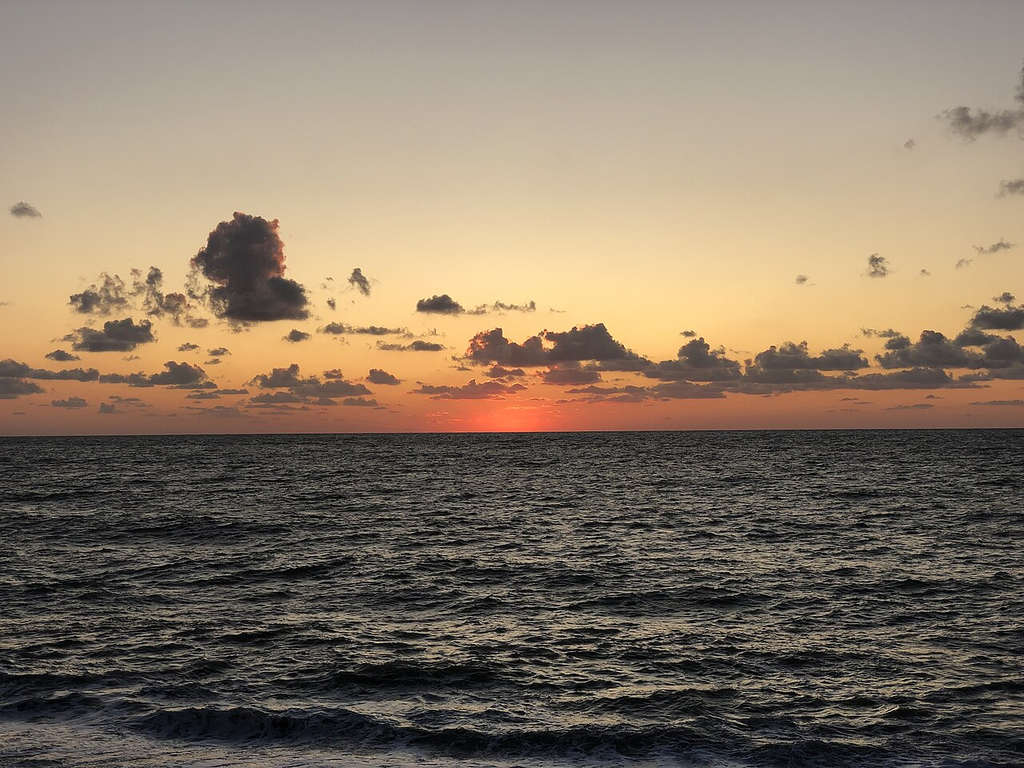
Above: Kobuleti sunset
The vegetation is another considerable attraction.
The coastal landscape, trees and gardens give parts of Kobuleti a softer appearance than Batumi’s increasingly vertical urban environment.
There is a particular pleasure in finding shade on a hot Georgian afternoon.
Kobuleti does not have to compete with Batumi’s ambitions to become a regional metropolis.
Its appeal is different.
Walking, reading, sitting in a café and watching the world go by.
Its less hurried character is an attraction in itself.
The town is also well situated for exploring the surrounding region. Its proximity to Batumi, Tsikhisdziri and the natural environment of the coast makes it a useful base.
After the civil conflicts of the early 1990s, many of its once sophisticated sanatoriums remained abandoned and plundered.
Subsequent investment and tourism development helped revive the resort, although the results have been uneven.

Above: Kobuleti
Kobuleti has also become particularly popular among Armenian holidaymakers.
Why Armenians?
The principal reasons are geography, economics and an established holiday tradition.
Armenia is landlocked.
It has no coastline.
For generations, the Black Sea has represented an attractive holiday destination for Armenian families.
Georgia is the natural neighbour through which many can reach the sea.

Above: (in green) Location of Armenia
The journey from Yerevan to the Georgian coast is manageable by regional standards.

Above: Yerevan, Armenia
Kobuleti offers accommodation and restaurants at prices that can compare favourably with international seaside destinations.

Above: Kobuleti
This is not a recent phenomenon.
During the Soviet period, Armenians regularly holidayed at Black Sea resorts, including Sochi, Yalta and the Georgian coast.

Above: Sochi, Russia
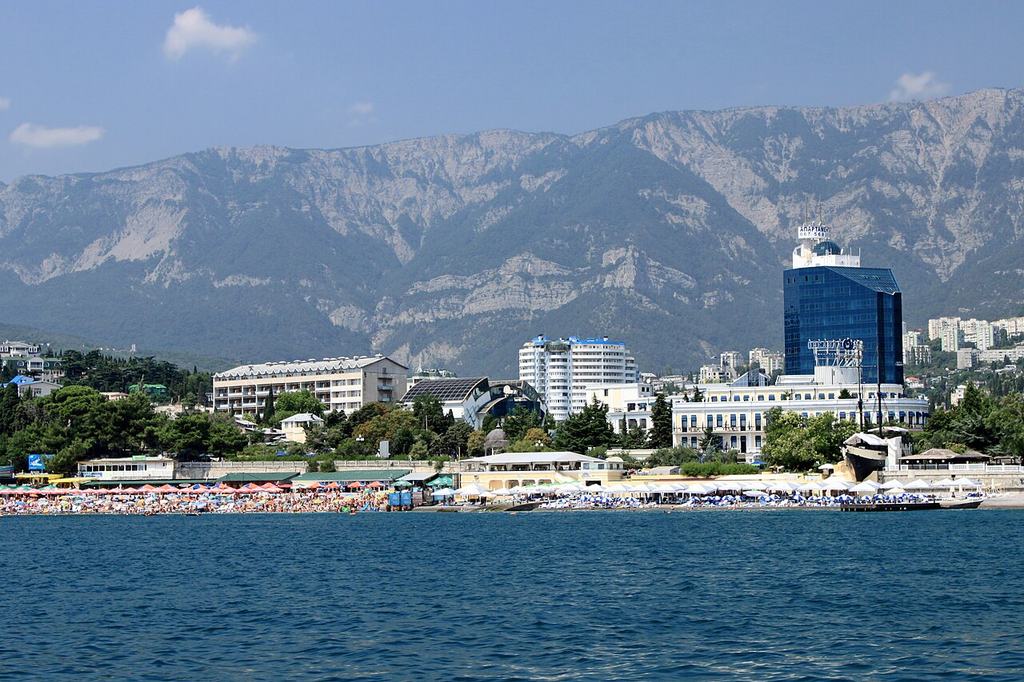
Above: Yalta, Crimea, Ukraine
Following the collapse of the Soviet Union, Georgia remained an accessible destination.

Above: Flag of Georgia
The loss of access to Abkhazia’s resorts following the 1992–1993 war also contributed to the importance of alternative destinations along the Georgian coast.

Above: Flag of Abkhazia
Kobuleti offers several attractions for families:
- Guesthouses and relatively inexpensive accommodation.
- Restaurants catering to different budgets.
- A long beach.
- A comparatively relaxed atmosphere.
- Familiarity with the destination and established holiday networks.
Families return to places where they have previously enjoyed themselves, know accommodation providers and perhaps have friends or relatives who recommend particular establishments.
A holiday destination develops a following through repetition.
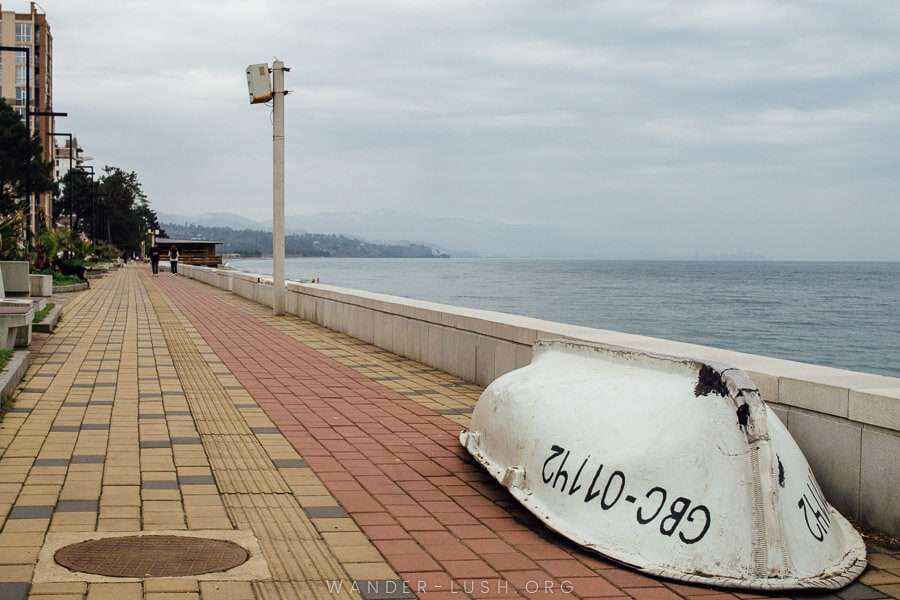
Above: Kobuleti
There is also an interesting cultural dimension.
Armenian visitors have become sufficiently associated with Kobuleti that the phenomenon has entered popular culture.
One example is the satirical Armenian comedy song Lady Kobuleti, which affectionately pokes fun at Armenians’ enthusiasm for the resort.
It is a 2018 Armenian summer hit by three performers:
Ando (Andranik Harutyunyan), Rafo (Rafael Yeranosyan), and Spitakci Hayko.
The music video was released on 1 August 2018 and became an immediate viral success.
Within six days it had attracted more than two million YouTube views.

The premise is delightfully uncomplicated.
An Armenian man goes to Kobuleti for his summer holiday and falls head over heels for a beautiful woman he encounters on the beach.
He doesn’t know whether she is Armenian, Russian or Kabardian.
He struggles to decide how to approach her, cycling through greetings in Georgian, Armenian, Russian and English — and declaring his love in several languages.
The refrain is essentially:
“Hey, Lady Kobuleti, I’ve fallen in love with you.“
The lyrics describe the familiar summer holiday scene:
Sunburnt holidaymakers, noisy children, men drinking beer on the beach, barbecues, and the crowds of Armenian visitors who make their way to Adjara every summer.
There is even a reference to putting yoghurt on the woman’s sunburnt back —
A particularly practical form of romantic courtship!
The song also plays with the contrast between Armenia, a landlocked country, and Georgia’s Black Sea coast.
It jokes that Armenians have their own lovely Lake Sevan, but that doesn’t quite satisfy the longing for the sea.

Above: Lake Sevan, Armenia
An article in Eurasianet in July 2021 described Kobuleti as having become a preferred holiday destination for many Armenians.

Quite an achievement for a relatively modest Georgian seaside town.
A town can sometimes tell us as much about the people who visit it as about the people who live there.

Above: Flag of Armenia
What else is interesting about Kobuleti besides the sea?
Three attractions stand out.
Two take visitors into the military and political history of the eastern Black Sea.
The third introduces them to an extraordinary natural environment that many visitors to the Georgian coast never properly appreciate.
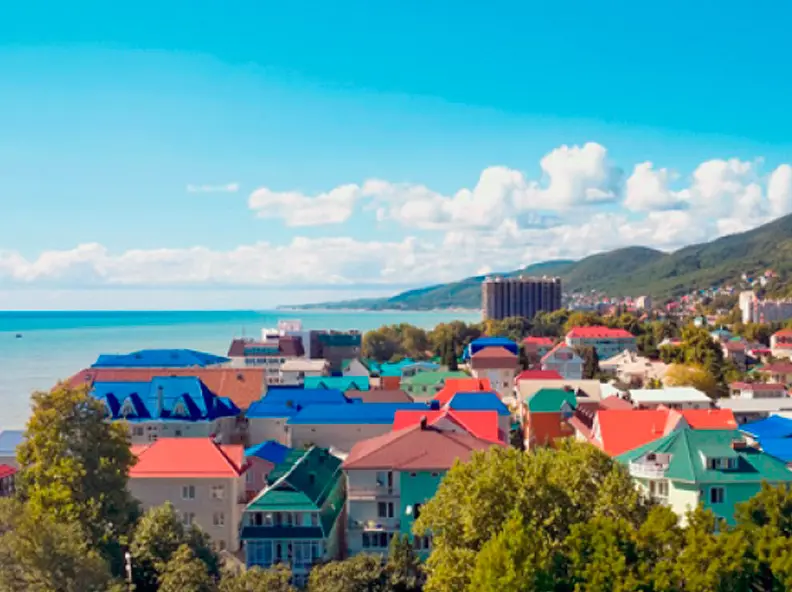
Above: Kobuleti
Located at Tsikhisdziri, approximately six kilometres north of central Kobuleti, Petra Fortress occupies a strategic coastal elevation overlooking the Black Sea.

Above: Petra Fortress
Its history is closely associated with the Byzantine Empire (330 – 1453) and its rivalry with Sasanian Persia (224 – 651).
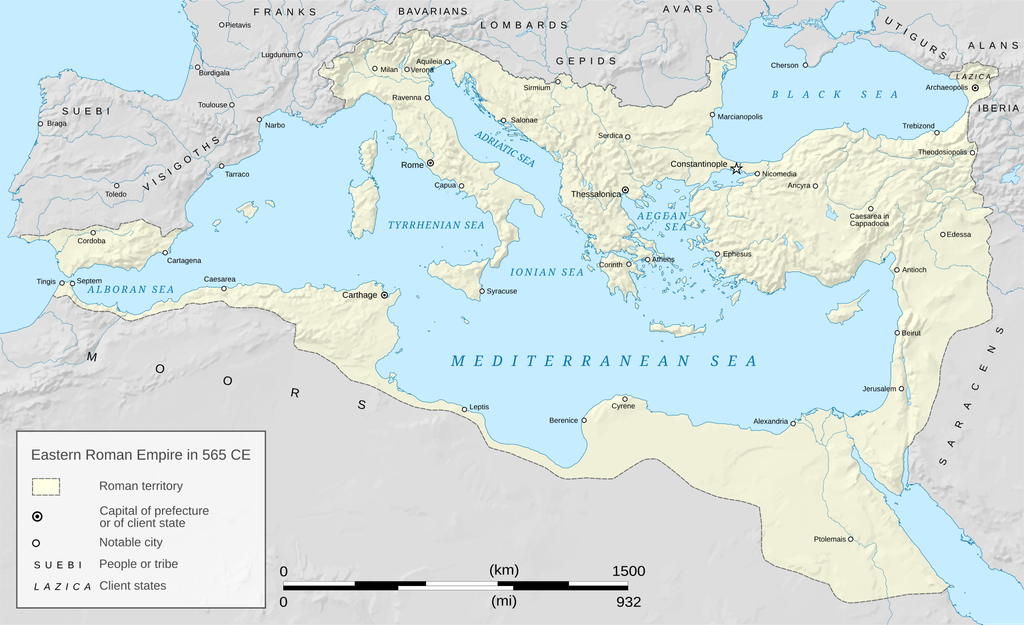

The fortress is particularly associated with Emperor Justinian I (527–565 AD), who sought to strengthen Byzantine influence in the eastern Black Sea region.

Above: Mosaic of Justinian I (482 – 565), Basilica of San Vitale in Ravenna, Italy
Petra became an important strategic stronghold during the Lazic War (541–562), fought between the Byzantine and Persian empires over control of Lazica, corresponding broadly to parts of modern western Georgia.
The Persians captured Petra in 541.
The Byzantines eventually regained control.
The fortress was subsequently dismantled under the peace settlement of 562.
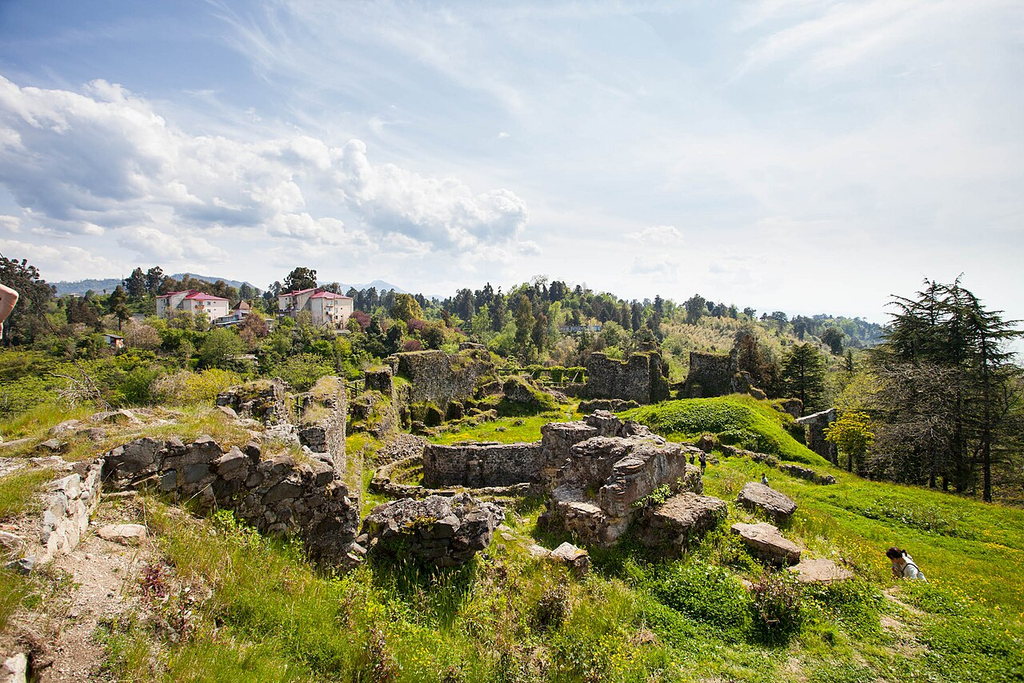
Above: Ruins of the Petra fortress and the Church of St. John the Baptist
There is a fascinating historical dimension here.
This relatively small stretch of Georgian coastline was once part of a much larger geopolitical struggle involving two powerful empires.
Today, visitors can see surviving fortification walls, archaeological remains, foundations of buildings and religious structures.
The setting is particularly impressive.
The ruins occupy an elevated position overlooking the Black Sea, providing a physical connection between the ancient history of the region and its contemporary landscape.
For anyone interested in history, the combination of archaeological remains and geographical position makes the visit worthwhile.

Above: Petra Fortress
The local history museum, the Kobuleti Museum, housed in a former cinema at 100 David Agmashenebeli Avenue, holds a collection more substantial than one might expect from a small municipal museum.
Its holdings reportedly exceed 10,000 exhibits, including:
- Archaeological discoveries.
- Ethnographic objects and traditional household articles.
- Coins, manuscripts and medieval art.
- Flora and fauna specimens.
- Historical photographs.
- Socialist realist art and works by local artists.
- An interesting collection associated with local sculptor Vazha Verulidze.
It offers an opportunity to explore the history of the town and surrounding region beyond the familiar resort narrative.
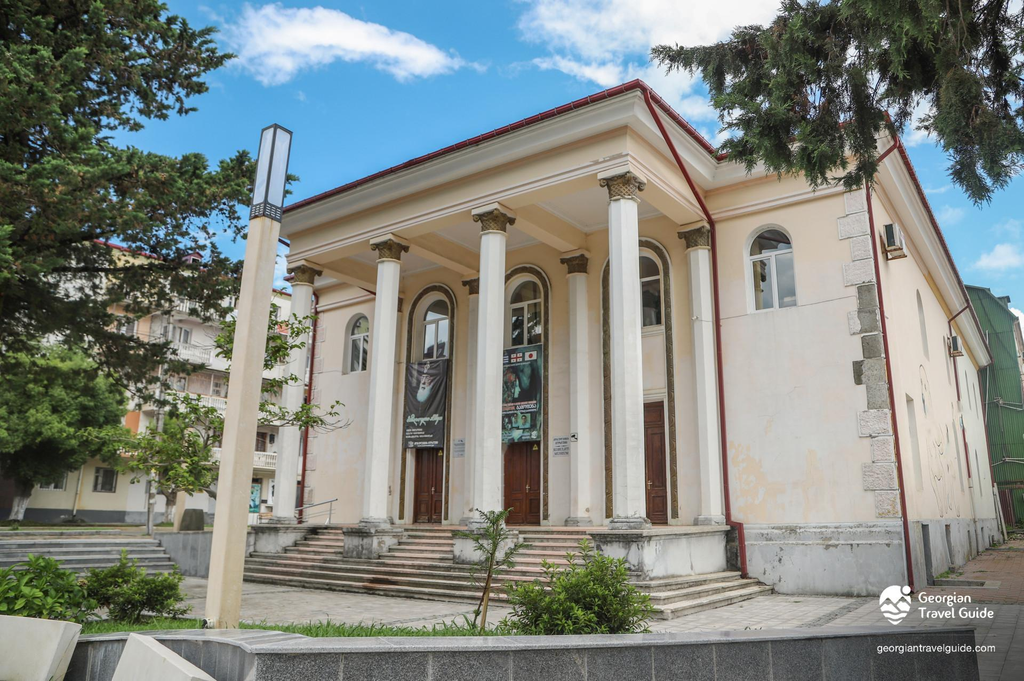
Above: Kobuleti Museum
Perhaps the most unusual attraction is the Ispani Marsh, immediately inland from Kobuleti and within the Kobuleti Protected Areas.
The wetlands are internationally recognized for their ecological importance.
The protected area includes two distinct wetland systems, Ispani I and Ispani II.
The latter is particularly remarkable.
Ispani II is an ombrotrophic peat bog.
An impressive scientific expression meaning that the bog receives its water and nutrients primarily from rainfall rather than groundwater or rivers.
The bog is dominated by sphagnum moss, which forms a floating, waterlogged carpet.
This is an unusual ecosystem, particularly in a humid subtropical coastal environment.
The wetland supports specialized bog vegetation, various bird species, including migratory waterbirds, amphibians and other wildlife.
Its accumulated peat also represents an important store of carbon.
The contrast is striking.
A busy seaside resort on one side.
An internationally significant wetland on the other.
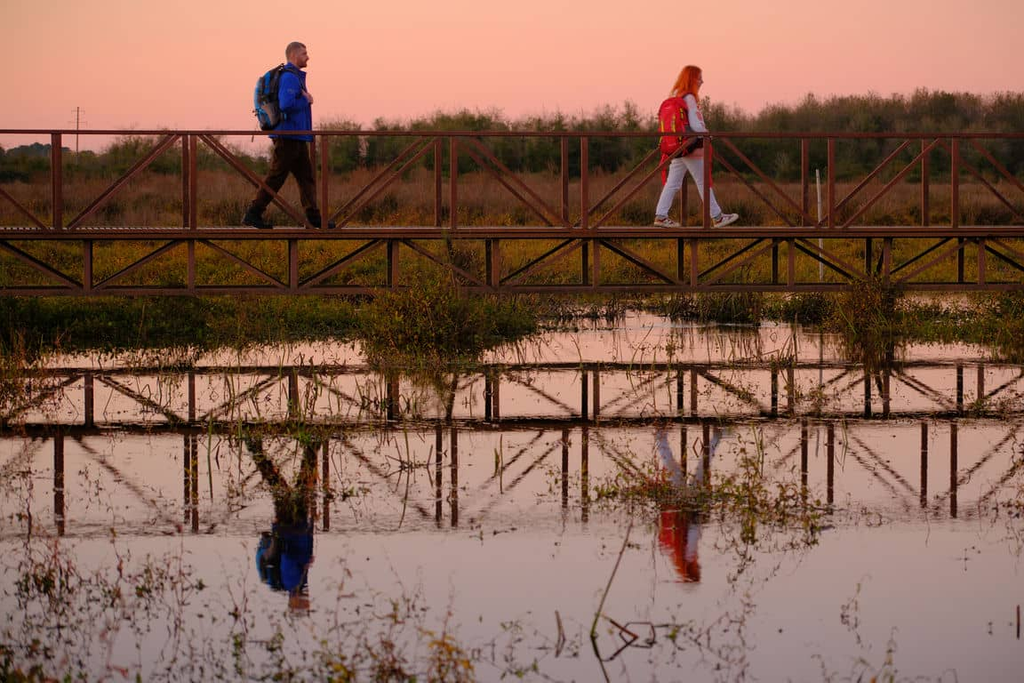
Above: Ispani Marsh
What would a visitor actually see?
Do not expect a conventional national park with dramatic mountains, waterfalls and extensive walking trails.
The appeal is more subtle.
You are visiting a wetland ecosystem where vegetation, water, birdlife and unusual peat formation are the principal attractions.
Binoculars are useful, and there is something to be said for simply taking time to observe.
Kobuleti’s natural environment deserves attention beyond its beaches and holiday accommodation.
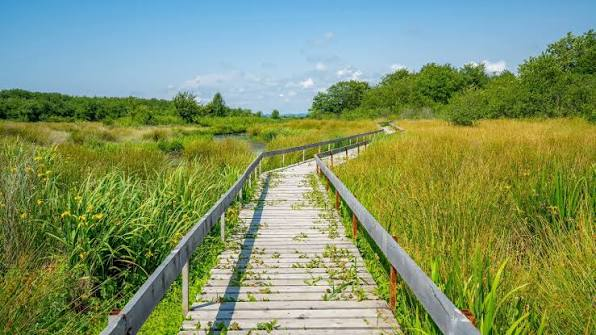
Above: Ispani Marsh
Kobuleti has also produced a surprisingly diverse collection of notable personalities.
A few deserve particular mention.
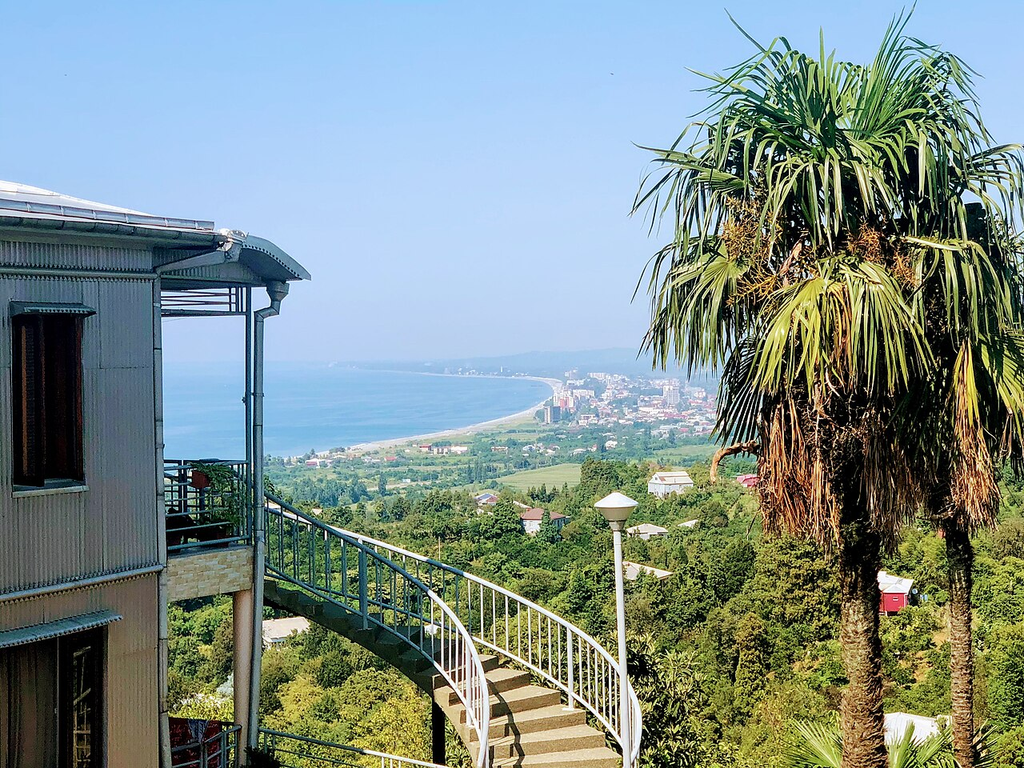
Above: View of the city of Kobuleti and the Black Sea, as taken from the village of Tskhisdziri in Adjara, Georgia.
Fadiko Gogitidze (1916–1940), aviator
Gogitidze is recognized as Georgia’s first female aviator.
She overcame considerable social and institutional barriers to pursue pilot training, graduating in an era when aviation remained overwhelmingly male.
Her first flight took place on 18 August 1936.
Tragically, she died during a test flight in Batumi on 20 October 1940, leaving behind a three-month-old daughter, Julieta.
Her story is remembered through monuments and commemorations in both Kobuleti and Batumi.
There is something particularly poignant about the sculpture dedicated to her in Batumi, depicting a female pilot with a small child at her feet admiring an aeroplane.

Above: Fadiko Gogitidze monument and Colonnade, Batumi
A woman who pursued an extraordinary ambition, remembered alongside the child she left behind.

Above: Georgian pilot Fadiko Gogitidze
Nino Katamadze (born 1972), singer and composer
One of Georgia’s best-known contemporary musical personalities, Katamadze is a jazz singer whose album White achieved considerable international success following its release in 2006.
Her career has extended well beyond Georgia, with performances and releases across Europe and the former Soviet Union.

Above: Georgian jazz singer Nino Katamadze
She has also become known for her outspoken political views.
Following the 2019 Georgian protests, she announced that she would no longer perform in Russia.

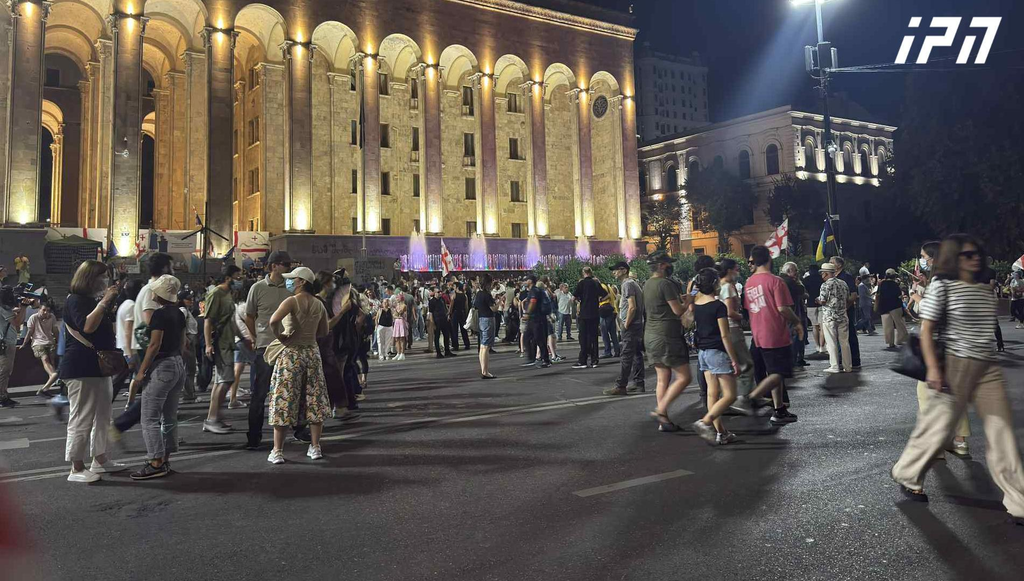
Above: Demonstrators on the second day of protests. Protesters are holding signs “don’t shoot” and “stop USSR“.
(DIGRESSION
The 2019 Georgian protests were a series of demonstrations, principally in Tbilisi, triggered by an incident involving a Russian politician in the Georgian Parliament.
They became a much broader expression of public anger about Russia, the government, police conduct and democratic accountability.
A meeting of the Interparliamentary Assembly on Orthodoxy was being held in the Georgian Parliament.
Russian State Duma member Sergei Gavrilov was invited to participate and took the seat normally occupied by the Georgian parliamentary speaker, addressing the assembly in Russian.
For many Georgians, this was an extraordinary insult.
The anger was rooted in the 2008 Russo-Georgian war and Russia’s continuing military presence in the breakaway regions of Abkhazia and South Ossetia.
A Russian politician, particularly one associated with support for those regions’ separation, sitting in the parliamentary speaker’s chair was seen by many as a humiliation.
Opposition MPs disrupted the meeting, and thousands of people gathered outside Parliament.
That evening, some demonstrators attempted to enter Parliament.
Police responded with:
- Tear gas.
- Rubber bullets.
- Water cannon.
- Physical force and mass arrests.
The confrontation continued into the early hours of 21 June.
Hundreds of people were injured, including demonstrators, police officers and journalists.
Some protesters suffered permanent eye injuries after being struck by rubber bullets.
More than 300 people were detained.
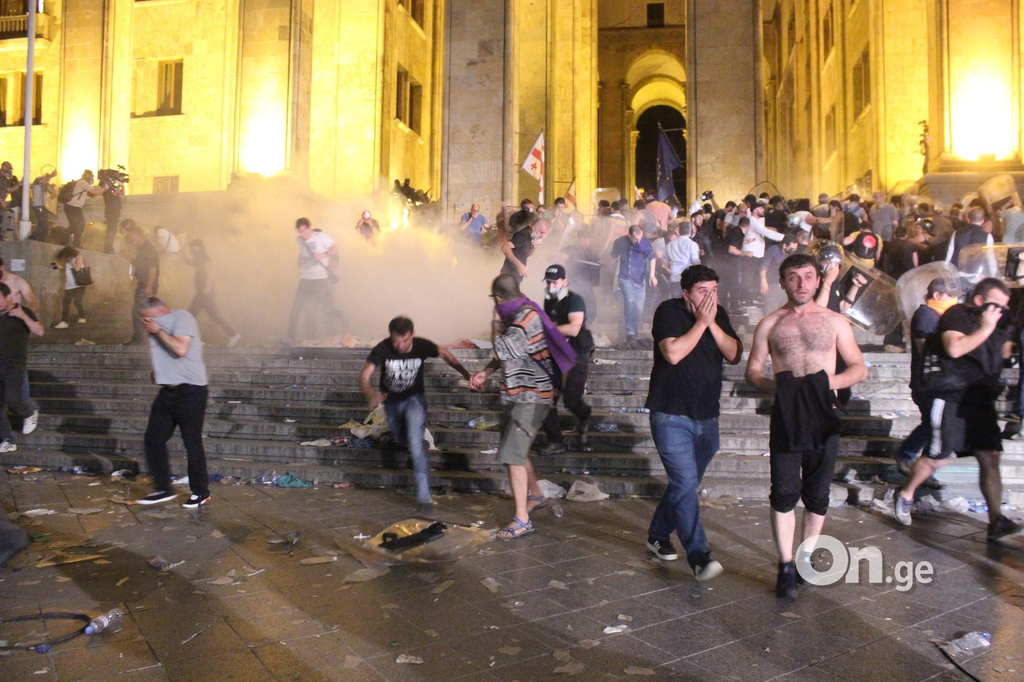
Human rights organizations subsequently questioned the necessity and proportionality of the police response.
The police operation did not end the demonstrations.
Instead, protesters returned to the streets over subsequent days.
Their demands expanded to include:
- The resignation of Parliament Speaker Irakli Kobakhidze.
- The resignation of Interior Minister Giorgi Gakharia.
- The release of detained demonstrators.
- Electoral reform, including a fully proportional parliamentary voting system.
- Greater accountability for police violence.

Kobakhidze resigned on 21 June.
The ruling Georgian Dream party also promised to introduce fully proportional elections for 2020.
The promised electoral reform became another source of confrontation.
In November 2019, the proposed constitutional amendments failed to pass Parliament, despite the ruling party’s earlier commitment.
This provoked another wave of demonstrations.
Protesters demanded electoral reform and, increasingly, early parliamentary elections.

The issue was important because Georgia’s mixed electoral system combined constituency-based seats with proportional party-list seats.
Critics argued that the arrangement gave the ruling party an unfair electoral advantage.
The dispute contributed to the continuing political tensions that carried into 2020.
The events left several unresolved questions:
Police accountability:
Investigations into the use of force were criticised for failing to establish responsibility adequately.
Injured demonstrators:
Some victims suffered life-changing injuries and continued seeking recognition and compensation.
Political trust:
The confrontation deepened distrust between the government and sections of the public.
Russia:
The incident reinforced the importance of national sovereignty and the unresolved consequences of the 2008 war.

In May 2024, the European Court of Human Rights found that Georgia had failed to conduct an effective investigation into alleged police abuses during the June 2019 events.

The 2019 protests began with an apparently extraordinary breach of parliamentary protocol, but the public reaction was about much more than a Russian politician occupying the wrong chair.
It brought together three powerful sources of Georgian political tension:
National sovereignty:
Russia’s occupation of Georgian territory remains deeply significant.
Democratic accountability:
Citizens wanted their government to answer for its decisions and actions.
Police conduct and civil liberties:
The use of force against demonstrators became a defining issue.
One distinction is worth preserving:
The initial protest was directed at the Russian presence and the government’s decision to host the delegation.
The subsequent confrontation with police, and the electoral dispute, widened it into a much larger domestic political crisis.
After the Russian invasion of Ukraine in 2022, Nino Katamadze publicly supported Ukraine and participated in charitable initiatives assisting Ukrainian children who had sought refuge in Georgia.

In 2023, Ukrainian President Volodymyr Zelenskyy awarded her the Order of Princess Olga in recognition of her support for Ukraine.
Her story illustrates how Georgian cultural personalities can become involved in questions extending well beyond music.
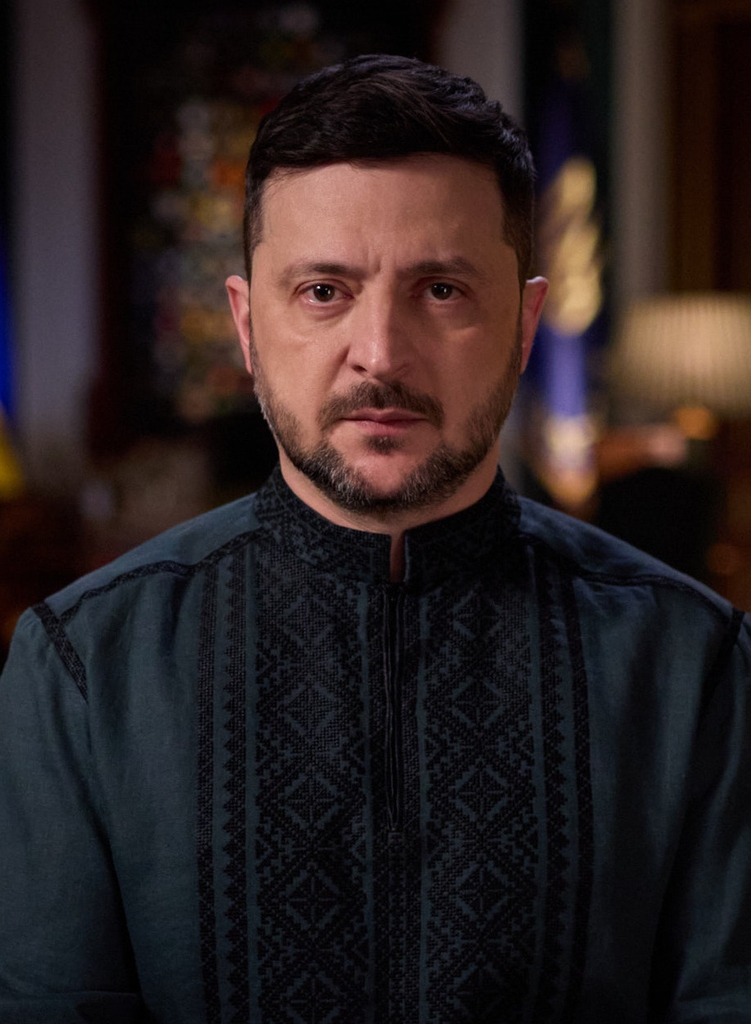
Above: Ukrainian President Volodymyr Zelenskyy
Jano Ananidze (born 1992), footballer
Ananidze became the youngest player to score a goal in the Russian Premier League when he scored for Spartak Moscow against Lokomotiv Moscow on 18 October 2009, aged 17 years and eight days.
He subsequently represented Georgia internationally.
His decision to play for his country rather than Russia was accompanied by a memorable declaration to Russian media:
“Don’t worry about me. I made my choice. I am a Georgian and I will play for my country.“
A small but revealing statement about national identity and personal choice.

Above: Georgian footballer Jano Ananidze
Other notable personalities associated with Kobuleti include:
- former Georgian Prime Minister Zurab Nogaideli
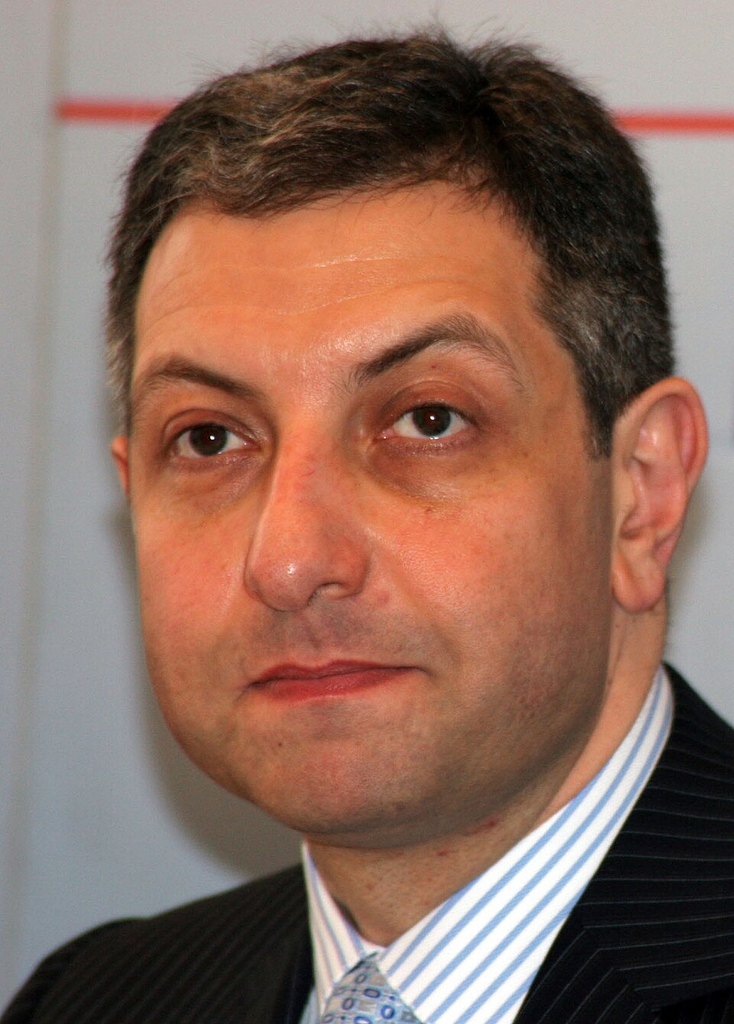
Above: Georgian politician Zurab Nogaideli
- footballer Revaz Chelebadze
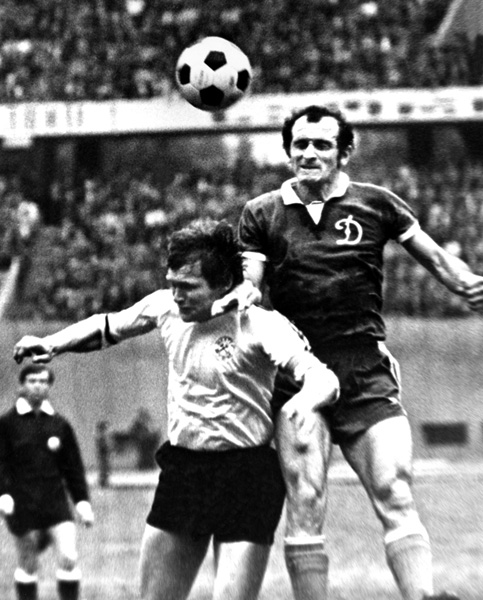
Above: Georgian footballer Revaz Chelebadze
- rugby international player Giorgi Tkhilaishvili

Above: Georgian rugby player Giorgi Tkhilaishvili
- Olympic weightlifter Irakli Turmanidze

Above: Georgian weightlifter Irakli Turmanidze
- Ottoman general and politician Çürüksulu Mahmud Pasha (1864 – 1931)

Above: Ottoman general and politician Çürüksulu Mahmud Pasha
For a relatively small coastal town, the list is impressive.
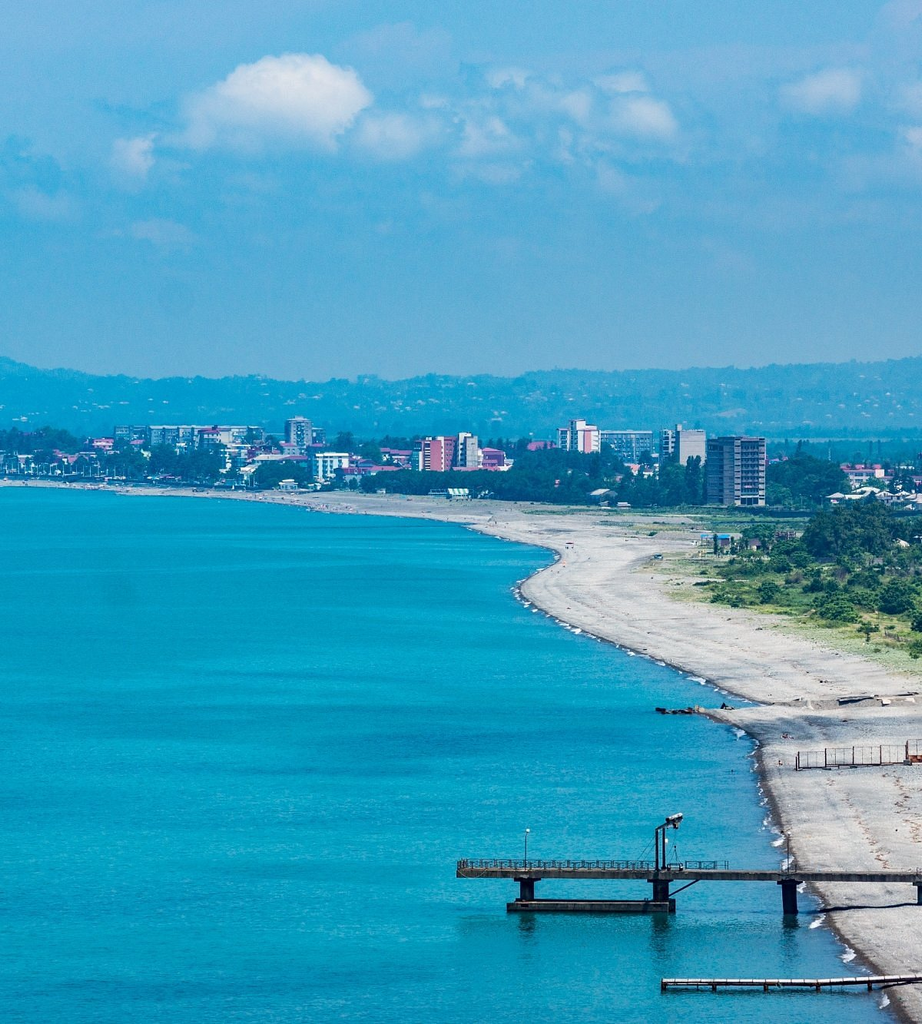
Above: Kobuleti
Now, let us put away the holiday brochures.
Kobuleti is a somewhat uneven urban environment.
It does not always present itself as a carefully conceived seaside town.
There are attractive sections, but the overall impression can be inconsistent.
Some buildings and streets have considerable character.
Others are unremarkable, neglected or architecturally disappointing.
The legacy of Soviet resort development is visible.
That legacy is not necessarily unattractive, but it contributes to the impression of a town still negotiating its identity.

Above: Kobuleti
The beach is not necessarily Paradise.
The Black Sea is beautiful, but Kobuleti’s shoreline is predominantly pebbly rather than sandy.
It can be appealing, but its considerable length should not be confused with exceptional beach quality.
Sea walls and coastal protection structures are also part of the landscape.
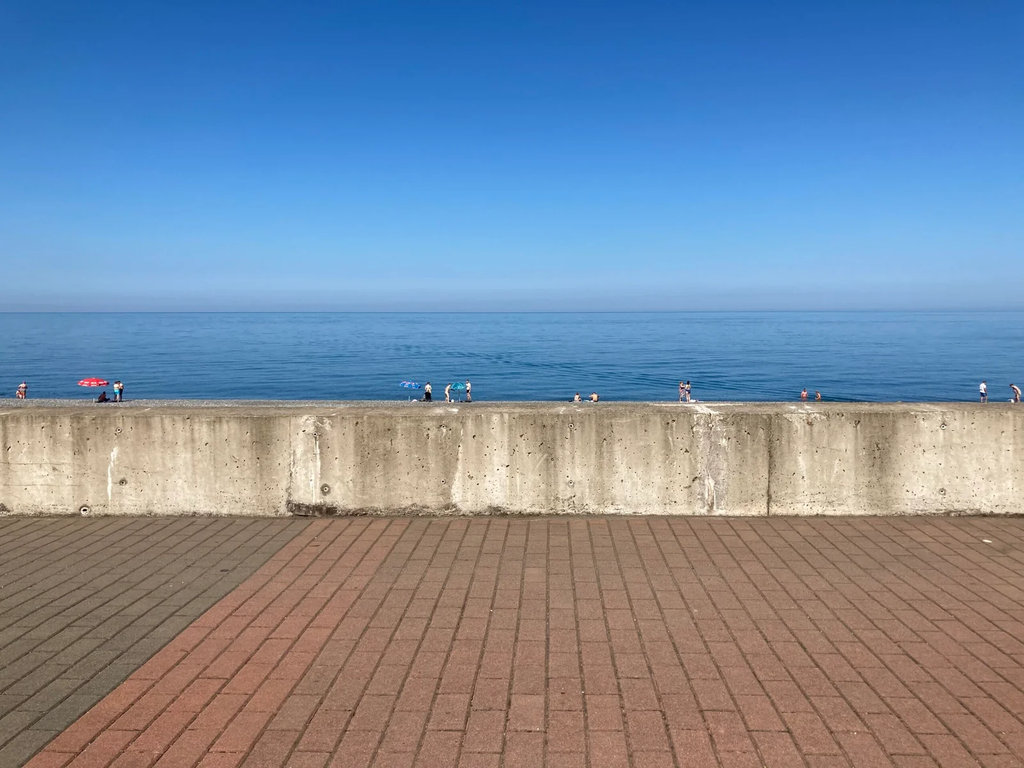
Above: Kobuleti
There is another substantial weakness.
A resort town can be a very different proposition in July and January.
The summer economy brings visitors, open businesses and activity.
Outside the principal tourist season, the atmosphere can become considerably quieter.
This is not necessarily bad.
Indeed, some people might prefer it.
But it raises questions about employment, business sustainability and the town’s ability to offer a satisfying year-round existence.

The subtropical climate has its attractions, but there is a price.
Western Georgia receives considerable rainfall.
Kobuleti’s coastal environment is humid.
Prolonged wet periods are a reality.
Anyone expecting Mediterranean sunshine throughout the year might be disappointed.

Above: Kobuleti
Kobuleti risks becoming defined almost exclusively by its summer visitors.
A town needs more than hotels, restaurants, beach facilities and seasonal entertainment.
It needs a living community, cultural activity, employment and reasons for people to remain after the holidaymakers have departed.

Above: Kobuleti
Comparing Batumi with Kobuleti is instructive.
Batumi has greater variety, but sometimes seems to be trying too hard to impress.
It is a city determined to become something.
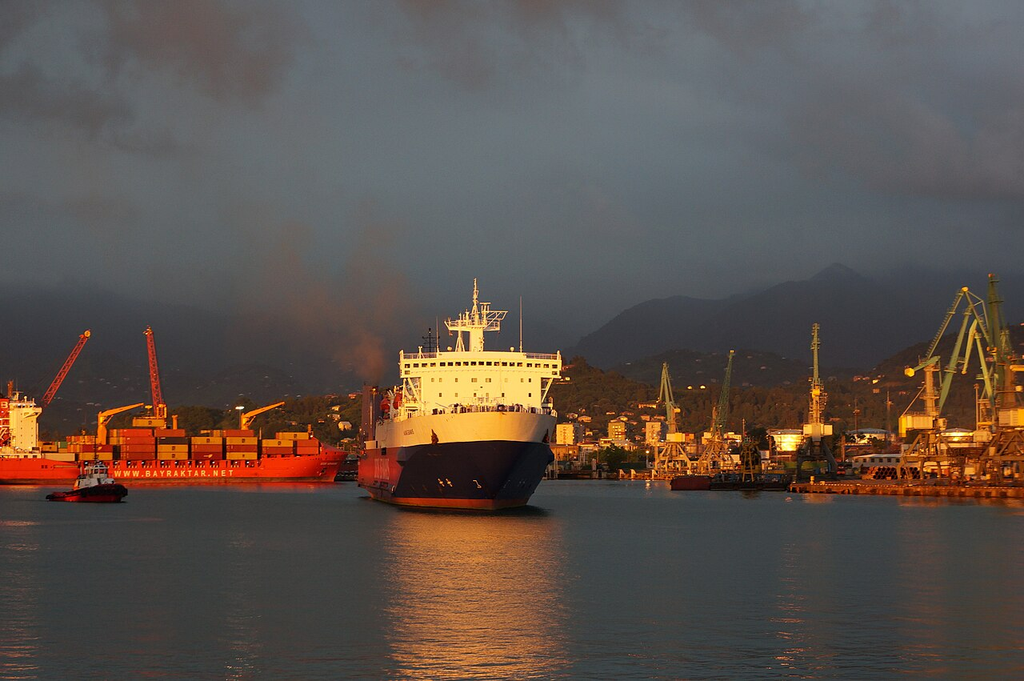
Above: Batumi Harbour
Kobuleti is a place that might be more interesting if it could rediscover what it already is.
Kobuleti has fewer pretensions, although it also has fewer amenities.

Above: Kobuleti
Still, there is something rather appealing about a place that does not continually demand attention.
Kobuleti has a history that predates its modern resort status, a distinctive natural environment, a connection with the wider history of Adjara and a geographical position that makes it more than just another seaside destination.
But it also has problems:
- Uneven development.
- Seasonal economic dependence.
- An occasionally tired built environment.
- The challenge of maintaining its attractiveness without sacrificing its natural surroundings.
Kobuleti has perfected the art of being almost somewhere.
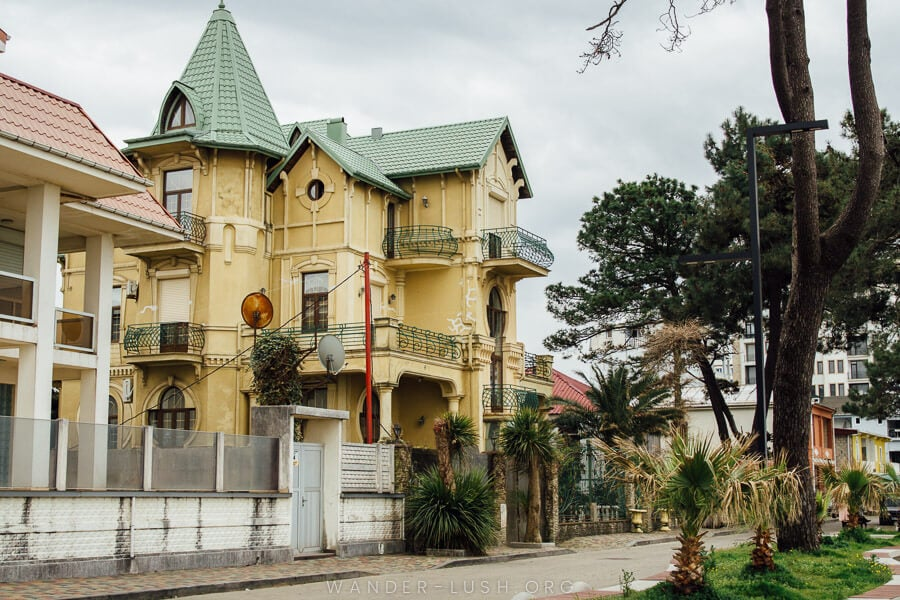
Above: Kobuleti
As I ride the rails towards Tbilisi, I find myself thinking about yesterday’s taxi journey to the Batumi train station.
The driver spoke very little English, but when he asked where I was planning to travel next, he described Tbilisi as “the Big Good.”
Perhaps this description of Tbilisi is not grammatically correct, but hopefully it is emotionally accurate.
From the perspective of someone living in Batumi or one of the smaller coastal towns, Tbilisi might indeed feel like the place where things become possible again.
More warmth.
More movement.
More choices.
More bookstores and cafés.
More strange conversations.
More opportunities to disappear or reinvent oneself for a while.
Tbilisi is messy, uneven, noisy and beautiful in parts, exhausted in others.
Some streets feel almost European, while others seem suspended between empires.
One block may contain a crumbling wooden balcony, a hypermodern glass building, a wine cellar, a stray dog sleeping like a philosopher (or a philosophy student) and a grandmother selling herbs from buckets.
Perhaps the Big Good captures something essential about travel psychology.
After enough small frustrations, the traveller begins investing a destination with salvational energy.
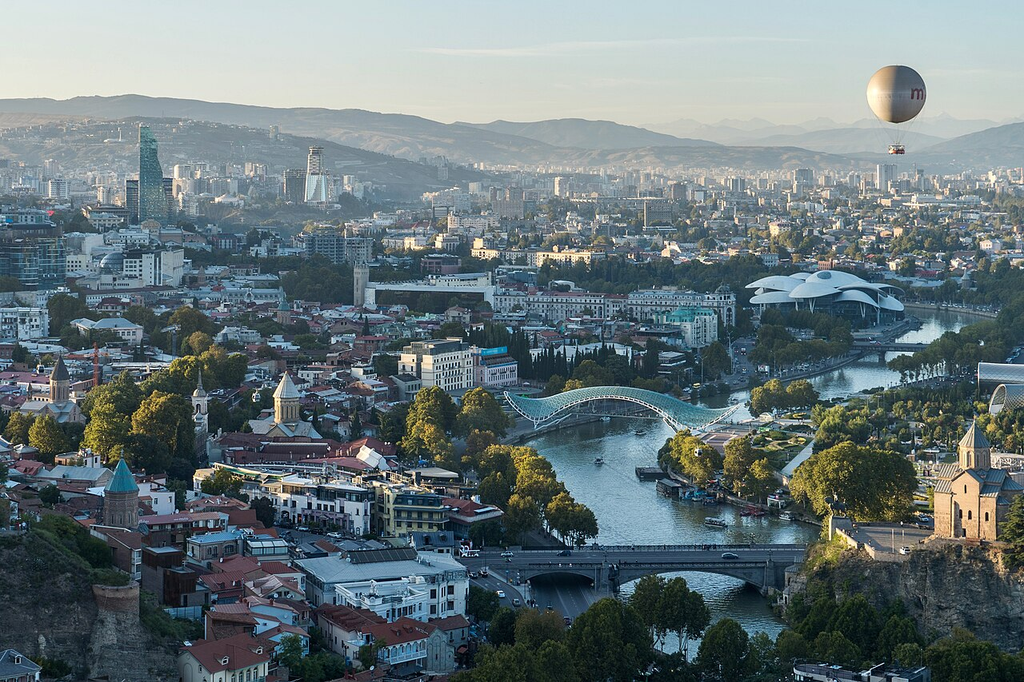
Above: Tbilisi
I am not merely travelling to Tbilisi.
I am travelling towards warmth, dry shoes, legroom, restored morale and regained agency.
Hope is useful as long as the traveller avoids demanding perfection from the destination upon arrival.
Tbilisi might not redeem the entire day instantly, but it can hopefully improve it.
I am also hoping to find work.
I am not simply enduring discomfort for tourism or idle wandering.
I am moving towards possibility.
Work.
Stability.
Usefulness.
Income.
Structure.
Perhaps even a new chapter.
Something that makes wet shoes and cramped carriages easier to justify internally, even when they remain physically miserable.
Many meaningful transitions probably begin in exactly this kind of unglamorous state.
Tired.
Uncertain.
Underfunded.
Carrying too much.
Wondering whether the destination will actually deliver on its perceived promises.
Very few people arrive at a turning point feeling cinematic and triumphant.
More often they arrive damp, stiff-backed and doubtful.
What matters now is not emotional certainty.
It is continued motion combined with practical persistence.
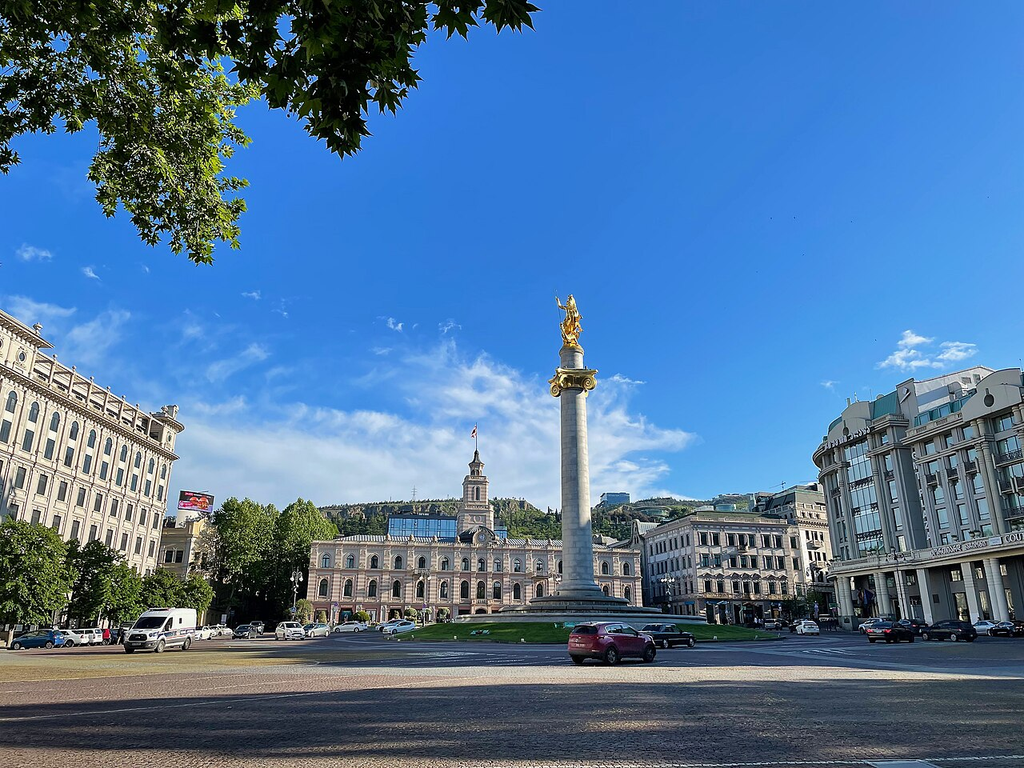
Above: Freedom Square, Tbilisi
My immediate goals for Tbilisi are simple.
Get warm.
Dry out.
Stabilize my physical state.
Pursue the job question methodically rather than anxiously.
A job search conducted while exhausted and physically miserable can easily become apocalyptic in the mind.
A job search conducted after food, warmth and rest becomes a strategy problem rather than an existential crisis.

Above: Tbilisi
I also need to remember that cities often reveal opportunities incrementally.
One conversation leads to another.
One café becomes familiar.
One contact knows someone.
Perhaps especially in Georgia, informal human networks matter more than polished systems.
There is a distinction between salvation and practicality.
Cities cannot heal existential uncertainty overnight.
But they can provide conditions under which recovery and opportunity become more plausible.
Warmth.
Movement.
Anonymity.
Encounters.
Infrastructure.
Chance.

Above: Tbilisi
The Big Good may therefore be less a promise of happiness than a promise of increased possibility.
Physical discomfort radically alters cognition.
Exhaustion shrinks perspective.
Wet shoes make the future appear terminally bleak.
Once warm, fed and rested, the exact same circumstances frequently become manageable logistical problems rather than existential verdicts.
This is not weakness.
It is biology.

Above: Anchiskhati Basilica, a 6th century monument, is the oldest surviving church in Tbilisi
Perhaps that is the hidden function of long train journeys.
They force the mind to reorganize itself between one chapter and the next.
My thinking has evolved during this journey.
From immediate bodily misery towards broader reflections on work, reinvention and forward motion.
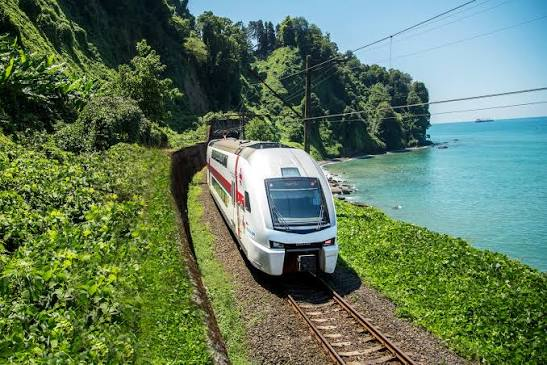
Kobuleti is almost somewhere.
Not quite Batumi.
Not quite an independent destination in the popular imagination.
A town between histories, between ambitions and between identities.

Above: Kobuleti
And perhaps that is the attraction of travelling in the first place.
We leave somewhere in the expectation of finding somewhere else.
Sometimes we arrive.
Sometimes we discover that the destination is not quite what we imagined.
And occasionally, somewhere between departure and arrival, we find something unexpected that makes the journey worthwhile.

I am almost somewhere, too.
The train continues towards Tbilisi.
And somewhere ahead, perhaps, is the Big Good.
(To be continued…..)

