The Road to the Big Good – Part Three
Saturday 16 May 2026
Zestaponi, Imereti, Georgia
The train stopped at Kutaisi Airport station, but I somehow managed to sleep through that.
I will save my descriptions of Kutaisi for next week’s planned stay there.
Seeing yet another rather uninspiring railway station, reminiscent of Batumi’s own rather drab offering, I find myself hoping that unattractive, utilitarian stations are the exception rather than the norm in Georgia.
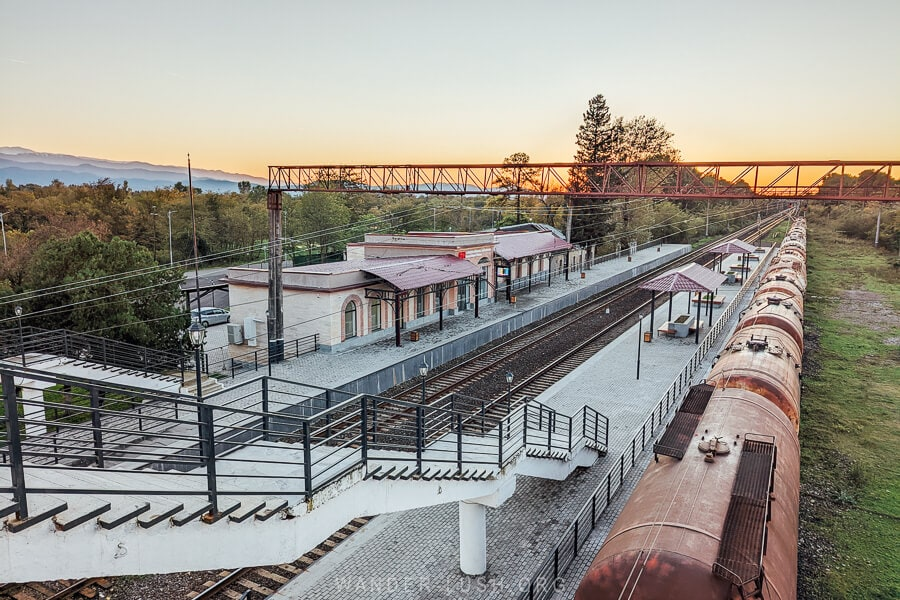
Above: Kutaisi Airport Station
Two things come to mind as I try to capture the essence of the places I visit, the places that pass me by or that I pass by.
First, too many places seem remarkably unsuccessful at promoting themselves.
Second, I have an almost irresistible urge to get off a bus or train at every stop it makes.
I appreciate that railway and bus stations are generally built for practical purposes rather than aesthetic appeal.
Nevertheless, they provide our first impression of a community, and sometimes that impression does little to encourage further investigation.
As I write about the places where the train stopped but I didn’t disembark, I find myself wondering what I missed and actively seeking reasons to return.
Perhaps I have a weakness for places that don’t immediately demand attention.
I rather like the possibility that something interesting might be hiding behind an unremarkable exterior.
It is, after all, a principle that applies to people as well as places.
Which brings me to Zestaponi.
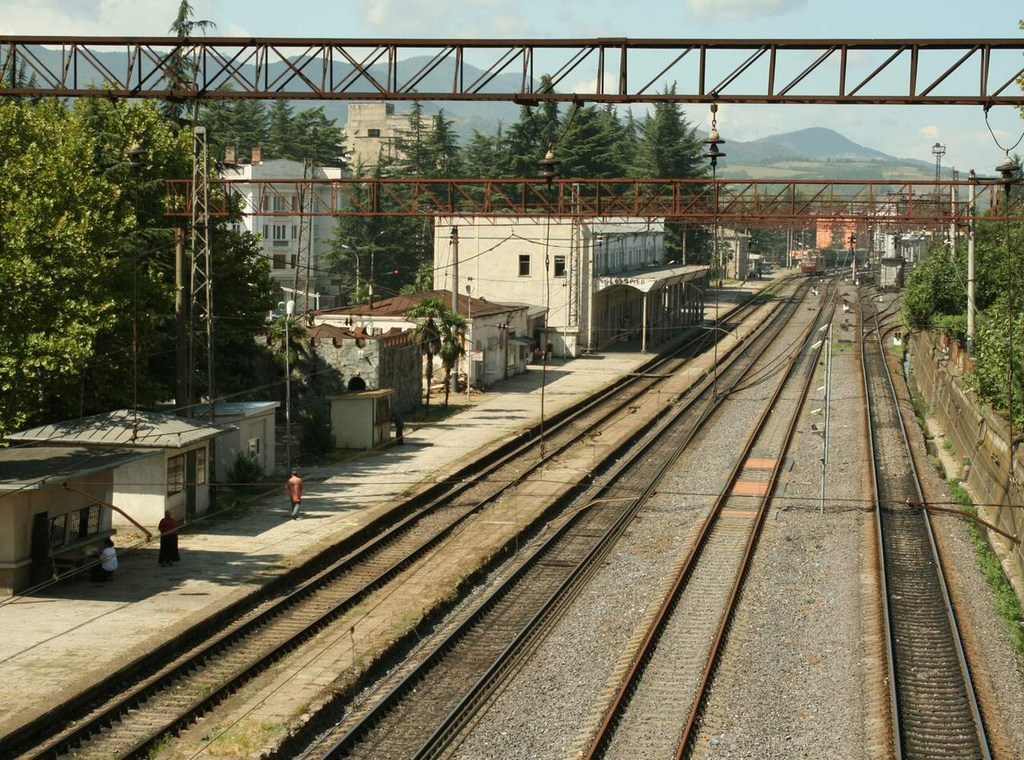
Above: Zestaponi Railway Station
Zestaponi is situated in the Imereti region of western Georgia, on both banks of the Kvirila River, near the eastern edge of the Colchis Lowlands.
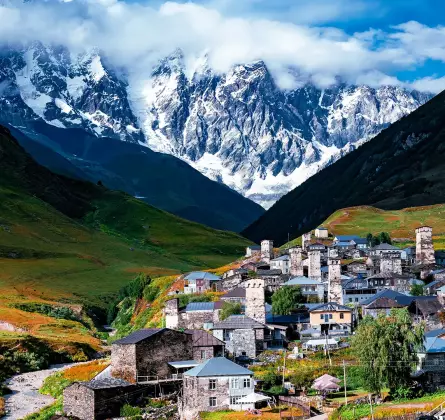
Above: Zestaponi
It is an important industrial centre, best known for its large ferroalloy plant, which processes manganese ore transported by rail from nearby Chiatura.

Above: Chiatura
The surrounding countryside is also a wine-growing region, with local varieties including Tsitska and Tsolikouri.
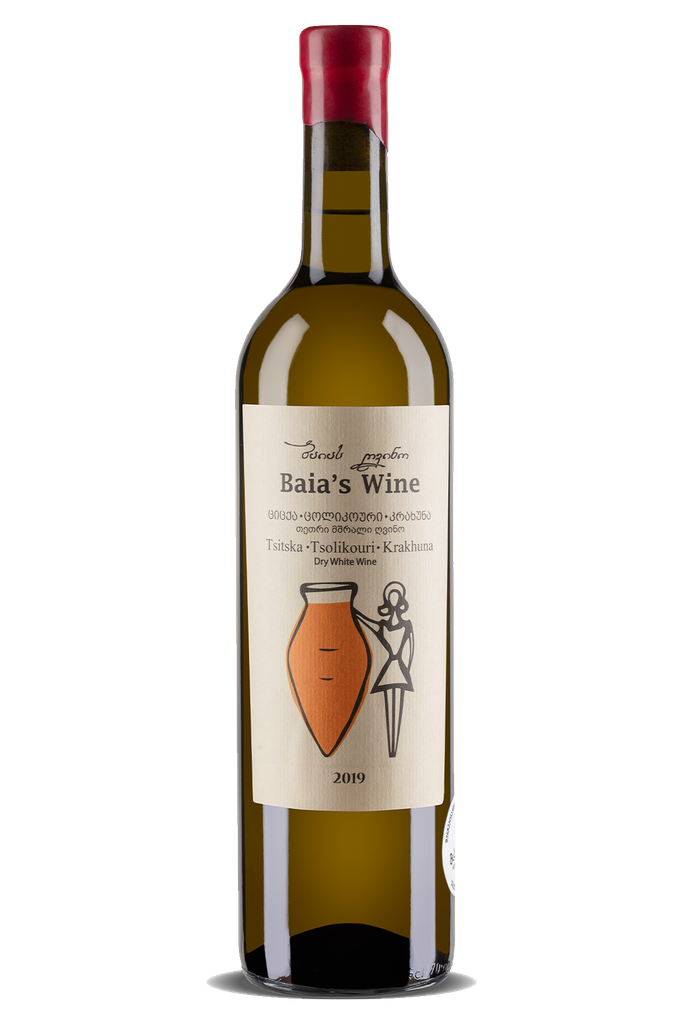
Zestaponi is not going to sell itself with a postcard.
It is an industrial town, and its public image is dominated by the ferroalloy works.
If you are expecting the handsome streets of Kutaisi or the dramatic mountain setting of Chiatura, you may be disappointed.
But I think Zestaponi has something more interesting to offer:
Layers.
And some of them seem quite remarkable.
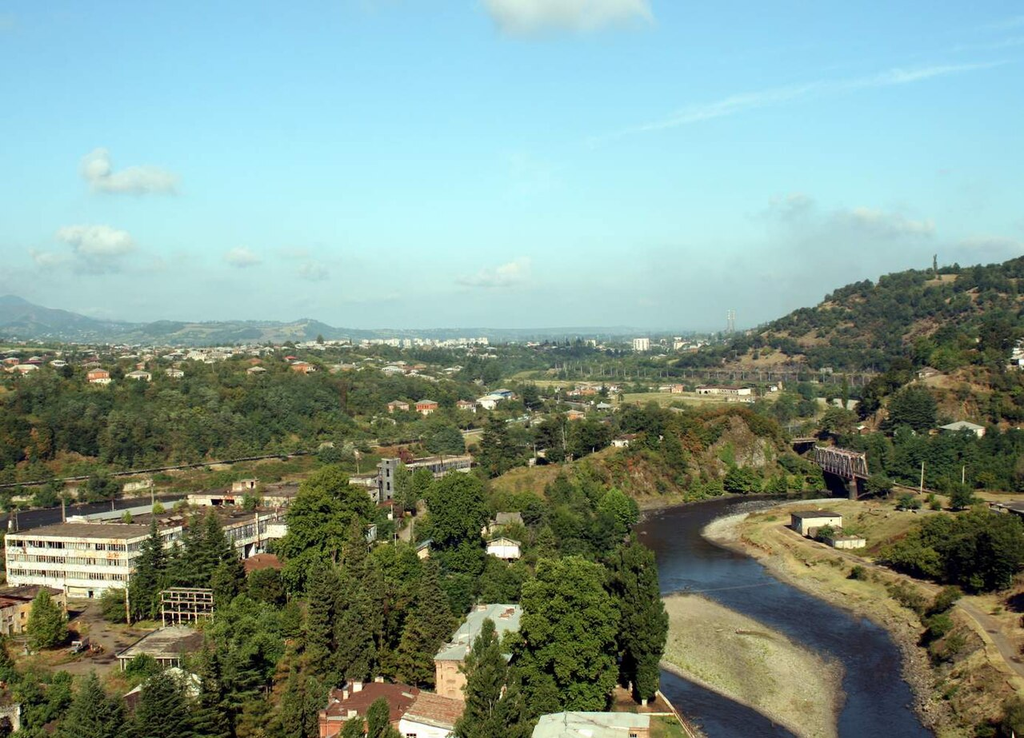
Above: Zestaponi
The name Zestaponi is generally traced to the Georgian expression Kvirilas zeda poni, referring to the upper bank or crossing of the Kvirila River.
Its location was not accidental.
This was a place where people crossed, traded and travelled between western and eastern Georgia.
The settlement appears in historical records in the 16th century, but the surrounding landscape has a much older story.
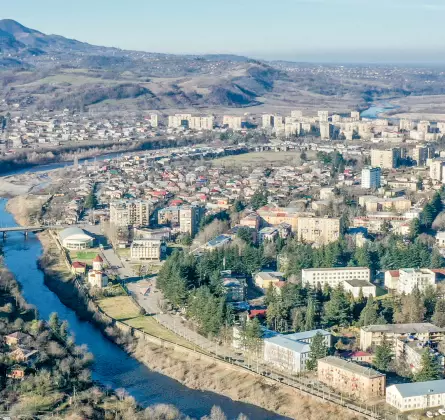
Above: Zestaponi
Nearby stands Shorapani Fortress, traditionally attributed to the reign of King Parnavaz, an early ruler of ancient Georgia.

Above: Relief of Georgian King Pharnavaz I (329 – 219 BCE)
Zestaponi occupies a strategic position near the confluence of the Kvirila and Dzirula rivers, guarding an important route through the country.
Imagine standing there and considering the generations of travellers, merchants, soldiers and ordinary people who passed through this valley.
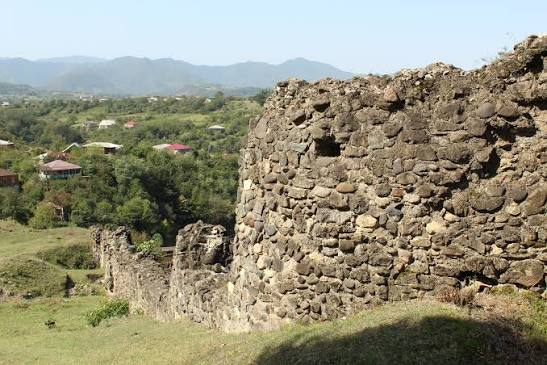
Above: Shorapani Fortress
The railway may have changed the means of transport, but the geography explains why people have been passing this way for centuries.
The railway reached the Kvirila area during the 19th century, and the development of the network was closely associated with the manganese deposits around Chiatura.
Zestaponi gradually became an important transport and industrial centre.
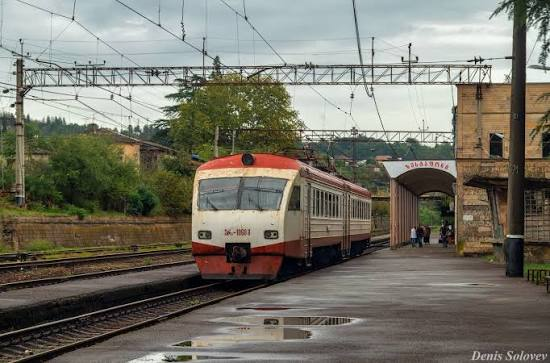
The ferroalloy plant began operating in 1933.
It transformed the town’s economy and identity.
In February 2006, the British steel trading company Stemcor acquired the plant.
Its operations were suspended in November 2024, following decades of industrial production.
The suspension was initially announced as a six-month closure.

Zestaponi had become a place where raw materials, railways, metallurgy and working lives converged.
I wouldn’t suggest that the industrial landscape is conventionally beautiful.
But there is a story here about how a town is made:
Not by royal decree or tourist brochures, but by geography, resources, infrastructure and the people who work there.
And for this writer, interested in the relationship between place and identity, that is promising territory.

Above: Zestaponi
At 4 Rustaveli Street, the Zestaponi Museum of Local Lore was founded in 1968 and holds more than 8,500 objects.
Its collections include archaeological finds from the Stone, Bronze and Iron Ages, coins, ceramics, medieval domestic objects, documents, photographs and fine art.

Above: Zestaponi Museum of Local Lore
But here’s the detail that caught my attention:
The Museum has a 12th-century chainmail shirt, bearing the scars of battles.
Now, that is an object with a story waiting to be imagined.
Who wore it?
Where was it worn?
What happened to the person inside it?
Did it survive a battle, a siege, a fire or a change of rulers?
The Museum may not answer all those questions, but it gives me a starting point.
I rather like the idea of a small regional museum holding something that has survived eight centuries while the world around it has changed beyond recognition.

There are some particularly interesting cultural connections, too.
Varinka Tsereteli (1874 – 1948) is associated with Zestaponi and one of Georgia’s most recognisable songs, Suliko.
Born Barbare Machavariani, she was a Georgian composer, performer, educator and public figure.
She is best remembered for composing the melody of Suliko, setting Akaki Tsereteli’s celebrated 1895 poem to music.
Poet Akaki Tsereteli personally asked Varinka to compose a melody for his poem.
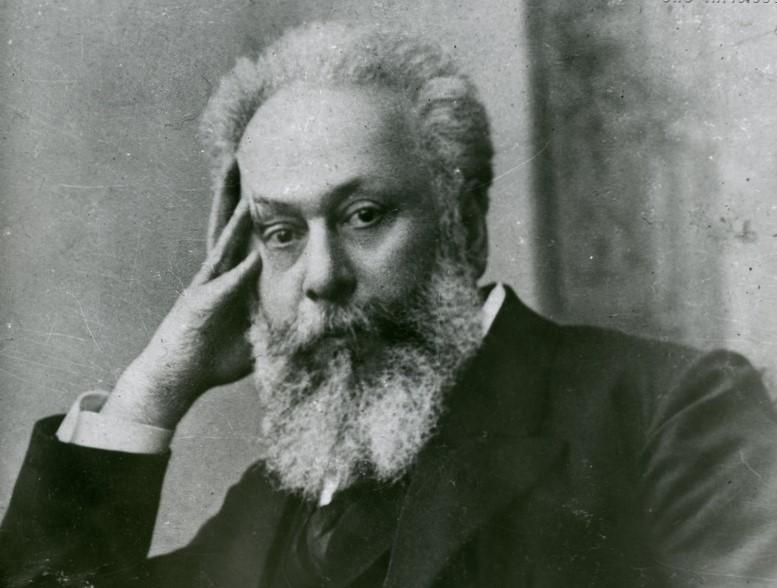
Above: Georgian poet Akaki Tsereteli (1840 – 1915)
According to historical accounts, Tsereteli created an original setting with guitar accompaniment, subsequently performed it publicly and helped the song spread throughout Georgia.
It eventually became enormously popular, spreading throughout the Soviet Union and being translated into numerous languages.

Above: Flag of the Soviet Union (1922 – 1991)
It was reportedly a favourite of Joseph Stalin, who was Georgian.
That association undoubtedly helped its visibility, although the song’s popularity extended far beyond Stalin’s personal preferences.

Above: Russian leader Joseph Stalin (1878 – 1953)
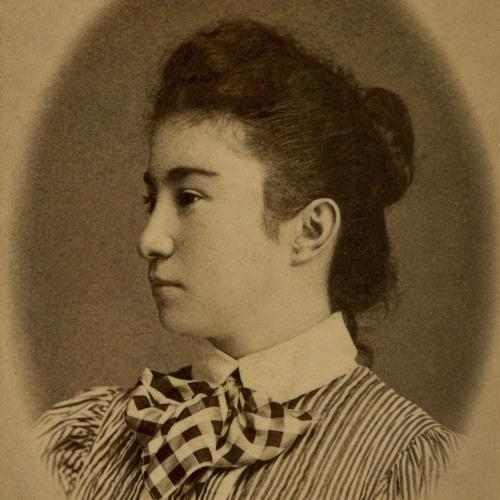
Above: Georgian composer Varinka Tsereteli
There is a rather unfortunate aspect to Varinka’s story.
Her authorship was not always properly credited.
By 1937, Suliko could be presented as a folk song.
She spent years seeking formal recognition for having written its music.
The Georgian Composers’ Union ultimately acknowledged her authorship.
A historical recording of Varinka herself performing Suliko on a wax cylinder is preserved by the National Archives of Georgia.
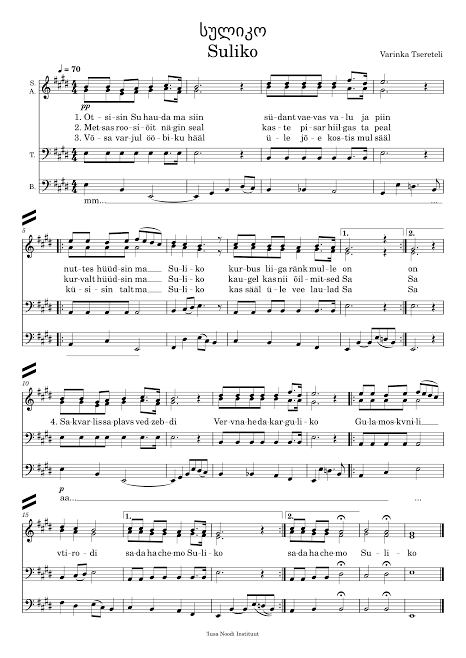

Above: National Archives of Georgia, Tbilisi
Varinka was also involved in the Society for the Promotion of Literacy among Georgians.
In 1909, she became chair of its Zestaponi branch and subsequently established a reading room and a small school in her own home at Tskhratsqaro, serving children from approximately ten surrounding villages.

Above: Tskhratsqaro
Her contribution to Georgian cultural life extended well beyond one exceptionally successful composition.
She occupies an unusual place between Georgian art music, popular song and oral tradition.
Her best-known composition became so thoroughly absorbed into communal musical life that its individual authorship was partly obscured.
A woman creates the melody for one of Georgia’s most beloved songs, yet the popularity of that song threatens to erase the identity of its composer.
That is a story in its own right.
In 2025, the traditional performance of Suliko received official Georgian intangible cultural heritage status, underscoring the song’s enduring role in national culture.
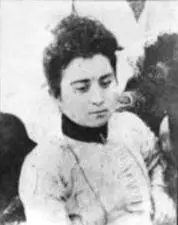
Above: Varinka Tsereteli
A digression: The soul of Suliko
The name Suliko is derived from the Georgian word suli, meaning soul.
It can be used as a name for either a man or a woman.
The poem tells the story of someone searching for a lost beloved, eventually discovering that she has become part of the natural world.
Here is my English rendering of the poem:
SULIKO
I sought my beloved’s grave;
At a loss I began to moan,
Trembling, sobbing violently,
“Where are you? Answer please, Suliko.“
I walked alone through gardens,
Amongst brambles I saw a rose.
My heart thumped, I dared to ask,
“Could that be you, Suliko?“
As a sign of affirmation
The blossom swayed and bent her head;
Dew beads collected on her petals
And dripped to the ground like tears.
I gasped suddenly. A nightingale
Rustled in the undergrowth.
I called the songbird close to me,
“Is that you, dear Suliko?“
The birdpoet flapped her wings,
Nudged the flower with her beak.
“Chikchika!” she sobbed and twittered,
As if to say, “Yes, it’s me!“
A star brightened up above us,
Illuminating beams glowing.
In earnest I entreated,
“Is that you, dear Suliko?“
She shone her rays upon me,
Confirming with a twinkling pulse;
A breeze meanwhile rippled past my ear,
Whispering this epistle:
“You’ve found the answer you’ve been seeking.
From this moment stop and rest.
Let your nights darken sweetly
And your days brighten at last.
Your lover has become a trinity—
The rose, the nightingale, the star—
Immortalized, transfigured by
The love you shared with one another.”
How true! No longer do I seek
The grave of my Suliko;
The world no longer hears my sighs,
Bitter tears no longer flow in sorrow.
I gaze at the star, drink the rose’s fragrance,
The nightingale’s songs fill my ears;
Feelings rise and crest within me,
My words dissolve and disappear.
Until today life was damned bitterly.
My soul’s renewed, my grief let go.
Now finally I understand:
You live on in three, Suliko.
The narrator searches for someone who has disappeared.
He looks in one place, then another, and eventually discovers that what he seeks may be present in unexpected forms.
Isn’t that rather close to the spirit of travel?
You leave one place looking for something, pass through another without stopping, and sometimes discover that what you were looking for was waiting somewhere you hadn’t thought to look.
Perhaps Zestaponi deserves a stop not only because of what it contains, but because of the song that came from its neighbourhood.
I would certainly listen to Varinka’s Suliko before arriving.
It might change the way you see the town.
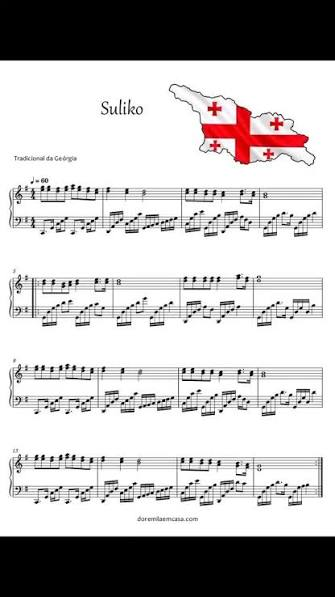
Another interesting connection is Dimitri Uznadze (1886 – 1950), who was born in the nearby village of Sakara.
Uznadze became internationally recognised for his psychological Theory of Set, sometimes translated as the Theory of Attitude.
He was a Georgian psychologist, philosopher and educator, a founder of scientific psychology in Georgia and one of the founders of Tbilisi State University.
Uznadze argued that human behaviour is influenced by a preconscious state of readiness, or set, arising from the interaction between a person’s needs and the circumstances in which those needs might be satisfied.
Rather than perception and action beginning from a psychologically neutral position, an existing set predisposes us to perceive, think and act in particular ways.
He investigated this through what became known as fixed-set experiments.
Participants were repeatedly given two objects of noticeably different sizes to hold, one in each hand.
After several repetitions, they were given two objects of identical size.
Some participants nevertheless perceived one as larger than the other.
Their previous experience had established an expectation that influenced their subsequent perception.
In other words, we don’t simply approach every experience with a completely blank mind.
Our psychological readiness helps determine how we interpret what follows.
Uznadze studied philosophy and experimental psychology at Leipzig and completed his doctorate at Halle in 1909.
Returning to Georgia, he helped establish Tbilisi State University in 1918, founded its psychology department and experimental laboratory, and later led the psychology research institute established under the Georgian Academy of Sciences.
His work extended beyond perception to include child and educational psychology, thinking, will and personality.
His book The Psychology of Set appeared in English in New York in 1966, helping introduce the Georgian school of set psychology to a wider international audience.
I find his central proposition particularly interesting:
We don’t approach every experience with a completely blank mind.
Our expectations and previous experiences influence how we interpret what happens next.
Perhaps there’s a connection here with my own investigation of Zestaponi.
I initially see an industrial town with an unremarkable railway station.
My expectations establish a particular impression.
But then I start looking.
And the impression changes.
Uznadze might have appreciated the illustration.
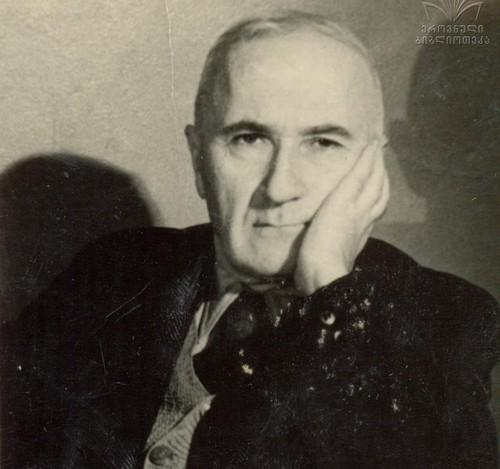
Above: Georgian psychologist Dimitri Uznadze
Ushangi Chkheidze (1898 – 1953) was a prominent Georgian stage and film actor whose career spanned the formative decades of Soviet Georgian theatre.
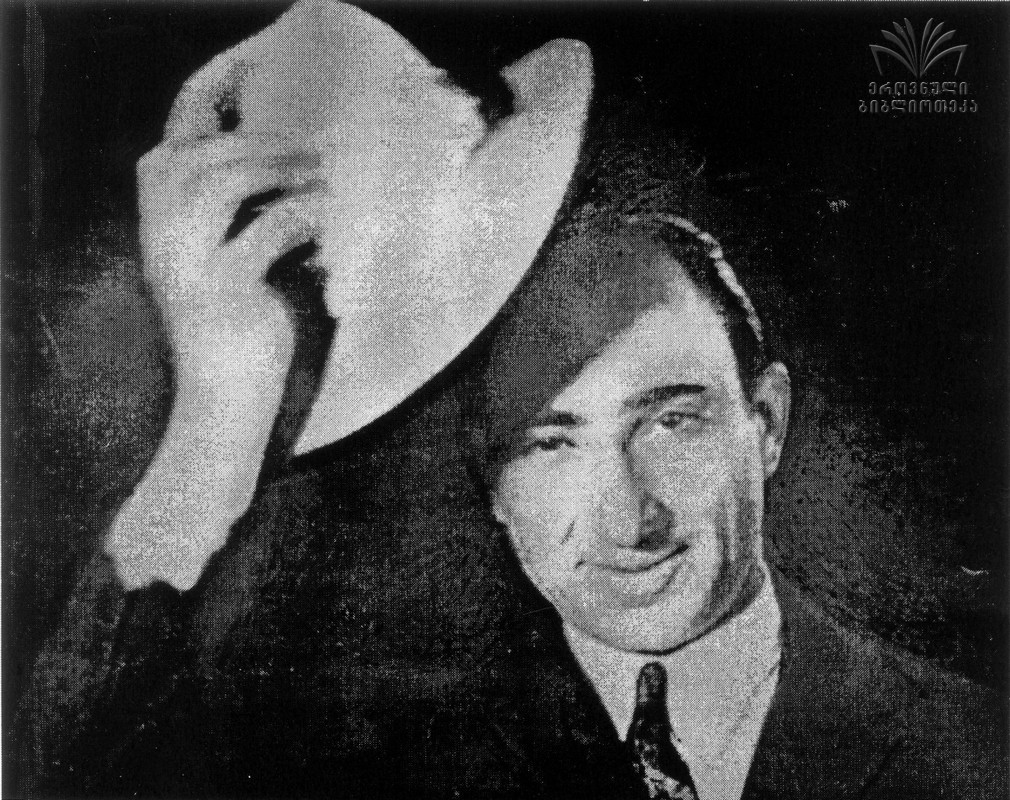
Above: Georgian actor Ushangi Chkheidze
Born in the Zestaponi area, he became particularly associated with major dramatic roles and was named a People’s Artist of the Georgian SSR.

Above: Flag of the Georgian Soviet Socialist Republic
His repertoire combined European classics with Georgian drama.
Among his recorded roles were Shakespeare’s Hamlet and Iago in Othello, Uriel Acosta in Karl Gutzkow’s play of the same name, and Kvarkvare Tutaberi in Polikarpe Kakabadze’s Georgian satire.

Above: English writer William Shakespeare (1564 – 1616)
These roles placed him among the notable Georgian dramatic actors of his generation.
The town has a house-museum dedicated to him.
There is also the Ushangi Chkheidze State Drama Theatre, whose theatrical tradition dates back to the 19th century.
I wonder what might be playing there when I eventually visit.
But two of Chkheidze’s theatrical roles caught my attention for reasons extending well beyond the theatre….
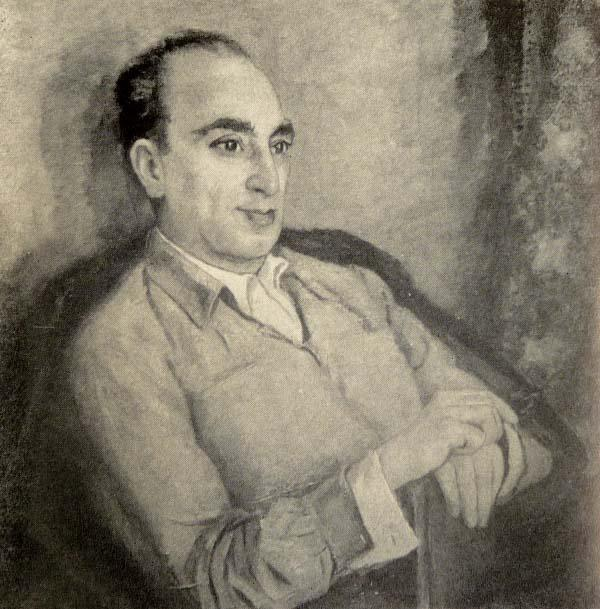
Above: Georgian actor Ushangi Chkheidze
A digression: Uriel Acosta and Kvarkvare Tutaberi
Karl Gutzkow (1811 – 1878) was a German novelist, journalist and playwright associated with Young Germany (Junges Deutschland), a literary movement advocating liberal ideas, intellectual freedom and challenges to established authority.

Above: German writer Karl Gutzkow
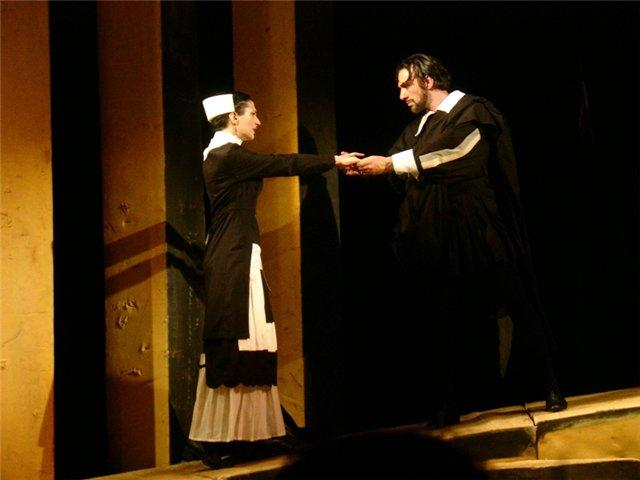
His play Uriel Acosta (1847) is based on the life of a real historical figure, Uriel da Costa (1585 – 1640), a Portuguese-born Jewish religious dissenter.
Da Costa was born into a family of conversos, descendants of Jews who had been forced to convert to Christianity in Portugal.
He eventually rejected Catholicism and travelled to Amsterdam, where he hoped to practise Judaism openly.
But his return to Judaism did not bring the intellectual freedom he expected.
He became increasingly critical of the authority of rabbinical tradition, particularly the idea that the oral interpretations of religious law possessed the same authority as scripture.
He questioned the doctrine of the immortality of the soul and argued for a more natural, rational understanding of religion.
The Amsterdam Jewish authorities excommunicated him.
He was subsequently readmitted after submitting to a humiliating public act of penance.
But the conflict between his conscience and religious authority continued.
He eventually took his own life in 1640.
His autobiography, Exemplar Humanae Vitae (An Example of Human Life), describes his experiences and persecution.
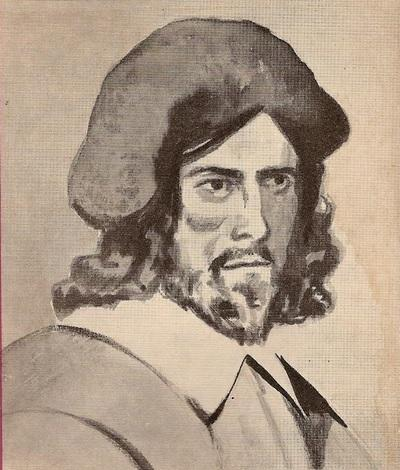
Above: Portuguese Jewish writer Uriel da Costa
Gutzkow was not simply writing a historical biography.
He was using Acosta’s predicament to examine a contemporary European question:
How much freedom should an individual possess to question the beliefs and institutions of the society in which he lives?
The play’s central conflict is between individual conscience and institutional orthodoxy, reason and inherited dogma, intellectual independence and social conformity.
Gutzkow was writing at a time when liberal intellectuals were challenging political censorship, religious conservatism and the restrictions imposed by established institutions.
Acosta therefore becomes a figure of intellectual resistance.
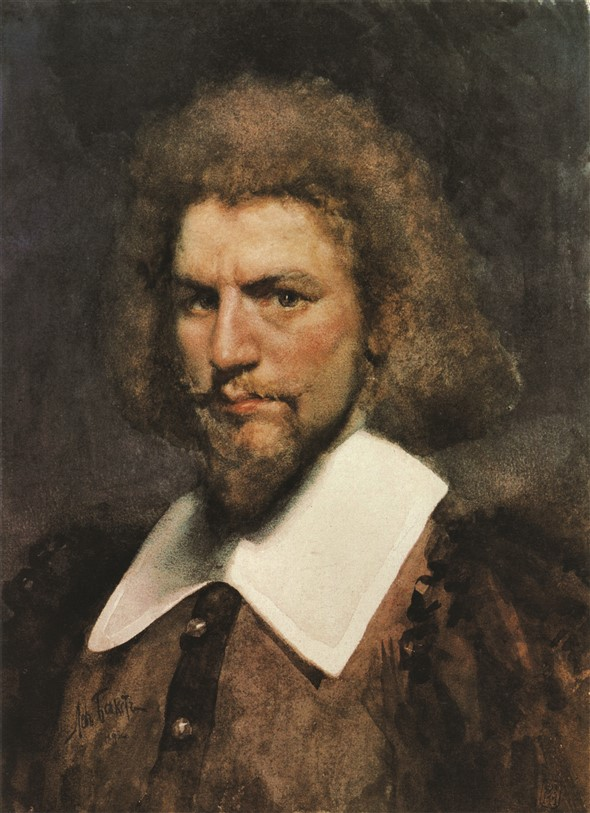
Above: Uriel da Costa
There is an interesting theatrical connection, too.
The young Baruch Spinoza appears towards the end of the play.
Spinoza would become one of Europe’s most influential philosophers of religious tolerance, rationalism and freedom of thought.

Above: Dutch Jewish philosopher Baruch Spinoza (1632 – 1677)
Acosta represents the individual who cannot comfortably inhabit a society that requires him to surrender his capacity for independent thought.
His tragedy is not simply that he disagrees with authority.
It is that he cannot find a way to live with the consequences of that disagreement.
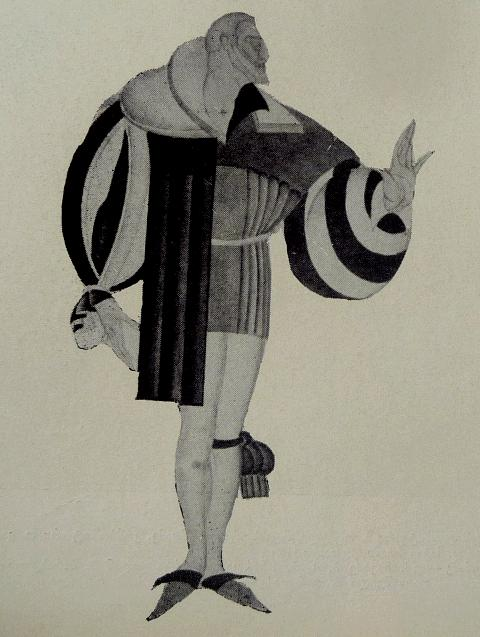
Above: Uriel da Costa
Now let’s consider the other character.
Polikarpe Kakabadze (1893 – 1972) was an important figure in 20th-century Georgian drama.
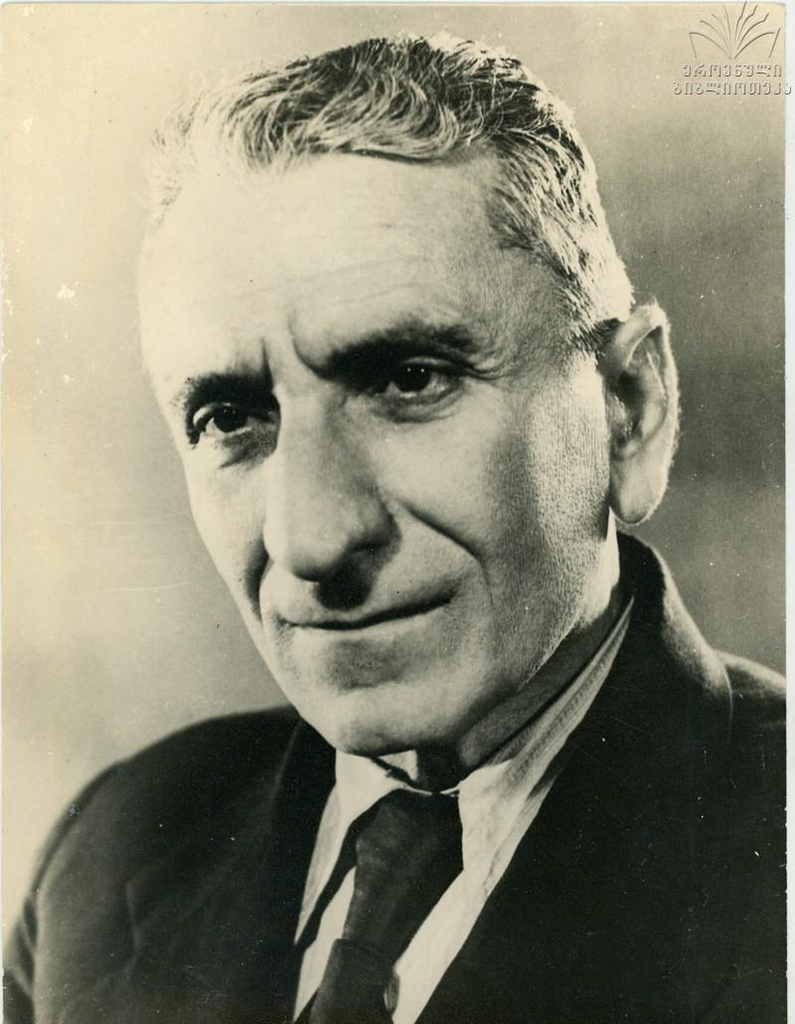
Above: Georgian dramatist Polikarpe Kakabadze
His Kvarkvare Tutaberi was written in 1928 and staged by director Kote Marjanishvili in 1929.
This is a very different theatrical world.
The play is a political satire set during the turbulent early period of Soviet rule in Georgia.
Its central character, Kvarkvare, is an idle, cowardly, uneducated and cunning man who somehow manages to survive, and prosper, as political authority changes hands.
Kvarkvare is not a revolutionary hero, a political thinker or a man of conviction.
He is an opportunist.
His political allegiance changes according to whoever appears to be in control.
When the Russian Emperor holds power, Kvarkvare supports the Emperor.
When the Provisional Government takes over, he becomes its representative and commander.
When the Bolsheviks prevail, he becomes their comrade.
His principles are remarkably adaptable.
His principal political philosophy is essentially:
Who is in power and how can I benefit?
He survives by flattering those above him, exploiting the confusion around him and presenting himself as indispensable.
The character is comic, but the comedy has a rather uncomfortable edge.
Kvarkvare is not merely a fool.
He is a fool who understands that other people can be manipulated.
Here’s where Kakabadze’s achievement becomes particularly interesting.
The play was written only seven years after the establishment of Soviet rule in Georgia.
The new political order was still consolidating its authority.
On the surface, the satire could be interpreted as a criticism of politically immature people who opportunistically attached themselves to successive regimes.
But there was another interpretation.
The play’s absurdity and grotesque humour also exposed the ridiculousness of the political environment itself.
The authorities initially struggled to understand its implications.
The humour provided a degree of protection:
The satire could be understood as a criticism of an individual fool while simultaneously exposing the absurdity of the system that enabled him to flourish.
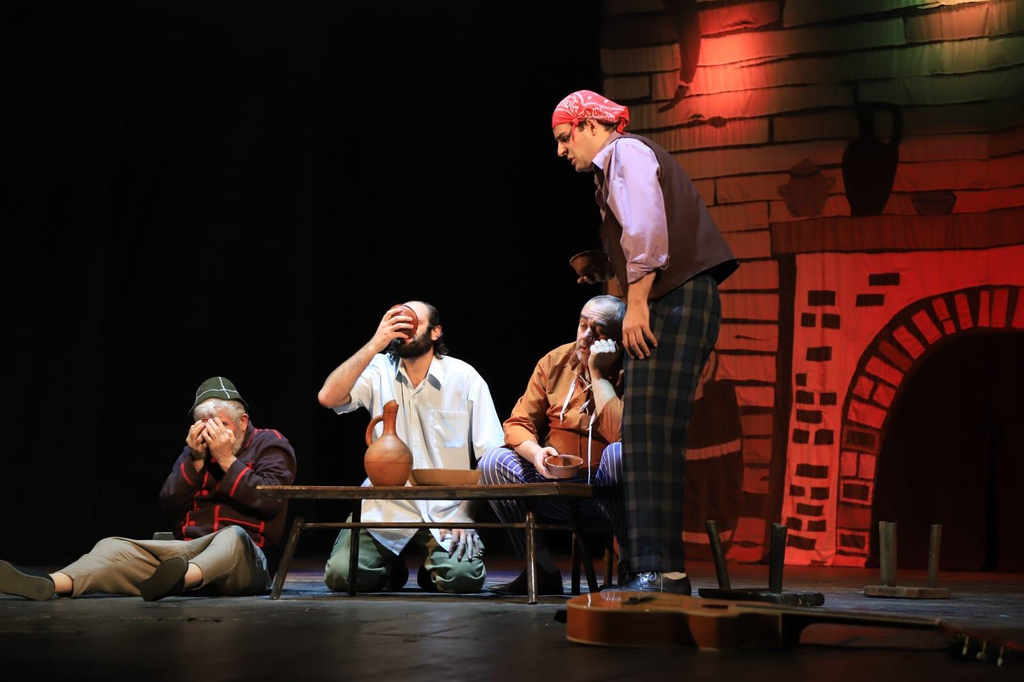
Above: A performance of Kvarkvare Tutaberi
And now we have two very different characters.
Acosta asks:
How can I remain true to myself when society demands conformity?
Kvarkvare asks:
How can I appear to conform while remaining true to my own interests?
One risks everything for integrity.
The other risks nothing for advantage.
I find that contrast fascinating.
Chkheidze also appeared in early Georgian cinema.
Surviving film credits include Before the Hurricane (1924), The Communard’s Pipe (1929) and Orange Valley (1937), demonstrating how his acting career crossed from the stage into Georgia’s developing film culture.
I would be interested in seeing some of these surviving films.
A performance at the Ushangi Chkheidze State Drama Theatre, or even a conversation with someone familiar with its history, might provide another reason to visit.
Boris Akunin was born in Zestaponi on 20 May 1956.
His father was Georgian and his mother Jewish.
His family moved to Moscow when he was two.

Above: Red Square, Moscow, Russia
He became one of the most successful contemporary Russian-language writers, particularly through his historical detective novels featuring Erast Fandorin.
The Fandorin novels combine historical settings, especially 19th-century Imperial Russia, intricate detective mysteries, political intrigue, espionage and a playful relationship with the conventions of classic detective fiction.
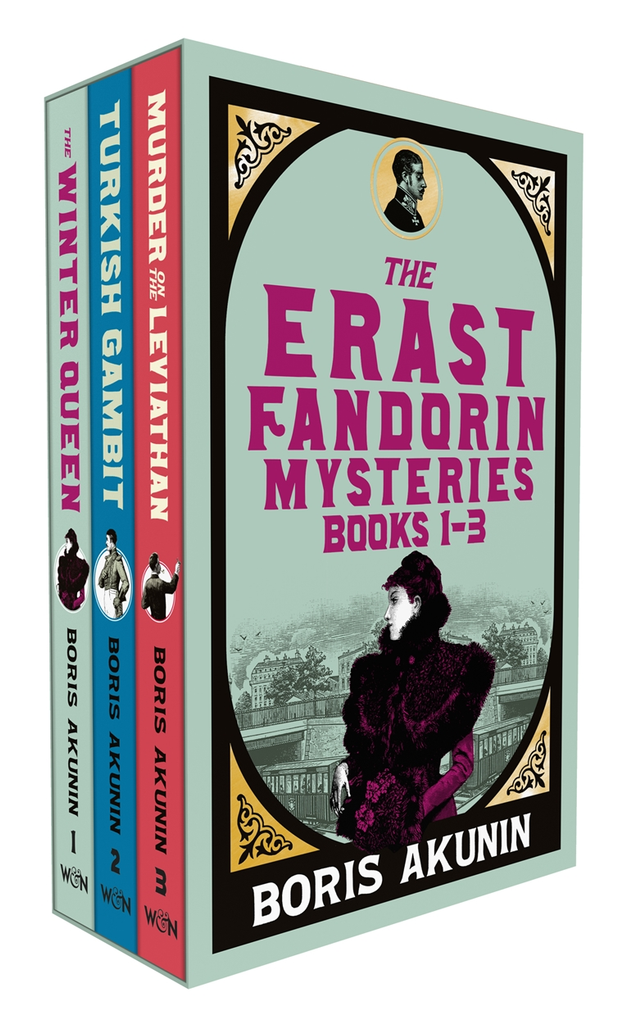
His first Fandorin novel, The Winter Queen (1998), introduces the young detective Erast Petrovich Fandorin in 1876.

Akunin is also a literary scholar and translator, particularly of Japanese literature.
His pen name derives from the Japanese word akunin, meaning a villain or bad person.

Above: Flag of Japan
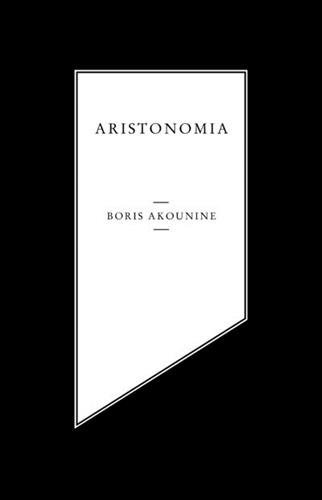
A particularly interesting connection is his novel Aristonomia (2012), which explores the development of personal dignity against the background of the Russian Revolution and Civil War.
Akunin has become an outspoken critic of the Putin government and Russia’s invasion of Ukraine.
He was designated a foreign agent and convicted in absentia by a Russian court in 2025.
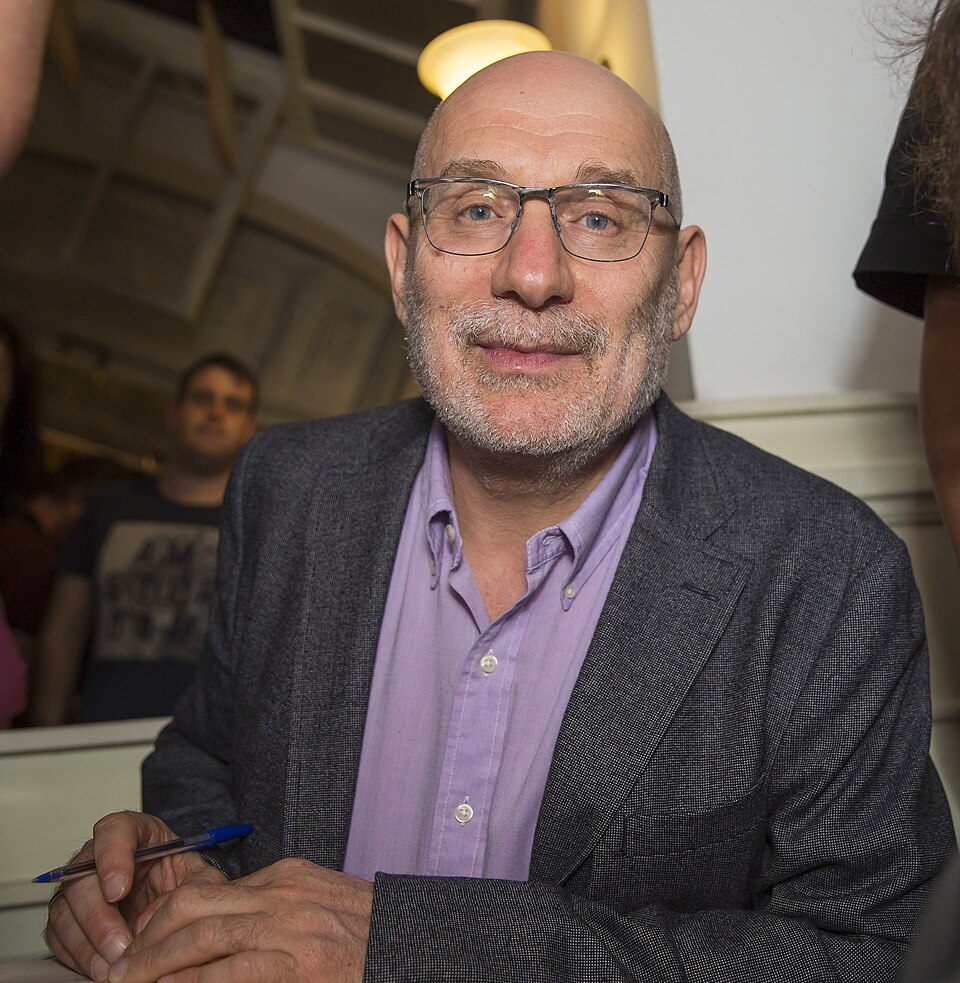
Above: Georgia-born Russian writer Boris Akunin
Shalva Dadiani (1874 – 1959) was born in Zestaponi into the aristocratic Dadiani family.
He became a novelist, playwright, actor, theatre director and public figure.
He began his theatrical career in 1893 and became involved in the development of Georgian theatre during a period of considerable political and cultural upheaval.
One particularly interesting aspect of his career was his travelling theatre company, Modzravi Dasi, founded in 1908.
The troupe toured Georgia and other parts of the Russian Empire, performing for workers and ordinary audiences.
Dadiani was interested in making theatre accessible beyond the established cultural centres.
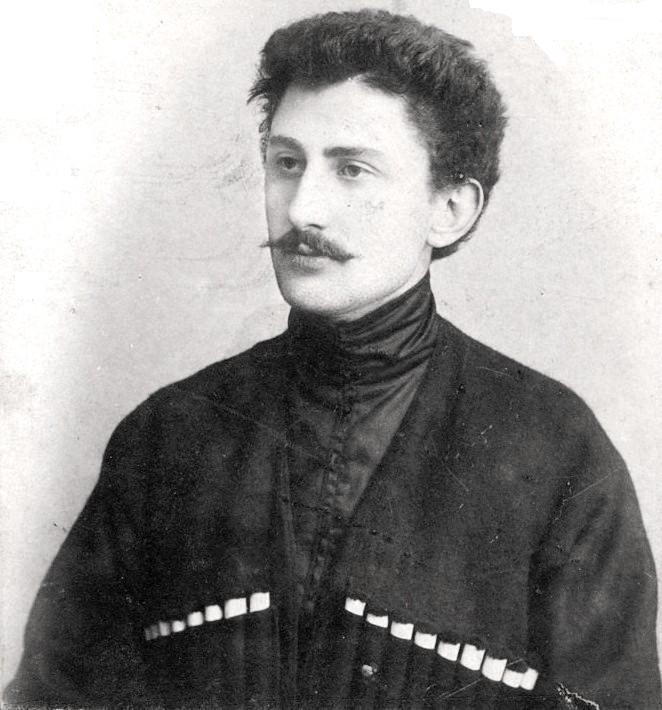
Above: Georgian writer/actor Shalva Dadiani
His historical drama George the Rus (1916–1926) dealt with Yuri Bogolyubsky, the 12th-century Russian prince who married Queen Tamar of Georgia and was subsequently expelled from the country.

Above: Yuri Bogolyubsky, the 12th-century Russian prince and Queen Tamar of Georgia
Dadiani’s relationship with Soviet power was complicated.
Some of his works were critical or independent in tone, while others later celebrated Soviet leaders.
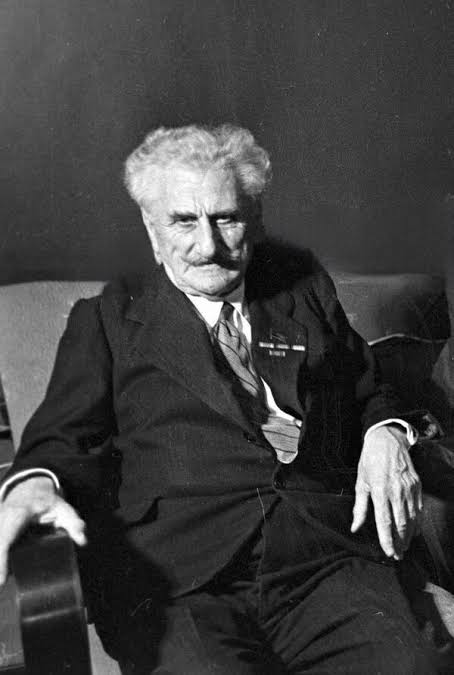
Above: Shalva Dadiani
Let us consider the contrast presented to us:
Zestaponi, a town more readily associated with furnaces and industrial production, has also nurtured music, psychology, education and theatre.
One caution, however.
Being born in Zestaponi doesn’t necessarily mean that these people were shaped by growing up there.
Akunin, for instance, left as a toddler.
Nevertheless, the geographical connections are interesting, and the town has every reason to acknowledge them.
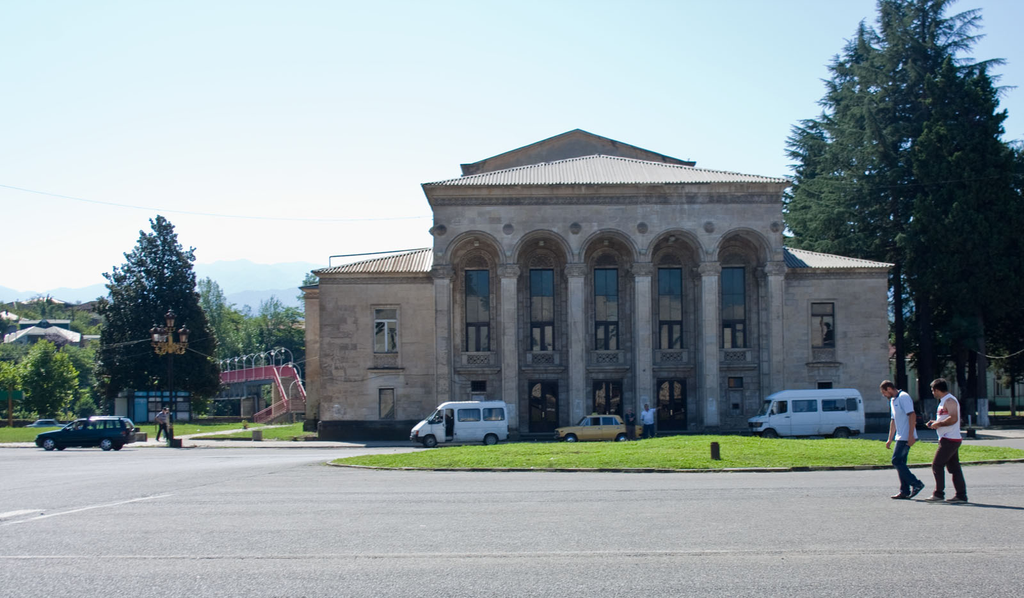
Above: Zestaponi Theatre
Zestaponi’s municipality is not simply an industrial landscape.
It is also an agricultural one, with vineyards and local varieties including Tsitska, Tsolikouri and Krakhuna.

A few excursions would give a visitor a rather different impression of the area:
Tabakini Monastery
A historic monastery in wooded hills, offering a welcome change from the industrial character of the town.
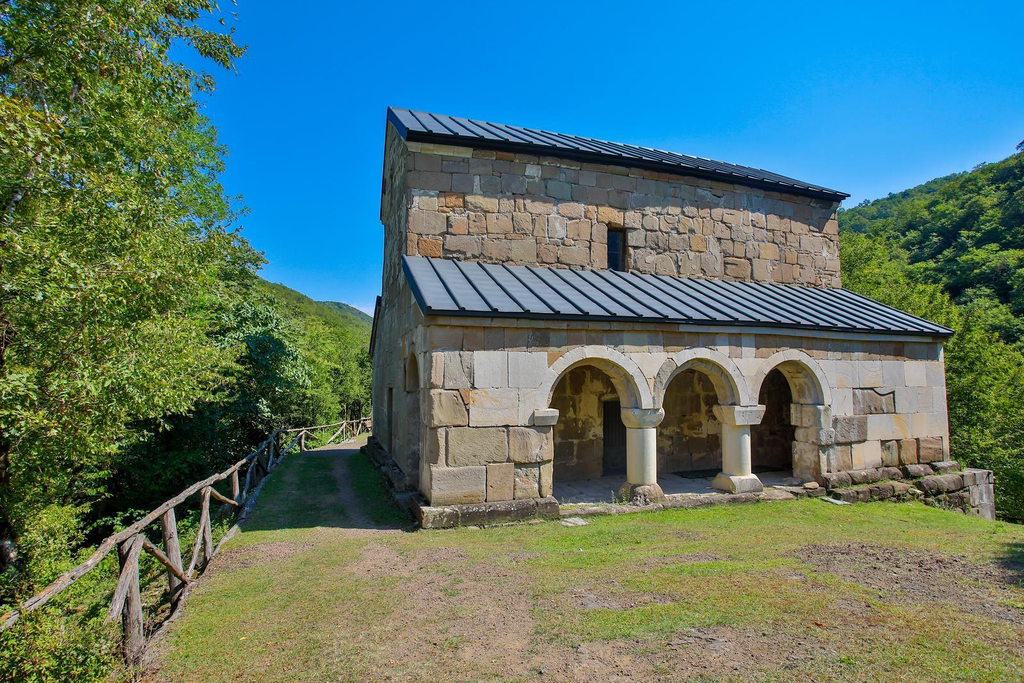
Above: Tabakini Monastery
Queen Tamar’s Bridge
A medieval stone bridge near Chalatke, an interesting subject for anyone fascinated by how people once crossed the rivers and valleys of rural Imereti.

Above: Queen Tamar’s Bridge
Samtsvera Waterfall
A waterfall near Zovreti, surrounded by greenery.
A possible destination for a little walking and a change of scenery.
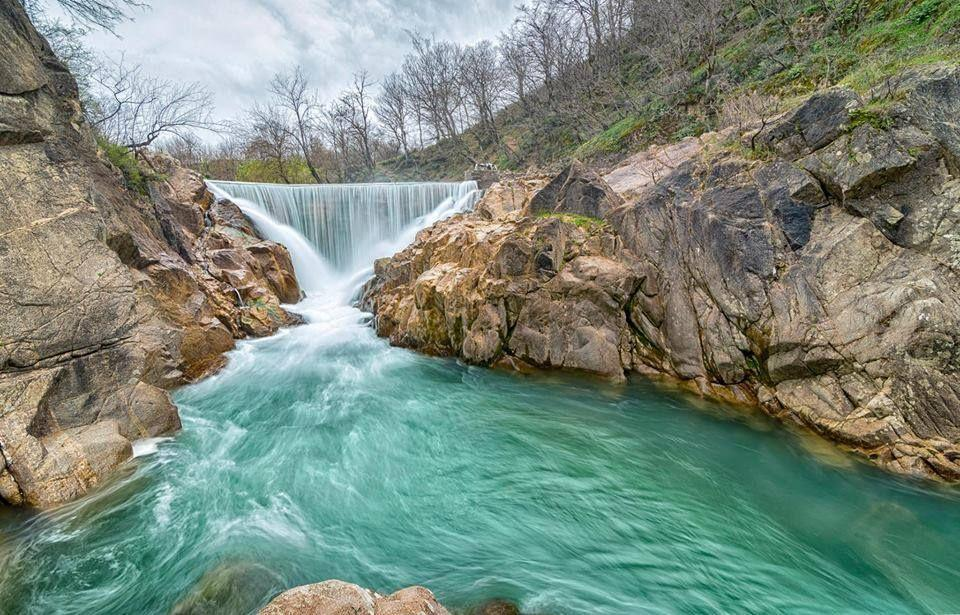
Above: Samtsvera Waterfall
Shrosha pottery village
Local potters produce clay vessels, including traditional qvevri used for winemaking.
This is a living craft rather than simply another monument to photograph.
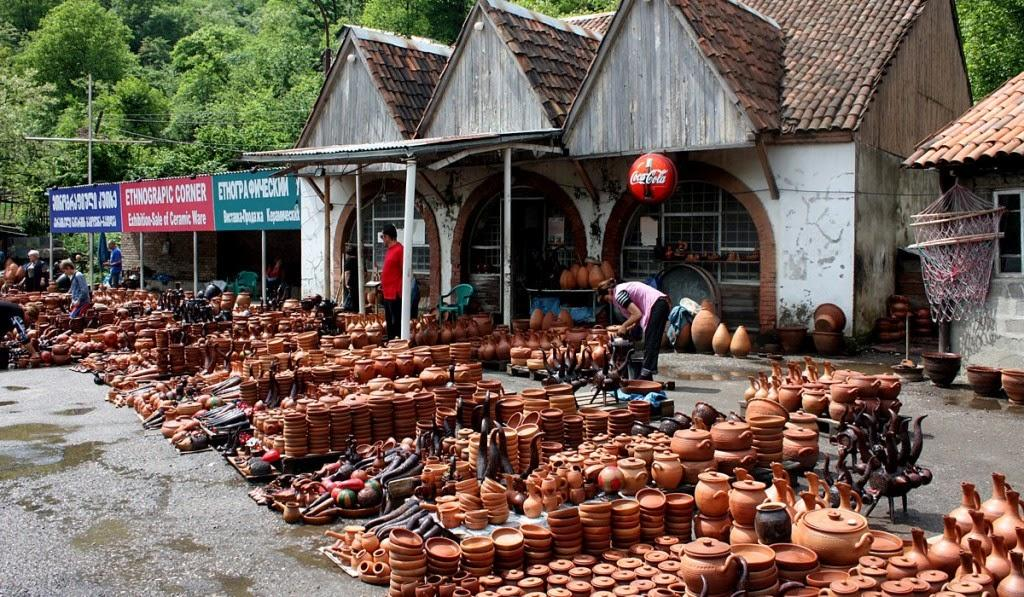
Above: Shrosha pottery village
The countryside could be the real surprise.
You might arrive expecting a factory town and discover vineyards, churches, forests, waterfalls and traditional crafts within the wider municipality.
And one detail I think I would particularly enjoy seeing:
The town’s own self-portrait.
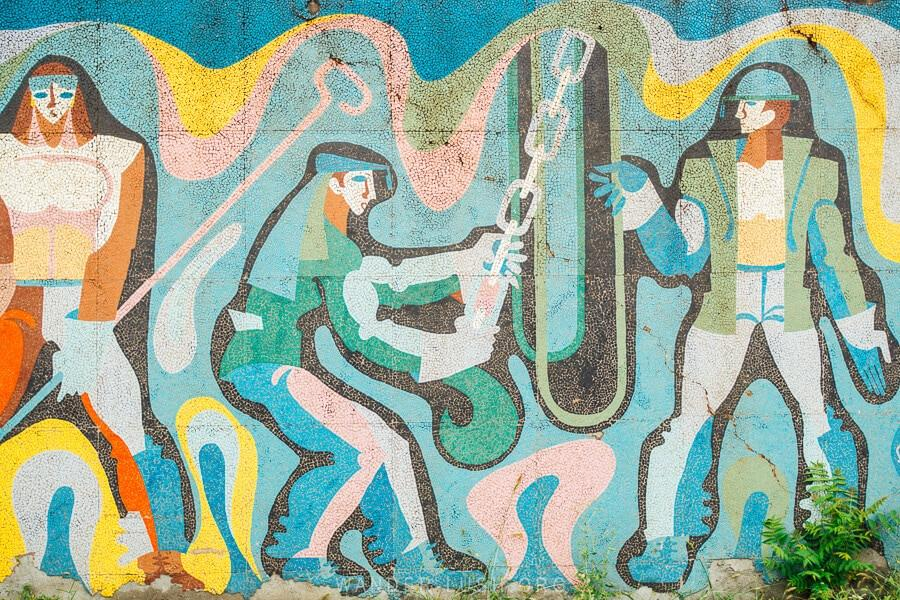
There is a monumental Soviet-era mosaic in Zestaponi titled Land of Winegrowers and Metallurgists, created in 1983 by Georgian artist Demur Basheleishvili.
It brings together the two sides of the municipality’s identity:
Agriculture and heavy industry.
I rather like the idea of a town presenting itself in this way.
It doesn’t attempt to conceal its industrial identity, but neither does it forget its agricultural roots.
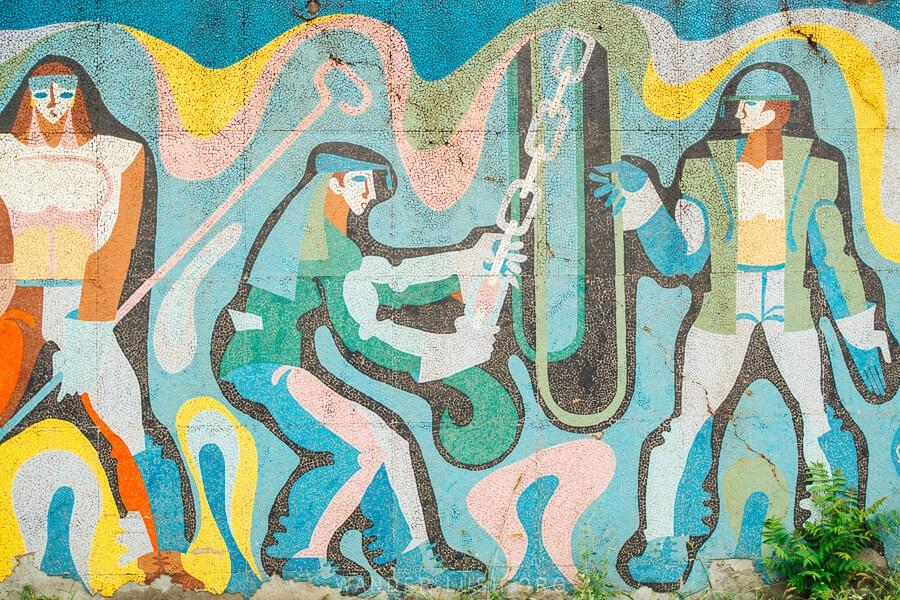
Above: Land of Winegrowers and Metallurgists (1983), Demur Basheleishvili
I wouldn’t sell you Zestaponi as a beautiful Georgian town.
I would sell it as a place that invites you to look beyond its first impression.
It has an ancient strategic landscape, a railway and industrial history, a museum with an eight-century-old piece of battle-scarred armour, a theatrical tradition, an unusual musical connection, vineyards, monasteries and rural scenery.
And it has something else:
The contrast between what a place is known for and what it actually contains.
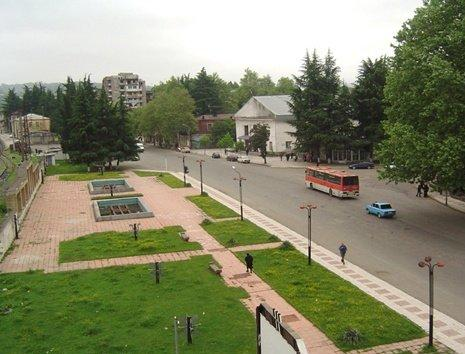
Above: Central Square, Zestaponi
Perhaps that is the subject hiding in my observations about stations and towns that fail to promote themselves.
A place does not necessarily lack attractions because it lacks a tourist industry.
Sometimes it lacks the person willing to get off the train and look.
Perhaps every place has the potential to be the Big Good.
(To be continued….)