Eskişehir, Türkiye
Thursday 9 October 2024
It has been a while since I have written my blog and the reasons are complex.
Since my trip to Andalucia – the subject of the past few blogposts – I have changed employers, visited the Princes’ Islands off the coast of Istanbul and have been building a network of friends both in Eskişehir and Istanbul.
As regards to my writing I have come to the realization that quality is far superior to quantity, that there exists a need to make my blogposts more universally appealing and that my writing needs to be less spontaneously and more planned to achieve both clarity and effect in the messages I try to convey.
I cannot say that I am “there” yet.

That being said, I am compelled to write today as recent conversations about the idea of fatherhood have been occupying my thoughts for quite some time.
No, I am not a father, either knowingly or unknowingly, for I have been relatively chaste in my life.
Overthinkers rarely have an overabundance of opportunities to behave spontaneously, whether they are married or not.
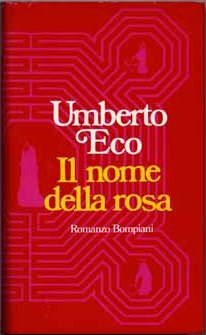
“In great wisdom, there is great pain.
He who increases his knowledge increases his pain.“
(Umberto Eco, The Name of the Rose)
Being married, though separated from the wife by thousands of kilometers, I have found more peace of mind living a monastic solitary existence than chasing skirts to satisfy animalistic urges.
I do not seek to dictate to anyone, including my wife, how to sate the thirst for human intimacy and physical contact.
I am no one’s conscience.
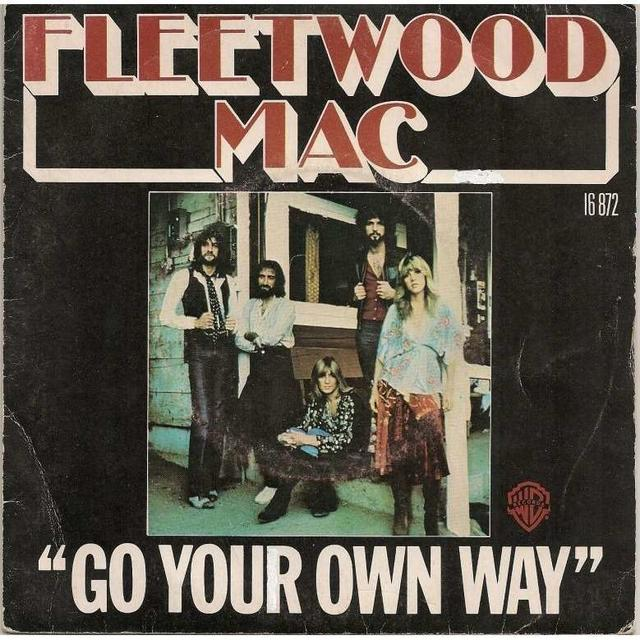
But a question I am frequently asked is whether or not I have children.
When I answer that I have not been blessed in such a manner then the subsequent query is whether I have ever wanted to be a father.
The first question is easier to answer.
Sometimes nature says “No“.
The second question is complicated.
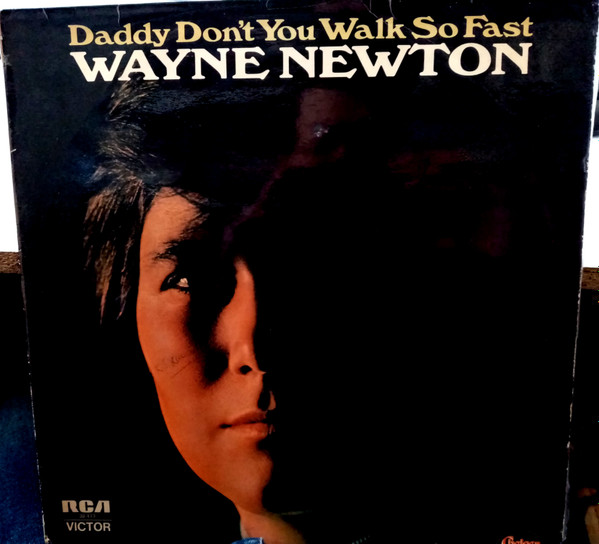
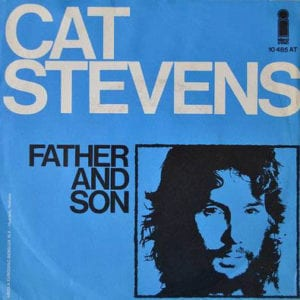
I am reminded of two powerful novels – one that shows an exemplary father and the other that shows a man who actively avoids this entanglement.
At its best, being a dad is a chance to be a kid all over again, while precipitating into a new phase of maturity both as a father and as a partner.
Fatherhood gives you the opportunity to pass on your passions and all that you have learned, but it brings with it enormous responsibilities and can change your relationship in ways you don’t like – and sometimes the resentment gets let out on the child.
The mantle of fatherhood does not always sit easily on a man’s shoulders.
Cormac McCarthy offers the fictional equivalent of a father – son, how-to manual in his harrowing novel The Road.
Its premise is grim.
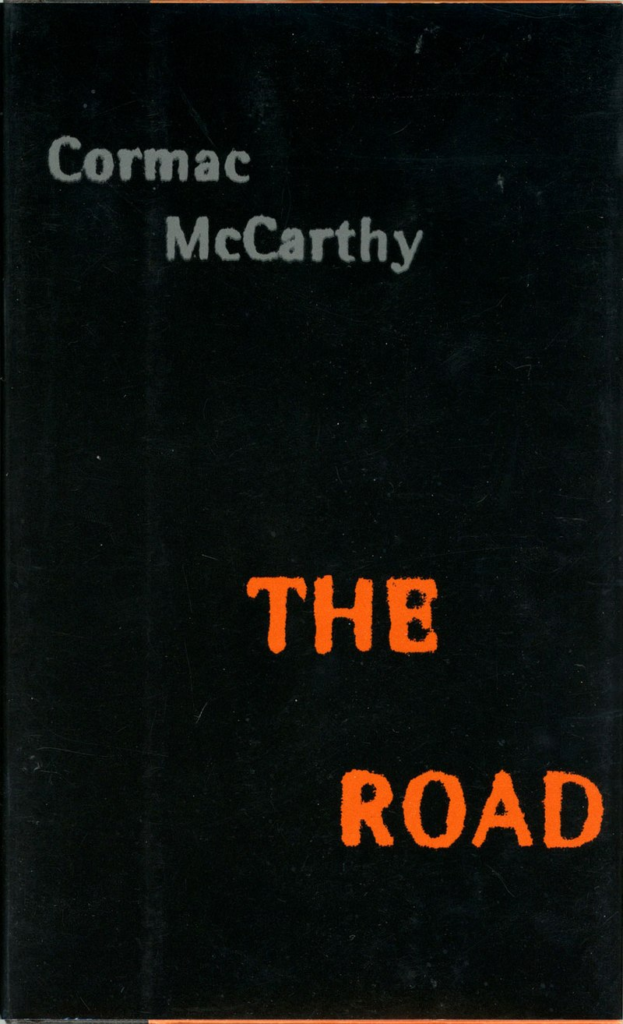
Following a cataclysmic event, the exact nature of which the survivors can only guess at, America – and perhaps the entire world – has been devastated.
Ash blocks the sun.
The cities have burned.
Trees have died.
Through this barren, silent, godless land, a man and his son, in a world without color and with scant humanity, follow the road south where they hope to find warmth and increase their chances of survival.
Along the way they try to sleep through nights that are long and dark and cold beyond anything they had yet encountered and scavenge what food they can.
They are under constant threat from filthy terrifying men wearing masks and hazard suits and carrying clubs and lengths of pipe, plundering and killing like animals.
It is as shorn of beauty as a world can get.
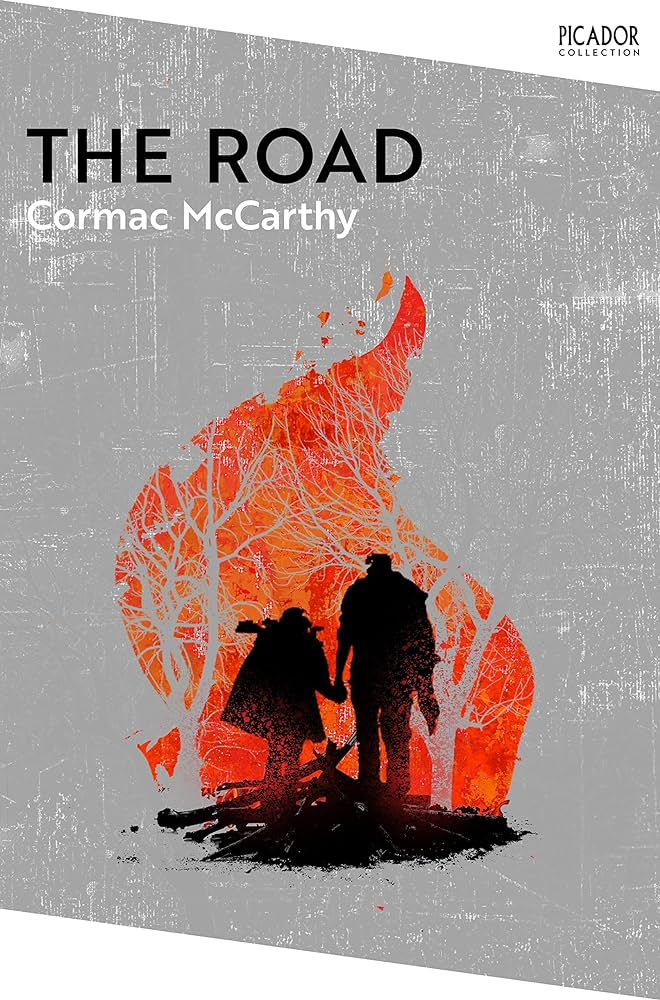
The boy is frequently so sick with fear that he cannot run when his father commands it.
The boy is half-starved.
He yearns for his mother and the possibility of playmates, let alone any of the normal pleasures of childhood – toys, sports, green grass, cake – are unknown to the boy.
With everything else taken away, the extraordinary love that exists between a father and a son is revealed in its purest, its most primal form, where the only thing that matters is making sure the boy is all right.
For what is the essence of fatherhood if not hope for the next generation?
The novel leaves us on a note of hope – an essential ingredient for living.

The Road is a celebration of fatherhood as we bear witness to the habit of absolute honesty that exists between father and son.
Observe the trust between them.
The son’s need to see that his father will never break a promise, never leave him, will always tell him the truth if he asks, except perhaps if they are dying.
The boy’s need for reassurance that they are “the good guys”, that they carry the fire.
If honesty is there, if love is there, along with a firm set of moral principles and a dependable presence, then such is a good father.

Being a father means changes.
No more late night drinking.
No more lazy Sundays with newspapers and coffee till noon.
No more undivided devotion of girlfriend / wife / partner / dog / mother.
No more being able to say, without guilt:
“Just off for a weekend with the boys.
See you on Sunday night.“
It may be different for women.
As soon as they are pregnant, they start to be changed, not just physically but emotionally, by the new life that is growing inside them.
This is what happens to Isabelle in Sebastian Faulks’ Birdsong.
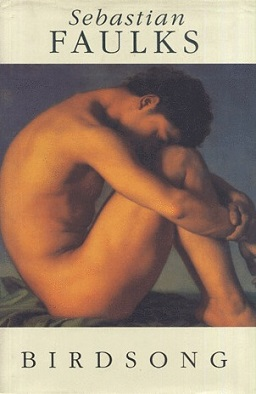
Isabelle realizes she is carrying Stephen’s child soon after they run away together from Isabelle’s unhappy marriage.
Almost immediately, she discovers a hitherto unnoticed desire for a child.
But in her confusion, she decides not only not to tell Stephen about it, but she abandons him and runs to her sister Jeanne instead.

The next time we see Stephen – emotionally shut down and not having touched a woman for seven years – he is in charge of a platoon in the trenches of the Somme.
As the men struggle to cope with unimaginable daily horrors and the possibility of death at any moment, the men send and receive letters from home.
We become very aware of which of them has children and which do not as, rightly or wrongly, Faulks uses the existence of children in these men’s lives to elicit our greater sympathy.
There is Wilkinson, newly married and with a baby on the way, who dies a horrible frontline death.
There is the good-humoured Jack Firebrace who gets word from his wife that his son John is in hospital dangerously ill with diphtheria.
He asks his lieutenant – who, at that moment, is considering whether or not to have Jack shot for falling asleep on duty – whether he has children himself.
That lieutenant is Stephen.
“No” comes the answer, but the reader knows that Stephen probably does.
We may or may not approve of Faulks differentiating between one man and another in this way, but nevertheless a world opens up in this novel in which those with children differ from those without.
We cannot help feeling that Stephen, a father without knowing it, loses out by his ignorance of his and Isabelle’s child.
If he were aware of being a father, how might he be different?
He does not have Jack shot, but neither is he given hope in the dark days of war by the existence of his child in the way the others are.
The novel ends with a birth.
It is one which brings the father concerned unexpected joy.

To be a father may leave a man feeling nothing but bewilderment and a vague sense of dread at the apocalypse lying ahead.
The desire to step crablike around the issue of commitment and marriage resides in many men.
Many men who have not a jot of fatherly feeling for the embryo they have sired while it is still in the womb often fall hopelessly in love the moment the child is born.
Did Stephen have a narrow escape or did he lose a chance to experience an extra dimension to life?
Australian psychologist Steve Biddulph would estimate that 30% of men today don’t speak to their father.
30% have a prickly or hostile and difficult relationship.
30% go through the motions of being a good son – and discuss nothing deeper than lawnmowers.
Less than 10% of men are friends with their father and see them as a source of emotional support.
Where are you at with your father, Sir?
And with older men in general?
This is an important question.
In fact, your manhood depends on it.
Manhood is not an age or a stage.
It is a connection.
Unless you can connect to the inherited masculinity of generations of older men, you are as much use a mobile phone without a battery.

Think about your connection with your father for a moment.
Your masculinity, Sir, unconsciously or not – is based on his.
Most men realize with alarm that their father’s mannerisms, stances and even words are deeply a part of them and are likely to emerge at any time.
If you are at war with him in your head, then you are divided against yourself.
In truth, until you reach a place where you can feel love and respect, you will remain a boy.
Men can suppress their pain by hard work and denial, but will still be prone to outbursts of deep distress, often masked by anger.

A journey is needed.
A deep personal journey to heal the emptiness and understand the whole picture is essential.
The journey can be internal, into your memories of long forgotten incidents and experiences.
You will never have true authority until you understand what respect is, what and who is worthy of respect.
Every father, however much he puts on a critical or indifferent exterior, will spend his life waiting at some deep level to know that his children love and respect him.
He will spend his life waiting.
We accept that a parent has the power to crush a child’s self esteem.
We forget that a child, in time, holds the same power in reverse.
The words “I love you” are cheap and easily said, which is part of the reason we hesitate to speak them.
It is not the words that matter, but the message, however it is conveyed.
Whether it is through a tone of respect, a liking for each other’s company, a hug or a touch, you will find your own way.
You have to tell the ones you love what you feel, all that you feel.
“How quiet life would be without love.
So safe, so calm, so boring.“
(Umberto Eco, The Name of the Rose)

Many men live lives of quiet desperation.
Many men go to the graves convinced that they have been an inadequate human being.
They feel this because of the lack of respect that has developed with those they love.
The pain of this cannot be overstated.
If there are differences between you and the ones you love, then these cannot be ignored.
Do not pretend things are OK.
Respect (love mixed with admiration) is the food of the soul.
We need to discover respect for others.
We need to get respect from others.
Nothing is more powerful than the need for love and approval.
Unless we receive clear and tangible demonstrations of these, we will wither like a flower without water.
All human beings are glorious and worthy of love and respect.
We should not be merely tolerated, but celebrated.
Love is what we hunger for and if it is not forthcoming, then a warp in our life sets in.
When our natural need for love is fulfilled, then we can get on with our lıves.
Unfulfilled, the need for approval drives us like an obsession.
At heart the issue is always the same:
Do you love me, even though I differ from you or what you expect?

One of the biggest stretches for our souls on this Earth is to abandon our shallow egotistical dreams and to realize how much better reality is than any dream we could imagine.
To honor grief, feel it, explore it and let it pass.

What does fathering mean?
It is a good question.
Certainly fathering does imply being a sperm donor.
Nothing more.
In fact, many people today do not see any problem with single women or lesbian couples – seeking donor insemination, leaving fathers out completely.
However, fathering is much more than this.
It is an essential part of raising children of either sex.
Children need men as providers and role models, men who are capable of psychologically meeting their needs.
Even the strongest, most capable single parent finds it difficult to give a child all that is needed to make a human being.
Where are all the fathers?

I feel a sense of profound loss, of defeat, of inhumanity, when men are devoid of personal contact with their children.
Their loss, the loss of something central to the human process, is society’s loss.
All the money, technology, bureaucracy, professionalism or ideology in the world cannot make up for this loss.
Above: Scene from the movie Austin Powers: Goldmember
Are fathers necessary?
Feminists would have you believe not.
Girls need fathers in their development for very specific reasons in their development – reasons that cannot be fulfilled by mothers on their own.
Boys who do not get very active fathering will never get their lives to fully work.
Fathers represent consistency, firmness, warmness and involvement.
Many men may have the love but not the methods of showing that love.

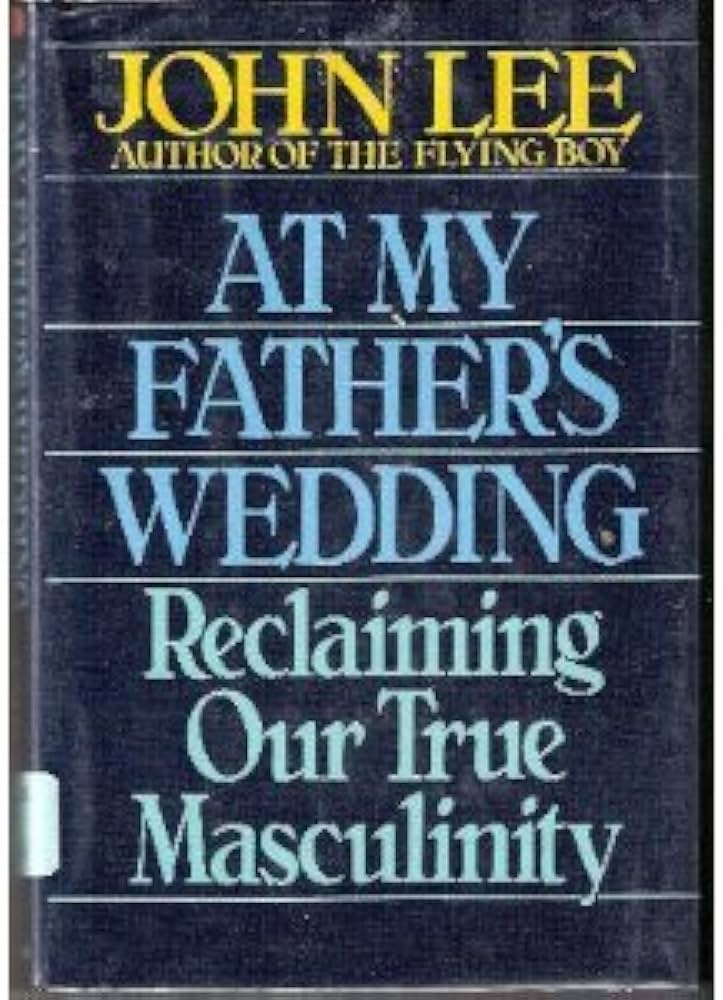
In his beautiful book, At My Father’s Wedding, John Lee decribes four kinds of defective father:
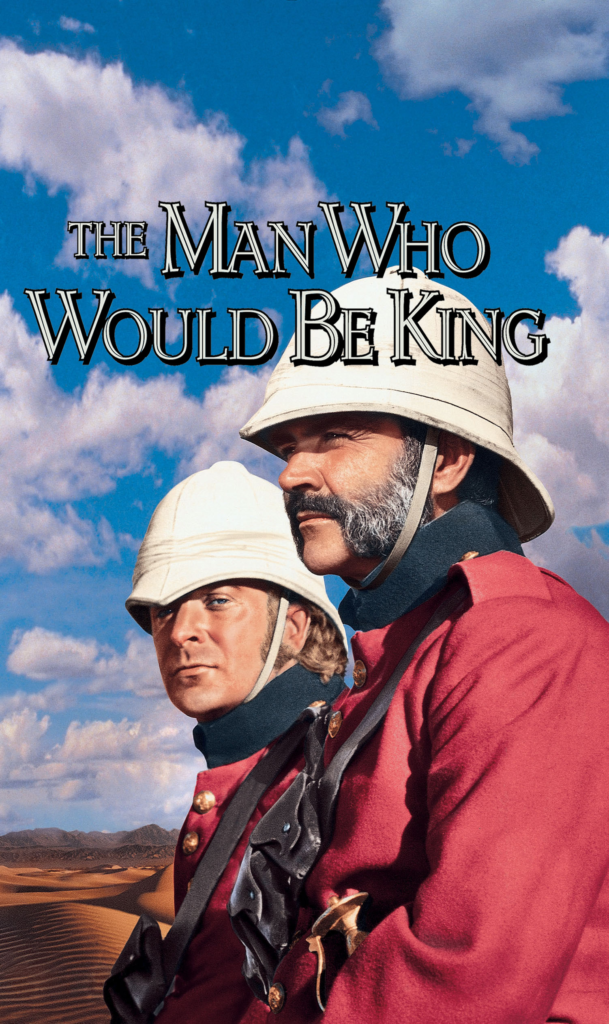
- The man who would be king
This is a man who, having worked hard all day, returns home to be waited on by his loyal wife – servant and seen-but-not-heard children.
He is King of the Castle, the Lord of the Manor.
His family tip-toes around his armchair, careful not to bother him.
The only time Father gets really involved is to dish out punishments or pardons.
He is the “wait till your father gets home” parent.
- The critical father
Full of putdowns and nitpicking, he is driven by his own frustration and anger.
He is certainly active in the family, but in totally negative and frightening ways.
Whatever is frustrating him – his job, his own father, his lack of success in his life, his hopes for his children – the sweet wine of his love has turned into an acid that eats away at his family’s well-being.
- The passive father
He gave up – all duties, all responsibilities and power to his wife, the mother of his children.
He backs down to his kids, his boss, his relatives, society, the government….
The list is long.
Apart from an occasional comment or the bleating justification of himself, he is never really there.
He has retreated.
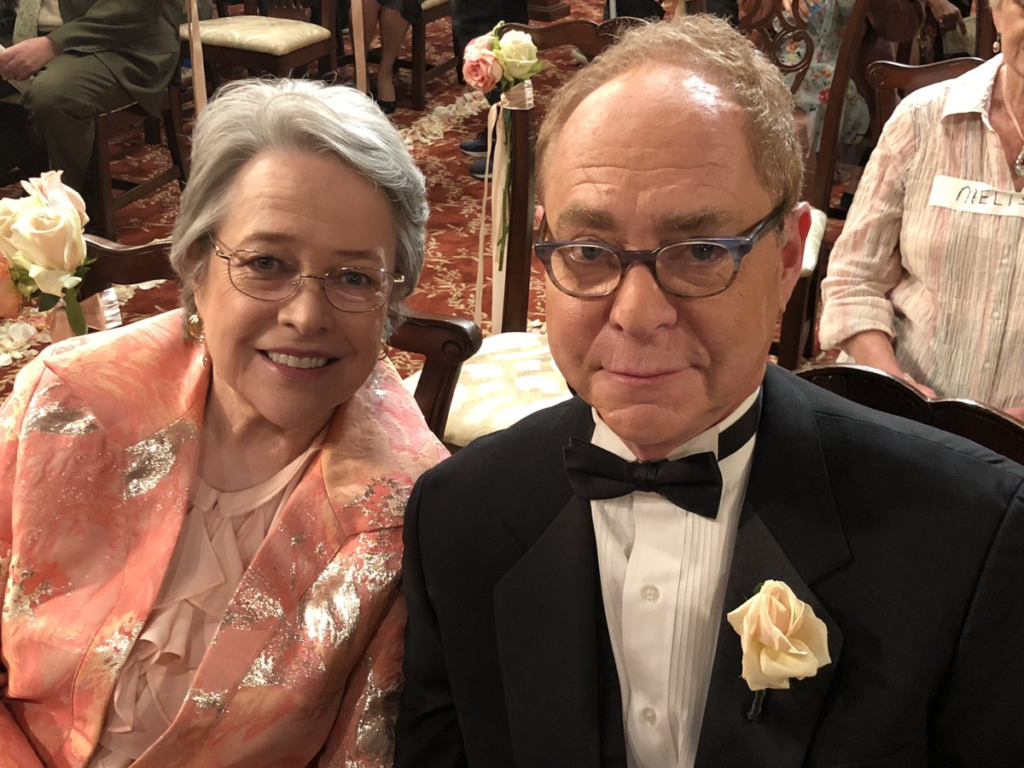
Above: Scene from the TV sitcom The Big Bang Theory
- The absent father
He might be a capable and powerful man, but not at home.
He is off having a career, leaving early in the morning, returning late at night.
He is of no use to you as a father because a father has to be there.
Sometimes it seems almost too much to ask – a father who is active and involved, a father who is his own man and is also willing to be a partner to his wife and father to his kids.
Imagine a world with fathers, religious leaders, bosses at work, school administrators, politicians and presidents whom we could actually believe in – who embody kindness, backbone, irony, humor, wisdom, righteous anger and protectiveness.
What a wonderful world this could be!

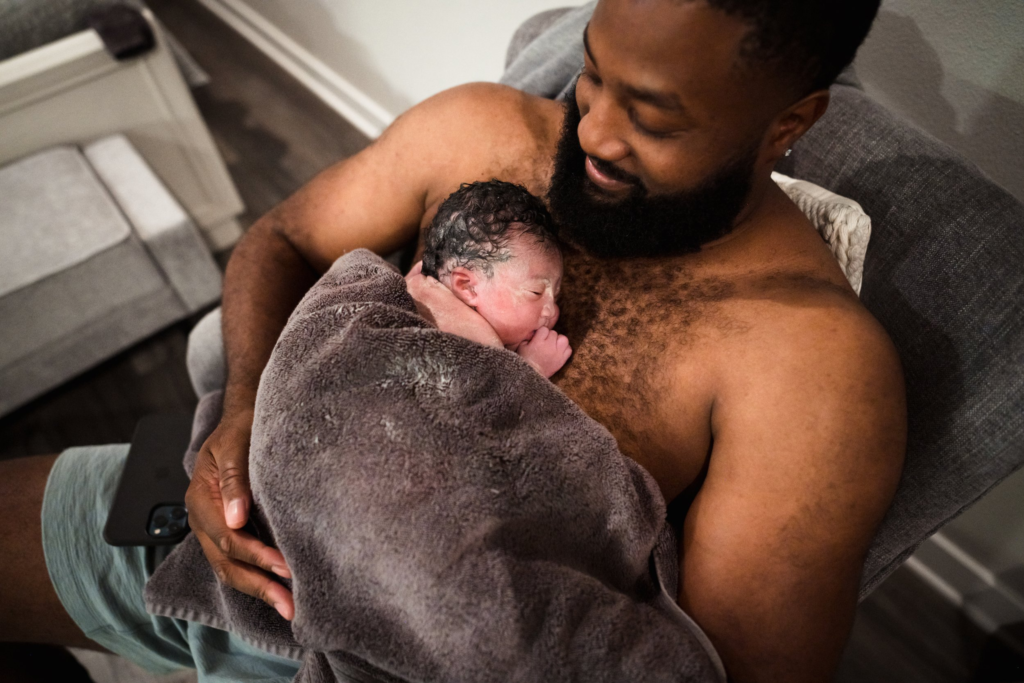
A father’s involvement should begin during her pregnancy.
If the fetus hears your voice, often, they will soon distinguish it from their mother’s and any other voices.
They will turn to face you once they are born and recognize that familiar rumble.
Holding them as infants they will feel your voice and your presence.
A man’s voice resonates deep in his chest and vibrates through a held baby in a way they come to love.
Let the baby feel your arms around it and become bound to your natural smell.
This reassures them of your feel and aroma.
Care for your child in an equal way as your wife does.
As a wee lad of a baby becomes a boy he will leave his mother’s side and cross over to his father’s side.
He will love and relate intensely to his mother, but he will actively want to be with and be like his father.
He can only do this if his father is around, available and interested in sharing time with him.
A father needs to be doing things with his son, enjoying sharing his life with him, challenge and test him but never wounding or belittling him.
Women and children need men to be at least equal partners in discipline.

There are moments when a man must stand up to his wife.
Don’t agree with her for the sake of peace.
Say what is true for you.
Walk the line between surrendering out of weakness and getting violent or intimidating.
Women are often right but there are times when they can be completely wrong.
Women are neither devils nor angels.
They are normal fallible human beings.
She can be as wrong as immature, as perverse, as prejudiced, as competitive, as bloody-minded as a man.
You will not always understand one another.
You will see things differently, because you are different.
Women can’t understand men unless we explain ourselves.
A man has to be able to state his point of view, to debate, to leave aside hysteria and push on with an argument until something is resolved.
Sometimes a man must set boundaries.

There are moments when a boy needs to learn to control his strength from the example of a father who never hurts him and who doesn’t allow him to hurt others.
A mother is about tenderness.
A father is about strength, explaining firmly and clearly about what is and is not acceptable and he reinforces this with nonviolent but firm follow-up while remaining loving and involved with his son.
He needs to teach him how to treat his mother with respect, that he can disagree with his mother without being rude or threatening.
Men are mentors for their sons.
A father’s male friends are also mentors for his son to see how men interact with one another, how each man has his own gifts and identity different from other men, so that the boy can choose to develop his own identity by emulating those men he respects.
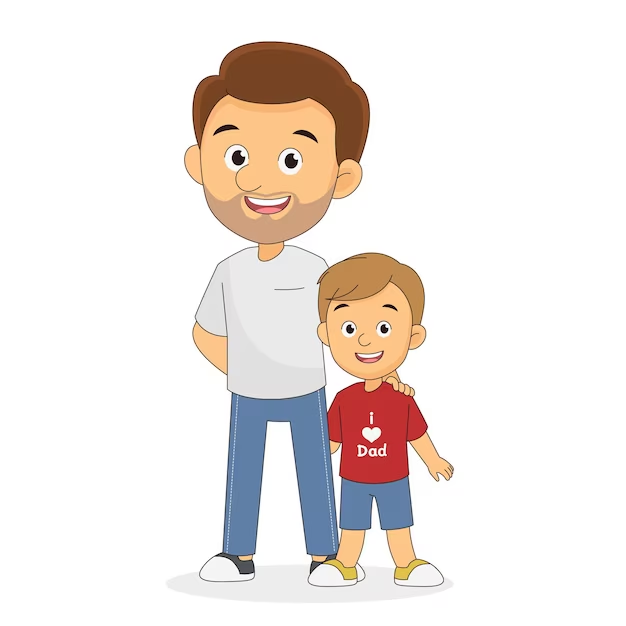
Daughters need fathers too.
Girls need affirmation from their fathers, a feeling of being admired but never in an uncomfortable way.
Girls need to learn from their fathers the respect that men should show women but as well the respect that women should show men.
Through conversation with he father and other older men, a girl can gain assurance, feel worthwhile and know that she does not have to settle for someone who does not treat her with the respect that her father has shown her.
A father shows her what a man’s qualities and foibles are, his strengths and weaknesses.
Seeing how her father interacts with her mother, knowing that he aligns with her mother at a deep level, that he cannot be seduced or undermined means that she will recognize the boundaries that men live by.
If her parents have a good relationship, she will instinctively seek a semblance of that quality in her own marriage.
Fathers protect and offer her safety, moderated according to her age and stage of maturity.
She needs to prove to him she can be trusted to make mature choices and that she can be strong and have a happy life.
A father protects his wife and children.
He represents strength and safety.

Men need protection, regardless of their age.
At any age men, through their isolation, can be extraordinarily vulnerable.
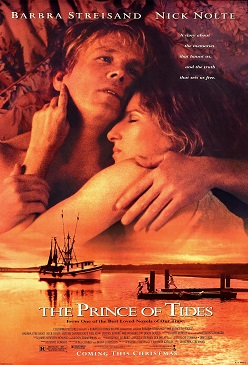
Men’s difficulties are with isolation.
We protect ourselves with walls around our hearts, pretending to be strong, pretending to be happy, rarely getting a taste of what life could be, should be, with moments of real passion and glory in being alive.

There are very few happy men.
Men, on average, live for less years than women do.
Men routinely fail at close relationships.
Over 90% of violent acts are carried out by men.
67% of the victims of that violence will be men.
In school, 90% of children with behavior problems are boys.
80% of children with learning problems are boys.
90% of inmates are men.
74% of the involuntarily unemployed are men.
The leading cause of death amongst men between 12 and 60 is self-inflicted death.
Over 75% of suicides are men.
For many men, life is just not working.

The world suffers from a lack of positive passionate masculinity.
We need to learn how to be confident and easy in making better relationships and in developing a rich and sustaining inner life.
So that we can enjoy our key role of raising our children to go further in the human adventure.

But in our modern times as men question whether they wish to be fathers or not (assuming that they physically and psychologically can) and they realize that they need to face up to the reality of the difficulty of what it means to truly be a man and to embrace our masculinity, men still must contend with the realities of the other gender of humanity with whom we share the planet:
Women.
Women are oppressed in many parts of the world and that should change, that must change and that will change.
But in more enlightened countries feminism has assured that a woman is financially secure in the event of a divorce and her children provided for should the father be absent from the home.

Women in the West still scream about equality, but, in truth, most companies are compelled to offer their female employees both an equal salary and the equal opportunities of their male counterparts.
This is good and to be applauded.
But are men truly equal to women?
I have my doubts.

Men are conscripted to military duty in many countries of the world.
Women rarely are.
Even if there are laws that say she should be, these laws are rarely enforced.
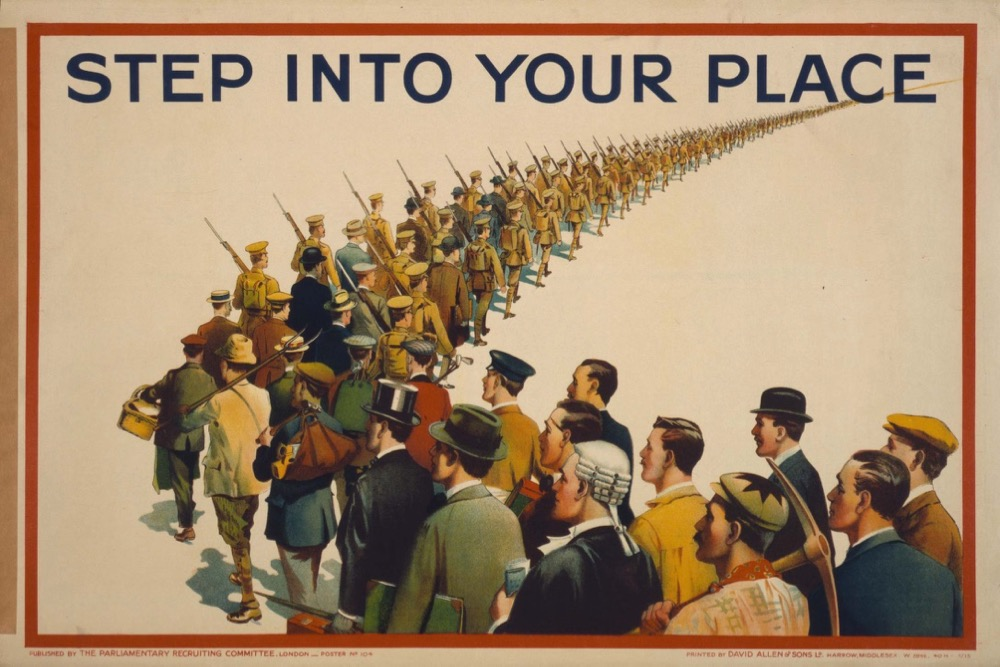
A man has no real choice but to work for his living.
A clever woman married to an affluent man can work as little or not at all as she wishes.
A woman has flexibility in the way she dresses and the way she adorns herself.
By comparison a man’s appearance need only conform to the task put to him.
A man’s garb is utilitarian even in the most formal of situations and as the focus remains firmly upon the female he remains invisible in his isolation as an indistinguishable individual in a mob of men like himself.
Our grooming is efficient and effective and standardized.
The creativity and imagination inherent in a woman’s appearance speaks of her perceived importance in her own eyes as well as in the eyes of the world she seeks to impress.

Life offers the human being two choices:
Spiritual existence and animal existence.
In general, it is permissible for a woman to opt for the animal existence that offers her physical well-being, a place to breed and an opportunity to indulge herself in that which makes her happy.
At birth, men and women have the same intellectual potential.
There is no primary difference in intelligence between the sexes.
Why don’t more women make use of their intellectual potential?
For the simple reason:
They don’t need to.

Women have choices to become whatever and whomever they wish to be.
Too many women choose to be less than their potential.
There is the old adage that men are stupid but women are crazy.
I think if this adage is true then the reason may be is that men allow themselves to be manipulated into situations that may not necessarily be to their advantage and women go crazy when they realize that their lives could be more than what they settled for.
I think a woman’s horizons are limitless, but it is she herself that diminishes herself and, in turn, diminishes men.

Man has a thirst for knowledge.
He wants to know what the world around him looks like and how it functions.
Man thinks.
He draws conclusions from the data he encounters.
Man is creative.
He makes something new out of the information achieved from his conclusions.
Man is sensitive (despite his image or pretense).
As a result of his exceptionally wide, multidimensional emotional scale, he not only registers the commonplace in fine gradation but he creates and discovers new emotional values and makes them accessible to others through sensible descriptions or recreates them as an artist.
Of all the qualities of man, his curiosity is certainly the most impressive.

I am in no way, shape or form suggesting that a woman can’t be thirsty for knowledge, that she doesn’t think, that she isn’t creative nor sensitive.
She can do and be anything and anyone she wants to be.
If she chooses to.

Some men think that a woman is selfish.
I won’t go so far to suggest that, but I think she operates self-interested.
A woman takes interest only in subjects that have an immediate personal usefulness to her.
While a man’s curiosity is something quite different.
His desire for knowledge does not need a personal implication, it can be purely objective and often is much more practical in the long run than a woman’s attitude.
Man’s curiosity is universal.
A woman’s curiosity is specific to only her.

Man is a kind of Sisyphus.
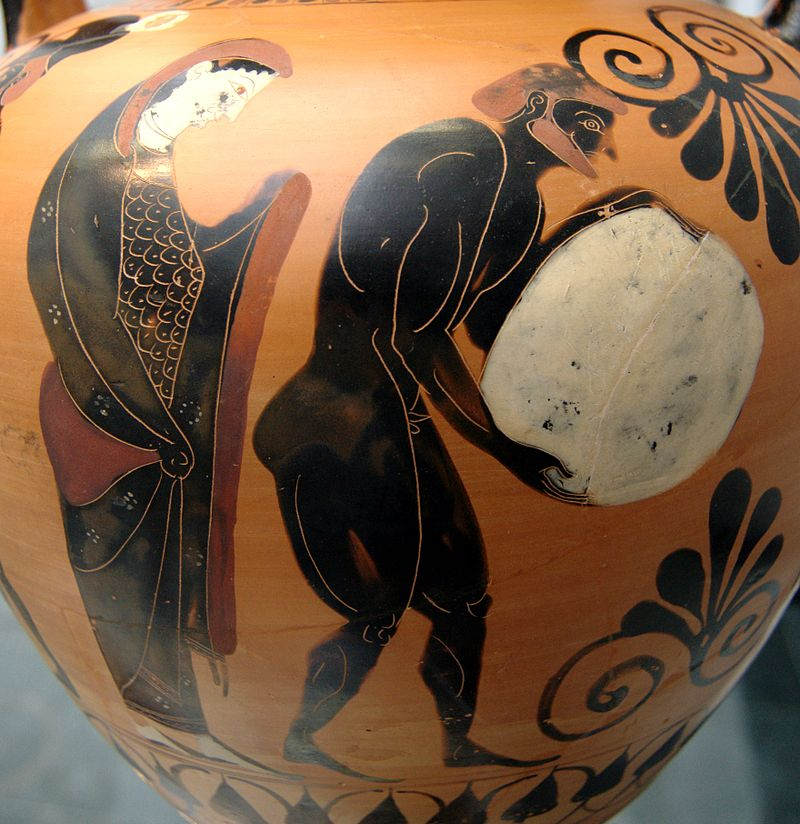
Above: Persephone supervising Sisyphus pushing his rock in the Underworld
(In Greek mythology, Sisyphus was the founder and king of Ephyra (now known as Corinth).
He was a devious tyrant who killed visitors to show off his power.
This violation of the sacred hospitality tradition greatly angered the gods.
They punished him for trickery of others, including his cheating death twice.
The gods forced him to roll an immense boulder up a hill only for it to roll back down every time it neared the top, repeating this action for eternity.
Through the classical influence on modern culture, tasks that are both laborious and futile are therefore described as Sisyphean.)
He comes into the world to learn, to work and to father children.
His sons, in their turn, will learn to work and produce children.
So has it been.
So will it always be.

If a young man gets married, starts a family and spends the rest of his life working at a soul-destroying job, he is held up as an example of virtue and responsibility.
While a woman of the West is encouraged to live only for herself, do what she wants simply because she enjoys it, sleep where and when and with whom she wants and take advantage of her femininity – while crying about her victimhood and inequality.
Should a man live only for himself, work only for himself, do what he wants simply because he enjoys it and only has to keep himself, sleeping where and when and with whom he wants, facing woman when he meets her on equal terms, he is rejected by society.
If a man stopped focusing on a woman’s wishes and whims, new worlds could be discovered and things could be made to make life fuller and richer.
Instead men forsake their enormous potential for the promise of sex and companionship to serve the needs of women.
If men would stop and think, they would tear the mask off these creatures with their tinkling bracelets and their frilly blouses and gold leather sandals.
Women have the capacity to surpass men and yet they fight to maintain a status quo that favors them and their femininity.
Why develop your own intelligence, imagination and determination when one only needs to take advantage of a man’s?

Children are endearing, which in itself is no reason for producing them.
The creation of a child is in effect the creation of an adult.
It is a mistake to maintain that only women are interested in having children.
Men want them, too.
Children are one of the excuses by which men justify their subjection to women.
Women, on the other hand, need children to justify their lives.
Both sexes exploit the child for their own ends.
Although the whole world is full of half-starved orphans, every couple produces its own brood.
Man must have a reason to be enslaved when, later on, his sexual powers have declined and this reason must also explain his enslavement to a particular woman.
This is simple.
She is, after all, the mother of his children.
Since woman is the excuse for his subjugation, he can have only one woman at a time.
She is his goddess.
To have more than one deity would make him insecure, lead him to question his own identity and throw him back into the state of freedom he does not know how to handle.
All she needs is an excuse for making one particular man work for her long after he ceases to bed her.
This excuse is provided by bearing his children.
When a man engenders children, he gives a woman hostages in hopes that she will need him forever.
She gives him some sort of stability and justifies his service.
He views woman and child as poor, helpless and in need of protection.
He believes he is needed.
Which, to be fair, he is.

Thanks to wife and child, man has acquired an excuse, an artificial justification for his wretched existence, for his subjection.
Both man and woman only stand to gain by having children – otherwise they would not produce them.
Man’s advantage lies in the fact that he appears to lead a more meaningful life and he is hers forever.
Woman receives in exchange: lifetime security, comfort and freedom from responsibility to the improvement of herself.
The production of hostages demands a ransom.
As aforementioned, men routinely fail at close relationships.
Depending on where in the world we speak of, over 40% of marriages end in divorce.
In some countries, this can be as high as two out of every three marriages ending in divorce.
Depending on the country, 70% to 80% of the divorces are initiated by the woman.
At first glance this seems to be an unwise move on the part of the woman until we take into account how protected she is by the system.
A woman divorces – even if she has been disloyal to their relationship – and is rewarded with cash and prizes.
A man divorces and is rewarded with debt, despair and a demoralizing diminishment of both his wealth and his well-being.
Rather than realizing the freedom a single man possesses is more ıdeal than the responsibilities a relationship requires, men are brainwashed into thinking that they are somehow, somewhat, inferior should they be unable to attract a bride or raise a family.
In regards to custody of his children, the courts traditionally reward the mother with their care, for how can a man work and raise children simultaneously?
What about working single mothers?
It depends on money management and materialism.
But in many countries a woman is given not only alimony (and with children, child support) she can also receive assistance from the state, so many women can and do remain at home and pretend they are sacrificing their lives for their family when it is largely for their own benefit that they sought a spouse and children.
Men, by their nature, have a great capacity for love and responsibility – and delusion.
He is so afraid of being rejected by his society, so afraid of isolation, he will spend his life in a degrading manner and he himself will not gain by it.
If a man worked only for his own personal welfare, he would have to struggle far less since luxuries do not mean as much to him as they do to women.
It is the fact that he works for others that makes him so tremendously proud.
No matter what a man’s job may be, every moment of his life will be spent as a cog in a huge and pitiless system – a system designed to exploit him to his utmost, to his dying day.
A man is like a child who is condemned to play the same game for the rest of his life, for as soon as it is discovered he has a talent in a field, he is compelled to do this forever.
The woman exploiting him will never permit him to look for something else.
Driven by the woman to increase their standard of living, he engages in a desperate struggle against competitors to improve his position, never calculating that the price he pays for his improved salary might be too high.
The fear of being rejected is considerable.
Why else will a doctor (who as a child liked to observe tadpoles in jam jars) busy himself night and day with people made weak and repulsive by injury or disease?
Why else does a pianist, who as a child liked to tinkle on the piano, spend his life playing the same Chopin nocturnes over and over again?
Why else does a politician, who as a schoolboy discovered the techniques of manipulating people successfully, contınue as an adult mouthing words and phrases, contorting his face and playing the fool and listening to idle chatter?
Even if he becomes President of the United States, isn’t the price too high and the prize too paltry?

No one can hardly assume men do all this for their own pleasure without sometimes feeling a desire for change.
They do it because they have been manipulated into doing a series of conditioned acts.
A man who is no longer able or willing to perform these acts, whose earning capacity is lessened, is considered a failure.
He stands to lose everything – wife, family, home, his whole purpose in life – all the things, in fact, which give him security.
One might think that a man who has lost his capacity for earning money is automatically freed from his burden and should be glad about this happy ending, but only in the service to the pitiless sentence of society does he feel secure.
A man has a great capacity to love and in his quest for security he will search for a companion.
She will cajole and command his service by the promise of sex and the threat of taking from him all that he has worked hard to acquire.
A man loves his wife and children but the demand to provide for them, to give them the highest standard of living possible, will mean the more wealth they acquire, the greater the sacrifice will be required from him in terms of time apart from them and time devoted to work.

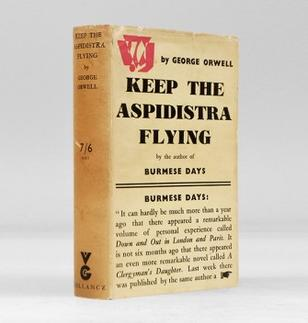
I find myself thinking of George Orwell’s Keep the Aspidistra Flying.
The aspidistra is a hardy, long-living plant that has been used as a house plant in England, and which can grow to an impressive, even unwieldy size.
It was especially popular in the Victorian era, in large part because it could tolerate not only weak sunlight but also the poor indoor air quality that resulted from the use of oil lamps and, later, coal gas lamps.

Aspidistras had fallen out of favor by the 20th century, following the advent of electric lighting, but their use had been so widespread among the middle class that they had become a music hall joke, appearing in songs such as “Biggest Aspidistra in the World“, of which Gracie Fields (1898 – 1979) made a recording.
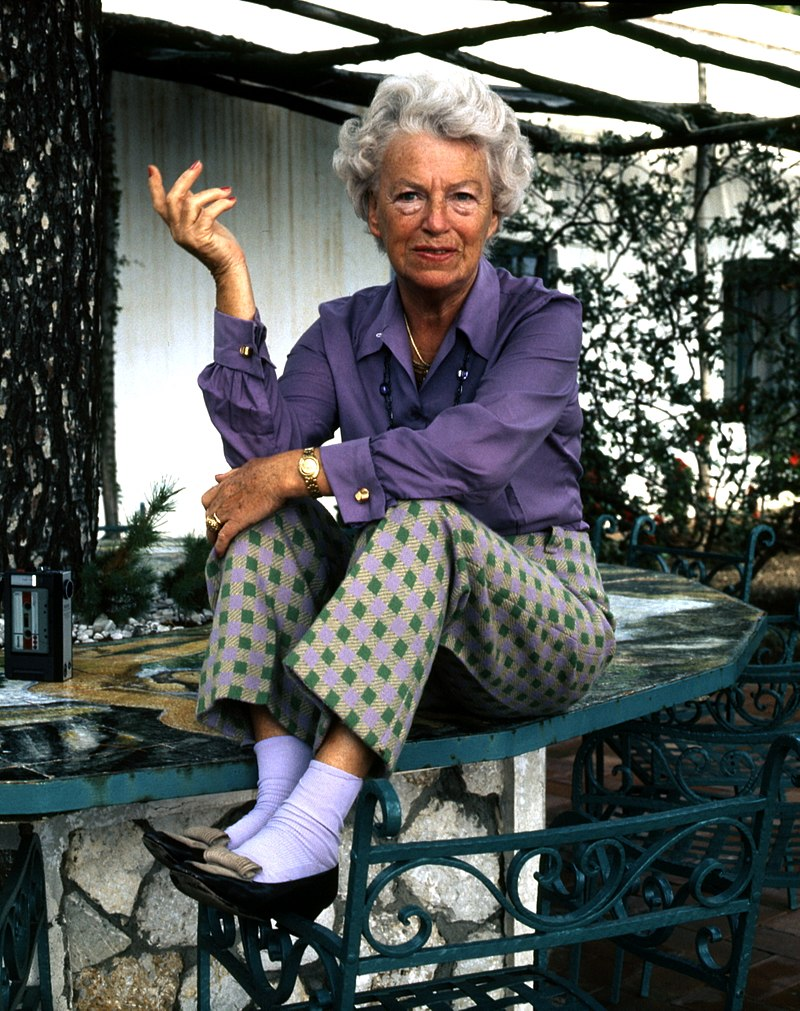
Above: English singer Gracie Fields (1898 – 1979)
In the titular phrase Orwell uses the aspidistra, a symbol of the stuffiness of middle-class society, in conjunction with the locution “to keep the flag flying“.
The title can thus be interpreted as a sarcastic exhortation in the sense of “Hooray for the middle class!“
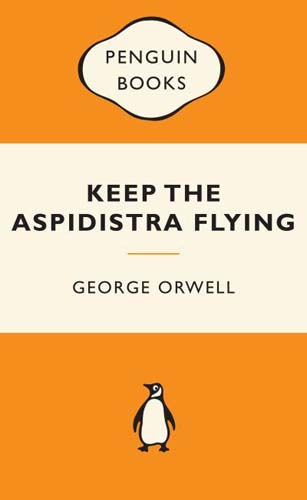
Gordon Comstock has “declared war” on what he sees as an “overarching dependence” on money by leaving a promising job as a copywriter for an advertising company called New Albion — at which he shows great dexterity — and taking a low-paying job instead, ostensibly so that he can write poetry.
Coming from a respectable family background in which the inherited wealth has been dissipated, Gordon resents having to work for a living.
The “war” and the poetry are not going well and, under the stress of his “self-imposed exile” from affluence, Gordon has become absurd, petty-minded and deeply neurotic.
Comstock lives without luxuries in a bedsit in London, which he affords by working in a small bookshop owned by a Scot, McKechnie.

He works intermittently on his magnum opus, a long poem that he plans to call London Pleasures.

Meanwhile, copies of his only published work, a slim volume of poetry entitled Mice, collect dust on the remainder shelf.
He is simultaneously content with his meagre existence and disdainful of it.
He lives without financial ambition or the need for a “good job“, but his living conditions are uncomfortable and his job is boring.
Comstock is “obsessed” by what he sees as the pervasiveness of money (the “Money God“, as he calls it) behind social relationships, feeling sure that women would find him more attractive if he was better off.
At the beginning of the novel he senses that his girlfriend, Rosemary Waterlow, whom he met at New Albion and who continues to work there, is dissatisfied with him because of his poverty.
An example of his financial embarrassment occurs when he is desperate for a pint of beer at his local pub, but has run out of money and is ashamed to cadge a drink off his fellow lodger, Flaxman.
One of Comstock’s last remaining friends, Philip Ravelston, a Marxist who publishes a magazine called Anti-Christ, agrees with Comstock in principle, but is comfortably well-off himself.
This causes strains when the practical miseries of Comstock’s life become apparent.
Ravelston does, however, endeavour to publish some of Comstock’s work and his efforts, unbeknown to Comstock, resulted in Mice being published via one of his publisher contacts.
Gordon and Rosemary have little time together — she works late and lives in a hostel, and his “bitch of a landlady” forbids female visitors to her tenants.
Then, one evening, having headed southward and having been thinking about “this women business” in general and Rosemary in particular, Gordon happens to see Rosemary in a street market.
Rosemary refuses to have sex with him, but she wants to spend a Sunday with him, right out in the country, near Burnham Beeches.
At their parting, as he takes the tram from Tottenham Court Road back to his bedsit, he is happy and feels that somehow it is agreed between them that Rosemary is going to be his mistress.
However, what was intended as a pleasant day out away from London’s grime turns into a disaster when, though they are hungry, they opt to pass by a “rather low-looking” pub, and then, not able to find another pub, are forced to eat an unappetizing lunch at an overpriced fancy hotel.
Gordon has to pay the bill with all the money he had set aside for their jaunt and worries about having to borrow money from Rosemary.
Out in the countryside again, they are about to have sex for the first time when she violently pushes him back because he was not going to use contraception.
He rails at her:
“Money again, you see!
You say you ‘can’t’ have a baby.
You mean you dare not, because you’d lose your job and I’ve got no money and all of us would starve.“
Having sent a poem to an American publication, Gordon suddenly receives from them a cheque worth ten pounds, a considerable sum for him at the time.
(£10 in 1934 equates to £592.20 in 2023.)

He intends to set aside half for his sister Julia, who has always given him money and support.
He treats Rosemary and Ravelston to dinner:
It begins well, but deteriorates as Gordon, drunk, tries to force himself on Rosemary.
She angrily rebukes him and leaves.
Gordon continues drinking, drags Ravelston with him to visit a pair of prostitutes, and ends up broke and in a police cell the next morning.
He is guilt-ridden over the thought of being unable to pay his sister back the money he owes her, because his five-pound note has been given to, or stolen by, one of the prostitutes.
After Gordon makes a brief appearance before the magistrate Ravelston pays Gordon’s fine, but a reporter writes about the case in the local paper.
The ensuing publicity results in Gordon losing his job at the bookshop.
As he searches for another job, his life and his poetry stagnate.
After living with his friend Ravelston, Gordon ends up working, this time in Lambeth, at another bookshop and lending library owned by the sinister Mr. Cheeseman, where he is paid 30 shillings a week, ten shillings less than he was earning before.
Yet Gordon is satisfied:
“The job would do.
There was no trouble about a job like this.
No room for ambition, no effort, no hope.”
Determined to sink to the lowest level of society, Gordon takes a furnished bed-sitting-room in a filthy alley parallel to Lambeth Cut.
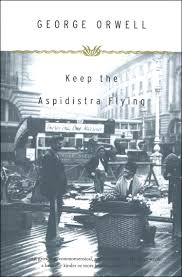
Both Julia and Rosemary, “in feminine league against him“, seek to get Gordon to go back to his “good” job at the New Albion advertising agency.
Rosemary, having avoided Gordon for some time, suddenly comes to visit him one day at his dismal lodgings.
Despite his terrible poverty and shabbiness, they have sex, but it is without any emotion or passion.
Later, Rosemary drops in one day unexpectedly at the library, having not been in touch with Gordon for some time, and tells him that she is pregnant.
Since she and Gordon reject the idea of an abortion (which would have been both illegal and dangerous at that time), Gordon is presented with the choice between leaving Rosemary to a life of social shame at the hands of her family or marrying her and returning to a life of respectability by taking back the job at the New Albion agency that he once so deplored.
Gordon chooses Rosemary and respectability, and experiences relief at having abandoned his anti-money principles with such comparative ease.
After two years of abject failure and poverty, he throws his poetic work London Pleasures down a drain, marries Rosemary, resumes his advertising career and plunges into a campaign to promote a new product to prevent foot odor.
In his lonely walks around mean streets, aspidistras seem to appear in every lower-middle class window.
As the book closes, Gordon wins an argument with Rosemary to install an aspidistra in their new small but comfortable flat off the Edgware Road.
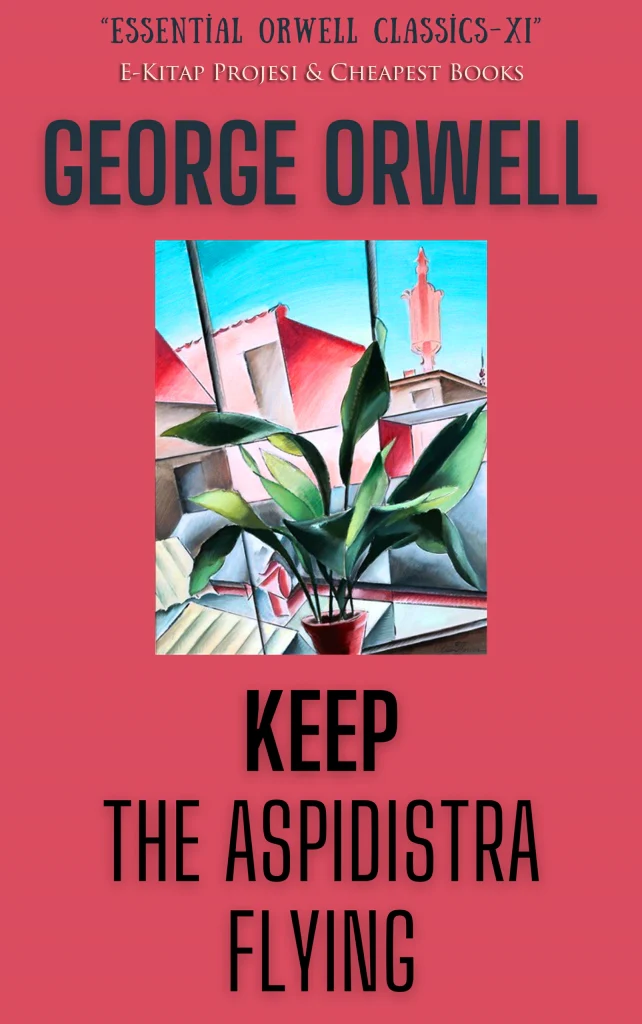
Man has been manipulated by woman to the point where he cannot live without her and therefore will do anything she asks of him.
He fights for his life and calls it love.
Woman is incapable of living without man, for she cannot survive on her own without making the same sacrifices as a man.
She fights for her life and calls it love.
To a woman, love is power.
To a man, love is service.
For the sake of love, woman will do things that are of advantage to herself.
For the sake of love, man will risk everything, sacrifice everything, harming himself.
When a woman marries, she can give up her career for the sake of love.
When a man marries, he will work for two and what children may follow.
For both sexes, love is a fight for survival.
The woman survives by being victorious.
The man survives by surrender and sacrifice.
Love gives a woman a halo of selflessness, even at the moment of her most pitiless deception.
For the sake of love, a man can hide his cowardly self-delusion behind a smokescreen of sentiment.
His service is honorable and serves a higher purpose.
He will achieve greater goals, and the more he achieves, the more alienated he will become from wife and children.
The more he tries to please her, the more she will demand.
The more comforts he provides, the more comforts she requires.
Women were meant to help men, not help themselves to whatever they can get from men.
Only woman can break the circle of manipulation and exploitation, but she will never do it.
There is no compelling reason why she should.
The world will go on.
And man, that wonderful dreamer, will never awaken from his dream.

I am not against fatherhood, but let us examine again this question of “equality“.
Should a man in the West get a woman pregnant, she has the choice of becoming a mother or not.
Should a man want the baby and she does not, he has no say in the matter.
Should a man not want the baby and she does, not only does he not have a say in the matter but he will be expected to finance her and the baby if the law has the ability to make him do so.
Twenty minutes of pleasure rewarded with twenty years of sacrifice.

A man must decide, with eyes wide open, if a life with a woman is truly worth the sacrifices and responsibilities that commitment demands.
I neither condone nor condemn whatever decision he will make.

Life with children is, to quote the English writer Charles Dickens (1812 – 1870) in a different context than he might have intended:
“It was the best of times.
It was the worst of times.
It was the age of wisdom.
It was the age of foolishness.
It was the epoch of belief.
It was the epoch of incredulity.
It was the season of Light.
It was the season of Darkness.
It was the spring of hope.
It was the winter of despair.
We had everything before us.
We had nothing before us.
We were all going direct to Heaven.
We were all going direct the other way.
In short, the period was so far like the present period, that some of its noisiest authorities insisted on its being received, for good or for evil, in the superlative degree of comparison only.“
(Charles Dickens, A Tale of Two Cities)
The only thing I think that truly matters on the question of children is the why.
Does a woman want to have a baby simply to prove that her body can do what it was designed to do?
Does a woman want a baby to love or to use as a hostage to keep her provider by her side?
Does a man want a baby for someone to love or to justify his commitment to the woman he serves?
A child should be wanted for itself, should be loved for itself.
A child should be seen as a miracle of life rather than a means to an end.

For a man the choice of wife and children is a choice between freedom and fear.
Being free to do as he will despite the insecurity and isolation of this decision or to surrender to the fear of being rejected by the society from which he sprung.
I neither condone or condemn whatever he decides.
Sir, you have a choice.

Sources
- Ella Berthoud and Susan Elderkin, The Novel Cure
- Steve Biddulph, Manhood
- Charles Dickens, A Tale of Two Cities
- Sebastian Faulks, Birdsong
- John Lee, At My Father’s Wedding
- Cormac McCarthy, The Road
- George Orwell, Keep the Aspidistra Flying
- Esther Vilar, The Manipulated Man