
The Road to the Big Good – Part Two
Saturday 16 May 2026
Ureki, Guria, Georgia
The train next stops at Ureki, one of the strangest and most distinctive resort towns on the Black Sea coast.

Above: Ureki Station, Guria, Georgia
Its principal attraction is its magnetic black sand.
The beach contains unusually high concentrations of magnetite, an iron-bearing mineral that gives the sand its distinctive dark colour and magnetic properties.

Above: Ureki Beach
Since Soviet times, people have associated it with therapeutic benefits, particularly for joint pain, circulation problems, neurological conditions and rehabilitation following injuries.
I am essentially passing through a place where people historically came not simply to enjoy a holiday, but to be medically repaired by lying on a beach.
Ureki’s heyday coincided with the Soviet era, when sanatorium culture occupied an important position within the USSR’s approach to public health and recreation.
Workers and their families could receive subsidised holidays, often through trade unions and state institutions.
Rest and recuperation were considered important components of maintaining a healthy workforce.
Ureki became well known within that system.

Above: Flag of the Georgian Soviet Socialist Republic (1921 – 1991)
Situated approximately 60 kilometres north of Batumi and 300 kilometres west of Tbilisi, the settlement received town status in 1953.
Its name is traditionally associated with the dense woodland that once covered the surrounding landscape, an inaccessible forest where hunting was supposedly difficult.
There is something rather appealing about a seaside resort whose name recalls the forest that preceded it.
Deep Forest.

Above: The railroad near Ureki
The climate is humid subtropical, and the landscape is almost unexpectedly lush for what foreigners might imagine Georgia to be.
Palm trees, eucalyptus, pine forests, heavy rainfall and sea air create an unusual combination.
There is something surreal about the place in bad weather.
In sunshine, the black sand looks exotic and inviting.
Under rain and fog, it can feel almost volcanic or post-apocalyptic.
Ureki fits my current mood.

Above: Ureki
It belongs to that chain of Black Sea towns where the Soviet dream of collective health and leisure still lingers in faded hotels, ageing sanatoriums, rusting railings and damp sea air.
Ureki is a place suspended between medicine, memory and weather.
It captures something many modern travel cultures have almost forgotten: the older idea that rest itself was once treated as serious human maintenance rather than indulgence or inefficiency.
I am travelling through landscapes built around the idea that exhausted people can be restored.
And perhaps that is why Ureki interests me.
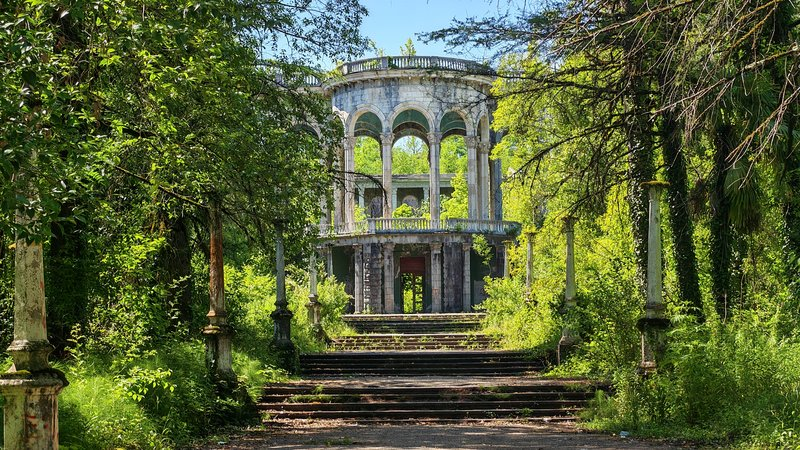
Above: Ureki
Ureki is not necessarily somewhere to visit in search of spectacle.
Not for nightlife.
Not for grand landmarks.
Not for sophisticated entertainment.
It is potentially a place for slowing down.
A few days of sea air, pine scent, long grey horizons, simple food and unstructured time.
A place of recovery rather than achievement.
There is something appealing about the distinction.
Modern life tends to frame almost every pause as instrumental.
We rest so that we can work more efficiently afterwards.
We exercise to improve performance, take holidays to return refreshed, and practise mindfulness to become more productive.
What happened to simply being allowed to rest?
The old Soviet sanatorium tradition, whatever its bureaucratic and ideological shortcomings, at least acknowledged that exhausted bodies and minds required opportunities for recuperation.
Climate, mineral water, sea air, forests, silence and routine were all considered components of a restorative environment.
Not self-improvement.
Not optimisation.
Recovery.
These damp stations, faded hotels and pine groves cease to be merely decaying infrastructure.
They become remnants of a civilization-scale philosophy of convalescence.

Above: Ureki Beach
Of course, the magnetic sand deserves a qualification.
It genuinely contains magnetite, but claims that it cures arthritis, cardiovascular conditions or neurological disorders should not be accepted uncritically.
The clinical evidence is insufficient to treat the sand as medicine.
Warm sand, gentle exercise, fresh air and an agreeable environment can be enjoyable without promising miraculous cures.
Perhaps the historical interest lies as much in people’s belief in the healing properties of Ureki as in the minerals themselves.

Above: Ureki sand
I would not sell Ureki as a beautiful town.
I would sell it as a potentially beautiful experience.
The magnetic beach is genuinely distinctive.
Unlike the pebble beaches found elsewhere along much of the Georgian coast, its dark sand provides a rather different seaside experience.
You can even run a magnet through it and collect magnetic particles.
The pine groves provide shade and a pleasant woodland atmosphere.
The relatively shallow coastal water is attractive to families, while the combination of sea, sand and forest encourages walking and relaxation.
The beach and surrounding pine forests are arguably Ureki’s greatest assets.

Above: Ureki
Its geographical position also makes it a convenient base for exploring parts of western Georgia.
Kobuleti and Batumi lie to the south, with Shekvetili and its pine forests nearby.

Above: Kobuleti Beach
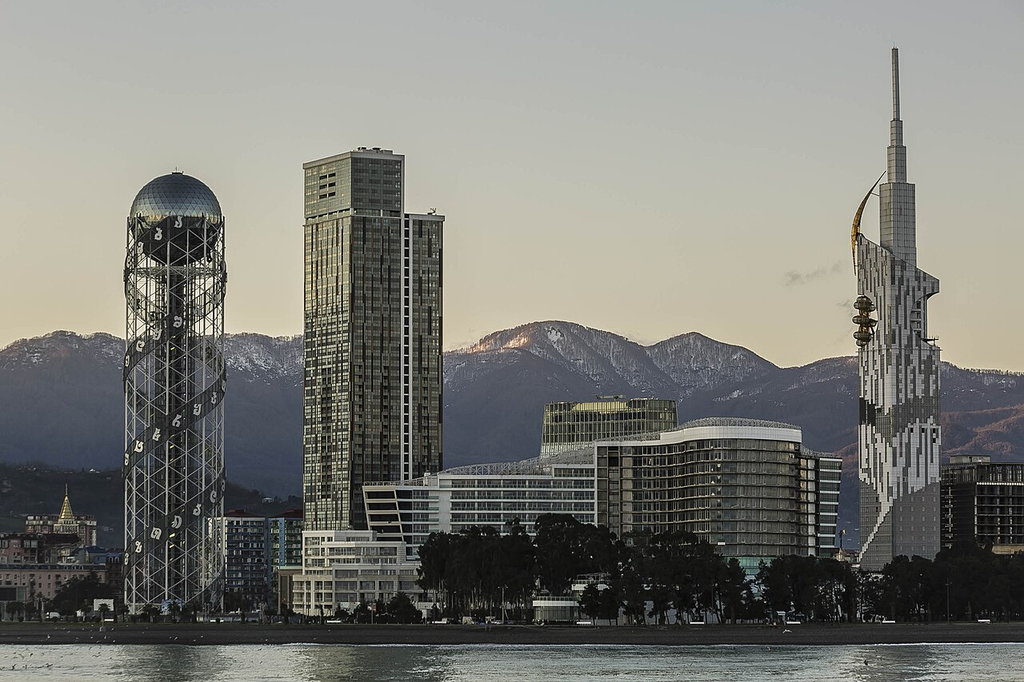
Above: Batumi
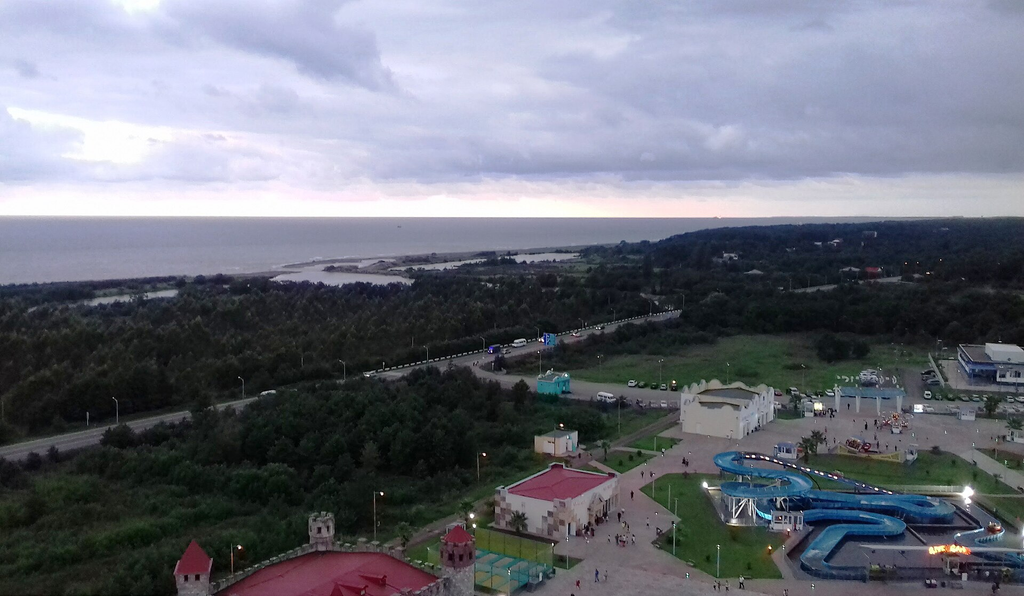
Above: Shekvetili
To the north are Grigoleti, Poti and the wetlands of the Kolkheti region, while Ozurgeti provides access to the interior of Guria.
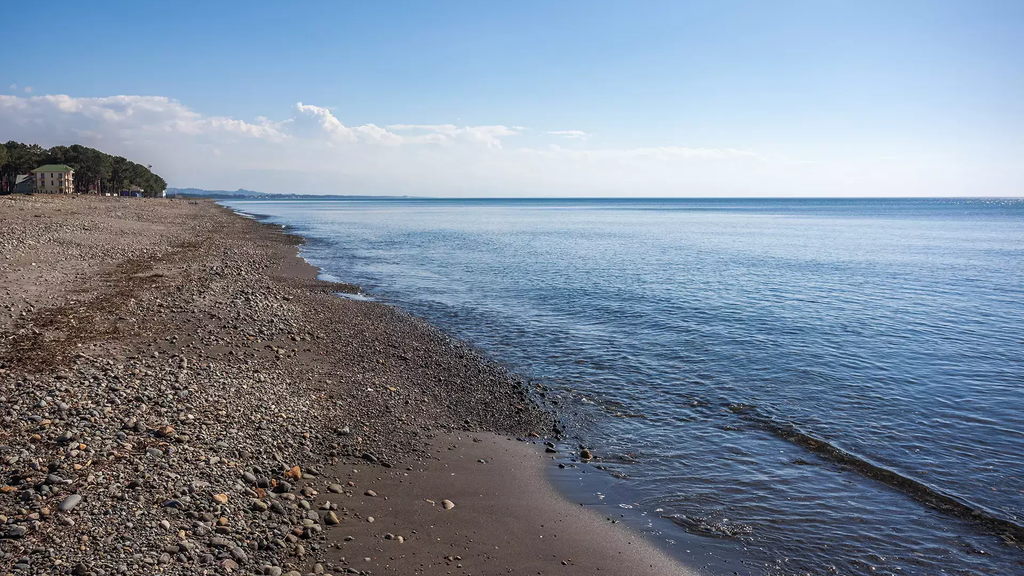
Above: Grigoleti Beach

Above: The port of Poti
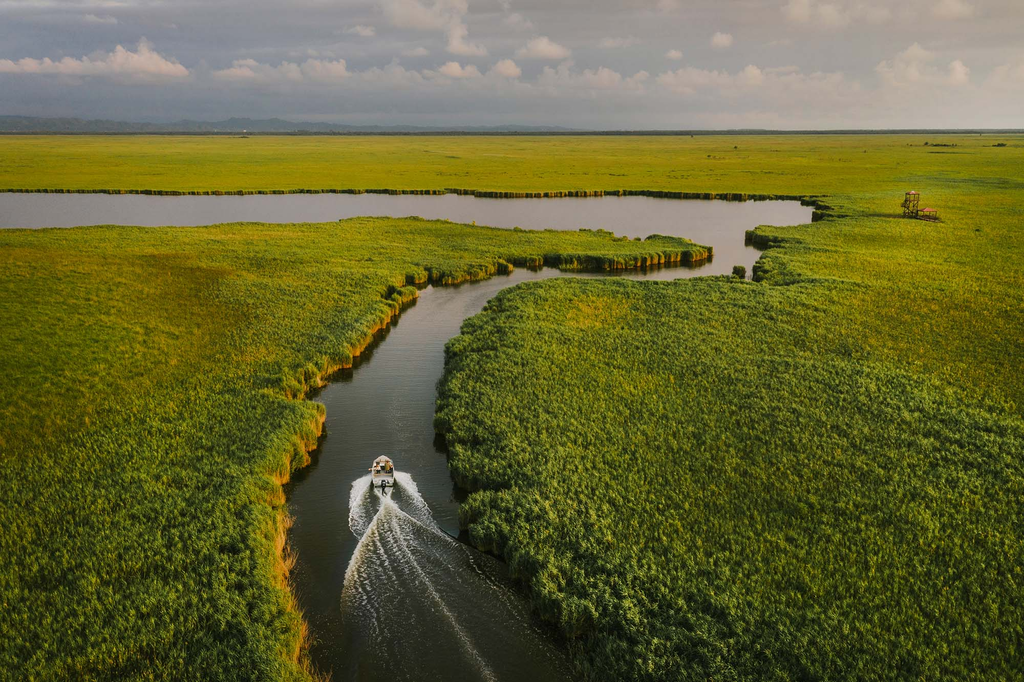
Above: Kolkheti National Park
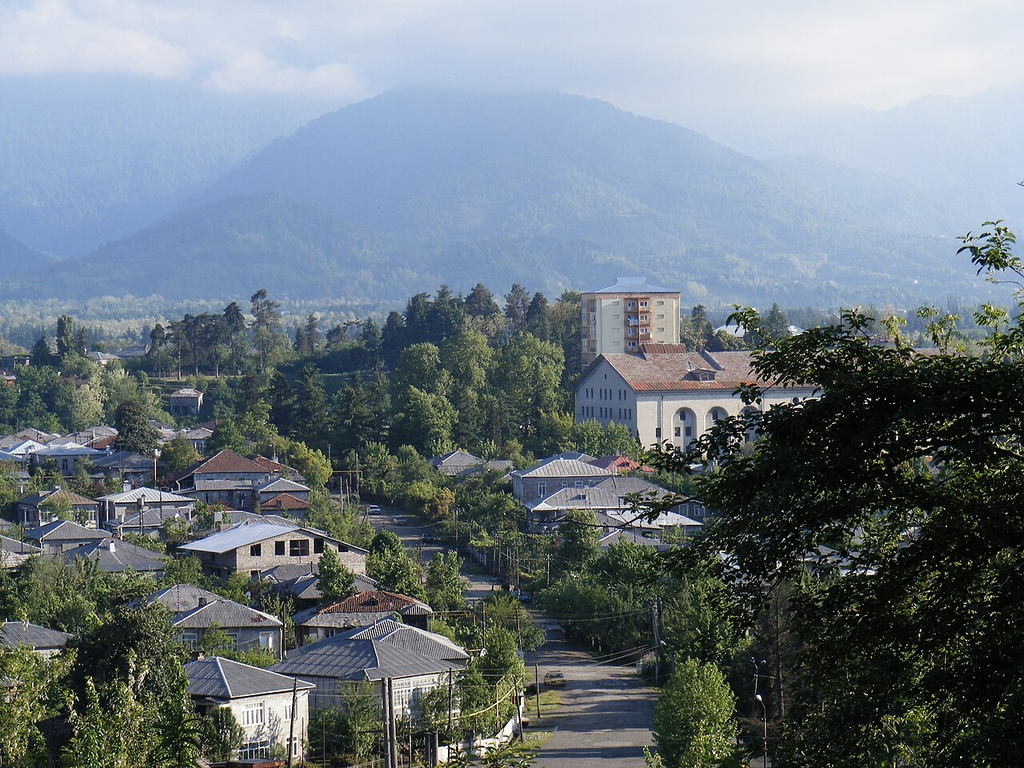
Above: Ozurgeti

Above: (in red) Guria, (in yellow) Georgia
Ureki is also served by the railway connecting Tbilisi and Batumi.


Above: Tbilisi
However, there are limitations.
Let’s be honest.
The magnetic beach is the attraction, not necessarily the settlement itself.
Ureki has developed largely as a seasonal resort.
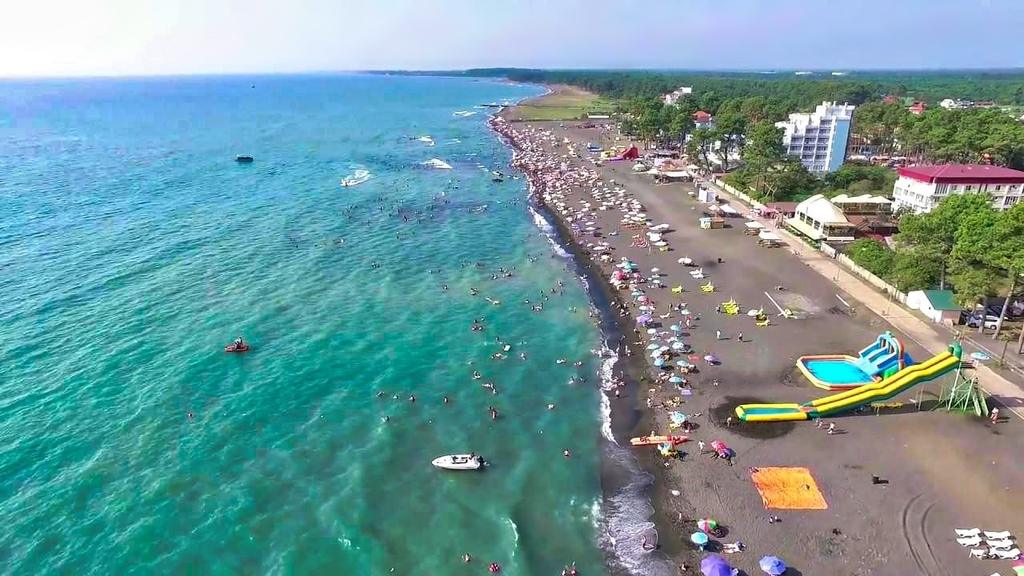
Above: Ureki
Its architecture is inconsistent, its streets are relatively uninspiring, and much of its accommodation consists of modest guesthouses and holiday properties.
There is a difference between rustic charm and underdeveloped infrastructure.
Sometimes Ureki risks confusing the two.

Above: Ureki
July and August bring considerable numbers of Georgian, Armenian and Azerbaijani holidaymakers.

Above: Flag of Georgia
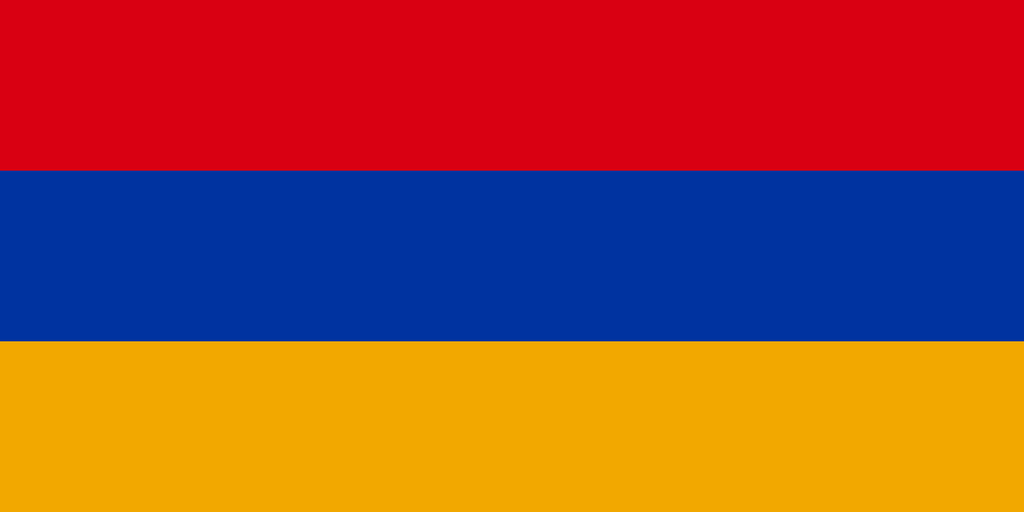
Above: Flag of Armenia

Above: Flag of Azerbaijan

Above: The Caucasus region
The very qualities that make Ureki attractive to families — shallow water, accessible beaches and relatively affordable accommodation — can create a crowded summer environment.
If you want solitude, August might not be the ideal time to visit.

Above: Ureki Beach
Weather can also be a disadvantage.
This is western Georgia, after all.
The region receives considerable rainfall, and humidity can be oppressive during summer.
A prolonged rainy spell could leave visitors with precisely the sort of experience I have endured in Batumi:
Damp accommodation, limited outdoor activities and a rather depressing seaside atmosphere.
Unlike Batumi or Tbilisi, Ureki does not have a substantial collection of museums, galleries, architectural attractions or cultural institutions.
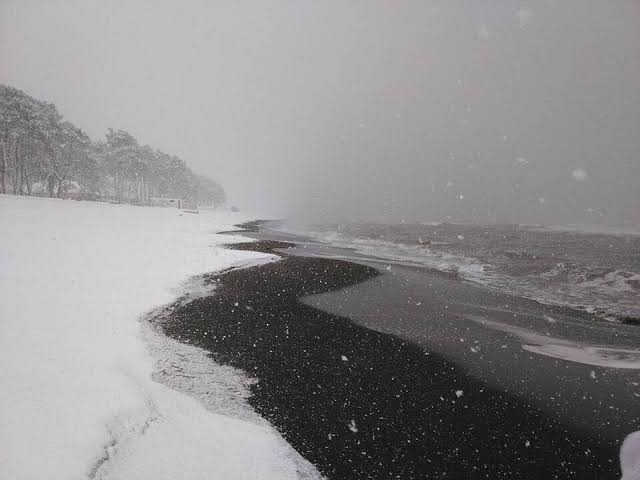
Above: Ureki Beach winter
The beach is the principal attraction.
If you become restless after two days beside the sea, you might find yourself wondering what to do next.

Above: Ureki Beach
There have also historically been concerns about drainage, sanitation and public facilities.
Substantial investment in water-supply and wastewater infrastructure was announced in 2018, addressing deficiencies that had affected the resort.
However, prospective visitors should still investigate the practical quality of individual accommodation and facilities rather than assume that every problem has been resolved.
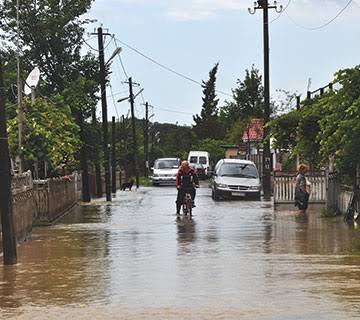
Above: Ureki once upon a time
There is a potentially interesting future for Ureki.
Rather than attempting to imitate Batumi, it could develop a more distinctive identity around its natural environment and historical association with recuperation.
Small rehabilitation and wellness centres, physiotherapy facilities, guided coastal walks, nature excursions and accommodation designed for longer restorative stays might provide an attractive alternative to conventional seaside tourism.
The surrounding wetlands, forests and coastal ecosystems offer opportunities for birdwatching, nature photography and quieter excursions.
Writers, artists, retirees and people seeking a slower environment might appreciate a destination where a modest apartment, reliable Internet, a decent supermarket, a café and a beach within walking distance are sufficient attractions.

There are, of course, threats.
Uncontrolled development could destroy the pine-covered character that makes Ureki distinctive.
Pollution and inadequate wastewater management could threaten the beach and surrounding ecosystems.
Coastal erosion, flooding and changing rainfall patterns may also affect the settlement.
Businesses may struggle outside the summer season, while mass tourism could undermine the very tranquillity that attracts some visitors.
The greatest danger, in my opinion, is that Ureki could lose its natural advantages while failing to develop the infrastructure and attractions necessary to compete with more established destinations.

I would recommend investigating June or September for a visit.
June offers the beginning of the summer season, while September potentially provides warm weather with fewer holidaymakers.
July and August would be less attractive choices if tranquillity were the priority.
I would also investigate accommodation in neighbouring Grigoleti and Shekvetili before committing to an extended stay.
Ureki deserves a visit, but it must earn a longer stay.
And I rather like that distinction.
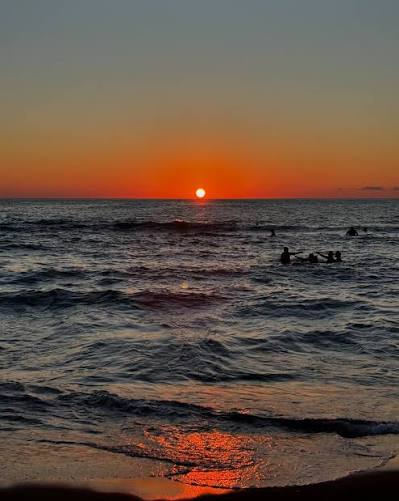
Above: Ureki
As I think about Ureki, my mind wanders towards two works of literature and cinema:
Thomas Mann’s The Magic Mountain (1924) and Paolo Sorrentino’s film Youth (2015).
Mann’s The Magic Mountain (Der Zauberberg) follows Hans Castorp, a young engineer who visits a secluded sanatorium in Davos to see his cousin.
What begins as a relatively brief visit becomes a stay of several years.
Within this unusual environment, Castorp encounters characters whose conversations and conflicting philosophies expose him to questions of politics, illness, love, mortality and the nature of existence.
The sanatorium gradually becomes a world apart from ordinary life, where time behaves differently and the outside world seems increasingly distant.

Mann’s novel was inspired partly by his experiences visiting a sanatorium in Davos in 1912 while his wife was receiving treatment for tuberculosis.
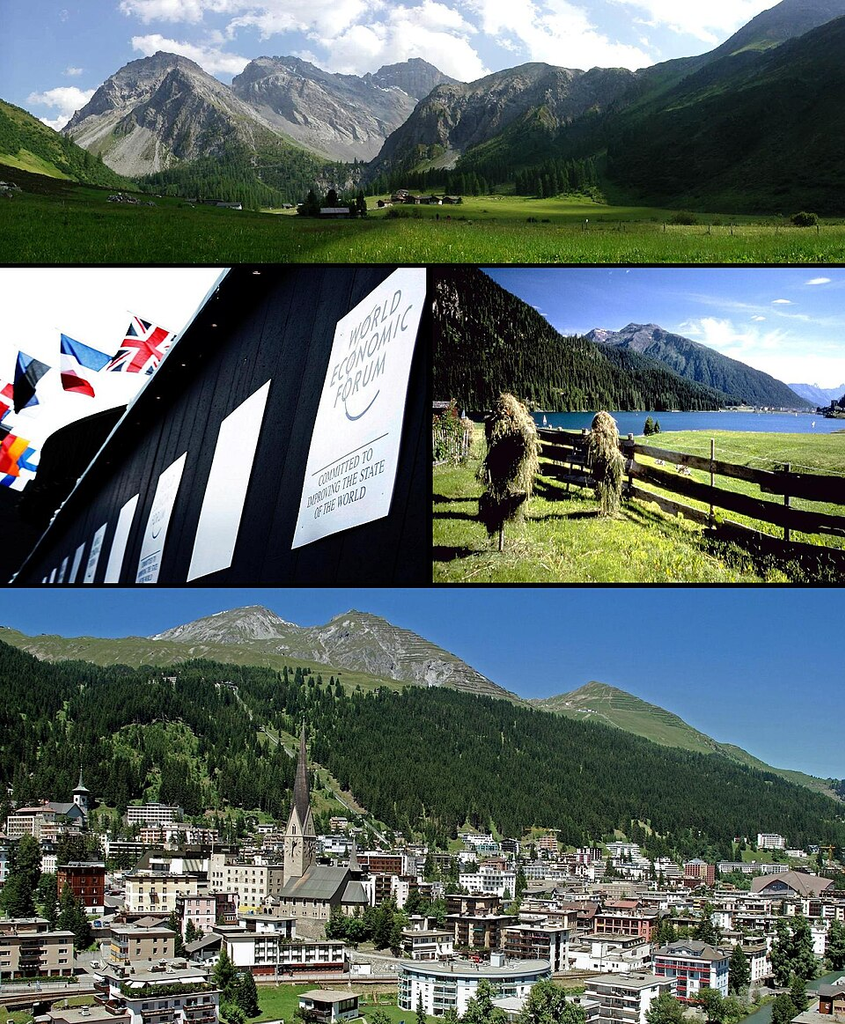
Above: Images of Davos, Graubünden, Switzerland
Paolo Sorrentino’s Youth, meanwhile, stars Michael Caine and Harvey Keitel as two old friends holidaying in a Swiss Alpine resort.
Their conversations and encounters explore the relationship between youth and age, memory and the future, artistic achievement and disappointment, life and death.
The cast also includes Rachel Weisz, Paul Dano and Jane Fonda.

Both works are fascinated by suspended spaces — resorts, sanatoriums and retreats — places physically removed from ordinary routines where people become unusually reflective about their lives.
In Mann’s novel, illness and isolation distort time until ordinary existence itself appears strange and fragile.
The sanatorium becomes more than a medical facility.
It is a philosophical landscape where Europe unconsciously waits for catastrophe.

Above: German novelist Thomas Mann (1875 – 1955)
In Sorrentino’s film, ageing men and women confront the erosion of certainty.
Artists wonder whether their work mattered, while memories of the past compete with the diminishing possibilities of the future.
Beauty coexists with absurdity and decline.
There is something of this atmosphere in the older Black Sea resort towns.
Places originally intended for healing now carry layers of nostalgia, decay and historical exhaustion.
And there is something of it in my own journey through western Georgia.

Above: Italian director Paolo Sorrentino
The train journey has gradually become its own kind of transitional chamber.
Not a luxurious Alpine sanatorium, admittedly.
More a damp Georgian railway carriage populated by weary citizens, thermoses, wet coats and existential weather.
Yet the psychological mechanism is similar.
Motion plus confinement creates introspection.
One cannot fully escape oneself on a long train journey.
Thoughts begin wandering through old books, films, regrets, hopes and unrealized futures.
This has become the texture of a real journey rather than a curated one.
That distinction feels important.
Curated travel tends to flatten experience into consumable highlights:
Attractions, views, optimized itineraries and photographs proving enjoyment.
Real journeys contain abrasion.
Fatigue.
Ambivalence.
Boredom.
Physical discomfort.
Unexpected philosophical associations.
Minor humiliations.
Fleeting revelations.
And paradoxically, those imperfections are often what give a journey its emotional authenticity.
The train journey has some of that tonal mixture too:
Wet shoes and philosophical reflection, bodily discomfort and literary associations, melancholy and dry humour existing simultaneously.
There is something quietly profound in my final realisation:
I will no longer be trapped in Seat 77.
Not every form of progress arrives dramatically.
Sometimes progress is simply exiting an uncomfortable phase that has begun to feel endless.
The uncertainty may remain.
The financial concerns may remain.
The job search certainly remains.
But one specific confinement ends.
One regains movement, privacy, choice of posture and the ability to stand up without negotiating strangers’ knees.
Human beings often survive transitional periods through precisely these modest, concrete improvements.
Earlier in the day, discomfort threatened to dominate my perception entirely.
Now the same journey has become intellectually and emotionally generative.
The wet shoes still exist, but they no longer monopolize meaning.
Instead, they become part of a wider narrative involving history, literature, cinema, Soviet resort culture, labour, exhaustion, hope and movement towards possibility.
That is the strange alchemy of travel.
Misery occasionally matures into insight before the journey has even ended.
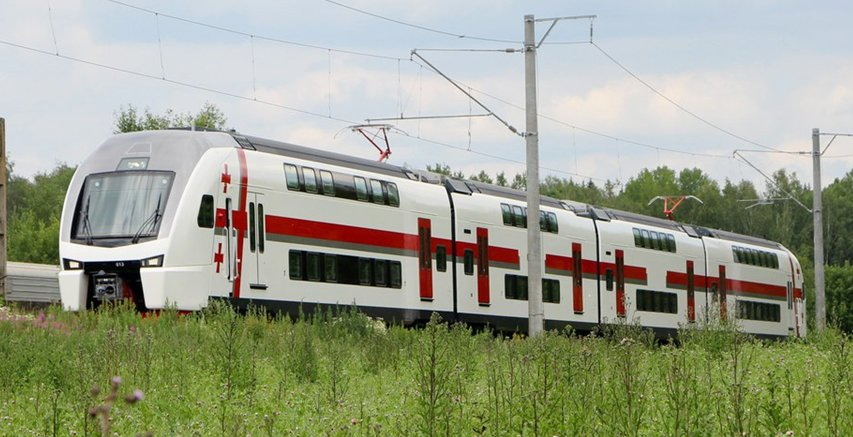
I may someday return to Ureki under entirely different circumstances.
Dry shoes.
Enough money.
No anxious train ride.
By choice rather than by necessity.
Then Seat 77 and this rainy journey may become part of the mythology of how I arrived at a better period of life.
Many difficult journeys acquire retrospective meaning only later.
At the time, they feel merely uncomfortable, anxious or disappointing.
Years afterwards, they become origin stories — the rough transitional passages preceding a more stable chapter.
I think my journey is producing a valuable recalibration.
There is wisdom in distinguishing restoration from achievement.
Modern life tends to frame every pause as instrumental: rest so that one may produce more later.
Places like Ureki suggest an older understanding.
Restoration as a valid human need in itself.
Pine air.
Grey horizons.
Slow time.
Bodies recalibrating beside the sea.
Perhaps that is why these towns linger emotionally despite their faded façades.
They were designed around vulnerability rather than spectacle.
Around the assumption that people periodically become depleted and need environments that ask little of them.
The train carriage, meanwhile, has provided its own peculiar opportunity for reflection.
I began the journey preoccupied with physical discomfort and the frustrations of travelling under less-than-ideal circumstances.
I am ending it thinking about Thomas Mann, Paolo Sorrentino, Soviet social history, the future of Georgian coastal tourism and the possibility of a more independent life.
The wet shoes remain.
The uncertainties remain.
But my relationship with them has changed.
Perhaps the Big Good may be the journey itself.
(To be continued….)

