Tbilisi, Georgia
Sunday, 17 May 2026 — Family Purity and Respect for Parents Day
It is said that Georgia’s vibrant capital, Tbilisi, almost manages to encapsulate the entire Caucasus experience within its city limits.
Having seen relatively little of the Caucasus beyond Batumi, I’ll have to take that on trust.
Walking alone, one encounters an astonishing layering:
Persian shadows.
Soviet concrete.
Orthodox domes.
European aspirations.
Decaying balconies.
Speculative modern glass.
Poets dying young.
Philosophers translating Plato by candlelight.
Hidden cocktail bars beneath graffiti.
Pipes marked by unknown tricksters.
The city seems permanently engaged in an argument with itself.
Here, ancient fortresses stand alongside state-of-the-art architecture, Christian churches coexist with Eastern bathhouses, and a Soviet legacy sits uneasily beside contemporary aspirations.
The food is fantastic.
The drinks are delicious.
And the people…
Well, that remains to be seen.
I find myself liking Tbilisi more quickly than I did Batumi.
(Though gluten-free bread still eludes me.)

Above: Tbilisi, Georgia
Today, 17 May, is a national holiday.
Its official designation is Family Purity and Respect for Parents Day, although precisely what is being celebrated, and how, seems less clear to some of the locals I question.
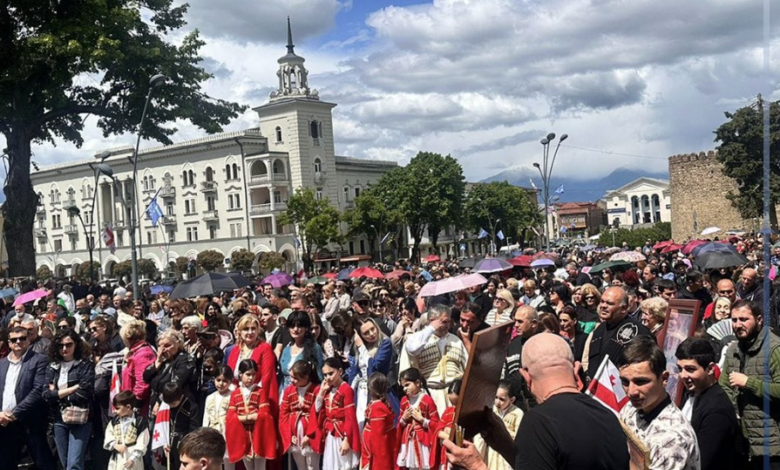
Above: March for the Day of Family Purity and Respect for Parents Day
From the 5th floor terrace of the Old City Boutique Hotel, I take a few photographs.

A television tower atop a distant hill looks as though it is about to topple.
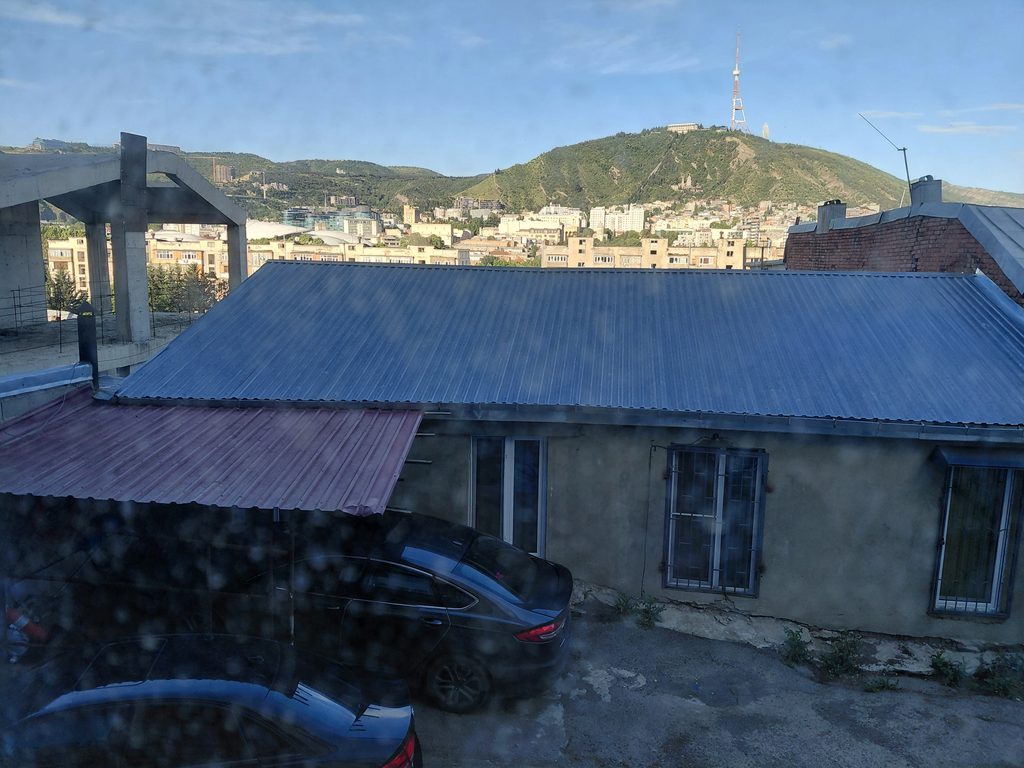
Above: View over urban rooftops in Tbilisi, Georgia, with the television tower and green hill of Mtatsminda visible in the background
Breakfast is surprisingly good and filling, with plenty of meat, cheese, fruit, juice, yoghurt and coffee.
I leave the Hotel and begin wandering, hoping that the tourist information centre at Freedom Square is open.
I photograph Jvaris Mama Church, also known as the Church of the Holy Cross.
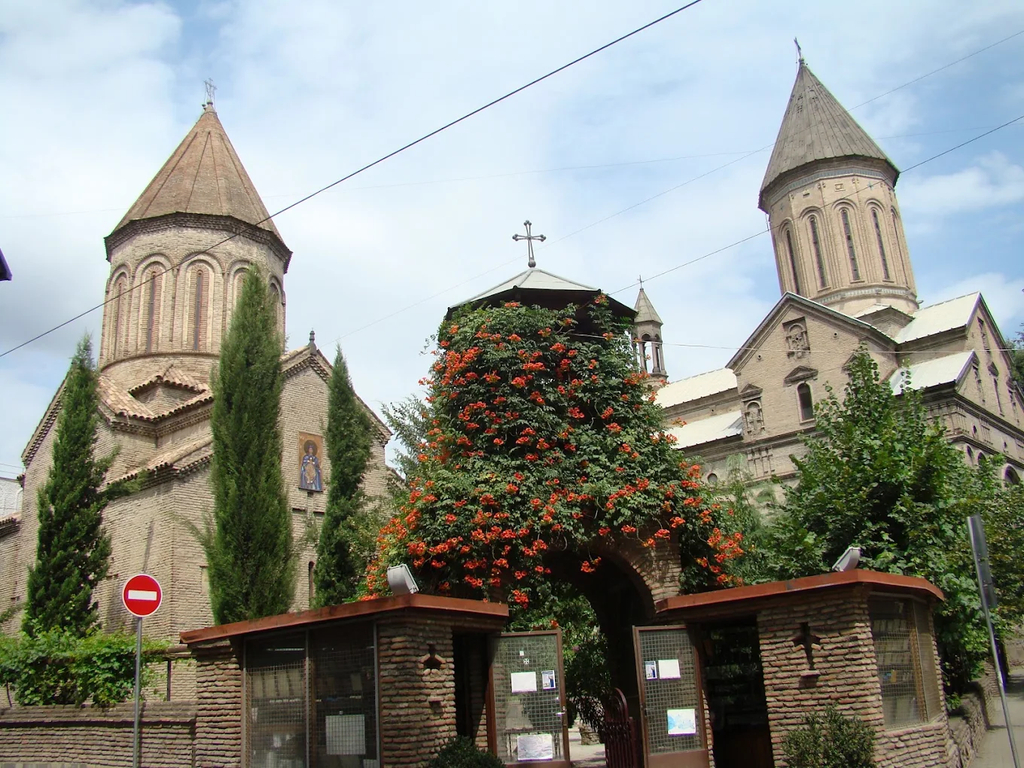
Above: Church of the Holy Cross, Tbilisi, Georgia
And a statue of the Georgian Romantic poet Nikoloz Baratashvili.
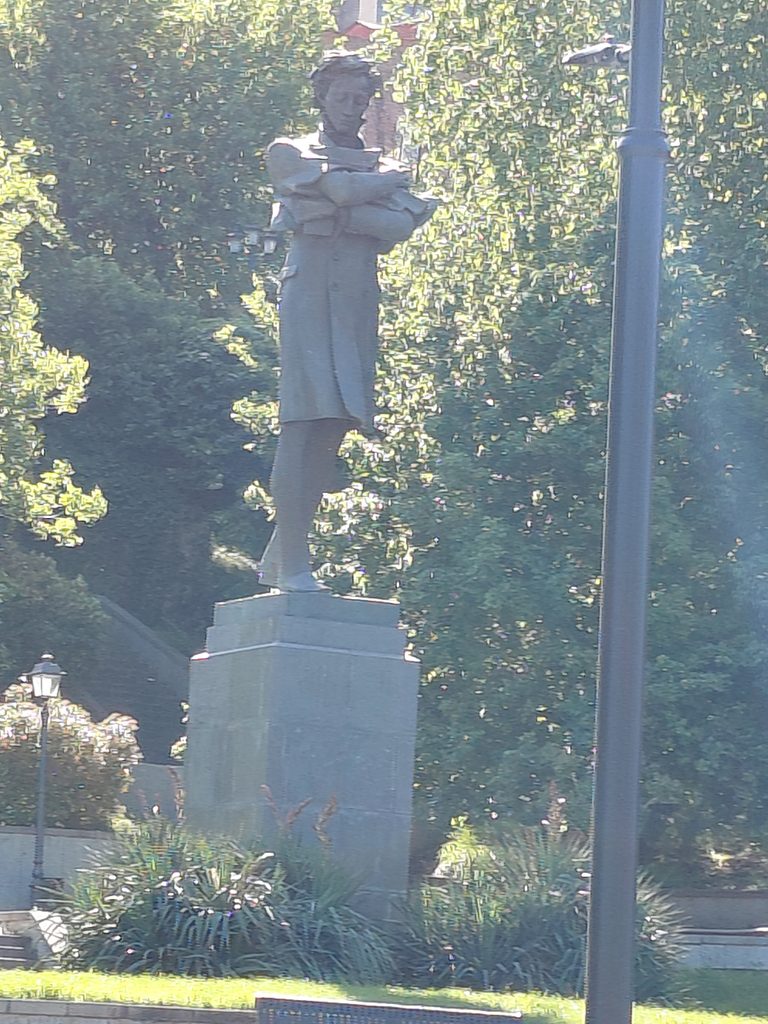
Above: Nikoloz Baratashvili Statue, Tbilisi, Georgia
Baratashvili…
Ah, there is the soul of Georgian Romanticism in full force.
Nikoloz Baratashvili feels almost inevitable in Tbilisi because the city itself possesses something of his character:
Melancholy yet defiant, wounded yet theatrical.
His celebrated question about the pleasure of a nightingale confined to a cage transcends its century.
I can understand why Georgians continue to quote him.
The tragedy of seeking survival through imperial protection while fearing cultural dissolution is one of the recurring dilemmas of Georgian history.
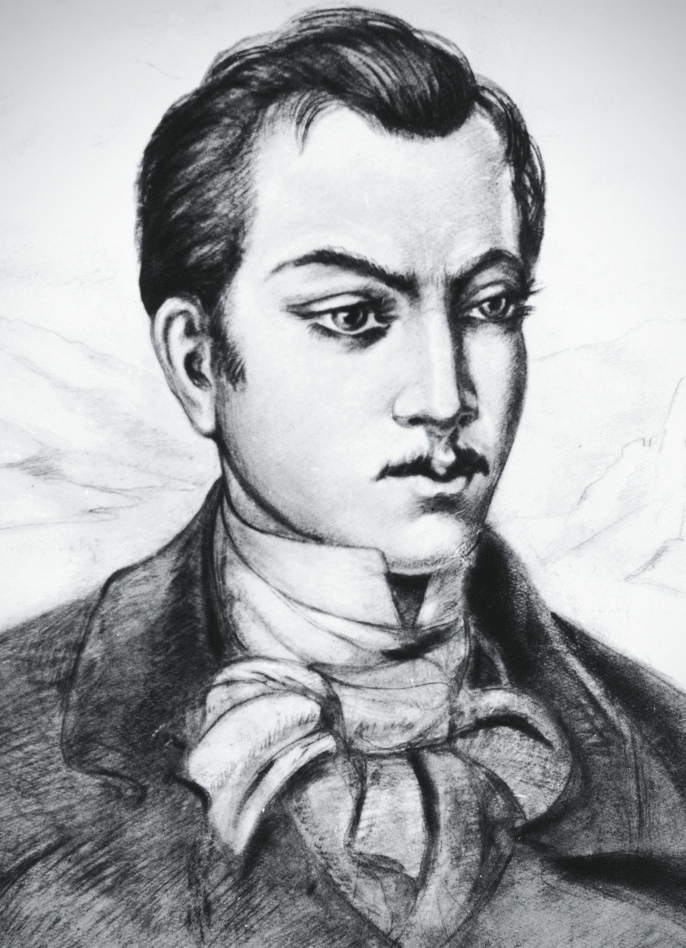
Above: Georgian poet Nikoloz Baratashvili (1817 – 1845)
I photograph the Mtkvari River as I cross the Nikoloz Baratashvili Bridge.
The Mtkvari, also known as the Kura, is a transboundary river flowing between the Greater and Lesser Caucasus mountain systems.
Rising in northeastern Turkey, it passes through Georgia before continuing southeast into Azerbaijan, where it eventually enters the Caspian Sea.
At approximately 1,515 kilometres, it is a substantial waterway.
Its tributaries support considerable biodiversity, including numerous fish species, some endemic to the region.
However, the river has suffered from industrial pollution, irrigation, hydroelectric development and the demands of growing urban populations.
Once navigable as far as Tbilisi, its flow has been significantly affected by human intervention.

The Mtkvari is not a picturesque romantic European river in the Danube sense.
It has the heavy, exhausted appearance of a river that has carried too much history, industry, conquest, irrigation and survival on its back.
Grey-brown is exactly the right description.
The river feels worked rather than admired.

Above: Mtkvari River, Tbilisi, Georgia
I take photographs of:
- The Bridge of Peace, opened in 2010, constructed from glass and steel and connecting the historic Old Town with Rike Park.
The contrast between the bridge and the older quarters is fascinating.
It almost resembles a spaceship attempting diplomacy with medieval masonry.
Some locals adore it.
Others think it resembles a giant illuminated sanitary product dropped into the Old Town by overly enthusiastic modernists.
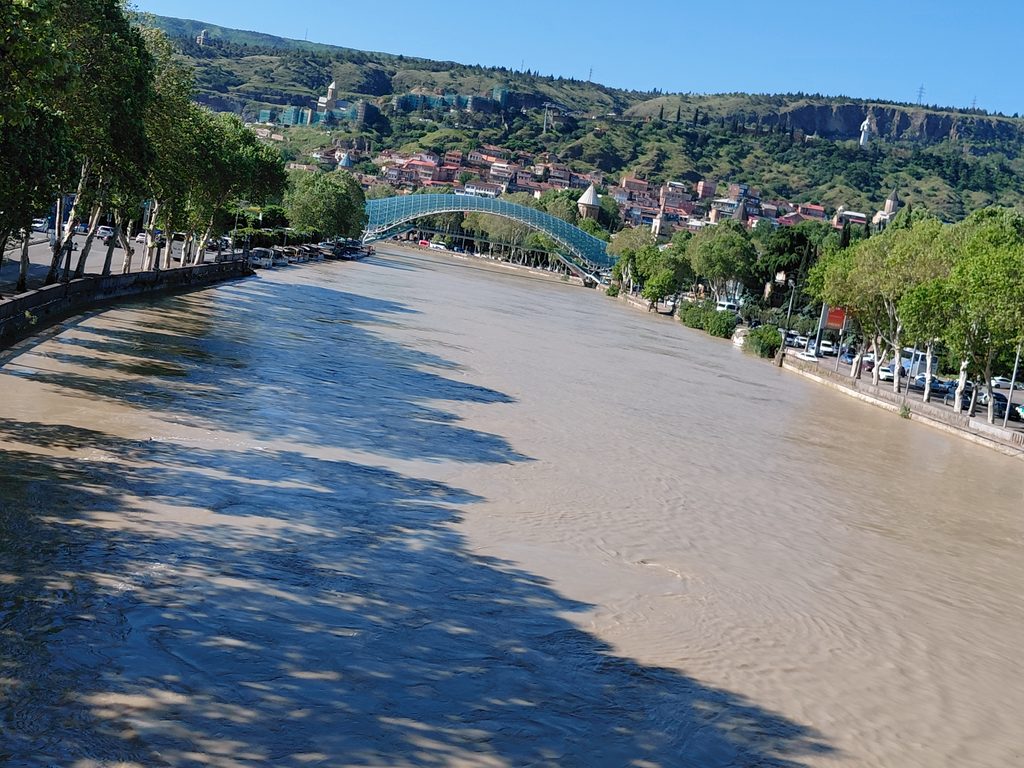
Above: Bridge of Peace, Tbilisi, Georgia
Tbilisi inspires unusually vivid architectural opinions.
The Tbilisi Public Service Hall, also known as the House of Justice, inaugurated in 2012.
Its striking modern design features large, inclined white petal-shaped roofs hovering above a glass atrium.
It accommodates several public institutions, including the Public Registry and National Bank of Georgia.

Above: Tbilisi Public Service Hall
The stylized bronze figures known as Youth, installed on the Bridge of Peace in 2006, depict various scenes of youth and affection, including a kissing couple, a photographer and figures leaning against the railings.

Above: Youth, Bridge of Peace, Tbilisi, Georgia
The Monument to the Lamplighter, dedicated to the workers who historically lit the city’s gas lamps, a tribute to an occupation that disappeared with the transition to modern street lighting.

Above: Monument to the Lamplighter, Tbilisi, Georgia
I see:
- A red trolley serving as a tourist information centre.

Above: Tourist Information Centre, Tbilisi
- Traditional Georgian balconies, featuring elaborate fretwork, arched supports, colourful paintwork and vines entwining their structures.
Tbilisi balconies do not merely decorate buildings.
They feel like theatrical boxes overlooking history itself.
Every carved wooden balcony looks as though someone once stood there during an empire’s collapse, smoking and listening to distant church bells while wondering which flag would fly next year.
This is the Old Town, with its narrow winding streets, historic charm and curious mixture of renovated and time-worn buildings.

Above: Balcony, Tbilisi
I also photograph:
- The Griffin Hotel, at 19A Nikoloz Baratashvili Street, featuring a modern design integrated with the historic city wall.

Above: The Griffin Hotel, Tbilisi
- The monument to Ioane Petritsi, the Georgian Neoplatonist philosopher of the 11th and 12th centuries, renowned for his translations and accompanying commentaries.
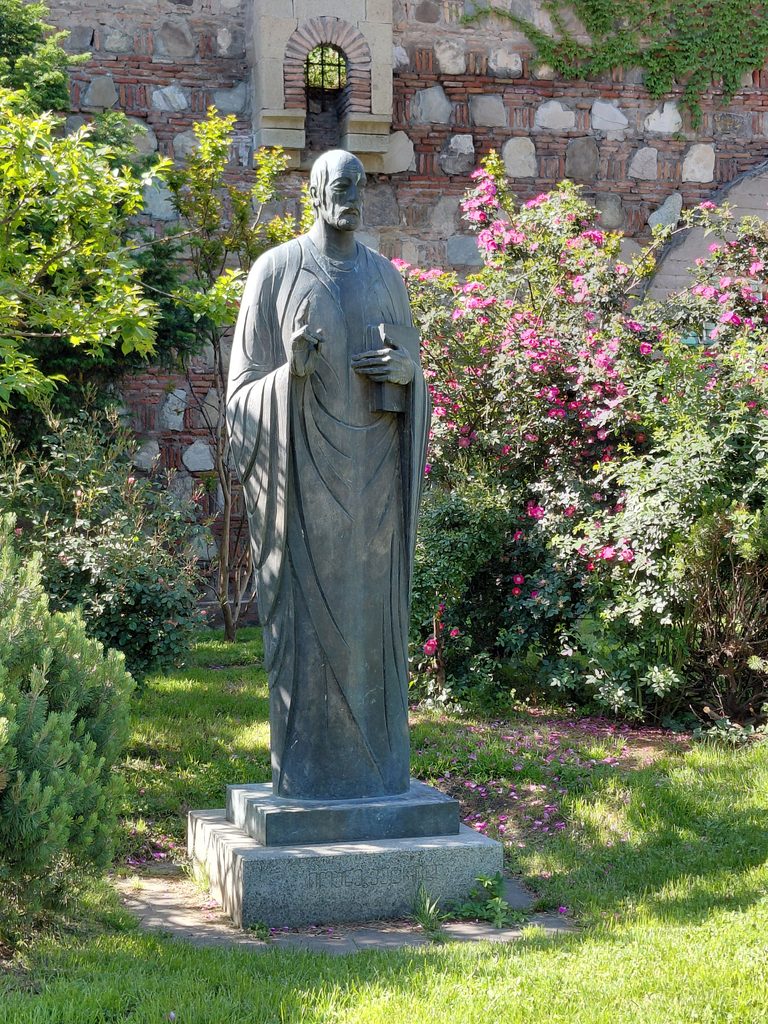
Above: Ioane Petritsi Statue, Tbilisi
- The facade of the former Department of Energy tower, depicting figures associated with industry and energy.
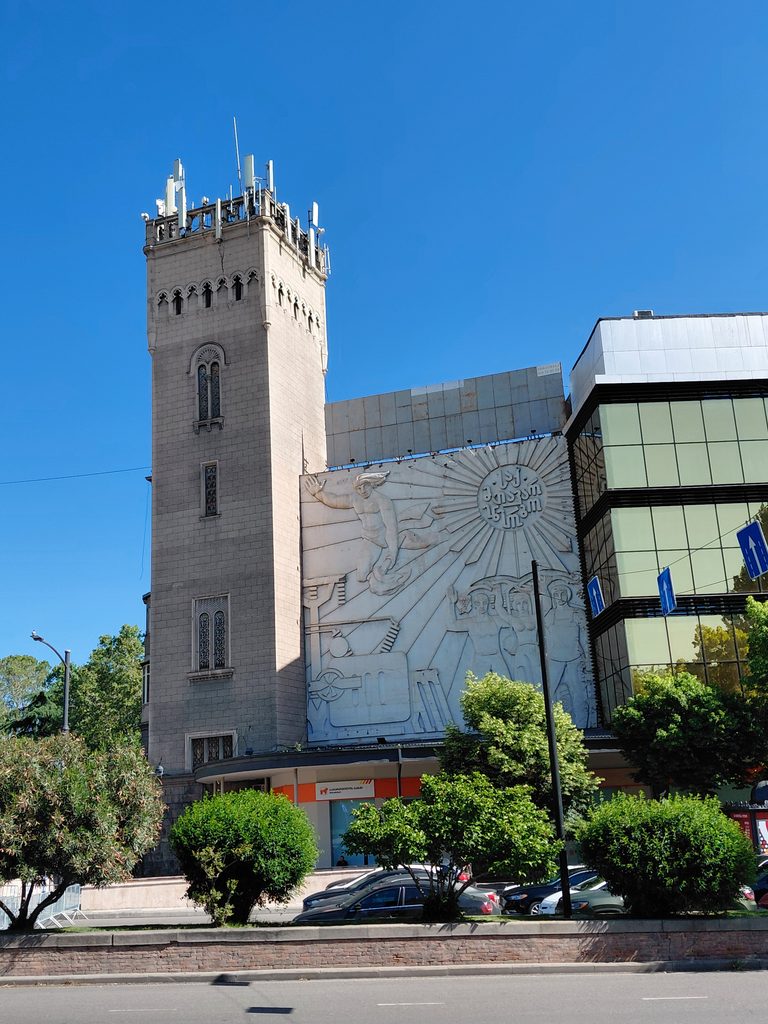
Above: Tbilisi
- The statue of Shota Kavlashvili (1926 – 1995), sometimes called the Prince of Balconies, a prominent architect and historic preservationist whose work helped shape postwar Tbilisi.

Above: Shota Kavlashvili Statue, Tbilisi
- 10 Alexander Pushkin Street, formerly a city hospital, now home to Pushkin 10 Hostel.
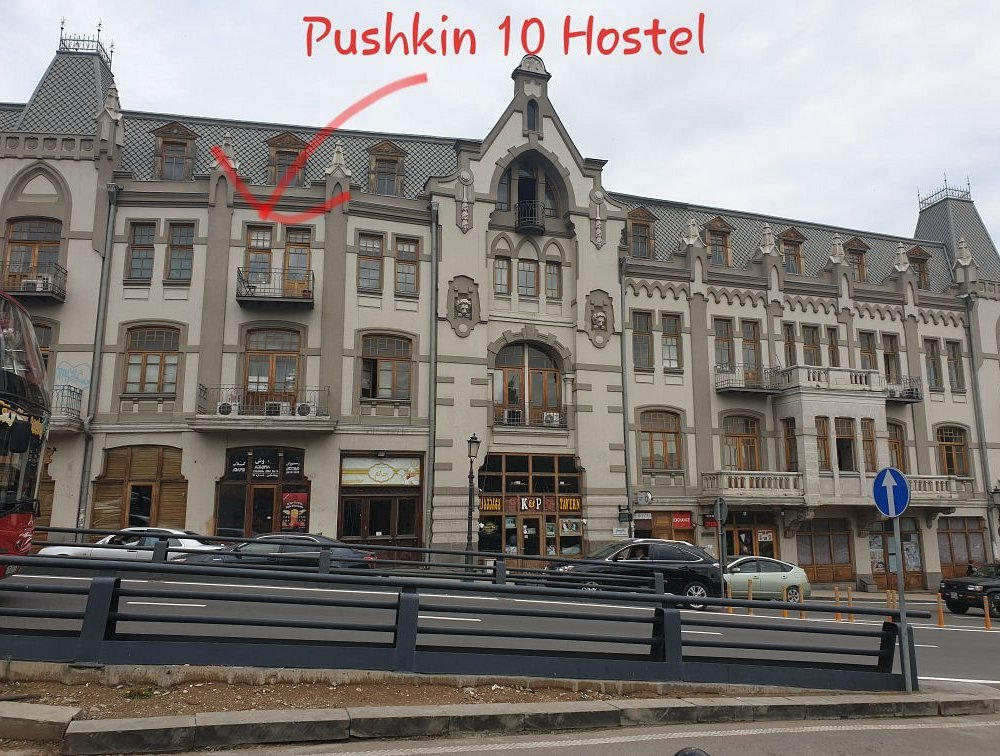
Above: 10 Alexander Pushkin Street, Tbilisi
- Freedom Square, dominated by the 35-metre column supporting the gilded bronze figure of St George slaying a dragon, symbolising the triumph of good over evil.

Above: Freedom Square, Tbilisi

Above: St. George Statue, Freedom Square, Tbilisi
- The former Information Centre on NATO and the EU, whose institutional future has become part of the wider debate about Georgia’s European orientation.

Above: Logo of the North Atlantic Treaty Organization

Above: Flag of the European Union
The latter is another small but telling detail.
Tbilisi’s geopolitical orientation is visibly contested in ways that many Western European capitals no longer experience.
One can sense the continuing tensions between Europe, Russia, nationalism, tradition, liberalism, Orthodoxy and modernity in the streetscape itself.

Above: Tbilisi
I photograph a plaque commemorating the former residence of brothers Bakhcho and Aziz Sloev, Yezidi poets.

Above: Former Sloev Residence, Tbilisi
I encounter the signs of several establishments:
- The Lucky Hotel

- The Whisper Speakeasy Bar, at 2 Ivane Machabeli Street, apparently concealed downstairs behind an unassuming entrance

- the Hostel Soul Kitchen

- Tseka Bar, featuring an armchair and a woman’s legs

- Backpackers Hostel

Tbilisi increasingly has that peculiar post-Soviet creative energy where literary ghosts, backpackers, techno clubs, philosophers and exhausted bureaucrats coexist within a few streets of one another.
One can imagine a poet from 1910 and a digital nomad from 2026 somehow ending up at the same table arguing over brandy.

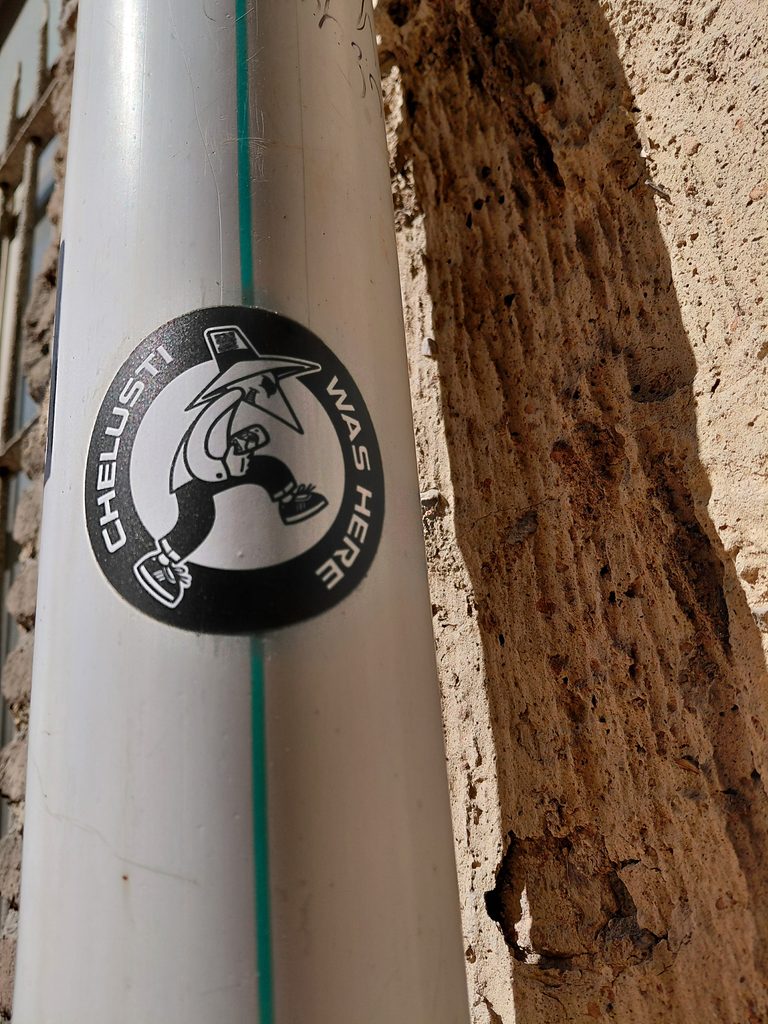
I also photograph a sticker on a pipe:
“Chelusti was here.”
It features the Black Spy character from MAD Magazine‘s Spy vs. Spy comic strip.
Who Chelusti was is anyone’s guess.
And finally, the goal of the morning:
The Writers’ House of Georgia, formerly the mansion of David Sarajishvili (1848–1911), Georgian entrepreneur, scientist and philanthropist, whose brandy enterprises helped establish an important Georgian industry.
The building is a significant cultural institution and literary hub, hosting literary programmes, workshops and exhibitions devoted to Georgian literature and repressed writers.

Above: The Writers House of Georgia, Tbilisi
It was also a meeting place for major literary figures, including members of the Blue Horns group during the early 1920s.
(Tsisperqantselebi (The Blue Horns) was a group of Georgian Symbolist poets and prose-writers which dominated the Georgian literature in the 1920s. It was founded as a coterie of young talented writers in Kutaisi in 1915 and was suppressed under the Soviet rule early in the 1930s.)

Above: Georgian writers The Blue Horns
From left to right, sitting: first row – Nikolo Mitsishvili, Tamar Iashvili (Paolo’s wife), Sandro Shanshiashvili, Maro Shanshiashvili.
Second row: Valerian Gaprindashvili, Efemia Leonidze, Geronti Kikodze, Paolo Iashvili, Nino Tabidze and Ali Arsenishvili.
Standing: Razhden Gvetadze, Shalva Apkhaidze, Titsian Tabidze, Leli Japaridze, Giorgi Leonidze.
Source: National Public Library of Georgia
The poet Paolo Iashvili died by suicide there during the Stalinist terror in July 1937, a tragic reminder of the persecution suffered by Georgian intellectuals.
The Writers’ House contains a museum devoted to the fate of writers persecuted under Soviet rule.
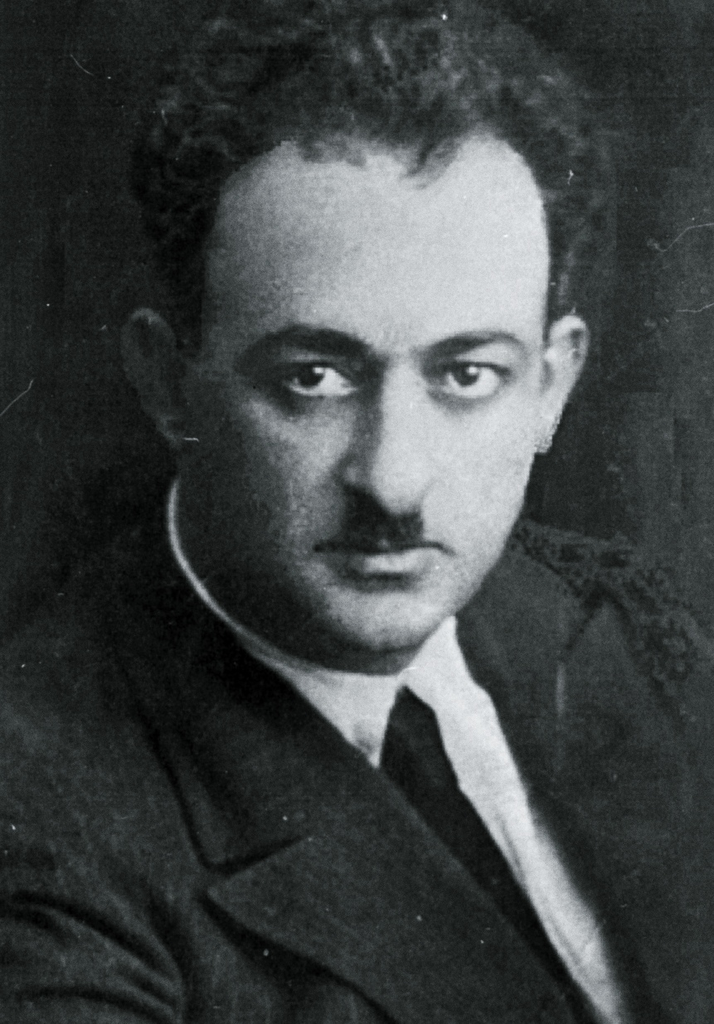
Above: Georgian poet Paolo Iashvili (1894 – 1937) – Under the Soviet Union, his obligatory conformism and the loss of his friends at the height of Joseph Stalin’s Great Purge heavily affected Iashvili, who committed suicide at the Writers’ Union of Georgia.
Tbilisi is not merely a city of historical significance and East-meets-West cultural contrasts.
It is also a remarkable literary capital, home to some of Georgia’s most celebrated writers:
- Shota Rustaveli (c. 1160–1220)

Above: Fresco of Georgian poet Shota Rustaveli in the Monastery of the Cross in Jerusalem, Israel
- Vazha-Pshavela (1861 – 1915)
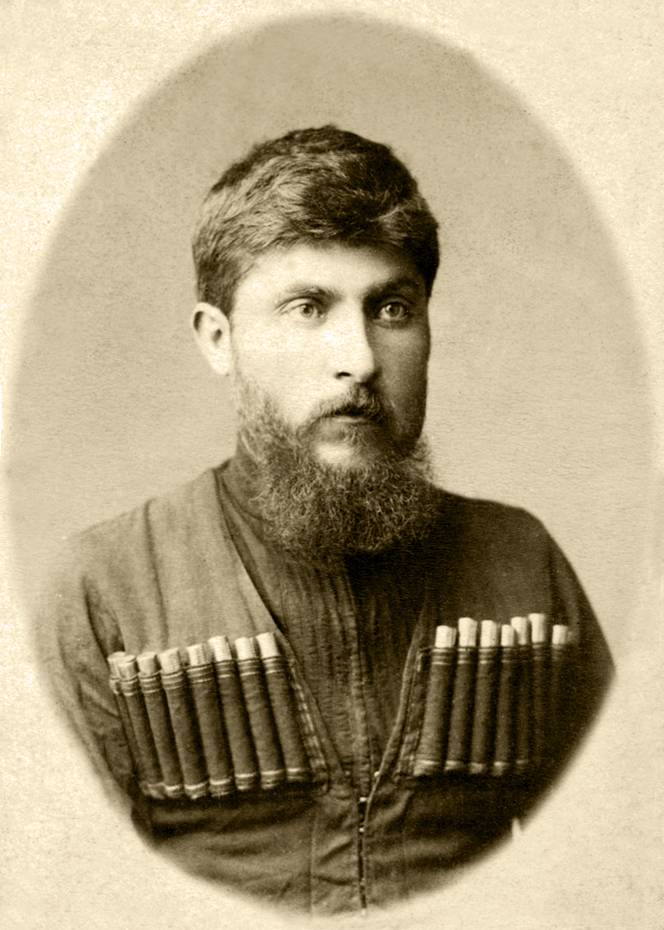
Above: Georgian writer Vazha-Pshavela
- Mikheil Javakhishvili (1880–1937)
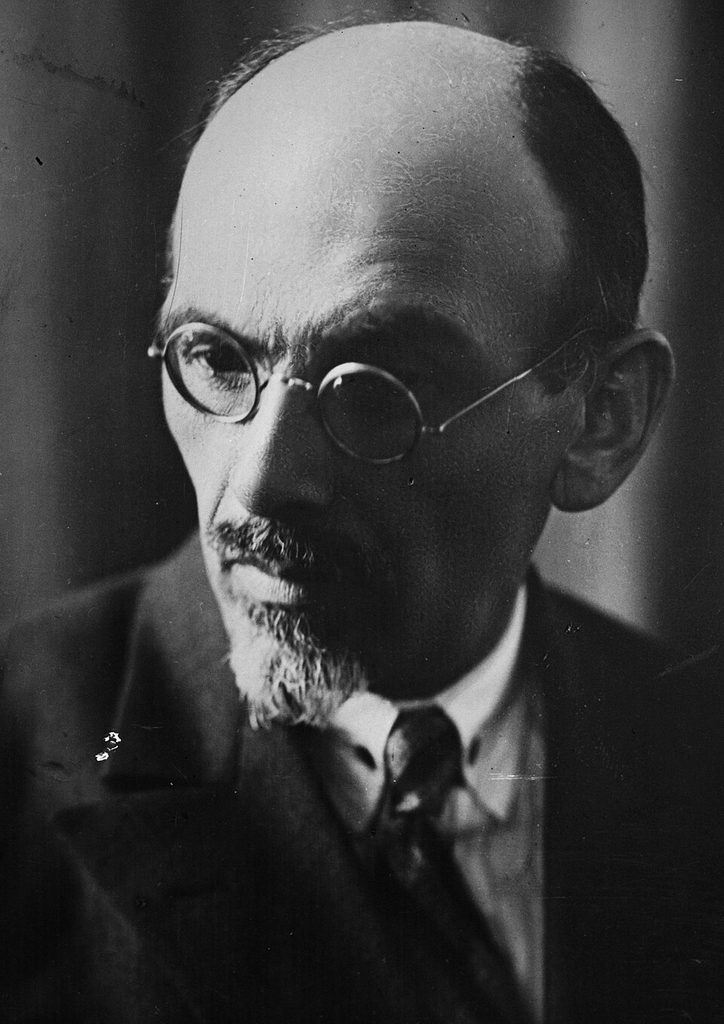
Above: Georgian writer Mikheil Javakhishvili
To name just a few.
The Writers’ House is closed.
Naturally, precisely when I most want to visit it.
I will return later.
It will probably be still closed.
There is something almost symbolically Georgian about this.

Yet even from outside, I absorb some of its atmosphere.
So many literary capitals possess cafés where writers drank.
Tbilisi possesses houses where literature and political tragedy collided head-on.

Above: Writers House of Georgia
Today is Family Purity and Respect for Parents Day.
The holiday has a politically contested history, emerging in opposition to LGBTQ visibility events and reflecting tensions between the Georgian Orthodox Church, conservative social forces and more liberal urban currents.
Police presence is noticeable on streets leading to and from Freedom Square.
Parades?
Protests?
Certainly, several thoroughfares have been cordoned off.
I am not entirely sure what is happening around me, and that uncertainty mirrors the ambiguity I encounter in conversations with some locals.
In Tbilisi, public gatherings, demonstrations, religious observances and heavy police visibility can overlap spatially and emotionally.
The city, like any national capital, carries celebration and tension simultaneously.
That duality is part of its character.

Above: Family Purity and Respect for Parents Day march, Tbilisi
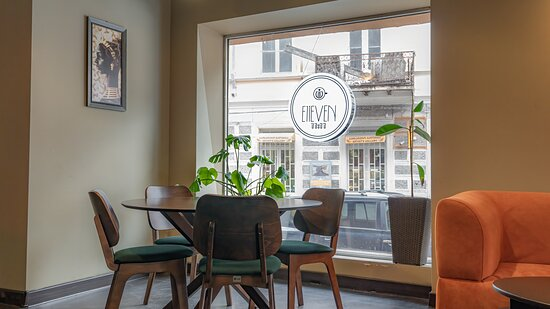
I enjoy an 11:11 mochaccino at the 11:11 Café, hoping that the Writers’ House might, after all, open at eleven.

Above: 11:11 Café, Tbilisi
Tbilisi feels more human and humane, more passionate and compassionate than Batumi.
Trees everywhere.
Cafés on many corners.
I speak with Anna (30) and Maria (19).
The café has been open for only two months.

Above: 11:11 Café
On my way to the Writers’ House, I had noticed their handwritten whiteboard sign:
“11:11 — Where coffee meets good vibes.
Please come in.
Our barista needs money for therapy.”
Modern urban humour at its best.
Self-aware exhaustion disguised as whimsy.
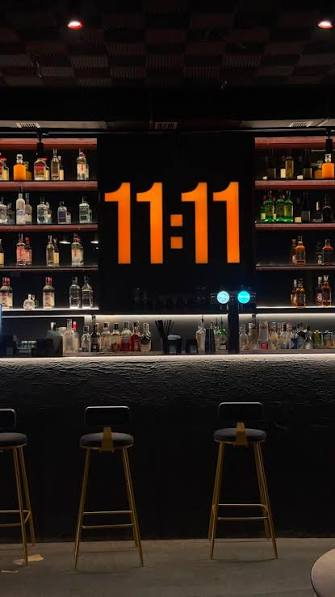
Above: What time is it?
Anna’s red hair and spectacles, colourful clothes and relaxed manner catch my attention.
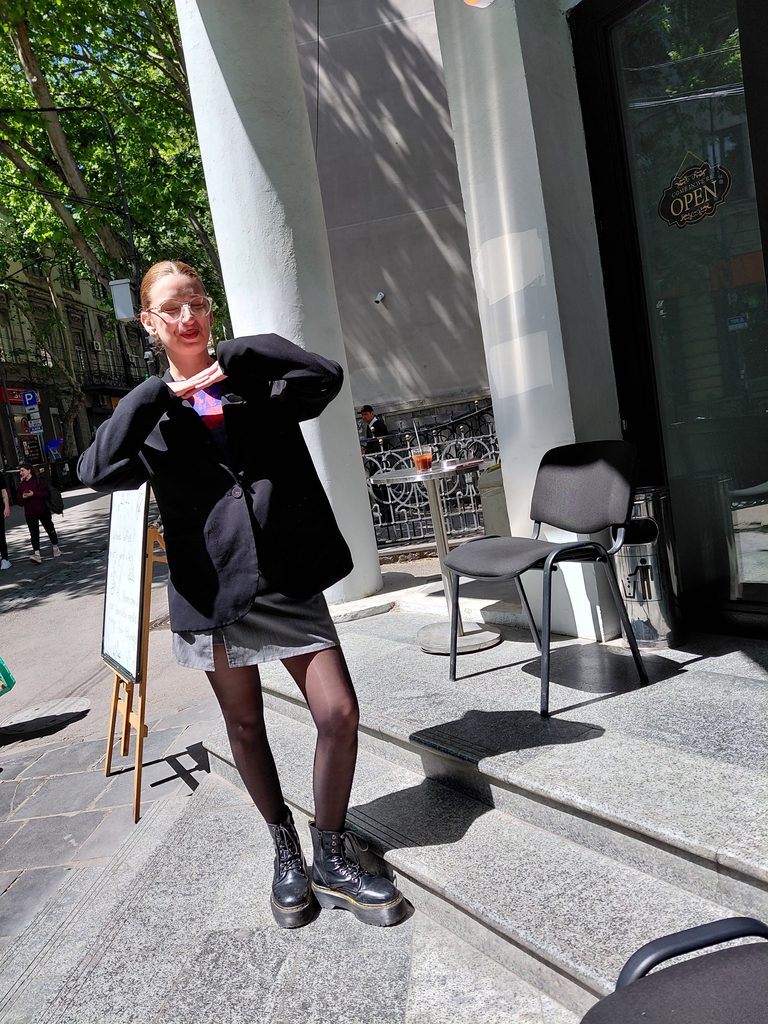
Above: Anna, 11:11 Café
Anna is nervous about her English, but her music selection is particularly agreeable.
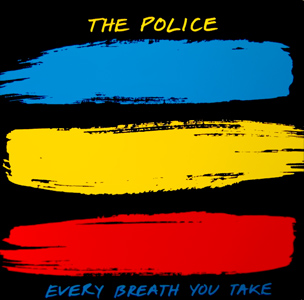
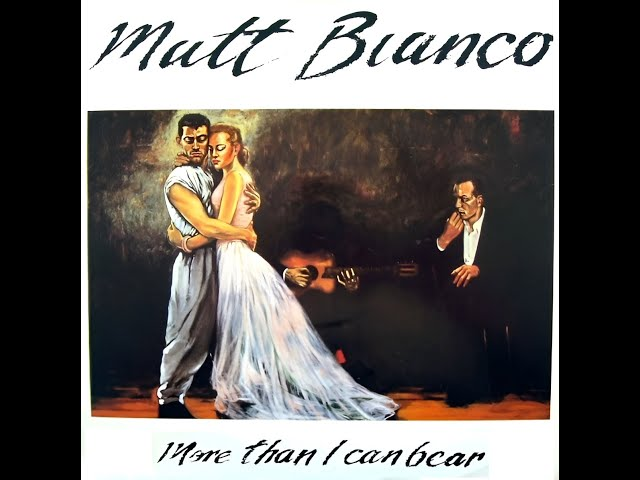
The Police’s Every Breath You Take and Matt Bianco’s More Than I Can Bear feature in her playlist.
I flirt, without an agenda or expectations.
I am merely a man attracted to a woman.
There is a dignity in attraction without acquisition.
I allow the moment to remain a moment rather than trying to convert it into a transaction, fantasy or future.
That restraint gives the scene its warmth rather than melancholy.
It is simply a moment in time.

I am relaxed.
There are many things I could rush around to see, for Tbilisi truly is variety on display.
But the breeze is gentle and the air is cool.
I sit comfortably at a table on the staircase landing and watch the world walk by.
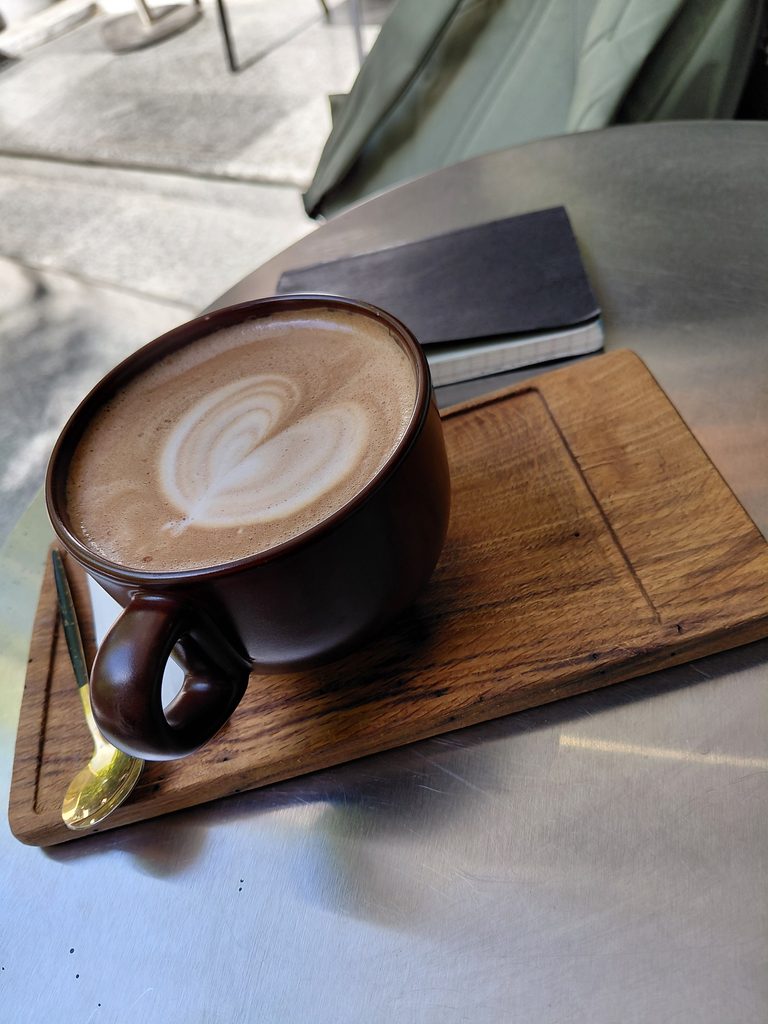
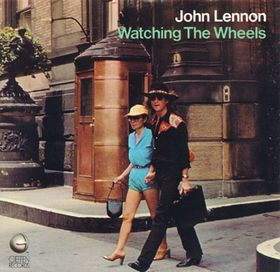
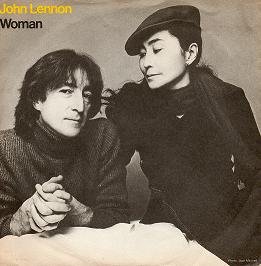
John Lennon arrives on my mind’s jukebox.
His Watching the Wheels seems almost uncannily suited to my present mood.
A song about a man who has stepped away from the expectations of others, no longer participating in the endless merry-go-round of ambition and competition.
Many travellers never truly arrive anywhere because they remain psychologically on that merry-go-round:
Optimising.
Documenting.
Conquering.
Consuming experiences as though they were achievements.
But here I am, stepping off it for an afternoon.
Today, I am a voyeur of humanity in all its infinity.
The café’s curbside heart-shaped mirror, affixed to the entrance post, causes several ladies to linger.
“Make a wish“ is scrawled across its surface.
Mirror, mirror on the wall.
Who is the fairest of them all?
There is something rather charming about the invitation.
A mirror can be both shield and stage, an opportunity to examine oneself and perhaps rehearse another version of who one might become.
I marvel at the simultaneous strength and fragility of human beings.

Anna reminds me that I am a man and that a woman’s company can genuinely enhance, and sometimes complicate, a man’s life.
She dreams of becoming a professional photographer.
The café is a beginning.
Ambition often seems improvised.
People build lives sideways.

As I sit and sip and watch the world, a stray blue balloon is blown across the street.
The sun is warm upon my jean-clad legs.
The breeze caresses my neck.
Birds accompany the music from the stereo.
Anna offers me a free coffee.
I ask merely for tap water.
Anna is half my age.
I am conscious of the difference, conscious of the boundaries it creates and conscious of the ephemeral nature of our exchange.
Yet my pulse quickens because biology and beauty remain alive within me.
I will not apologise for feeling alive in the presence of a woman.
Attraction heightens attention.
Colours sharpen.
Time slows.
Even water tastes different.

I let the feeling deepen perception rather than entitlement.
The danger is when a man begins to believe he must possess the source of that feeling rather than appreciate what it has awakened in him.
Perhaps this is maturity:
Sitting comfortably with the tension between longing and acceptance without demanding resolution.
Anna — red hair, nervous English, carefully chosen music, a humorous signboard and dreams of photography — offers a glimpse of the younger Tbilisi I am beginning to encounter.
Creative, precarious, stylish, anxious, humorous and trying to build small, beautiful things in uncertain times.
Nothing will happen between us beyond this café.
And that is perfectly fine.

Above: Tbilisi
It is good to feel seen as something more than a role, an age or a utility.
Customer.
Tenant.
Teacher.
Problem-solver.
Older man.
Foreigner.
A great many people, especially after 60, after disappointments, after long solitary stretches and professional exhaustion, can begin to feel socially invisible except for what they provide.

To feel oneself perceived again as a living, masculine, humorous and emotionally responsive presence is restorative, even when nothing whatsoever is going to happen.
Perhaps especially because nothing is going to happen.
The moment remains clean.
Untangled.
Human.

This may be the first moment in my Georgian chronicles when I truly feel at peace.
Not triumphant.
Not defeated.
Not searching frantically for the next answer.
Simply present.
And that changes everything.
The scene at the café feels cinematic precisely because nothing happens in the conventional sense.
No seduction.
No dramatic revelation.
No desperate pursuit.
Just a man pausing long enough to feel alive again in the company of other living people.
Tbilisi seems to reward precisely this kind of wandering attentiveness.
Batumi felt neon and performative:
Glossy façades, casinos, transient energy, a city designed partly to be consumed.
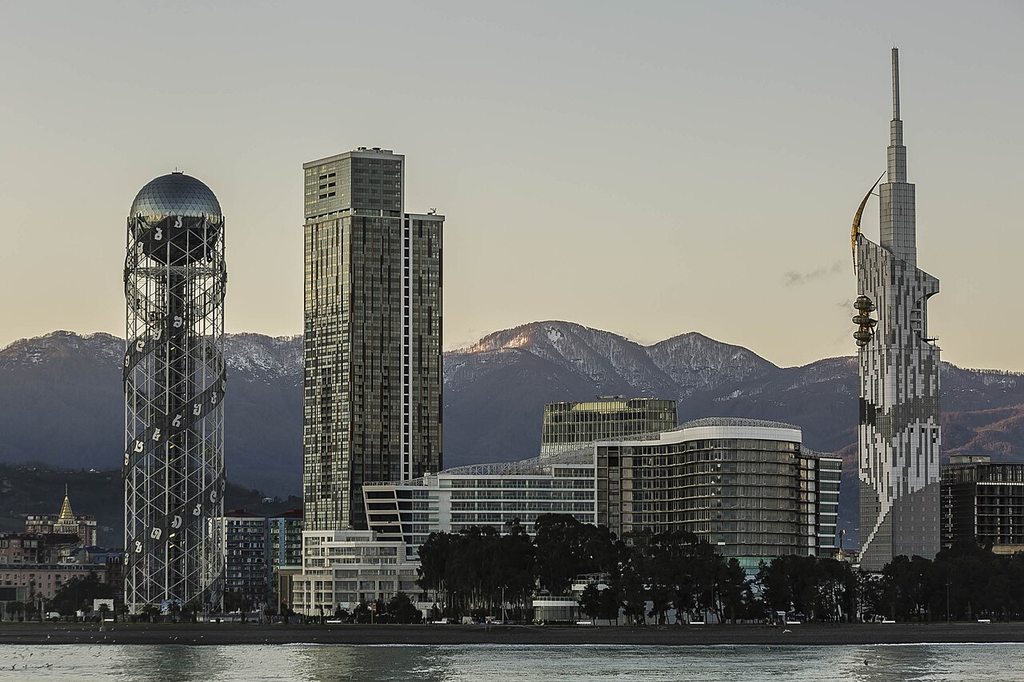
Above: Batumi, Adjara, Georgia
Tbilisi feels textured.
It reveals itself through human scale:
Worn staircases.
Conversations lingering too long and not long enough.
Cafés built around personality rather than throughput.
Trees insisting on life amid cracked stone.
It rewards attention.
A city where one can sit on a stair landing for an hour and feel one has discovered something important without ever entering a museum.
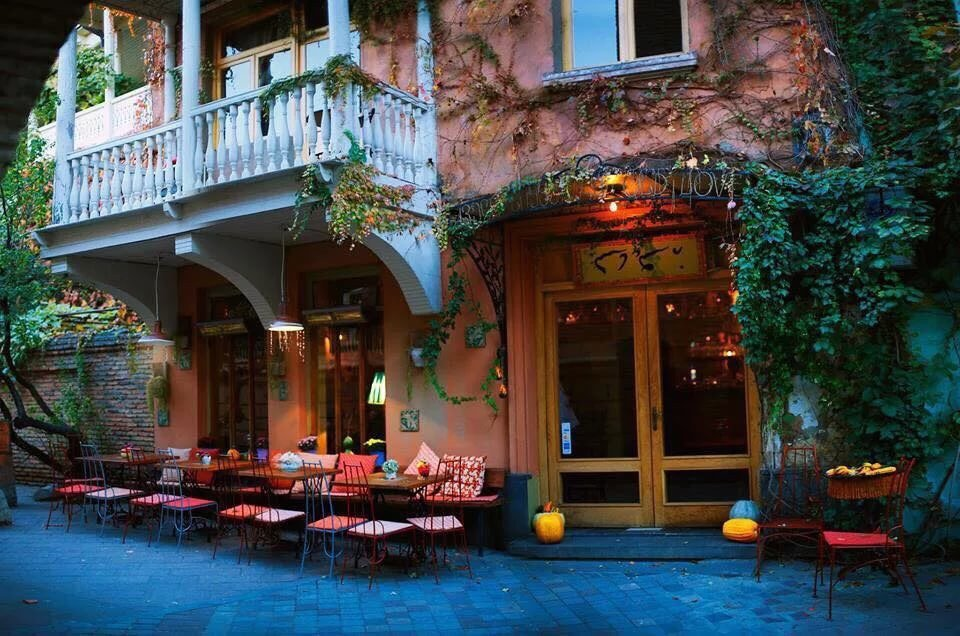
Above: Café, Tbilisi
I linger at the 11:11 for more than an hour.
Eventually, I return to the Writers’ House.
Still closed.

I decide to get lost.

The city reveals itself through fragments rather than monuments.
I am amused by many small things.
Not grand official narratives, but stickers, cats, awkward signage, café humour, strange advertisements, half-ironic art, overheard music and plaques half-read while wandering.
The city is becoming legible in precisely the way memorable cities do:
Obliquely.
Tbilisi rewards wandering with intention but without rigidity.
I engage with it slowly, observantly.

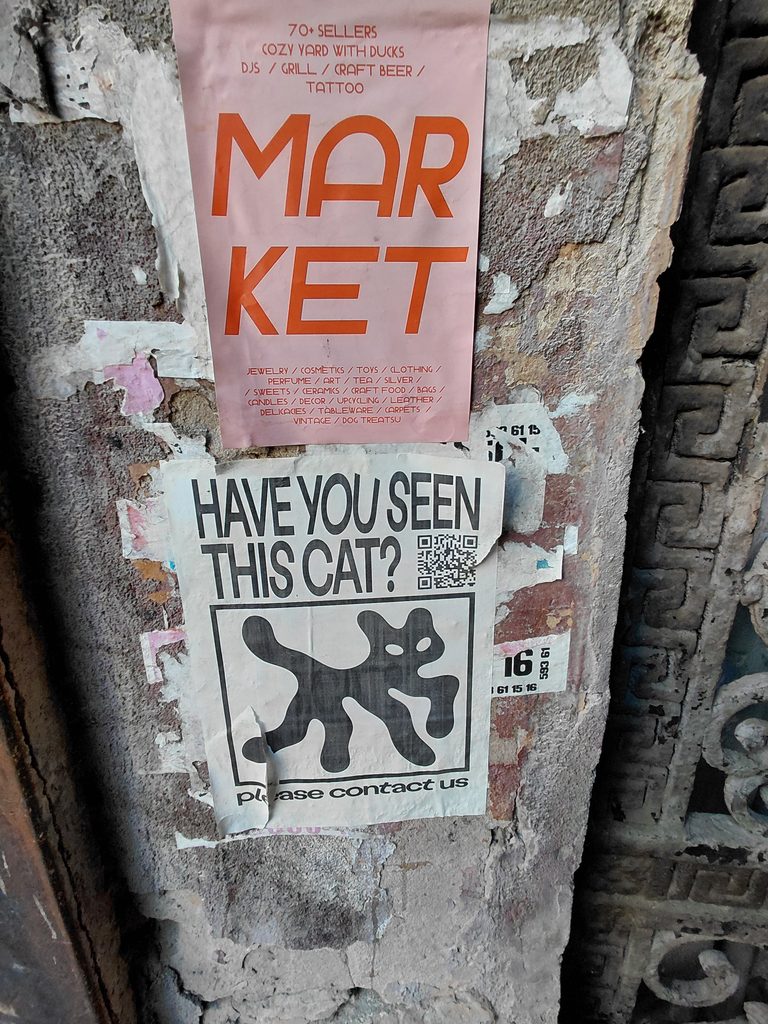
A poster asks:
“Have you seen this cat?
Please contact us.”
The image resembles a Rorschach inkblot.
The human brain eternally trying to impose meaning upon absence.
A window sign, written in Georgian, Russian and English, announces:
“Be quiet.
We are disturbing the neighbours.
Thank you.”
It contains an entire urban philosophy in one sentence.
Apology, irony, resignation, coexistence.
Intentional or not.

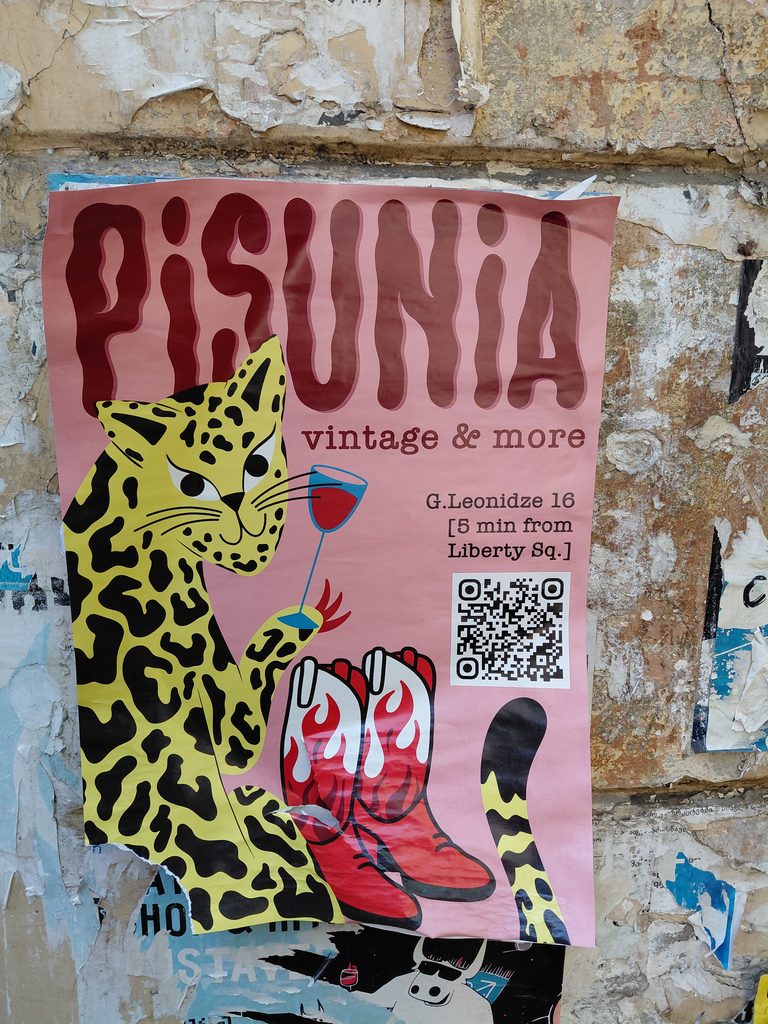
A poster for Pisunia: Vintage and More features a leopard holding a glass of Georgian wine beside a pair of red and white cowboy boots.
Another advertisement promotes Easy Day, offering pet care and domestic assistance:
Cat nanny, babysitting, dog walking, cleaning.

A work of street art by Goshaart, dated 19 August 2025, depicts a black cat offering a dead mouse to the silhouette of an extraterrestrial Xenomorph from the Alien franchise.
The alien appears terrified.
The joke works because it reverses cosmic horror into ordinary feline behaviour.
Humanity fears the alien apex predator.
The house cat merely thinks:
“I have brought you a gift.“

A sign for Humble, a shop selling leather goods and jewellery, prompts another question:
How humble must you be to wear leather and jewellery?

Back at Freedom Square, I photograph a plaque commemorating Giorgi Leonidze (1900–1966), Georgian writer, poet and public figure.

Another identifies the Square itself.

And yet another commemorates Shalva Dadiani (1874–1959), Georgian writer, playwright, actor and People’s Artist of Georgia.

Georgia’s national identity repeatedly seems tied to writers, poets and intellectuals in a way many Western countries no longer experience.
In Georgia, literature was survival.
Language preservation was resistance.
Poetry carried statehood when statehood itself repeatedly vanished.
Even the plaques are unusually literary in spirit.
Many countries memorialise generals and industrialists.
Tbilisi continually commemorates poets, translators, dramatists, philosophers and philologists.
That says something profound about the culture.

Above: Flag of Georgia
I stumble across Lumos, a Thai restaurant with a Harry Potter theme.

Nearby, I hear a congregation singing inside the Cathedral of the Assumption of the Virgin, a Roman Catholic church dating from the early 19th century.
The word “Hallelujah” is distinctly audible.

Above: Roman Catholic Cathedral of the Assumption of the Virgin
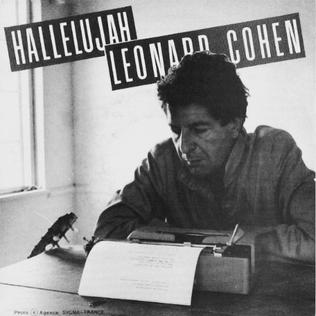
Leonard Cohen arrives on my mind’s jukebox.
His Hallelujah is a fascinating companion to Lennon’s Watching the Wheels.
Lennon captured surrender to stillness.
Cohen captures the collision between eros, spirituality, defeat, longing and transcendence.
The song acknowledges both the holy and the broken, suggesting that even a fractured expression of faith can retain its significance.
It is one of those rare compositions that seems to understand the complications of adulthood.
A cold and broken Hallelujah.
That could almost serve as an epigraph for much of Caucasian history.
I have moved from secular flirtation and urban irony into sacred resonance without encountering any particularly hard border between them.
That is very Tbilisi:
Wine cellars beneath churches.
Techno clubs near monasteries.
Saints beside graffiti.

Another sign catches my attention.
A large terracotta jar stands outside a wine cellar.
A qvevri, the traditional Georgian earthenware vessel used in an ancient winemaking technique in which wine ferments and matures in buried containers.

Next, another Goshaart poster, dated 1 April 2026, introduces a superhero:

I photograph the Papa Nikala Restaurant, advertising traditional Georgian cuisine.

Above: Papa Nikala Restaurant
Looking upwards towards Sollaki Hill, near Narikala Fortress, I see the imposing Kartlis Deda, commonly known as Mother of Georgia.
The 20-metre aluminium monument, erected in 1958 to commemorate Tbilisi’s 1,500th anniversary, symbolizes the Georgian national character.
She holds a sword in one hand for enemies and a cup of wine in the other for friends.
A sword for enemies.
Wine for guests.
Hospitality and ferocity fused into one aluminium giantess overlooking the city.
Few national monuments summarise a people’s self-image so efficiently.

Above: Mother of Georgia
My wandering eye for details reminds me of the old flâneur tradition:
The observer drifting through the city, collecting emotional archaeology rather than souvenirs.
I keep encountering one of Tbilisi’s defining qualities:
The coexistence of immense historical seriousness with playful absurdity.
The city refuses tonal consistency, which paradoxically makes it feel alive.
I have surrendered to the rhythm of wandering without an objective.

The repeated failure to enter the Writers’ House of Georgia is almost becoming narratively useful.
The closed doors have forced me outward into the streets, where the real encounter is happening anyway.
Had they opened immediately, I might have spent the afternoon indoors reading placards instead of absorbing the living text of the city itself.
My day has exactly the cadence of someone willingly surrendering to drift.
Not hunting.
Not optimising.
Following curiosity.
Street by street.
Which, in cities like Tbilisi, is often the best possible method.

The white sign of Café Mellow catches my attention.

The name beautifully continues my internal jukebox soundtrack.
Donovan’s Mellow Yellow.
Playful, psychedelic, faintly ridiculous and half-ironic.

Inside the café, Chopin plays on a vinyl record player.
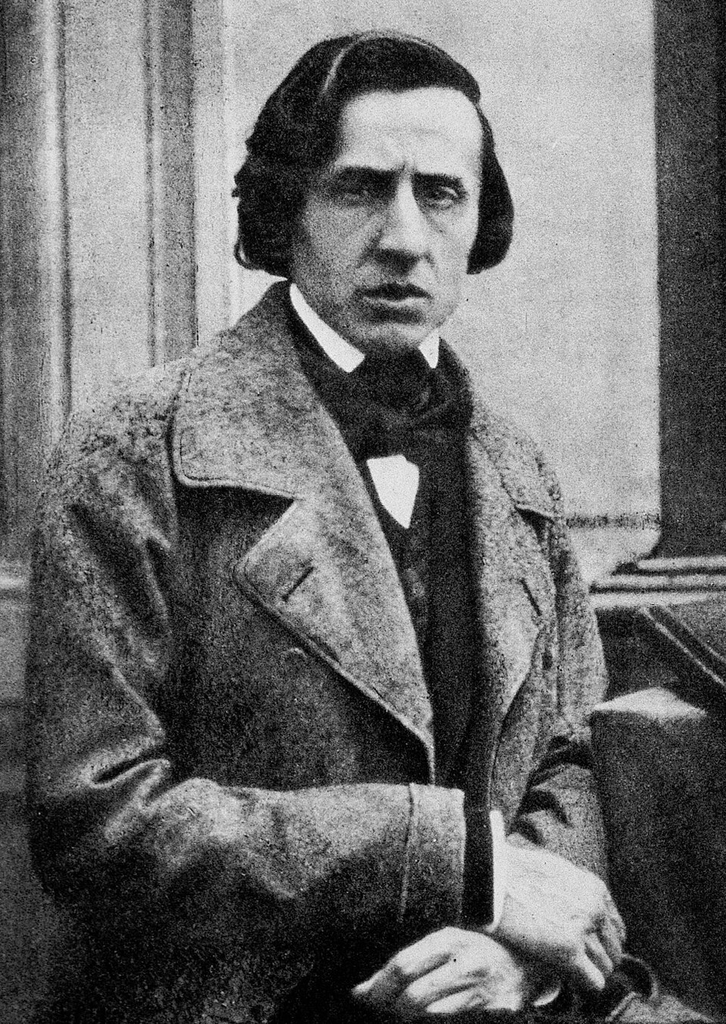
Above: Polish composer Frédéric Chopin (1810 – 1849)
I meet Sonja, a Viennese church architect, 14 years my junior, recently arrived from touring Uzbekistan.
She has been enthusiastic about her travels and speaks favourably of the Uzbekistani people, whom she finds gentler than Georgians.

Above: Flag of Uzbekistan
She plans to return to Vienna early Wednesday morning.
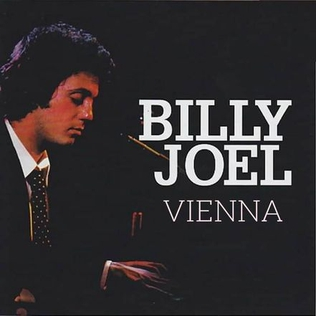
We share a pleasant conversation over bowls of pumpkin cream soup and glasses of green mint lemonade.

I am beginning to feel like myself again.
It is as though my spirit had been tied by a sailor’s knot, restricting the sailboat of my heart.
Now the ship has slipped its moorings and is moving freely towards unknown waters.
A release without pretending that all wounds are healed.
The boat is not arriving safely into harbour.
It is merely moving again under its own wind.

It is good to converse with women without compulsion or hesitation.
Sonja does not attract me in quite the same way Anna did, but that is neither here nor there.
I feel I had forgotten how it was to talk to women without worrying that my words might be misinterpreted, as so often seemed to happen in previous relationships and working environments.
My problem was never women in the abstract.
It was relational tension, emotional surveillance and the fear of interpretative traps.
Where every sentence feels like evidence for a future trial.
The death of spontaneity and serendipity.
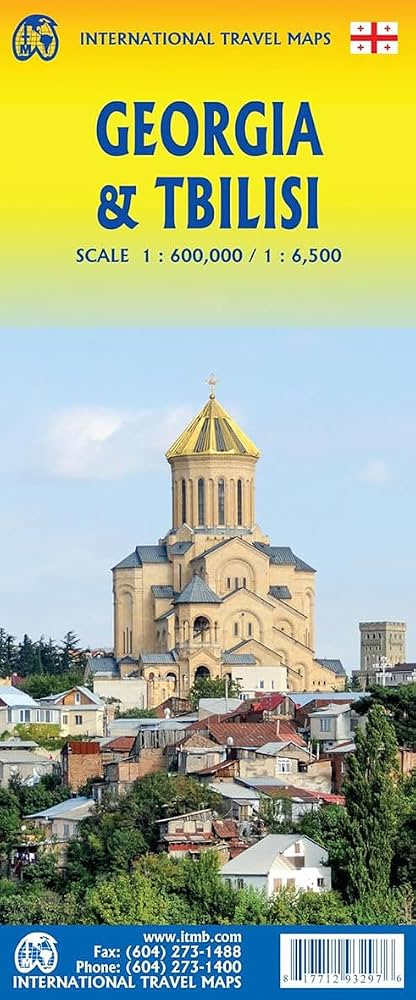
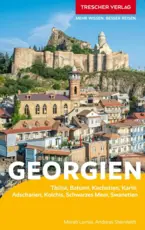
Sonja shows me a bright yellow German-language book, Tbilisi Ultimate Travel, advertising itself as a cultural and conservation tour of Georgia’s adorable capital at exceptionally low prices.
Sonja — Viennese church architect, recently returned from Uzbekistan — feels exactly like the sort of person one meets only while travelling properly.
Not networking.
Not dating.
Not making contacts.
Simply two temporary lives intersecting over soup, music and coffee.

The absence of apprehension in these conversations matters.
Not because flirtation itself is transformative, but because hyper-self-monitoring is exhausting.
When every sentence feels potentially dangerous, misunderstood or emotionally weaponised, spontaneous conversation dies.
My internal jukebox offers another contribution:
“Please don’t let me be misunderstood.“

I am rediscovering conversational freedom:
The ability to speak lightly, curiously and imperfectly without anticipating conflict at every turn.
I look at Sonja’s guidebook and cannot help smiling.
On 27 July 1996, at the YHA Hostel in Stratford-upon-Avon, I attracted the attention of my future wife through the guidebooks I was reading openly at breakfast.
Thirty years!
Wow!
How quickly time has flown.
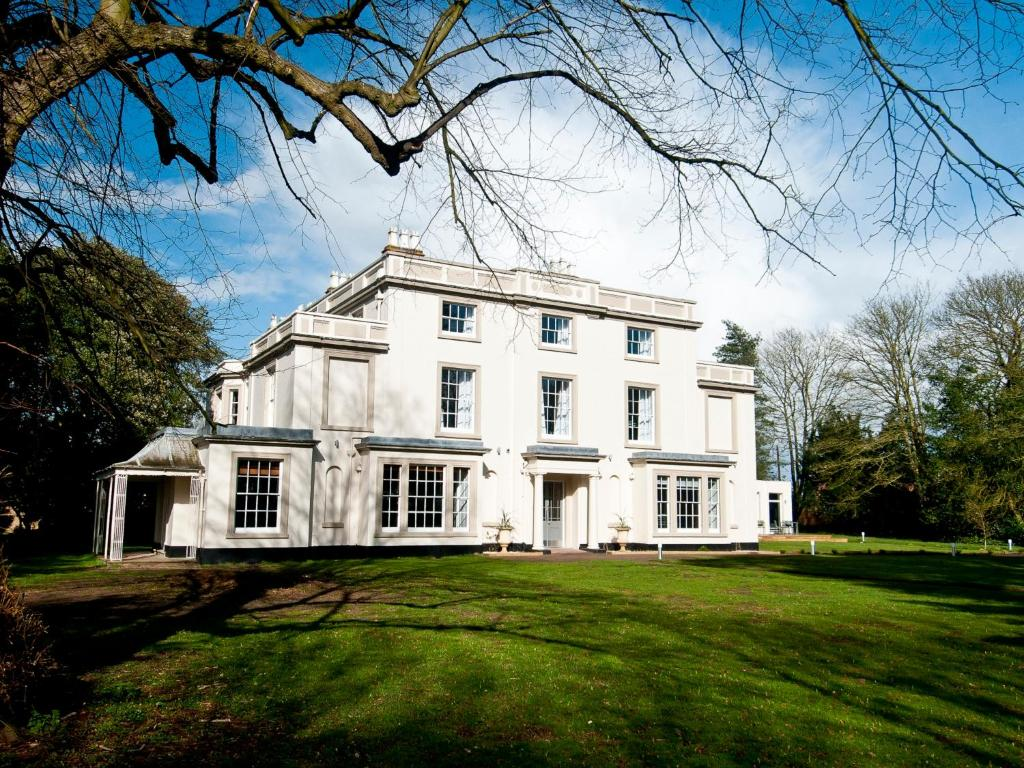
Above: YHA Stratford-upon-Avon Youth Hostel, England
We married 21 years ago, on 28 July 2005, at the City Hall of Freiburg im Breisgau, Germany.

Above: Rathaus, Freiburg im Breisgau, Baden-Württemberg, Deutschland (Germany)
I still love my wife.
There is no bitterness.
No self-exoneration.
No demonization.
Simply the recognition of two people who have spent years discovering one another emotionally while still retaining traces of loyalty and affection.
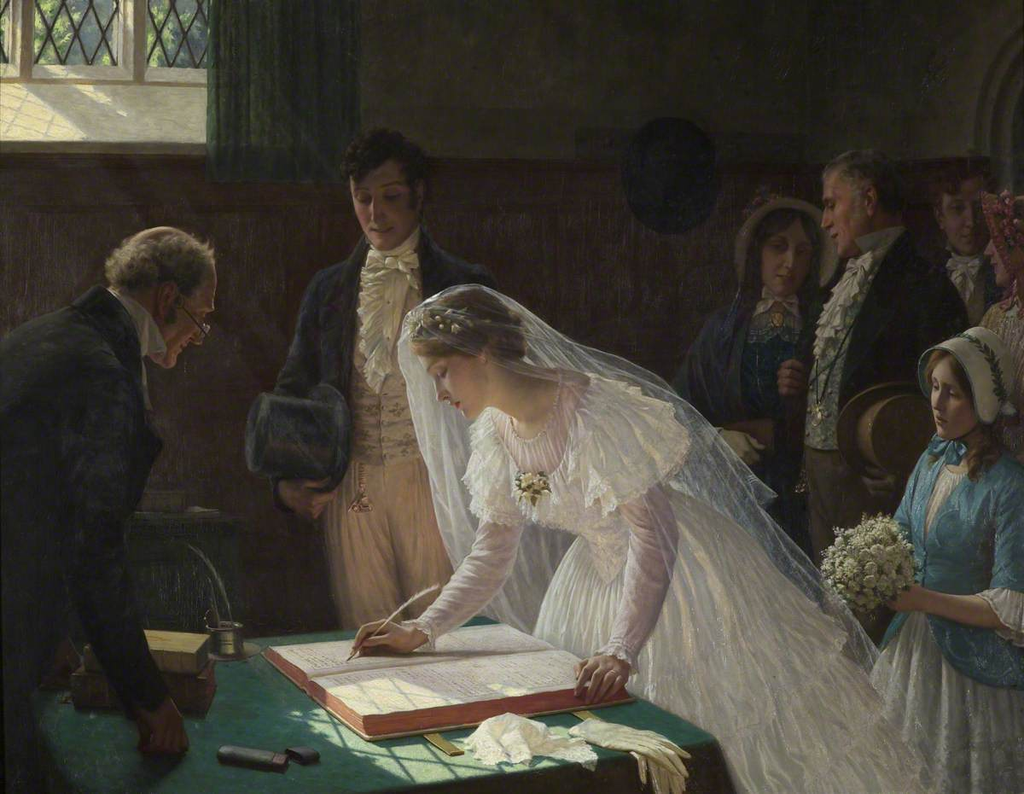
The hostel memory from 1996 is particularly poignant because it captures the strange compression of time that arrives in one’s sixties.
One conversation has become:
Thirty years.
Countries crossed.
A marriage.
Disappointments.
Endurance.
Careers.
Compromises.
And now a Georgian café with a yellow guidebook on the table and an Austrian stranger with whom I am conversing in German.
A whole civilization of memory contained within one yellow book.
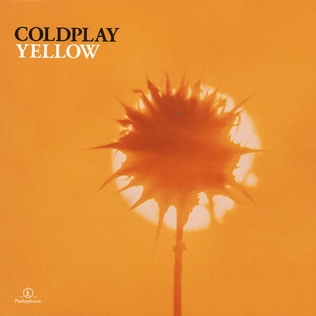
Sonja asks me about teaching.
I still love it, despite the difficulties I have experienced.
Beneath the frustration and exhaustion, the core vocation remains intact.
I still light up when discussing it because teaching, at its best, is fundamentally relational.
Conversation with possibility.
The institutional structures around it exhaust me, but the essence remains very much alive.

Mozart follows Strauss.

Above: Austrian composer Johann Strauss II (1825 – 1899)
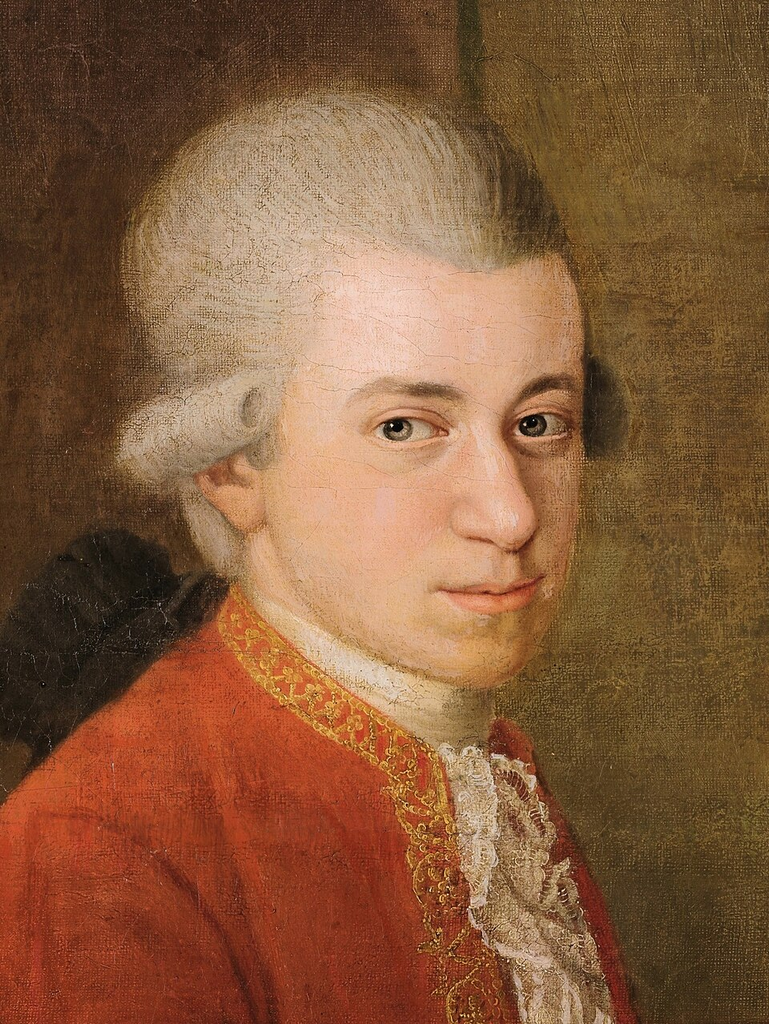
Above: Austrian composer Wolfgang Amadeus Mozart (1756 – 1791)
I eat my Georgian salad unusually slowly.
It is unexciting and bland.
Tomatoes, cucumbers and onions, with very little dressing to give it panache.
I try to persuade myself to enjoy it.
Perhaps receptivity is also the willingness to accept something imperfect, unseasoned and incomplete.
Contentment flavours food as much as seasoning or sauce.

I alternate between English and German with Sonja.
Eventually, she departs.
The café has attracted seven other English speakers.
I sit alone at my table, but I am not lonely.
That is a hard-won distinction.
I am relaxed, relieved and relishing the music of Mozart.
The murmur of conversation around me becomes a pleasant accompaniment rather than something requiring my participation.
The contrast from Mellow Yellow to classical music works beautifully because human consciousness itself moves that way:
Absurd pop trivia one moment.
Existential reckoning the next.
There is a quiet but unmistakable emotional turning point happening in this Tbilisi experience.
Not a dramatic rebirth.
Not a cinematic reinvention.
Something subtler and probably more real:
The gradual return of ease.
I linger rather than march.
Taste rather than merely consume.
Converse rather than perform.

Anna and Sonja have offered different experiences, but neither needs to represent anything beyond herself.
Anna awakens attraction and spontaneity.
Sonja offers companionship, memory and intellectual ease.
I am learning to appreciate the encounters without demanding that they become something else.

Mozart plays.
English voices drift around me.
The city continues outside.
And for once I am neither chasing nor fleeing anything.
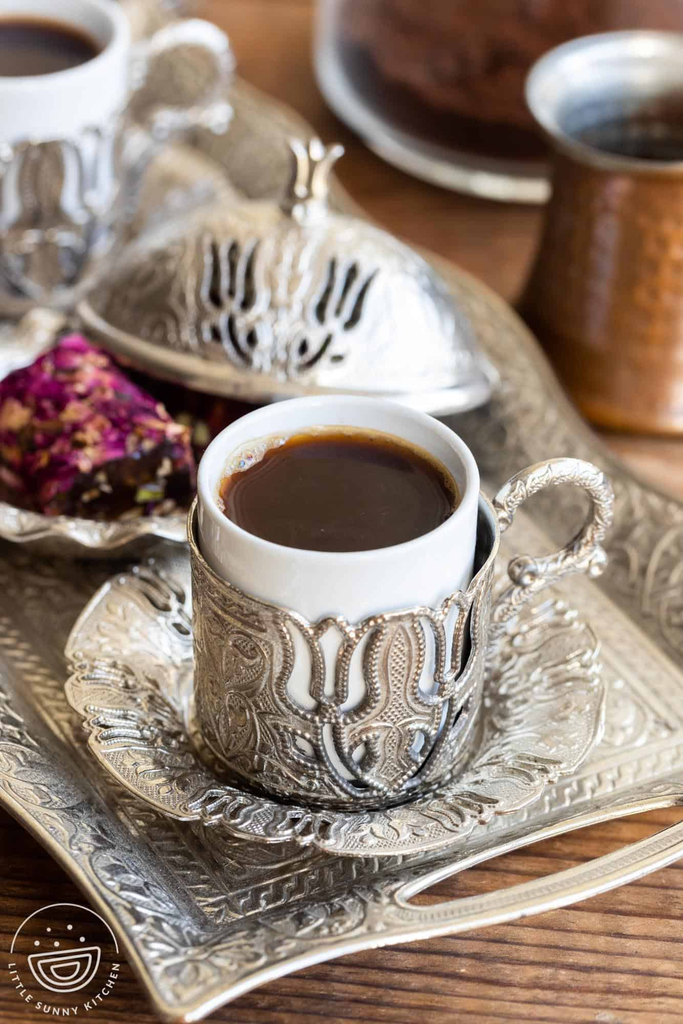
I savour a Turkish coffee and quietly leave.
No dramatic declaration.
No impulsive plan.
Merely the mind testing the emotional shape of a possibility while Mozart lingers somewhere in memory and Tbilisi continues unfolding street by street.
I suspect this journey is becoming less about geography and more about discovering the conditions under which I feel most fully human.
I continue wandering.
I visit the grounds of the Norashen Holy Mother of God Armenian Church, a historic brick structure featuring a cross-in-square architectural design.
Its ruined interior, bell tower and imposing supporting pillars suggest a building that has endured considerable changes in its circumstances.
The entrances remain inaccessible.

Above: Norashen Holy Mother of God Armenian Church, Tbilisi
I photograph the Great Synagogue of Tbilisi, also known as the Georgian Synagogue, on Kote Afkhazi Street.
Constructed in 1913 by Jewish immigrants from Akhaltsikhe, its red-brick exterior combines Moorish and Romanesque influences.
It continues to serve Tbilisi’s Jewish community.

Above: Great Synagogue, Tbilisi
A mural catches my eye.
A cat offers a fish at a doorway bearing the sign:
“No pets allowed“.
I smile.

I walk through a street market and photograph the Tamada Statue, at the intersection of Sioni, Bambis Rigi and Shardeni streets.
The bronze sculpture depicts a tamada, the traditional Georgian toastmaster, holding a kantsi, a drinking horn.
It is an enlarged modern replica of an archaeological find from Western Georgia dating to the 7th century BCE.

A photograph on the outside wall of Wine Shop #1 features Frank Sinatra:

I spot another sculpture on Shardeni Street:
A stylized metallic figure sitting upon a stone base.

Above: Street scene, Tbilisi
I capture a glimpse of Metekhi Church, a Georgian Orthodox church occupying a dramatic position on a cliff overlooking the Mtkvari River.
Behind it stands the monument to King Vakhtang I Gorgasali, traditionally credited with founding Tbilisi in the 5th century.
The surrounding Metekhi district has served various purposes throughout the city’s history, including as a fortress and a prison.

Above: Metekhi Church / King Vakhtang I Gorgasali Monument, Tbilisi
I photograph Meidani Square, with the ancient Narikala Fortress overlooking it from the hill.
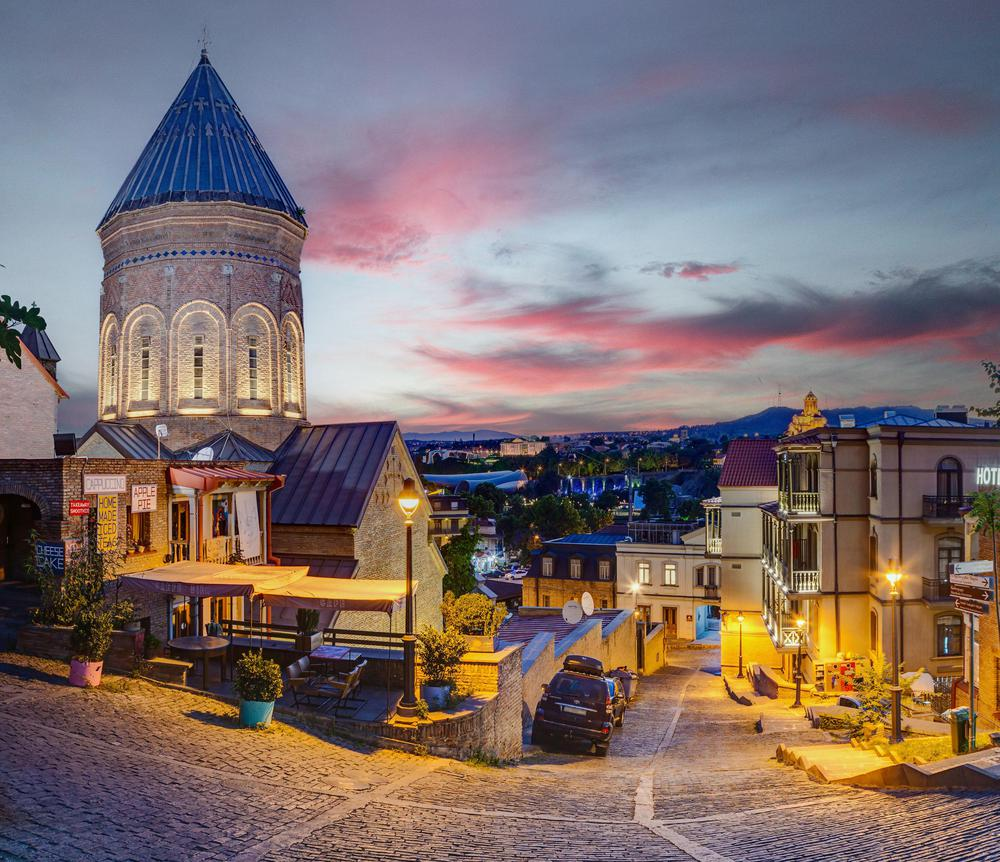
Above: Meidani Square, Tbilisi
Nearby stands the Ceremonial Palace of Georgia, formerly the Presidential Palace, now used for official receptions, ceremonial functions and major state events.

Above: Ceremonial Palace of Georgia, Tbilisi
I photograph Rike Park and the lower station of the cable car travelling towards Narikala Fortress.

Above: Cable car station, Rike Park, Tbilisi
To my surprise, I also encounter a bronze monument to Ronald Reagan (1911 – 2004), erected in 2011 to commemorate the 20th anniversary of the collapse of the Soviet Union.
Another unexpected historical and political association in a city that seems to specialize in them.

Above: Ronald Reagan Statue, Rike Park, Tbilisi
I eventually return home.
Dinner is a makeshift affair of corn chips, ham slices, rice cakes, black tea and Cola Zero.
Nothing particularly Georgian about it.
No grand conclusion.
No dramatic declaration of personal transformation.
Just another evening waiting to happen and a day in Tbilisi that has left me feeling unexpectedly content.
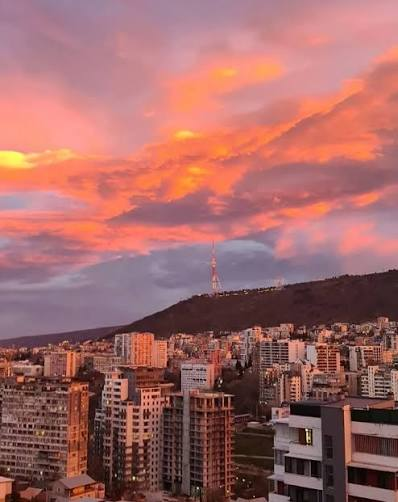
Above: Tbilisi
I never managed to enter the Writers’ House.
I didn’t see everything.
I didn’t conquer the city.
But I found a little café, enjoyed some music, met interesting people, remembered 30 years – half my life, contemplated the nature of love and attraction, admired some cats, watched a blue balloon cross a street and listened to a congregation sing Hallelujah.
I stepped off the merry-go-round for a while.
And perhaps that is enough.
As days go, it was a good day.