Sunday 5 July 2026
Sighnaghi, Signagi Municipality, Georgia
As my days decrease here in this country, my chronicles come closer to arriving in it.
Mad honey has been intoxicating travellers along the Black Sea coast for over 2,000 years….

Sunday 10 May 2026
Trabzon-Rize Shuttle Bus

The Difficult Daughter
A day that began as a punishing grid of small losses, bad timing and expensive friction has gotten worse.
I was finally allowed to board the shuttle at 1100 hours.
The bus can take 39 passengers and no standees.
Then enter the Difficult Daughter.
They, mother and daughter, enter the bus from a side door behind me.
The daughter immediately puts a death grip on the hair and ear of the young lady seated directly in front of me.
It takes force, repetition and argument to free the lady.

The Difficult Daughter sits beside me.
I am squeezed between the window and by her obese bulk.
Her mother is forced to stand.
I am trapped until the difficulty is pulled away.

Ridin’ in the bus down the boulevards
And the place was pretty packed, yeah
I couldn’t find a seat, so I had to stand
With the perverts in the back
It was smellin’ like a locker room
There was junk all over the floor
We’re already packed in like sardines
But we’re stoppin’ to pick up more, look out
Another one rides the bus
Another one rides the bus
And another comes on and another comes on
Another one rides the bus
Hey, he’s gonna sit by you, another one rides the bus
There’s a suitcase pokin’ me in the ribs
There’s an elbow in my ear
There’s a smelly old bum standin’ next to me
He hasn’t showered in a year
Well, I think I’m missin’ a contact lens
I think my wallet’s gone
And I think this bus is stoppin’ again
To let a couple more freaks get on, look out
Another one rides the bus
Another one rides the bus
And another comes on and another comes on
Another one rides the bus
Hey, he’s gonna sit by you, another one rides the bus
Another one rides the bus
Another one rides the bus, ow
Another one rides the bus, hey, hey
Another one rides the bus, hey, hey, hey, hey, hey
The window doesn’t open and the fan is broke
And my face is turnin’ blue, yeah
I haven’t been in a crowd like this
Since I went to see The Who
I know I should’ve got off a couple miles ago
But I couldn’t get to the door
There isn’t any room for me to breathe
And now we’re gonna pick up more, yeah
Another one rides the bus
Another one rides the bus
And another comes on and another comes on
Another one rides the bus
Hey, he’s gonna sit by you, another one rides the bus
Another One Rides the Bus, “Weird” Al Yankovic (1983)

I am miserable – especially after the kind of morning I have had already.
What makes this situation so exhausting is the lack of control.
I have finally got one simple step right – sit down, ride to Rize – and then someone else’s chaos gets dropped directly into my lap.
The useful question right now is only this:
Is this situation going to continue or will it settle down?
I endure, quietly.
I cannot distract the driver’s attention while he is concentrating on driving.
I cannot ask for another seat, for there are no other seats.
I am not rude.
I am Canadian, eh?

Above: Flag of Canada
I am miserable, because I am physically pinned in.
That is reason enough for misery.
Eventually, I hope, she will calm down, but until she has been moved away, my best move is simple:
Protect my space as much as I can.
Keep my bag secure.
Do not spend energy replaying the scene.
I have had enough unexpected battles today.
I do not need to win this one.
I just want to get to Rize.

The bus is moving, following the Black Sea coast.
The Difficult Daughter stares at her hands.
I can only hope mother and daughter disembark before I need to.
The immediate risk has dropped.
The main thing is that the situation has shifted from confrontation to transit.
At least following the coast from Trabzon toward Rize is a better backdrop than an airport hall.
At this point, I will not engage, unless I absolutely have to.
If she continues to stare at her hands and leaves other passengers alone, then quiet is my ally.
There is a decent chance that mother and daughter get off before I do, especially if they are riding the full route.
For now, the target is modest.
Every kilometer east is progress.
I have a clear view out the window – the sea on one side, green hills on the other.
After the morning I have had, that counts as compensation.
I do not want to give a diagnosis as to what ails the Difficult Daughter, but I can only surmise that what I have observed was behaviour during a brief, stressful encounter.
The constellation of actions could fit many different situations:
- an intellectual disability with behaviourial challenges
- autism spectrum disorder, particularly if accompanied by difficulties with impulse disorder or sensory regulation
- a psychiatric condition, such as a psychotic disorder or a mood disorder during an acute episode
- a neurological condition affecting behaviour
- the effects of medication or withdrawal
- or something else entirely.
It could even have been a one-off behaviorial crisis triggered by the stress of travel.
I simply do not know.
I need to be careful about letting this incident define the whole person.
I consider her mother.
Whether the words “dutiful” or “long suffering” are perfectly accurate, they convey my impressıon of someone carrying a heavy responsibility.
Caregivers of people with severe disabilities or chronic mental illness often live with exactly that kind of burden, though I cannot definitively conclude that is the case here.
I will never learn what lay behind the episode.

The Castle in the Middle
Araklı (population: 48, 581) lies about 30 km east of Trabzon, where the mountains of the eastern Black Sea descend abruptly to the coast.
It is a working town rather than a resort.
Fishing, tea cultivation, hazelnuts and small scale agriculture remain important to the local economy.
Behind the coastal strip, narrow valleys climb rapidly into forested highlands and summer pastures, which are central to local life.
Highland tourism has grown in recent years, although it is still much quieter than in Türkiye’s major tourist destinations.
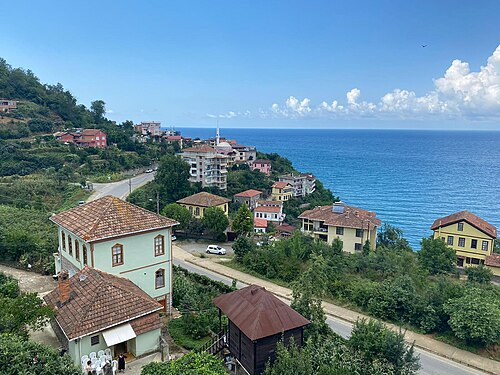
Above: Araklı, Trabzon Province, Türkiye
Historically, the area was influenced by Greek, Byzantine and Ottoman cultures.
The name “Araklı” is said to derive from “the castle in the middle“, referring to its position between two historical fortifications.
Araklı feels like a place where daily life outweighs tourism.
People head to work, unload fishing boats, tend tea gardens or catch minibuses along the coast.
Araklı has the quiet dignity of my fellow passengers.
Araklı is the kind of place where one might find a teahouse overlooking the sea, order a glass of strong Black Sea tea and watch the rhythm of the town – a town where the ordinary lives of its residents are the main story.
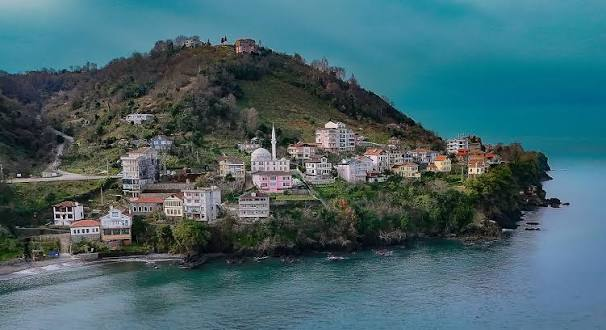
Above: Araklı
Sürmene
If Araklı is a working coastal town, then Sürmene is a working town with a famous craft.
Sürmene is 40 km east of Trabzon, squeezed between the Black Sea landscape of rushing streams, tea gardens and dense woodland.
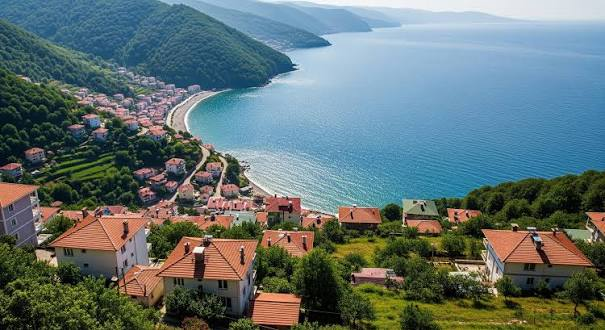
Above: Sürmene, Trabzon Province, Türkiye
Sürmene is known throughout Türkiye for one thing above all else:
The Sürmene knife.
These knives are hand-forged by local craftsmen and have become a symbol of the town.
These knives range from practical kitchen knives to finely decorated collector’s pieces.
I suspect I would have enjoyed seeing – not simply the finished knives, but as well the workshops where generations of smiths have continued the craft.
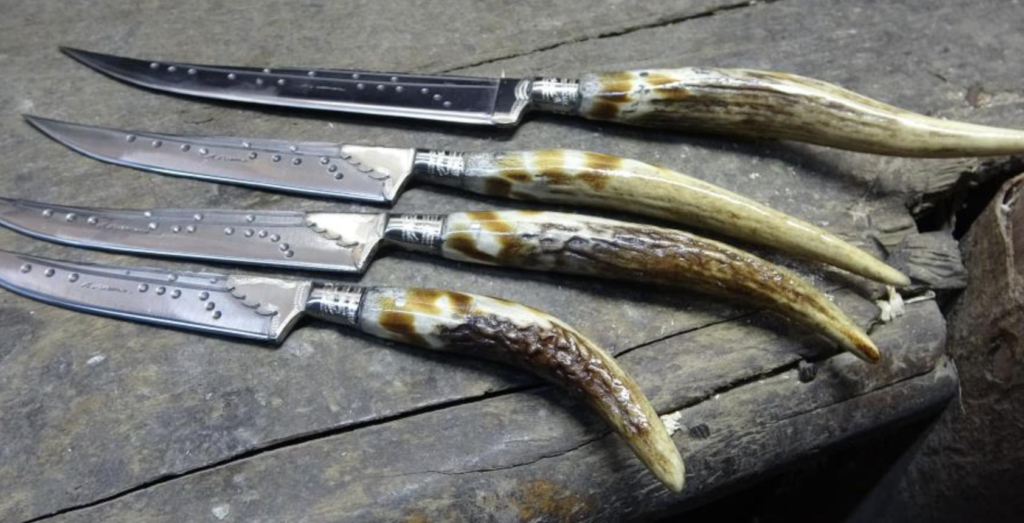
Like much of the eastern Black Sea coast, Sürmene has a layered past.
It was known in antiquity as Hyssus and lay along the coastal route connecting the Greek colony of Trapezus (Trabzon) with settlements further east.
The region later came under Roman, Byzantine and Ottoman rule.
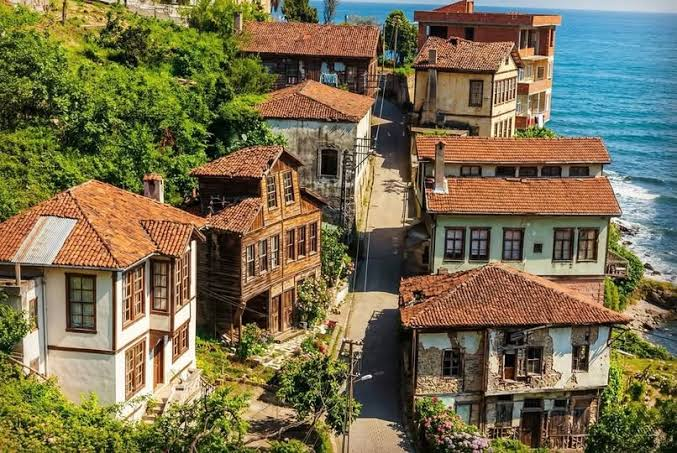
Above: Sürmene
Mad honey
One historical curiosity is what ancient writers associated the area with the famous episode in which Xenophon and his 10,000 became ill after eating “mad honey” produced from rhododendron nectar – a phenomenon that still occasionally occurs in the Black Sea region today.
It is a remarkable story because it sounds like legend, yet it is almost certainly based on a real biological phenomenon.
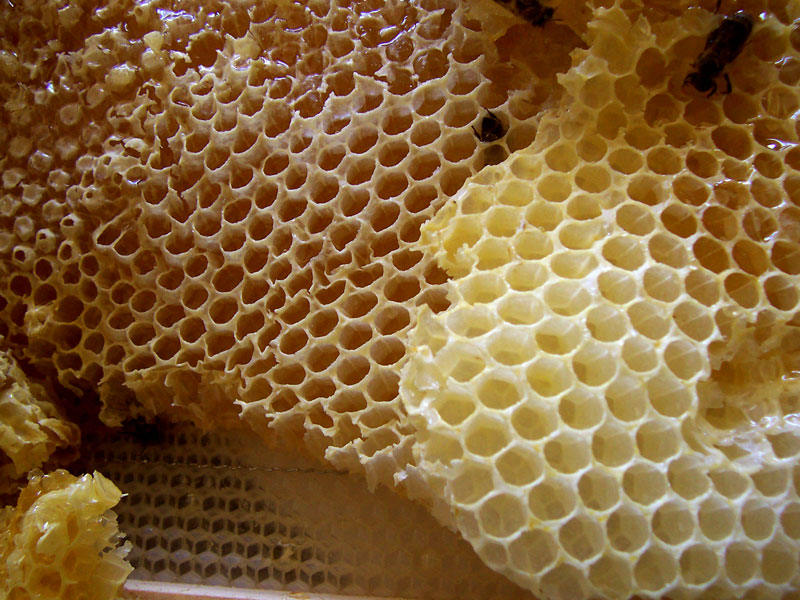
The account comes from Xenophon (430 – 354 BC), an Athenian historian/soldier/philosopher/writer, best known for combining firsthand military experience with influential historical and philosophical writing, he remains one of the principal literary sources for classical Greece and for the life and thought of Socrates (an ancient Greek philosopher who lived in Athens during the 5th century BC and is widely regarded as one of the foundational figures of Western philosophy).
Xenophon’s reputation rests largely on his participation in the expedition of the Ten Thousand – Greek mercenaries hired by Cyrus the Younger (r. 408 – 401 BC).
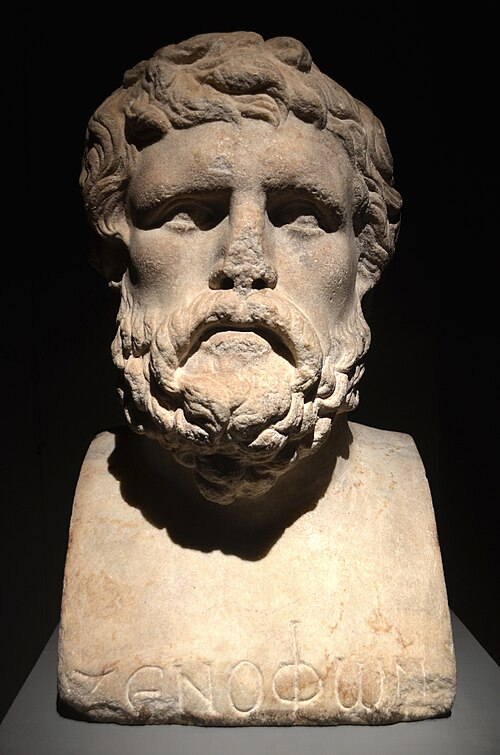
Above: Marble bust of Xenophon of Athens, Bibliotheca Alexandrina
Cyrus was an Achaemenid Empire (550 – 350 BC) Persian prince/military commander/provincial governor who attempted to seize the throne from his elder brother, Artaxerxes II (405 – 358 BC) in 401 BC.
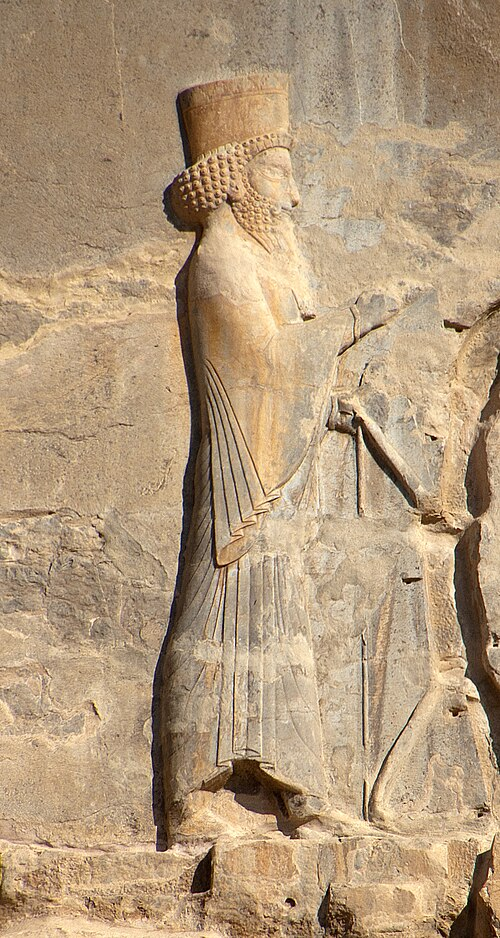
Above: Relief depicting Artaxerxes II, from his tomb at Naqsh-e Rostam, Persepolis
Although Cyrus’ rebellion failed, it became one of the best-documented episodes of Achaemenid history because of the Greek eyewitness accounts that followed.
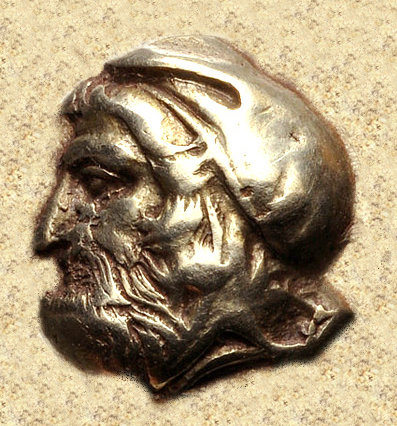
Above: Anonymous portrait of a satrap (provincial governor) of Asia Minor, around the time of Cyrus the Younger. From a coin of Ionia, Phokaia, circa 478-387 BC.
After Cyrus was killed at the Battle of Cunaxa (401 BC), Xenophon emerged as one of the leaders who guided the stranded army through hostile territory to the Black Sea, a journey he later recounted in Anabasis.
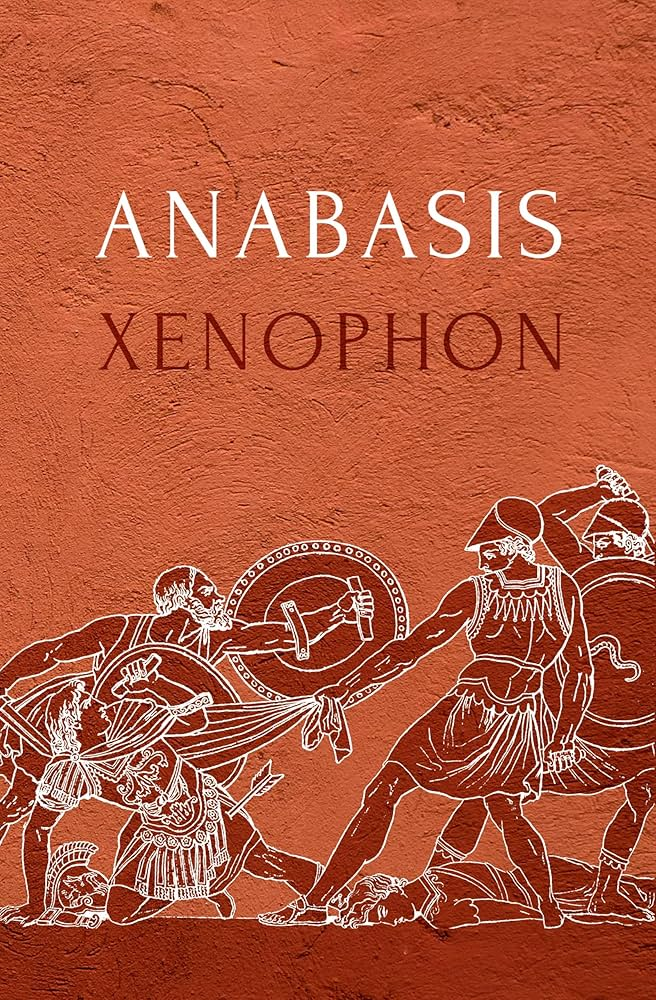
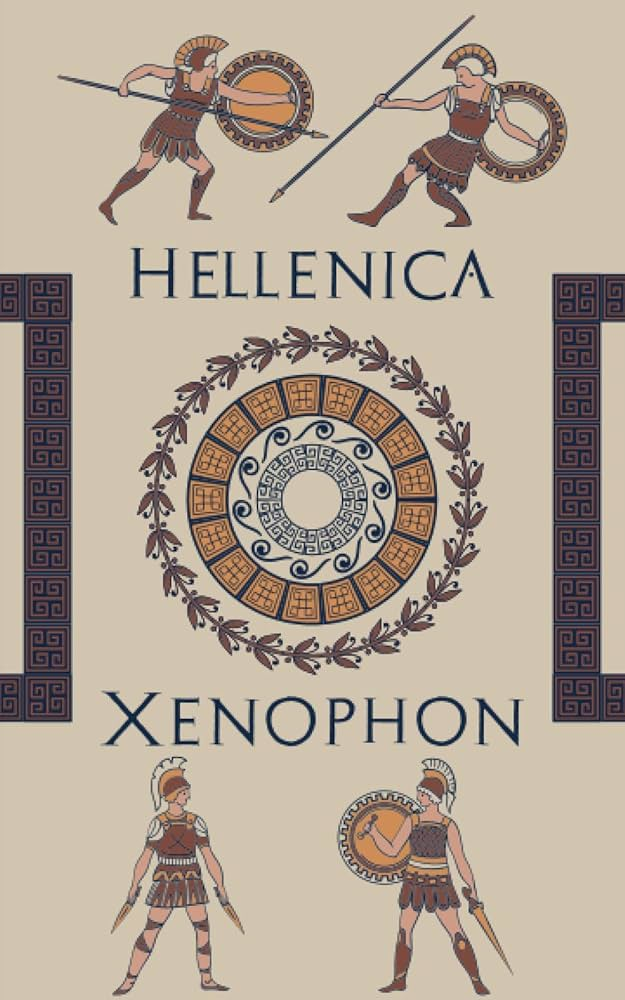
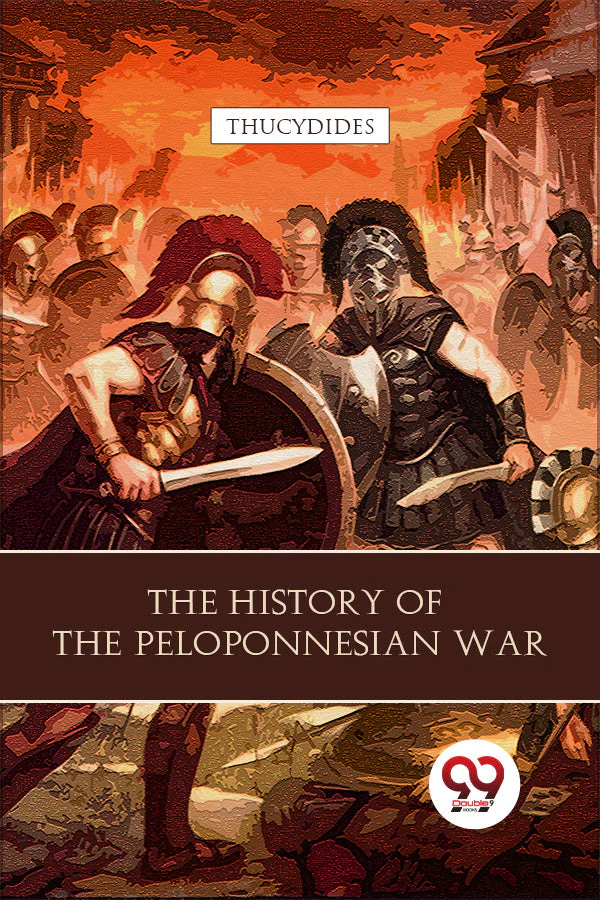
His Hellenica continues the historical narrative where Thucydides (460 – 400 BC) – an Athenian historian/general who wrote the influential History of the Peloponnesian War – ended, covering Greek affairs from 411 to 362 BC.
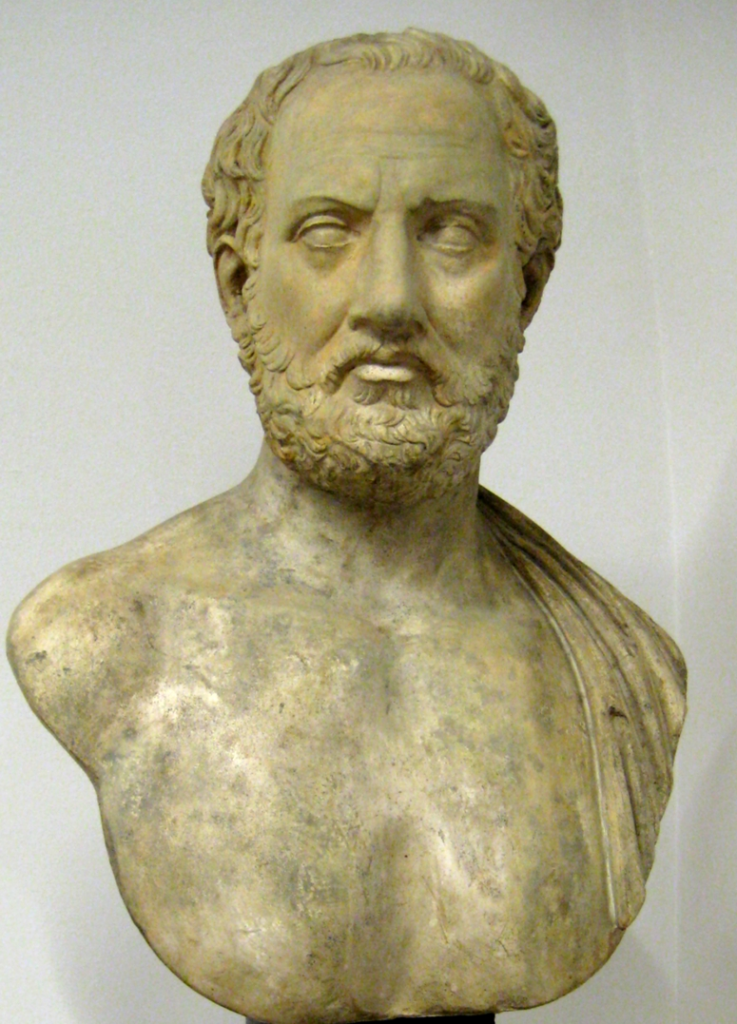
Above: Plaster cast bust of Thucydides in the Pushkin Museum, Moscow, Russia
Although remembered as a historian, Xenophon was also a devoted student of Socrates.
His Memorabilia, Apology and Symposium preserve an image of Socrates that is often more practical and concerned with ethics, self-discipline and everyday conduct than the portrait found in the dialogues of Plato (428 – 347 BC).
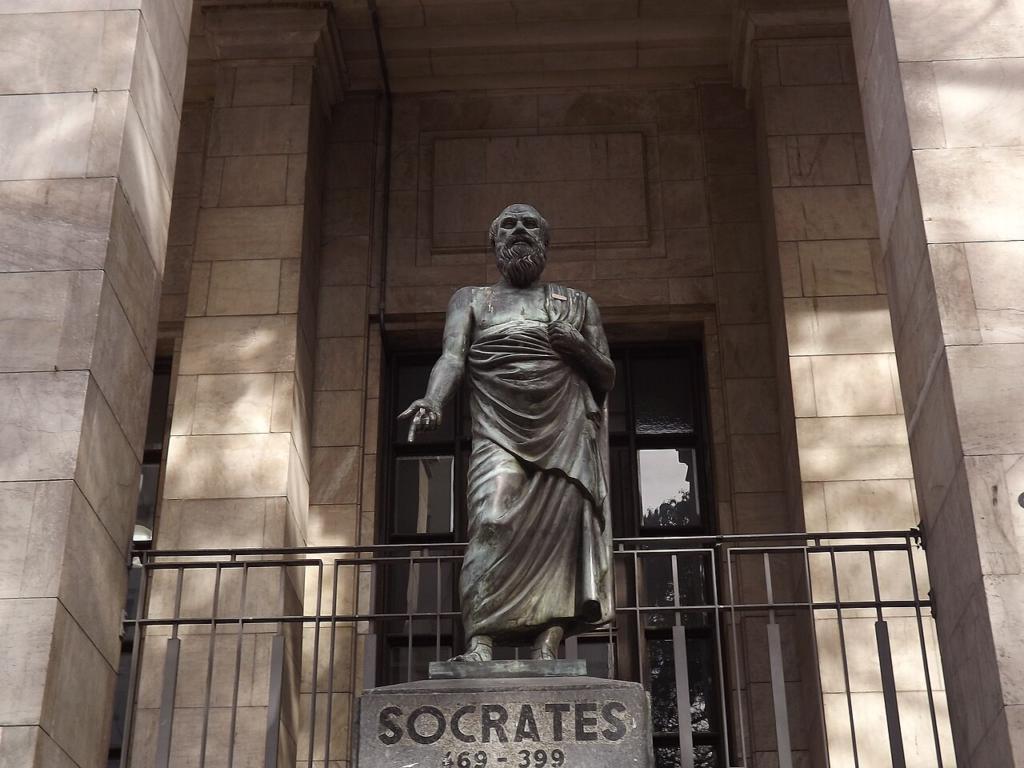
Above: Statue of Socrates, National Library, Montevideo, Uruguay
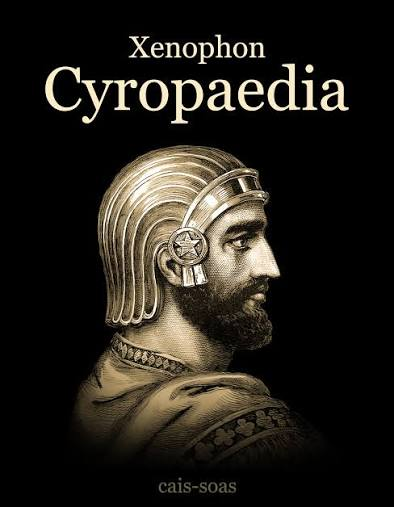
Xenophon’s Cyropaedia, an idealized account of Cyrus the Great (600 – 530 BC), became especially influential as a study of leadership and statecraft.
Xenophon’s writings span history, philosophy, military science, horsemanship, hunting and economics, making him one of antiquity’s most versatile authors.
His clear prose was widely used for teaching ancient Greek, while Anabasis remained admired for its vivid narrative and practical insights into command, logistics and survival, influencing readers from antiquity through to the modern age.
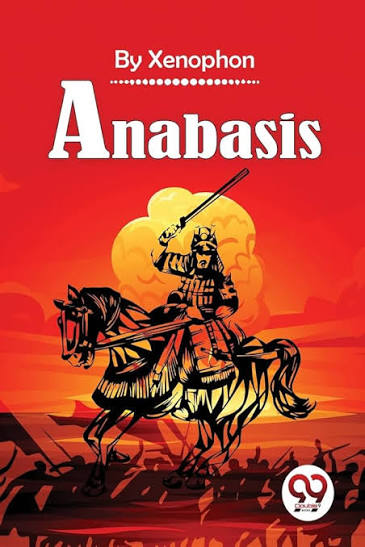
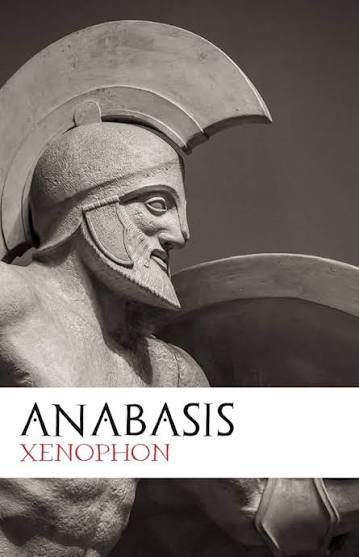
Anabasis recounts the expedition of the Ten Thousand Greek mercenaries into the Persian Empire and their long retreat to the Black Sea, making it one of the best-known firsthand military accounts from antiquity.
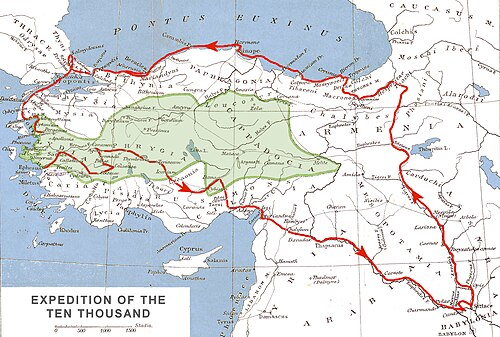
Anabasis is valued both as history and literature.
It offers a rare eyewitness perspective on the Achaemenid Persian Empire, Greek military organization, leadership under pressure and the practical challenges of campaigning across thousands of kilometres.
The famous cry, “Thalatta! Thalatta!” (“The sea! The sea!“) marks the moment the exhausted soldiers first glimpse the Black Sea, symbolizing survival and the hope of returning home.
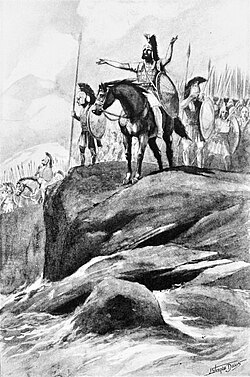
When Cyrus the Younger was killed at Cunaxa, this left the Greek army stranded hundreds of kilometres inside the Persian Empire.
To make matters worse, many of their senior officers were later murdered during negotiations.
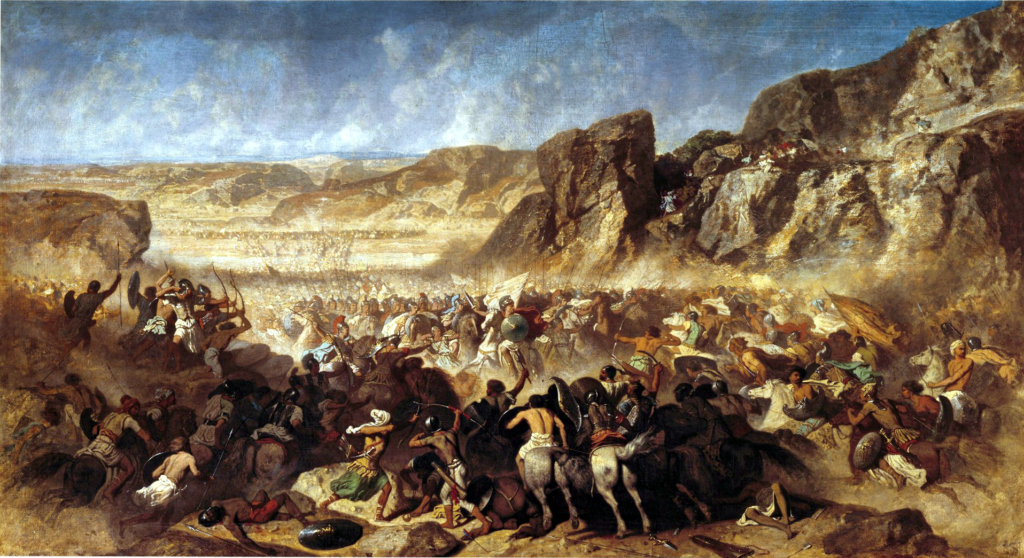
Above: Jean-Adrien Guignet, Episode in the Retreat of the Ten Thousand (1842)
At that point, Xenophon emerged as one of the leaders.
He helped guide the army on an extraordinary retreat northward through mountains, hostile tribe, snow and starvation towards the Black Sea.
Reaching the Black Sea coast meant they were once again within reach of Greek settlements and eventual safety.

Not long after reaching the Black Sea coast, the soldiers encountered beehives.
They naturally helped themselves.
That proved to be a mistake.
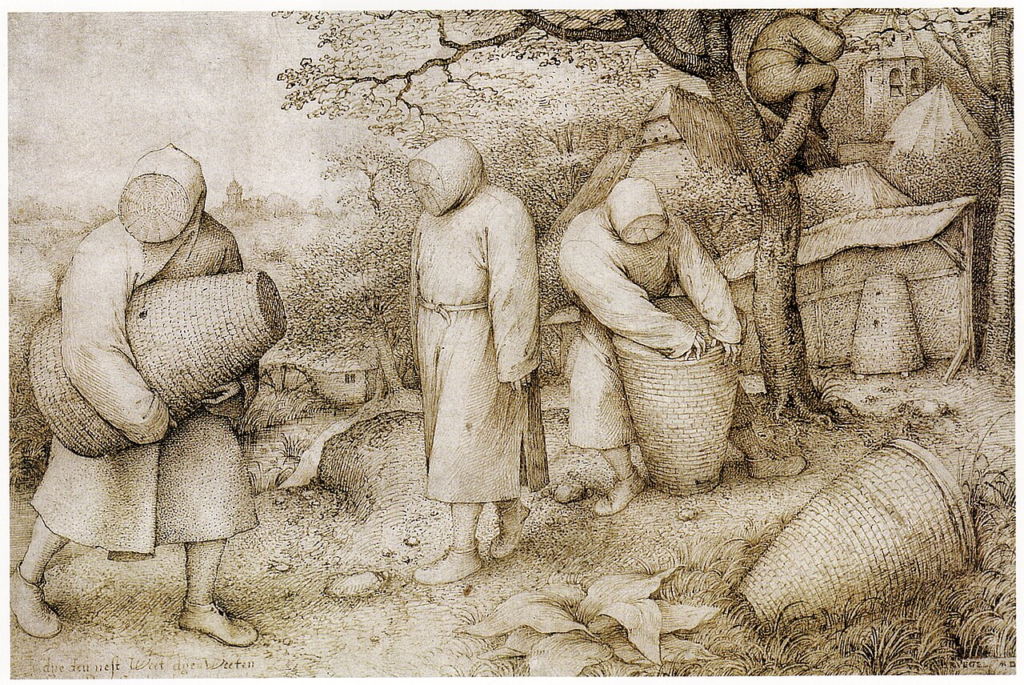
Above: The Beekeepers, 1568, by Pieter Bruegel the Elder
Xenophon wrote that everyone who ate the honey became violently ill.
The symptoms included:
- dizziness
- vomiting
- diarrhoea
- an inability to stand
- confusion
- staggering as though intoxicated
Those who ate only a little felt merely drunk.
Those who ate more collapsed completely.
Xenophon wrote that the army looked as though it had suffered a crushing military defeat because so many men were lying helpless on the ground.
Fortunately, no one died.
Within roughly a day the soldiers began recovering.
After several days they were fit to contınue marching.
It is called “mad honey“.
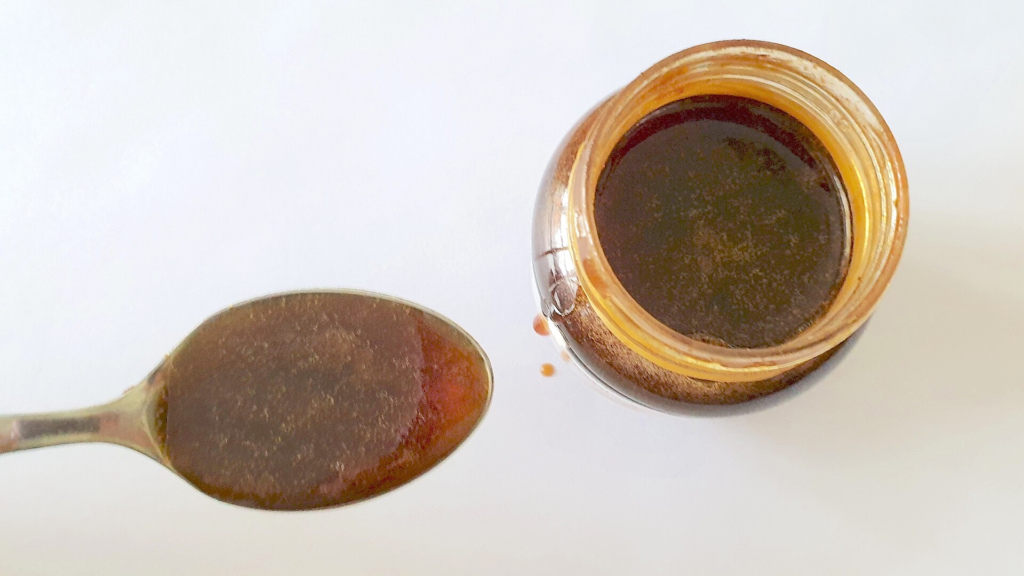
Above: A sample of mad honey on a spoon
The answer lies in the plants, Rhododendron ponticum – an evergreen flowering shrub, native to parts of the Black Sea and the Iberian Peninsula.
It is recognized for its glossy foliage and striking purple flower clusters.
It has become one of Europe’s best-known invasive woody plants.
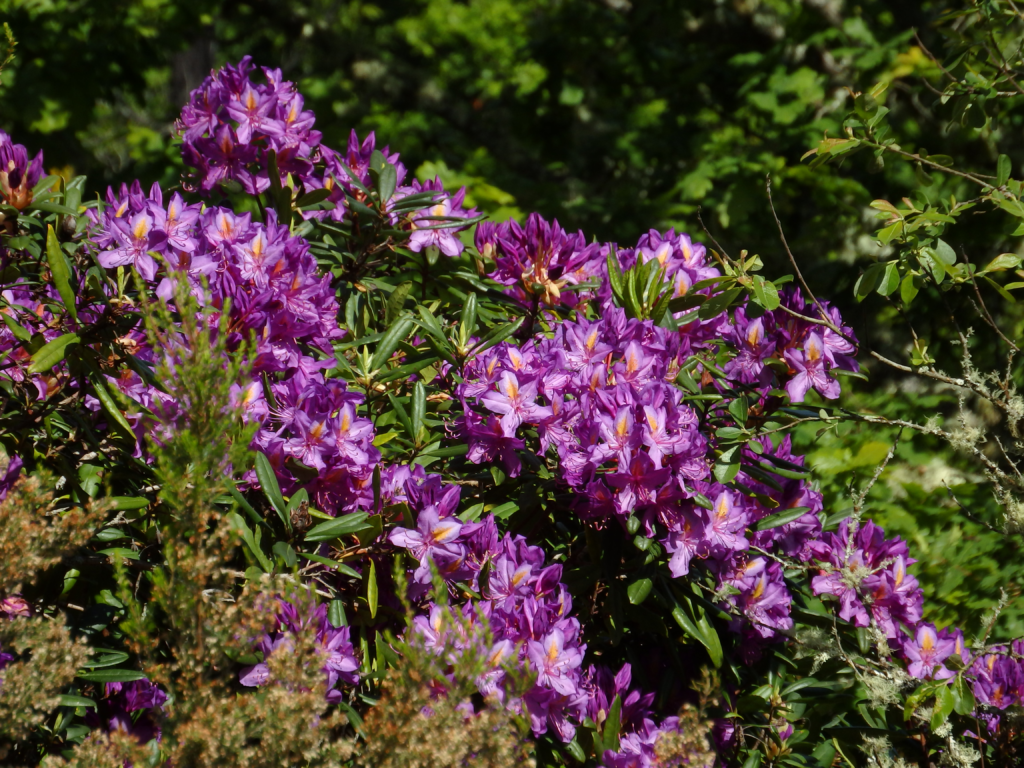
Above: Rhododendron ponticum
It typically grows between two and eight metres tall, although older specimens may become larger.
Its leathery, dark green leaves remain on the plant throughout the year, while funnel-shaped flowers appear in late spring to early summer, usually in shades of purple, lilac or pinkish violet.
The plant produces woody seed capsules that release numerous tiny, wind-dispersed seeds.
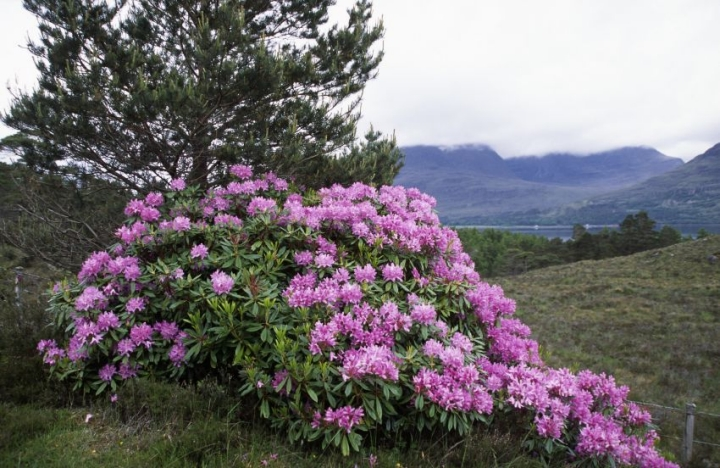
Above: Rhododendron ponticum
The shrub is an important component of humid mountain forests.
It thrives in acidic, well-drained soils and shaded woodland environments with abundant rainfall.
The flowers provide nectar for pollinating insects, although the nectar contains compounds called grayanotoxim, which can make certain honey toxic if collected predominantly from these flowers.
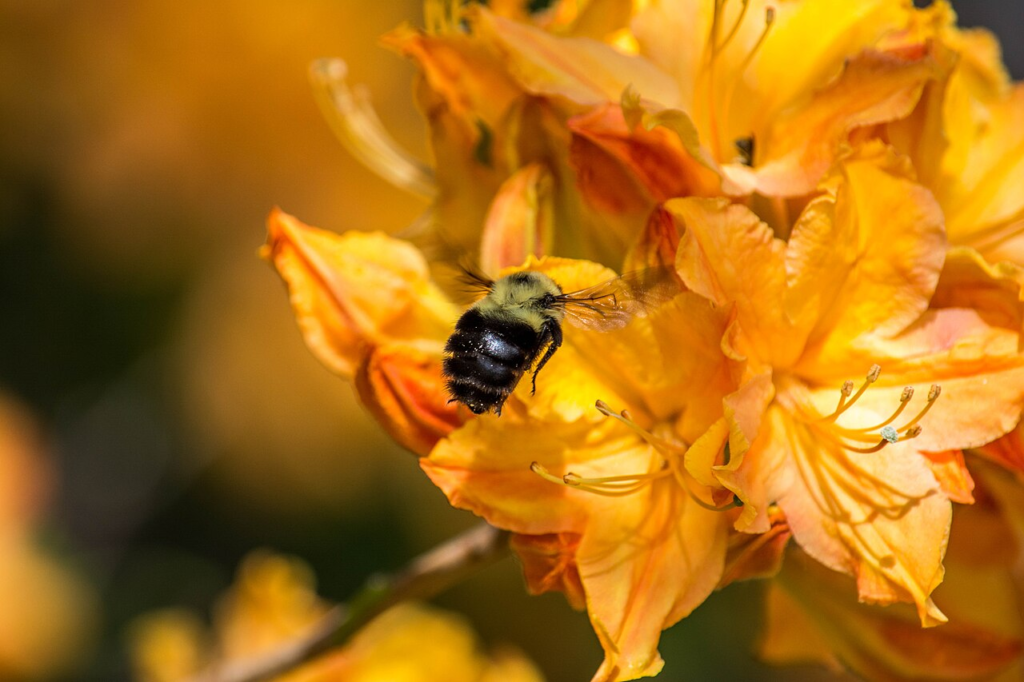
Above: Rhododendron species are a source of the grayanotoxins that give mad honey its properties.
Outside its native distribution, it spreads aggressively.
Dense thickets block sunlight, suppress native woodland plants, hinder tree regeneration and alter forest ecosystems.
Its prolific seed production, evergreen canopy and its ability to regenerate after cutting make long-term control challenging and often require repeated mechanical removal combined with targeted herbicide treatment.
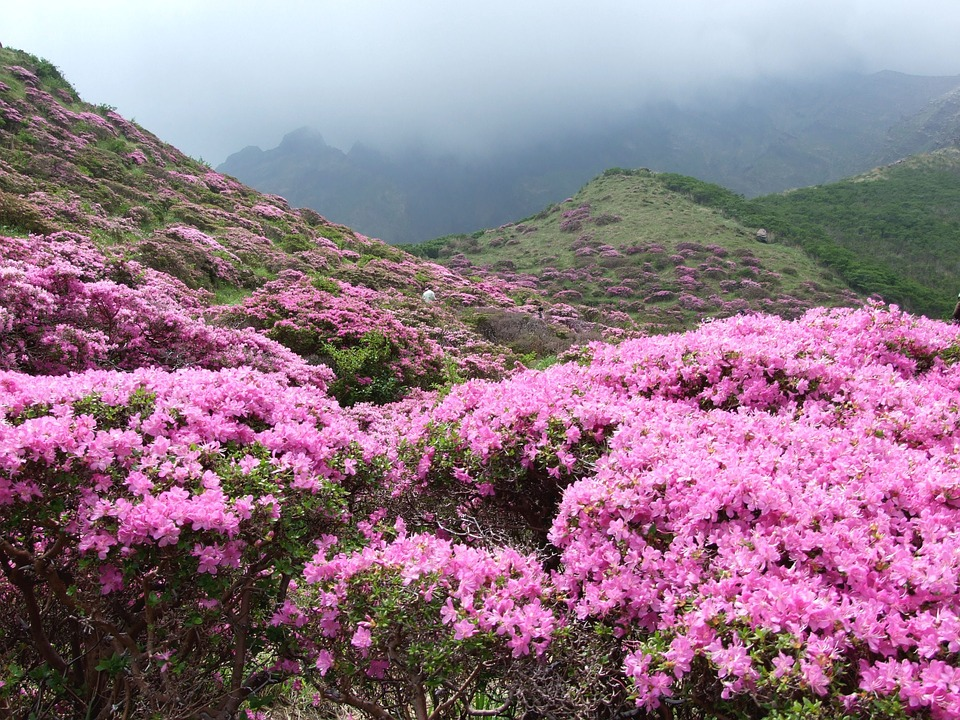
Above: Above: Rhododendron ponticum
Bees collecting its nectar are not harmed.
The toxin passes into the honey.
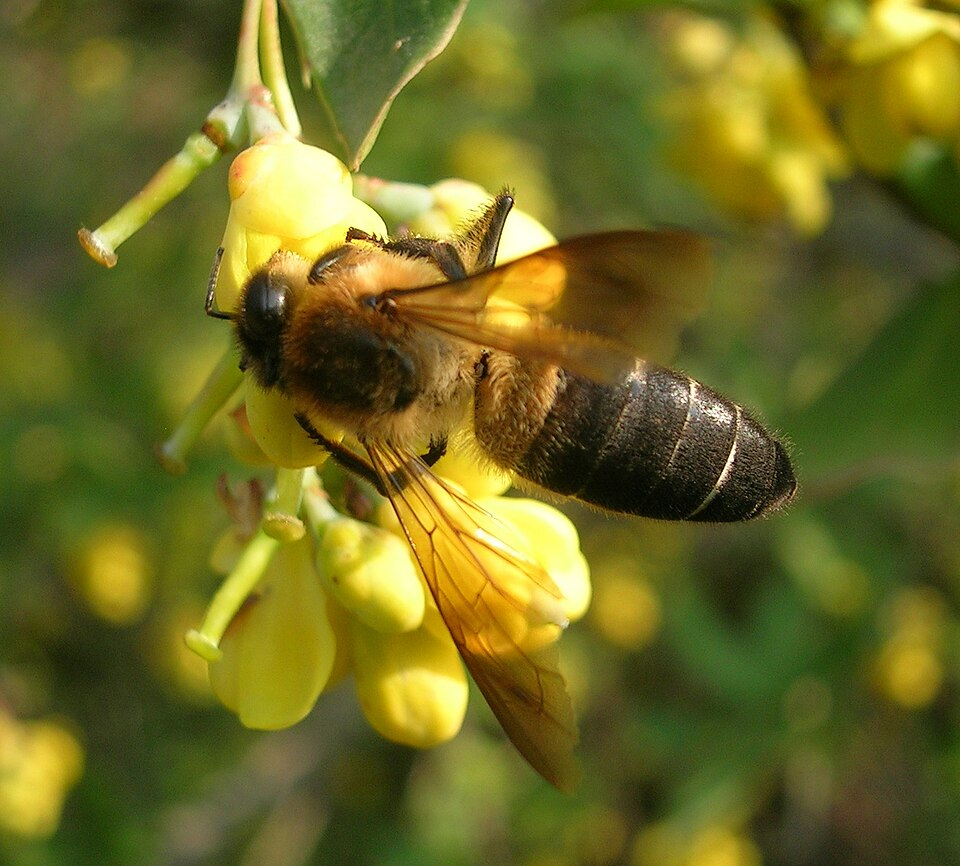
Humans who consume enough of it may develop mad honey poisoning.
Modern symptoms closely match Xenophon’s account:
- very low blood pressure
- slow heart rate
- dizziness
- nausea
- sweating
- fainting
- blurred vision
- confusion
In severe cases, people may require hospital treatment, but most recover fully well with supportive care.
It still exists today.
This isn’t just ancient history.
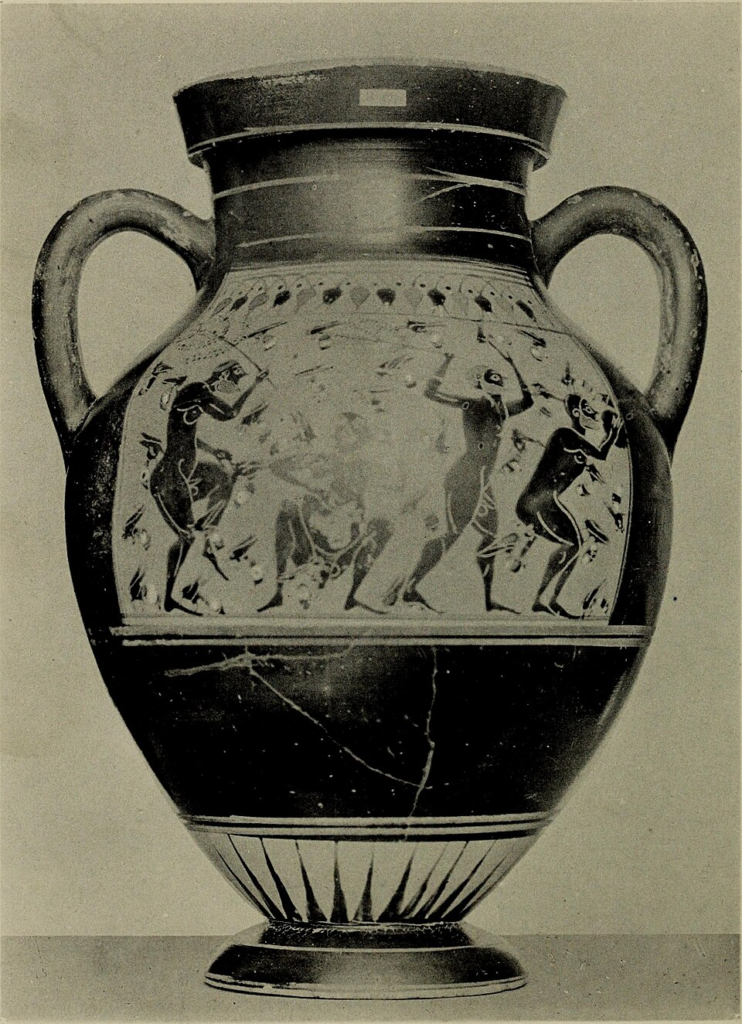
Above: An ancient amphora discovered at Vulci on the Tuscan coast, now in the British Museum, London, believed to depict the Greek myth of Laius, Celeus, Cerberus and Aegolius being stung by the bees of the Dictaean Cave on Crete.
Mad honey is still produced in parts of northeastern Türkiye, especially around the Black Sea region.
In Turkey, mad honey is known as deli bal and is used as a recreational drug and traditional medicine.
It is most commonly made from the nectar of Rhododendron luteum and Rhododendron ponticum in the Caucasus region.
Beekeepers in the Kaçkar Mountains have produced mad honey for centuries.
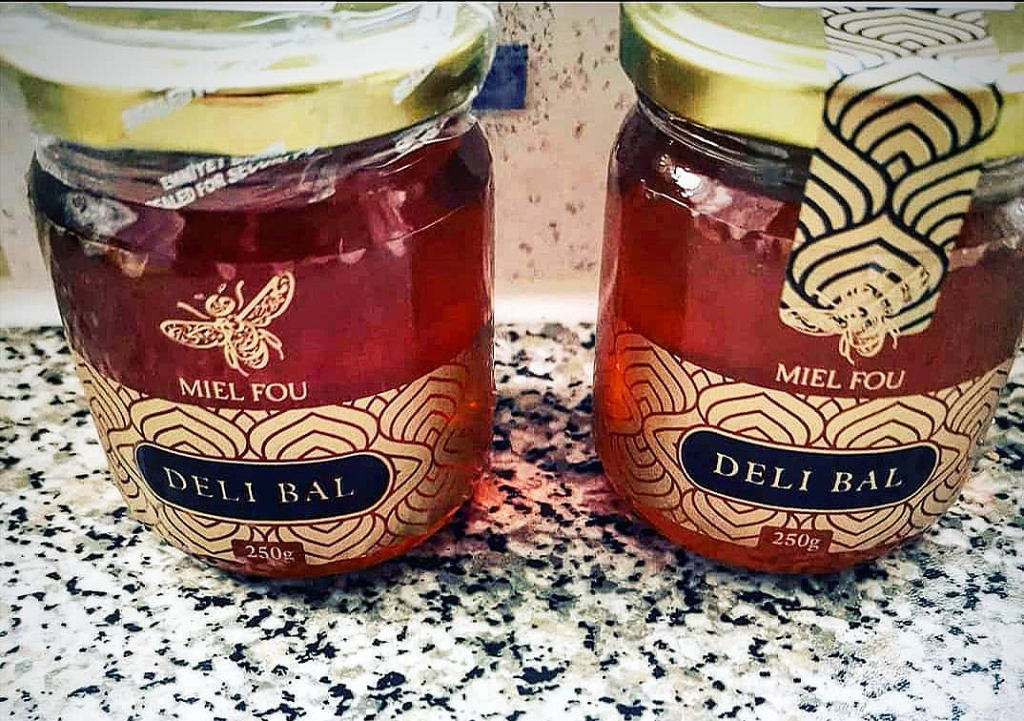
In small quantities, some people consume it as a traditional remedy or even as an aphrodisiac, despite the risks.
Every year, hospitals in the region treat people who have accidentally or deliberately eaten too much.
Medical literature continues to document such cases.

Above: Logo of the European Food Safety Authority
A 2015 systematic review of 1,199 cases of mad honey intoxication found no reported deaths.
Treatments for mad honey poisoning include atropine, adrenaline, and saline infusions.
Cuts like a knife
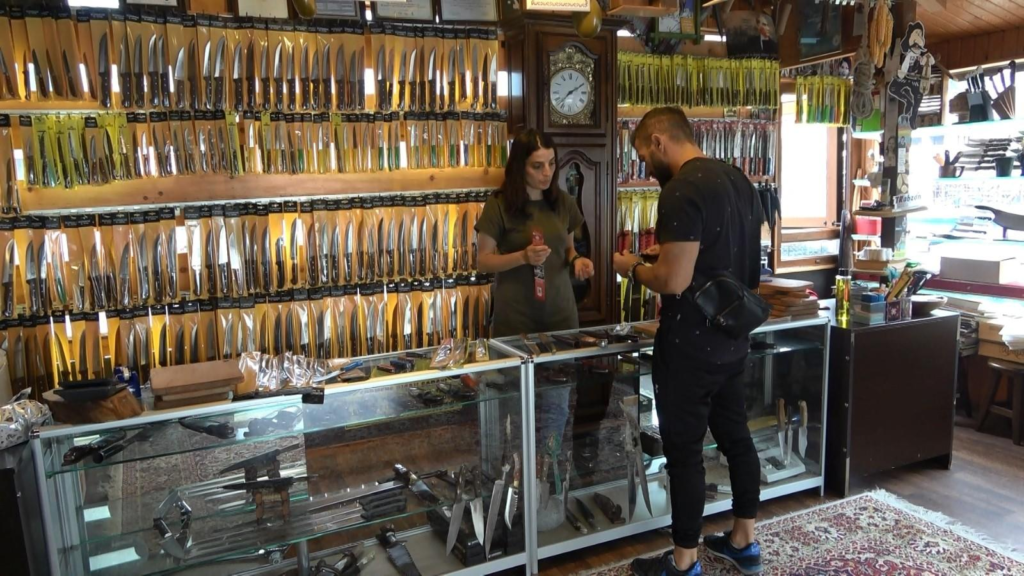
The bus rolled quietly through Sürmene, a town famous throughout Türkiye for its knives.
There was something fitting about that.
Knives, like journeys, are judged less by ornament than by their edge.
A good blade does its work cleanly and without fuss.
So, too, does a good journey.
Mine had begun raggedly enough in Ankara, but by now the sharpest part of the morning had passed.
Sürmene is famous for making knives of remarkable sharpness.
Fortunately for my fellow passengers, I carried none.
After sharing a bus seat with the Difficult Daughter for 40 minutes, however, I briefly understood why the town had developed such a reputation.

Knife-making in Sürmene almost certainly predates the Ottoman period.
Some historians trace the craft back to Byzantine times, while local tradition suggests that ironworking in the area may extend even further into antiquity because of nearby iron deposits and generations of blacksmiths.
Whatever its precise origin, the district has been renowned for quality blades for hundreds of years.
Unlike famous sword-making centres such as Solingen or Seki, Sürmene became known for practical working knives — the sort a fisherman, farmer, butcher or shepherd might carry every day.
Traditionally, a Sürmene knife has several recognizable features:
- an exceptionally sharp carbon or stainless steel blade;
- a narrow profile designed for precise cutting;
- handles fashioned from wood, horn or bone (modern examples may use synthetic materials);
- decorative engraving where the blade meets the handle;
- handmade leather or wooden sheaths on traditional models.
The emphasis has always been on function first.
A genuine Sürmene knife is meant to be used.
Traditionally, a single craftsman performed nearly every stage himself:
- Forging the blade,
- Shaping it,
- Hardening and tempering the steel,
- Grinding the edge,
- Fitting the handle,
- Making the sheath.
Today both handcrafted and factory-assisted production exist side by side.
Around the district, small family workshops continue to preserve traditional methods while larger firms produce knives on a greater scale.
Estimates suggest annual production reaches several hundred thousand knives, supporting many local families.
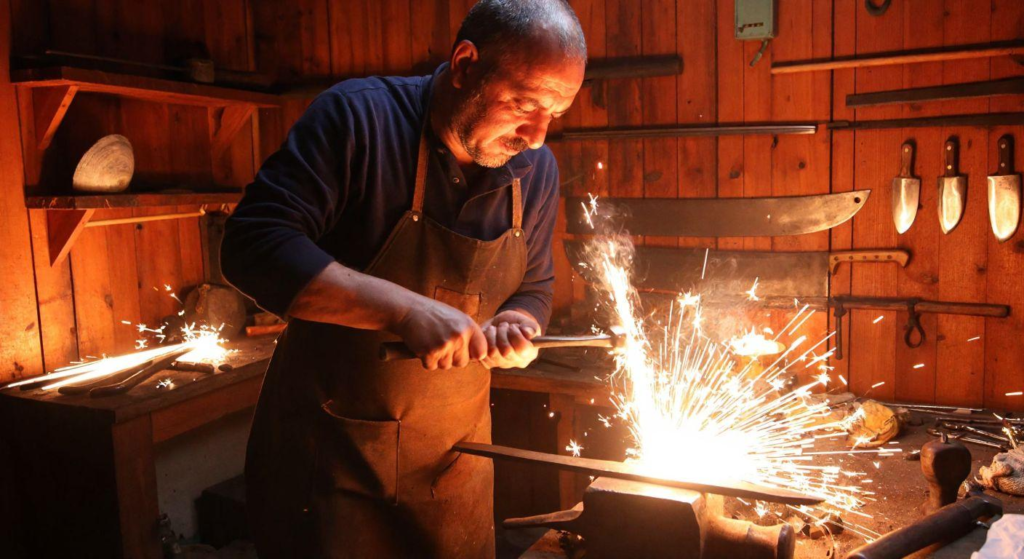
Experienced knife enthusiasts often say that what separates a fine knife from an ordinary one isn’t simply the steel but the heat treatment.
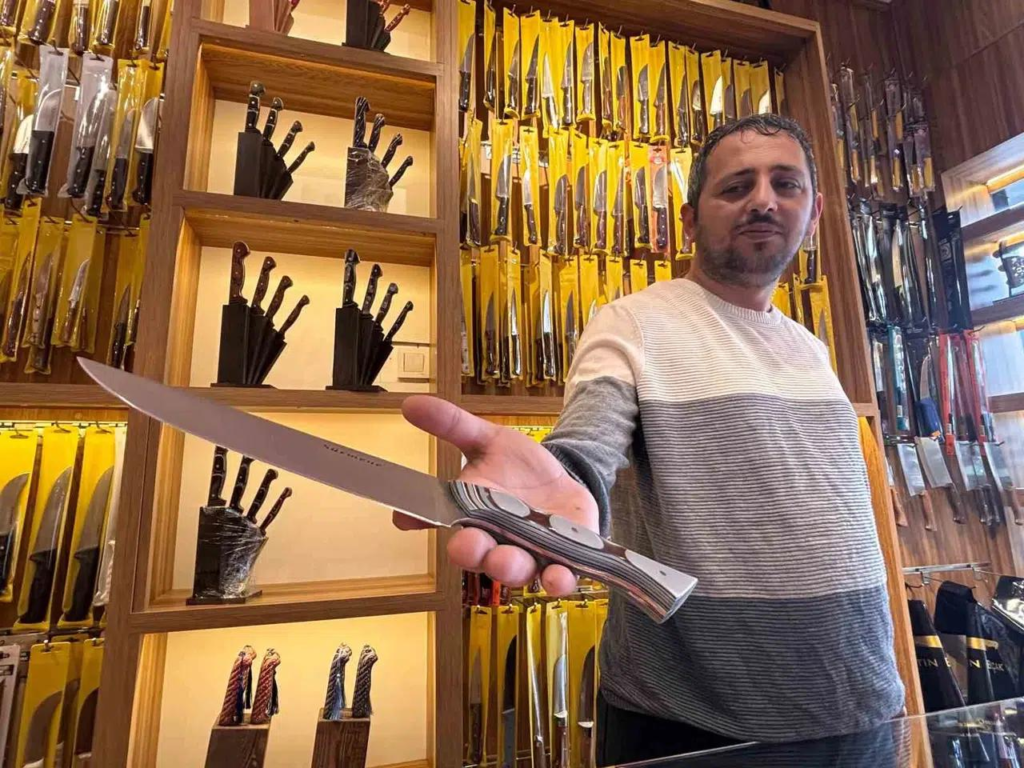
Traditional Sürmene smiths guarded their methods carefully.
Modern makers use controlled furnaces to achieve hardness while retaining toughness, whereas older craftsmen relied on generations of practical experience in heating and quenching the blade.
That combination of hardness, flexibility and edge retention gave Sürmene knives their reputation.
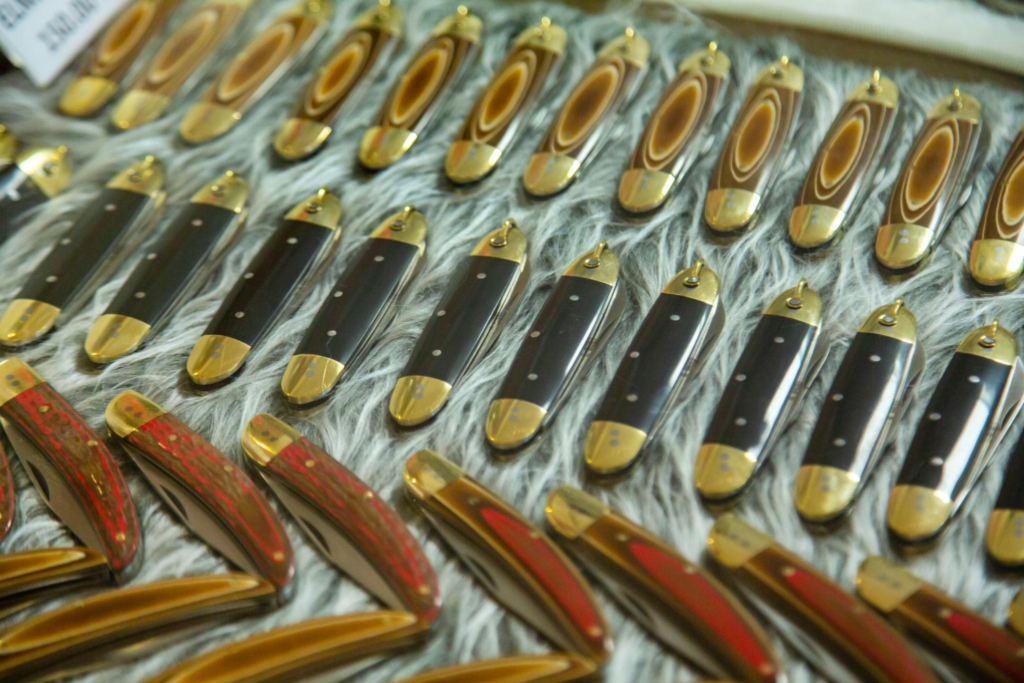
Historically, Sürmene craftsmen produced daggers and fighting knives as well as utility blades.
Over time, especially with modern firearms legislation, production shifted increasingly toward:
- chef’s knives,
- butcher’s knives,
- hunting knives,
- pocket knives,
- agricultural knives,
- household utility knives.
Today there are well over a hundred recognized patterns and models.
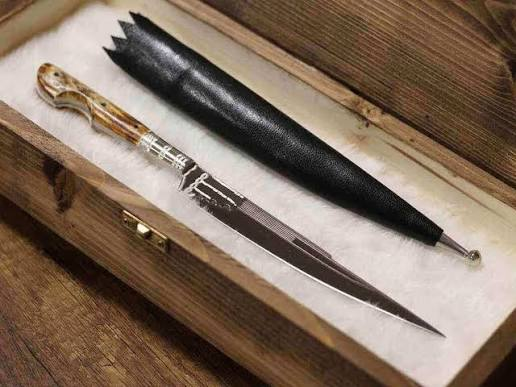
In 2018, the Sürmene knife received a Geographical Indication (GI) registration in Türkiye.
That means only knives produced within the Sürmene district according to the registered standards may officially bear the name “Sürmene Knife“.
It’s much the same principle that protects products such as Champagne or Parmigiano Reggiano.
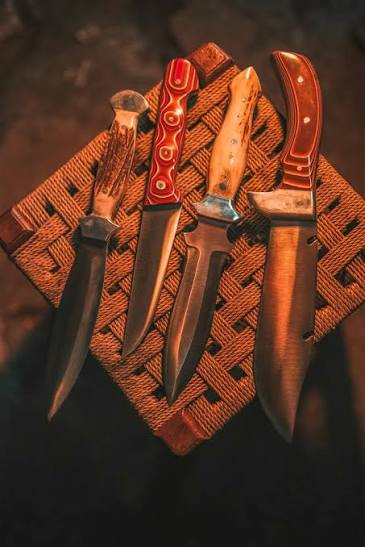
Sürmene is also known for:
- traditional Black Sea pide
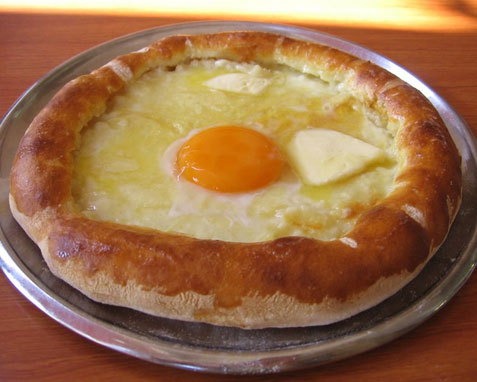
Above: Sürmene pide
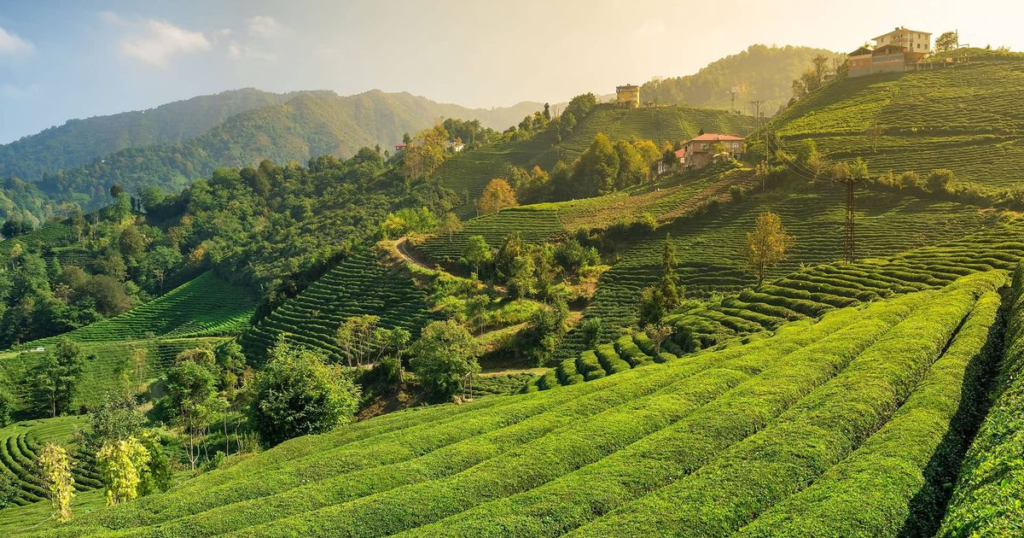
- tea cultivation in the surrounding hills
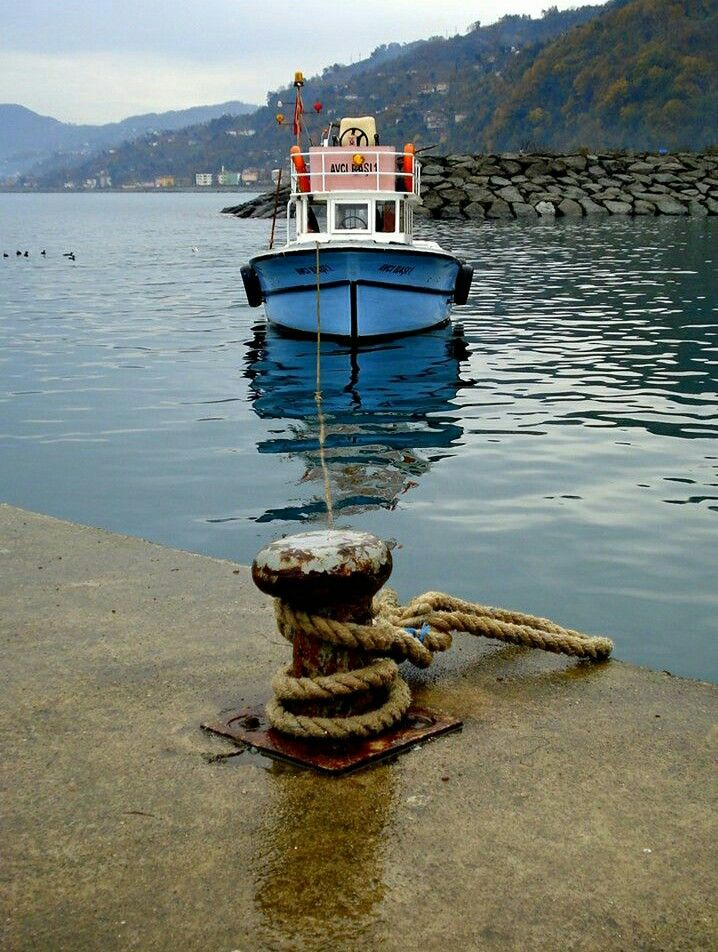
- fishing
- nearby highland villages and summer pastures
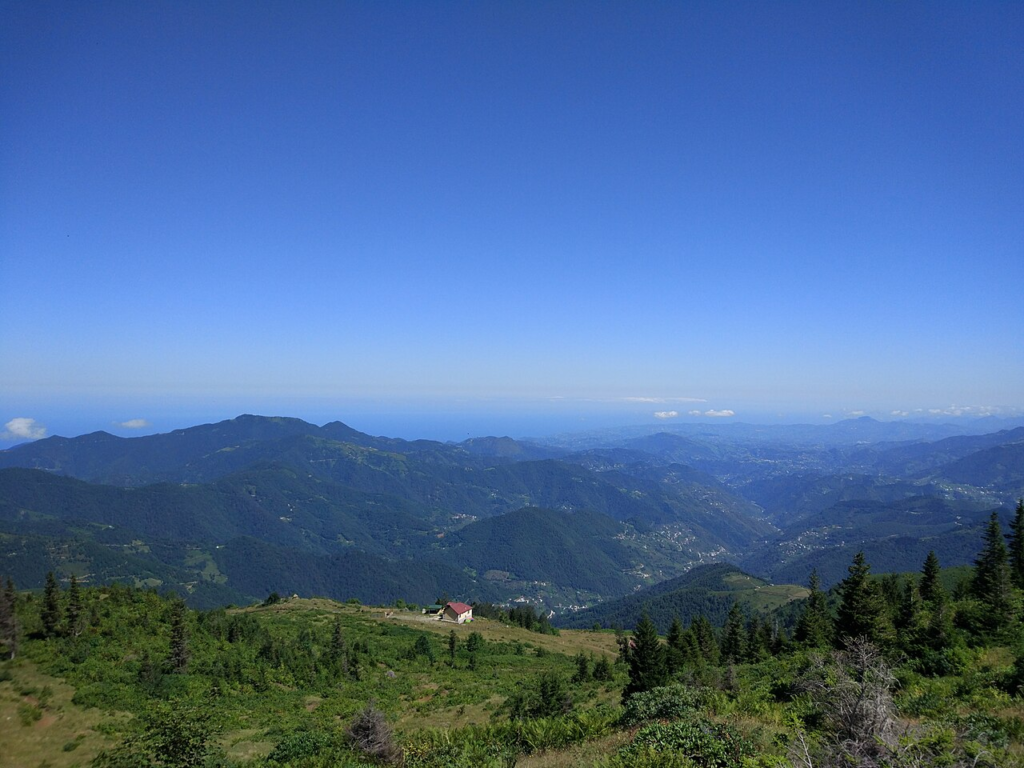
Above: Kazangıran Plateau
I think I would have enjoyed sitting outside a small teahouse, watching the traffic on the coast road, while listening to the rhythm of the town:
- fishermen unloading catches
- mini-buses arriving and departing
- the ever-present sound of the Black Sea
Sürmene feels like one of those places where quiet dignity is the town’s defining quality.
It isn’t trying to attract tourists.
It simply continues with its work, much as it has for generations.
Had the shuttle paused there for 20 minutes, I suspect I would have returned to the bus with a glass of strong tea and a Sürmene knife tucked carefully into my bag.
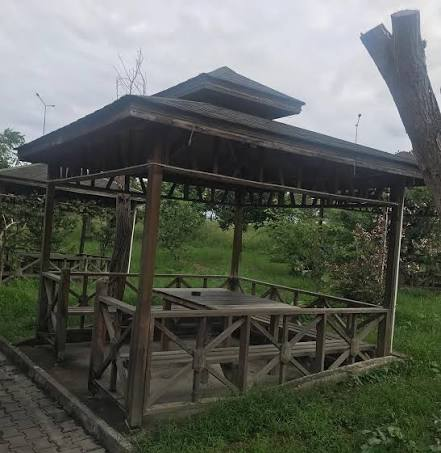
Above: Öğretmenevi (Teachers House), Sürmene
In Sürmene, the Difficult Daughter and her mother take seats vacated by a half dozen passengers.
Seeing my fellow passengers, I am struck by their unspoken honour and pride of their lives despite the struggles they may have.
Life is either a lesson or a blessing.
Sometimes it is both.

Of
Of is a place with a surprisingly rich history.
It lies 50 km east of Trabzon on the eastern Black Sea coast.
The town sits where the Solaklı River reaches the sea, with a narrow coastal plain giving way almost immediately to steep green mountains.
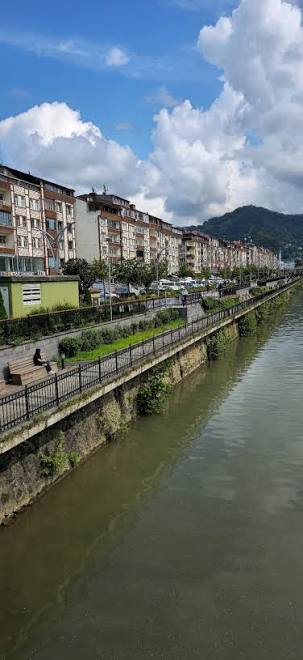
Above: Of, Trabzon Province, Türkiye
The valley behind Of climbs deep into the Pontic Mountains, dotted with tea gardens, villages and high summer pastures.
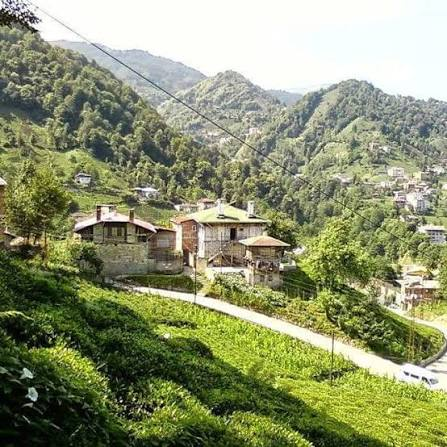
Above: Of
Of is a town shaped by the sea and the mountains.
Like much of the region, Of receives abundant rainfall.
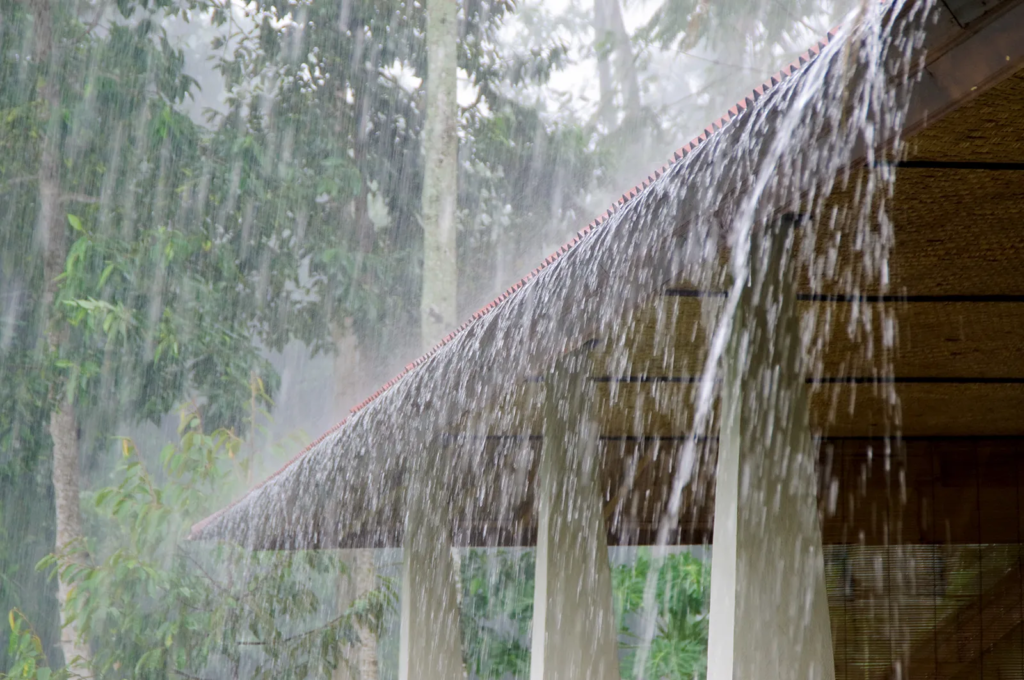
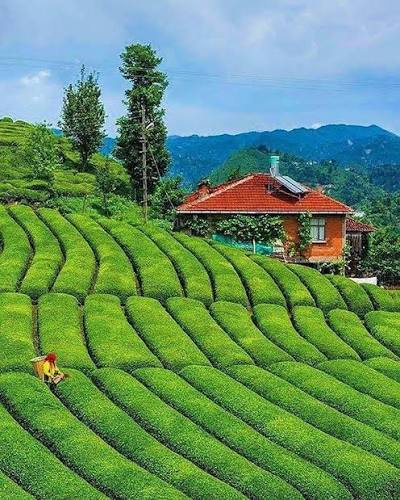
That climate has made it one of Türkiye’s important tea-growing areas.
The hillsides surrounding the town are covered with tea plantations.
Harvesting tea remains central to many families’ livelihoods.
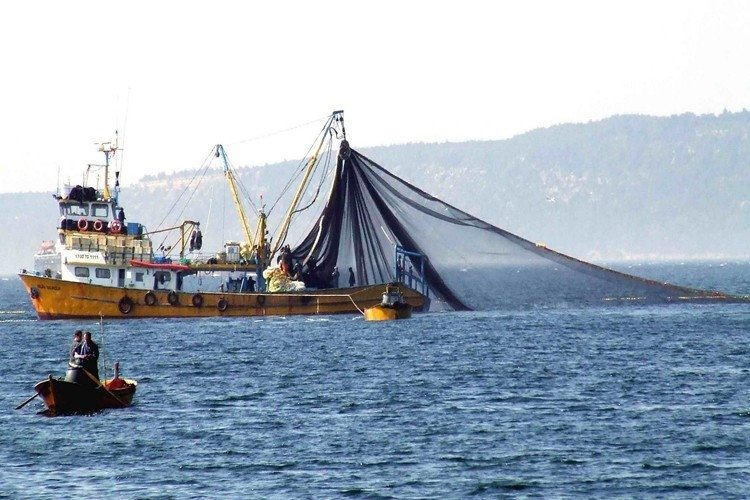
Fishing also plays an important role.
The Black Sea has sustained communities here for centuries, although modern fishing faces the same pressures seen elsewhere.
The area around Of has been inhabited since antiquity and formed part of the Greek and later Byzantine world before becoming part of the Ottoman conquest of Trebizond – the 1461 campaign which ended the independence of the Empire of Trebizond (1204 – 1461).
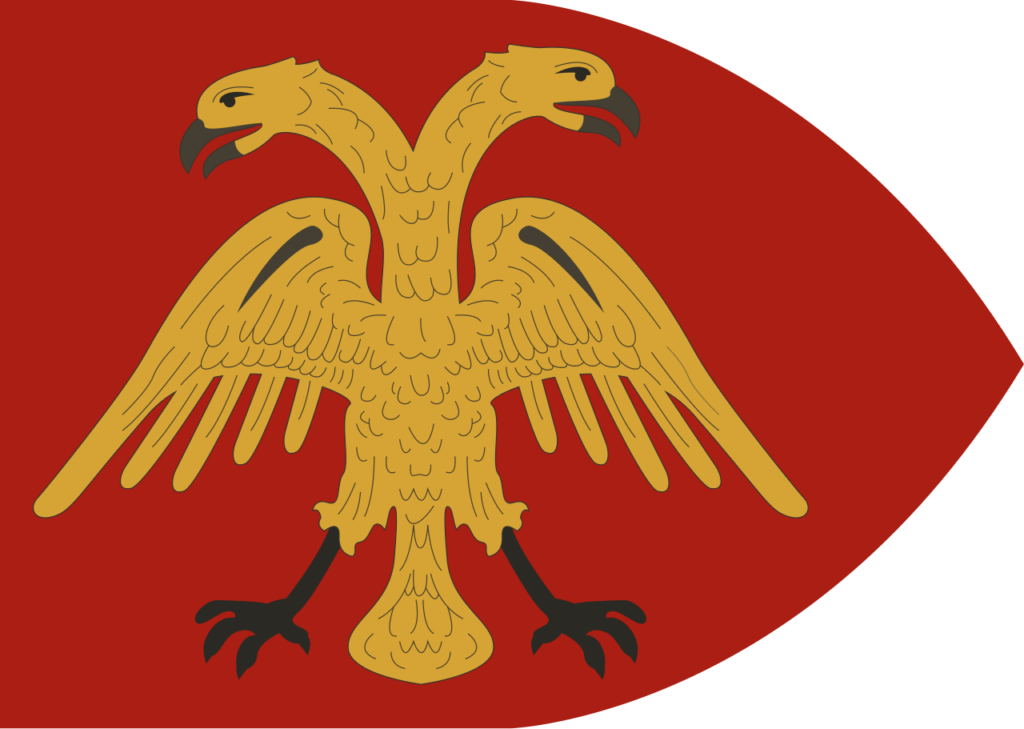
Above: Banner of the Empire of Trebizond
Led by Mehmed II (1432 – 1481), the campaign completed the Ottoman absorption of the last major Byzantine successor state on the southern coast of the Black Sea.
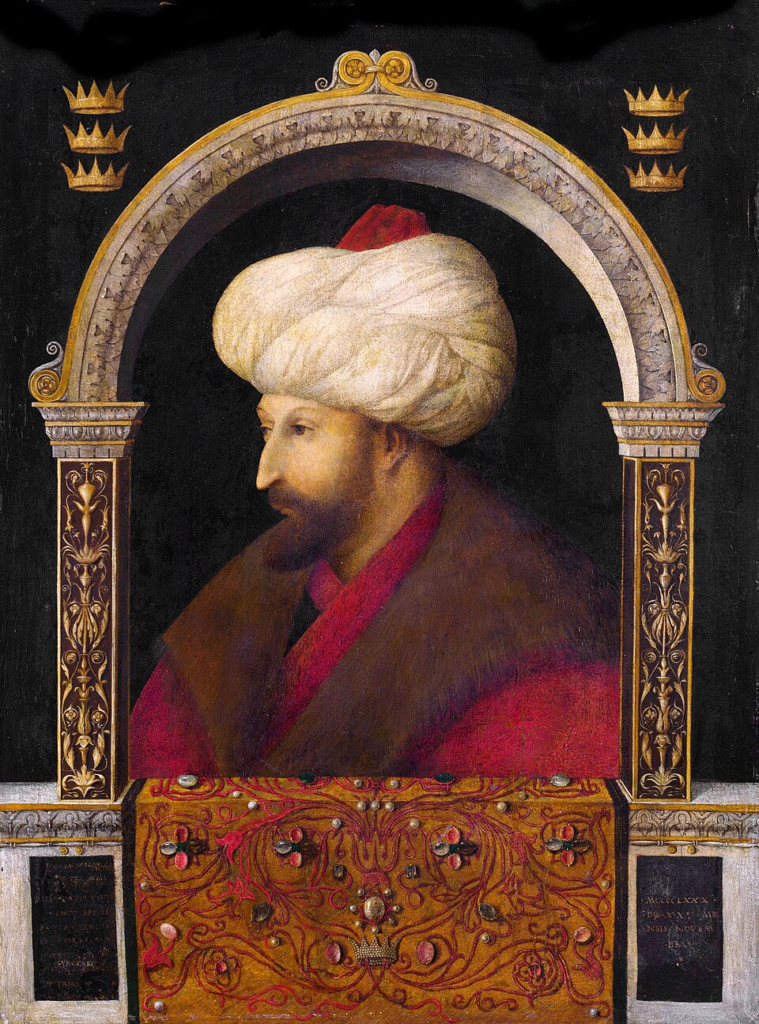
Above: Portrait of Ottoman Sultan Mehmed II
One aspect of Of’s history has intrigued historians for years.
Even after the Ottoman conquest, many inhabitants continued to speak a local Greek dialect, now known as Pontic Greek, for centuries.
Large scale conversions to Islam occurred during the Ottoman period, yet many Muslim families retained Pontic Greek as their everyday language well into modern times.
Pontic Greek is a variety of Modern Greek indigenous to the Pontus region on the southern shores of the Black Sea, northeastern Anatolia, and the Eastern Turkish and Caucasus region.
An endangered Greek language variety, Pontic Greek is spoken by about 778,000 people worldwide, who are known as Pontic or Pontian Greeks.
It is one of the more distinctive cultural stories of the eastern Black Sea region.
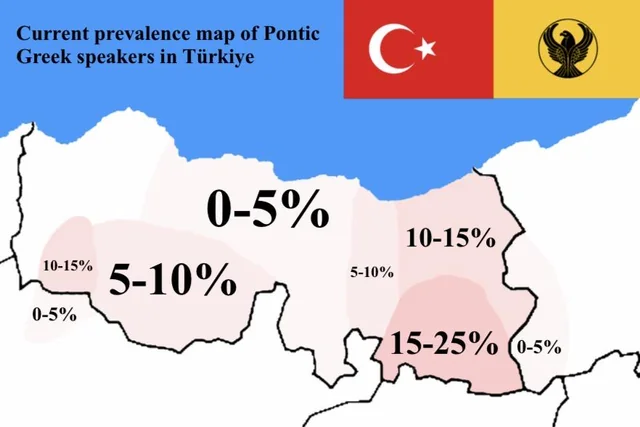
Above:
Estimated speaker prevalence by district:
• Çaykara: 15–25%
• Of, Dernekpazarı, Hayrat, Sürmene, Tonya: 10–15%
• Köprübaşı, Maçka: 5–10%
• Rest of Trabzon, Rize (İkizdere) and Gümüşhane (Torul): 0–5% (negligible or none)
Estimates based on fieldwork by Professor Ioanna Sitaridou (University of Cambridge) and the Romeyka Project.
Total active speakers estimated at 4,000 – 8,000, mostly elderly.
Sources:
https://www.romeyka.org/
https://www.nisanyanyeradlari.com/
University of Cambridge:
https://www.cam.ac.uk/research/news/last-chance-to-record-archaic-greek-language-heading-for-extinction
Notes:
• The language is primarily preserved in remote mountain villages.
• Younger generations are shifting to Turkish at a rapid rate.
• Pontic Greek is considered the most archaic living variety of Greek, retaining several features lost in all other Modern Greek dialects.
• The yellow flag with the Pontic eagle is a cultural symbol primarily used by Pontic Greek communities in the diaspora (especially Greece).
Speakers of Pontic Greek in Türkiye are Muslim and generally identify with the Turkish flag.

Above: The Pontic eagle
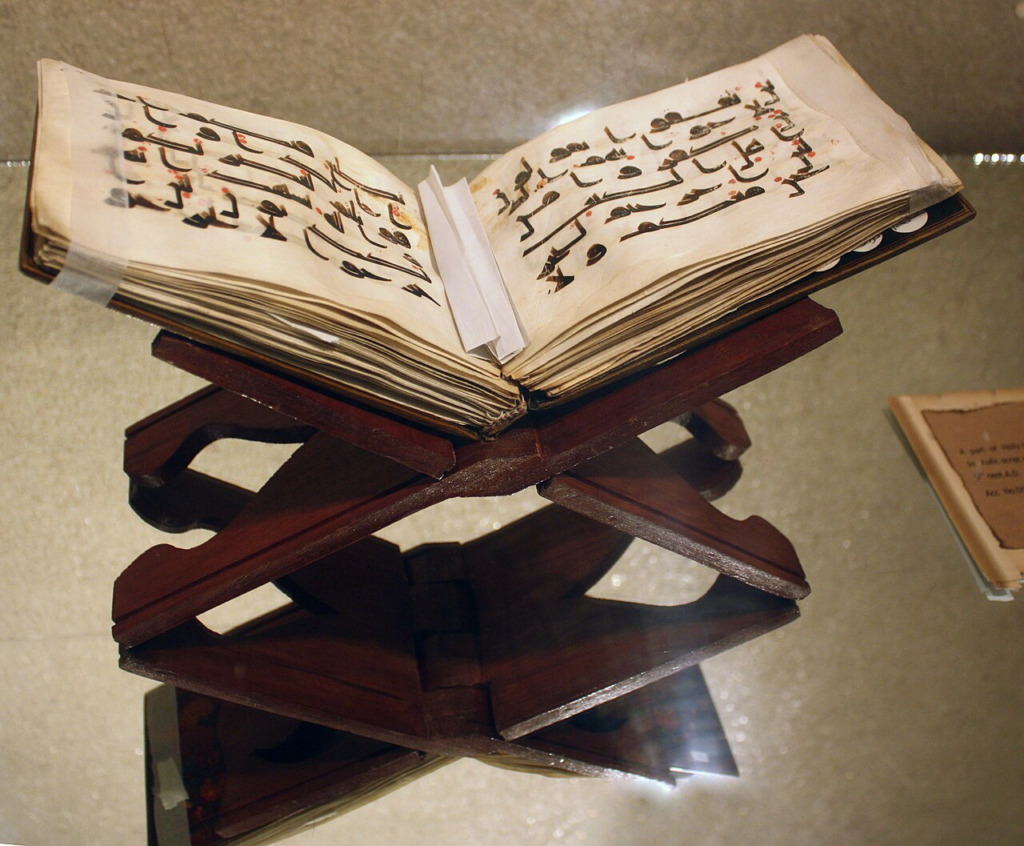
Within Türkiye, Of has long had a reputation for producing religious scholars, imams and teachers.
In Ottoman and Republican times, Of became known as a centre of Islamic learning, with many students travelling there to study.
Unlike Trabzon, Of is not a city that draws many international tourists.
Most visitors are simply passing through on the coastal highway.
Someone spending a few hours there would probably notice:
- busy teahouses filled with locals
- shops serving the surrounding villages
- mini-buses arriving and departing
- tea gardens climbing the hillsides
- the constant sound of the Solaki River
Of is an authentic provincial town rather than a destination for visitors.
Of occupies an interesting place in my travel memories, for it was there that the atmosphere on the shuttle changed.
The mother and the Difficult Daughter departed.
Of became the setting where my difficult morning finally gave way to quiet observation and reflection.
The landscape had not changed dramatically, but my perspective had.
In that sense, Of was not just another stop between Trabzon and Rize.
Of marked the point where the journey ceased to be about missed flights, excess baggage and airport frustration.
It became about the people and places unfolding outside my window.