
Sunday 19 July 2026
Landschlacht, Canton Thurgau, Switzerland
Don Lockwood:
Dignity, always dignity.
This was instilled in me by Mom and Dad from the very beginning.
They sent me to the finest schools including dancing school, that’s where I first met Cosmo.
And with him I used to perform for Mom and Dad’s society friends.
They used to make such a fuss over me.
Then, if I was very good, I was allowed to accompany Mom and Dad to the theater.
They brought me up on Shaw, Moliere, the finest of the classics.
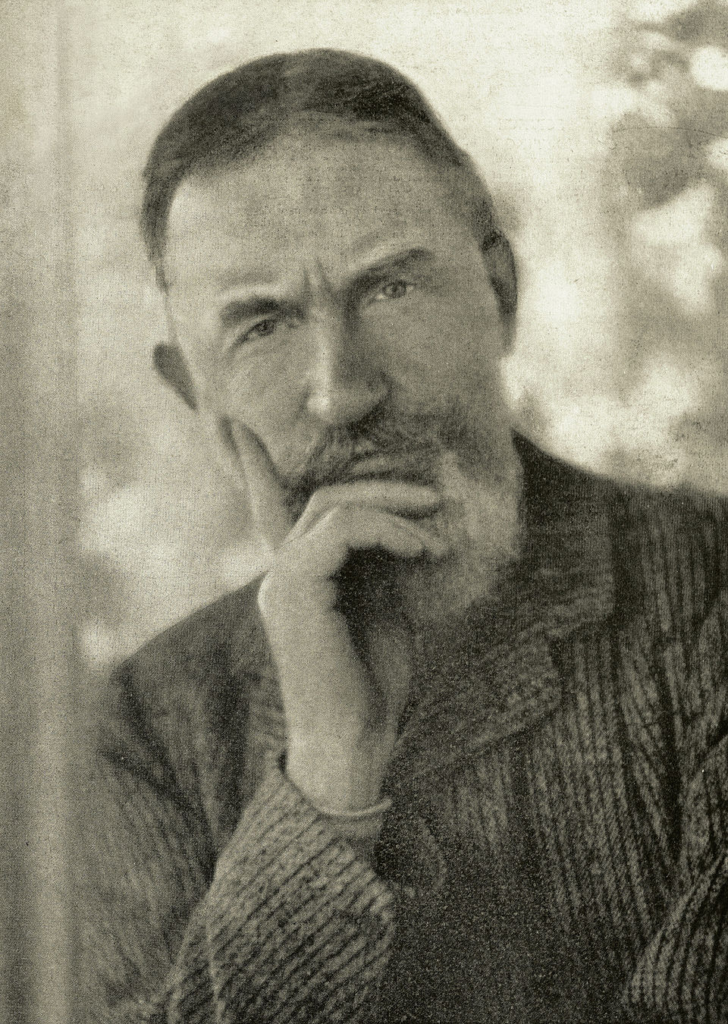
Above: Irish playwright George Bernard Shaw (1856 – 1950)
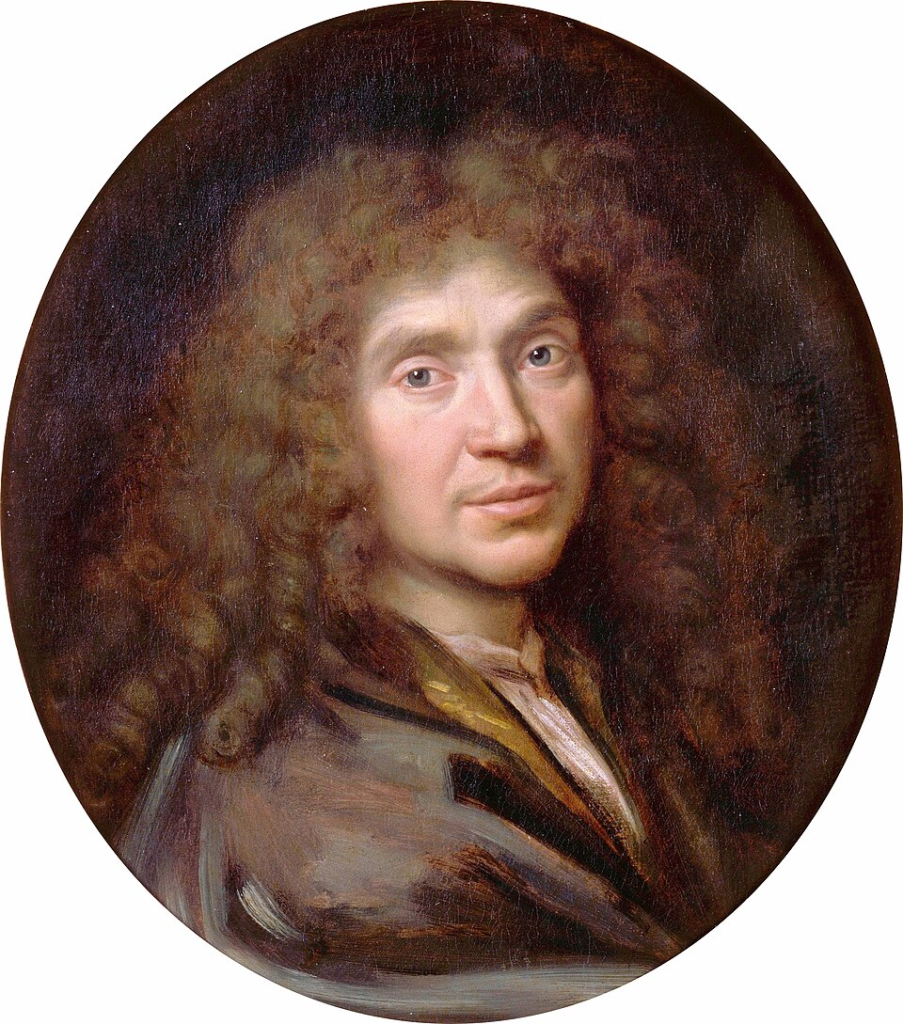
Above: French playwright Molière (Jean-Baptiste Poquelin)(1622 – 1673)
To this was added rigorous musical training at the Conservatory of Fine Arts.
Then we rounded out our apprenticeship at the most exclusive Dramatics Academy, and, in all that time:
Dignity, always dignity.

Above: (left to right) Donald O’Connor (Cosmo Brown), Madge Blake (Dora Bailey), Gene Kelly (Don Lockwood), Jean Hagen (Lena Lamont), Singin’ in the Rain (1952)
Don: In a few years Cosmo and I were ready to embark on a dance concert tour.
We played the finest symphonic halls in the country.
Audiences everywhere adored us.

Above: “Fit as a Fiddle“, Don and Cosmo – Singin’ in the Rain (1953)
Don: Finally we decided to come to sunny California.
We were stranded….
We were staying here resting up when the offers from the movie studios started pouring in.
We sorted them out and decided to favor Monumental Pictures.
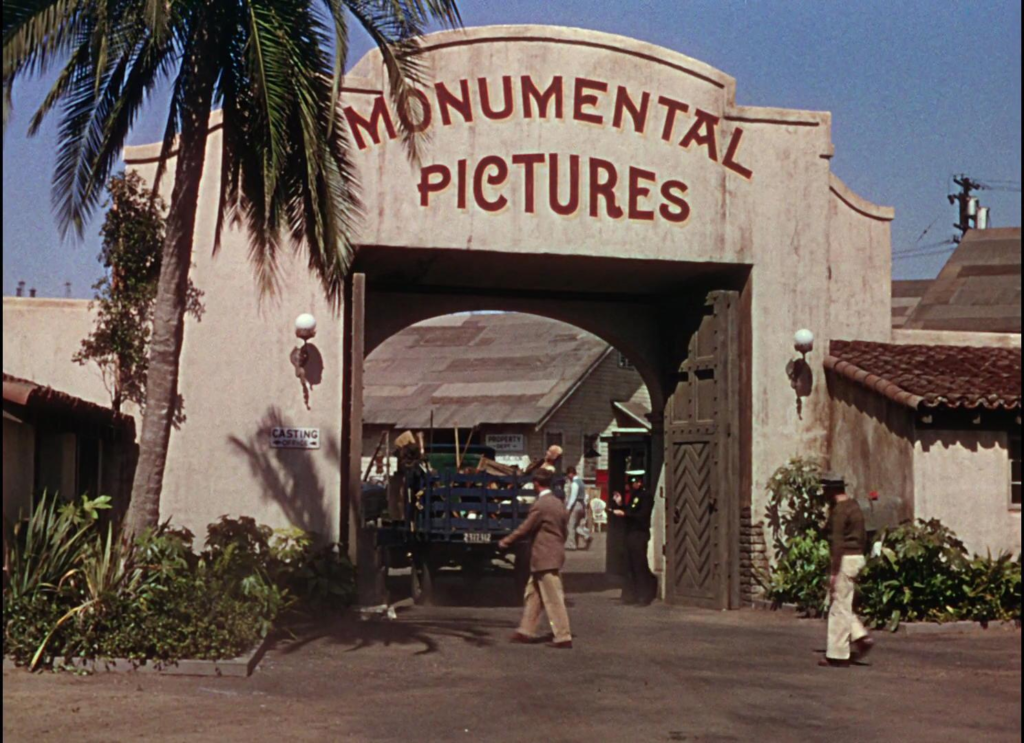
Roscoe Dexter: Lena, you hate him. You’re resisting him. Keep that mood music going. Okay, now, Phil you come in. Keep on grinding. And you see her. Phil, that’s it. Now here’s the bit where you get it on the jaw. No, no, that wasn’t right. You were supposed to go head over heels over the bar and crash into the glasses. Try it again, okay? Oh, that is swell, just swell, take him away, fellas. You’ll be all right. We’ve lost more stuntmen on these pictures. It’ll take hours to get a new one over from Central Casting.

Above: Douglas Fowley (Roscoe Dexter), Singin’ in the Rain (1953)
Don: Hey, Mr Dexter, I think I can do that for you.
Dexter: But you… You’re a musician.
Don: That’s a moot point.
Dexter: No kidding. What’s your name?
Don: Don Lockwood, sir, but the fellas all call me Donald.
Dexter: Wise Guy, huh? Okay, I’ll try you. Get this guy in a bird suit and remember you might be trading that fiddle in for a harp. Camera. Okay, Phil come in. Now you see him. That’s it. Now here’s where you get it right on the jaw. Cut. That was wonderful.
Don: You got any more little chores you want done in this picture?
Dexter: Plenty.
Don: Okay.
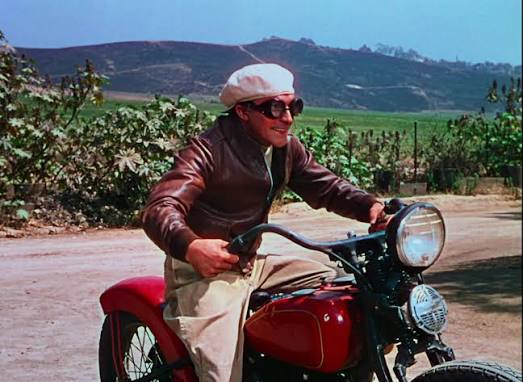
Above: Don Lockwood, stuntman – Singin’ in the Rain (1953)
Don: My roles in these films were urbane, sophisticated, suave.

Above: Don Lockwood, stunt man – Singin’ in the Rain (1953)
Don: And, of course, all through those pictures Lena was, as always, an inspiration to me. Warm and helpful, a real lady.

Above: Lena and Don, Singin’ in the Rain (1953)
Don: Hello, Miss Lamont. I’m Don Lockwood, the stunt man. It was sure a thrill working with you, Miss Lamont.
Dexter: Hey, Don. I want you to meet the producer of the picture, Mr RF Simpson.
Don: Hello, how do you do?
RF: Son, I just saw some of the rushes for the picture and asked Dexter here who the team of stuntmen were. He told me they were all you. I think you’ve got something, Don. I’m going to put you and Lena together in a picture. Come over to my office after lunch. We’ll discuss a contract.
Don: Thanks, Mr. Simpson.

Above: Millard Mitchell (R. F. Simpson), Singin’ in the Rain (1953)
Don: Are you doing anything tonight, Miss Lamont? That’s funny, I’m busy.

Above: Don and Lena, Singin’ in the Rain (1953)
Don: Well, Lena and I have had the same wonderful relationship ever since, but most important of all, I continue living up to my motto:
Dignity, always dignity.

Above: Don Lockwood – Singin’ in the Rain (1953)
Don: Tell me what’s your lofty mission in life that lets you sneer at my humble profession?
Kathy Selden: Well, I’m… I’m an actress.
Don: What?
Kathy: On the stage.
Don: Oh, on the stage. Well, I’d like to see you act. What are you in right now? I can brush up on my English or, uh, bring along an interpreter…That is if they’d let in…. a movie actor.
Kathy: Well, I’m not in a play right now, but I will be. I’m going to New York.
Don: Oh, you’re going to New York, and then someday we’ll all hear of you, won’t we? Kathy Selden as Juliet, as Lady Macbeth, as King Lear. You’ll have to wear a beard for that one, of course.
Kathy: Oh, you can laugh if you want to, but at least the stage is a dignified profession.
Don: Dignified profession.
Kathy: And what do you got to be so conceited about? You’re nothing but a shadow on film. A shadow. You’re not flesh and blood.
Don: Oh, no?
Kathy: Stop!
Don: What can I do to you? I’m only a shadow.
Kathy: You keep away from me! Just because you’re a big movie star… wild parties, swimming pools… you expect every girl to fall in a dead faint at your feet. Well, don’t you touch me!
Don: Fear not, sweet lady. I will not molest you. I am but a humble jester. And you? You are too far above me. Farewell, Ethel Barrymore. I must tear myself from your side.

Above: Gene Kelly (Don Lockwood) and Debbie Reynolds (Kathy Selden) – Singin’ in the Rain (1953)
Tuesday 12 May 2026
Batumi, Adjara, Georgia
Alarm goes off.
0500 hours.
Too early.
Shut it off.
Sleep some more.
0800 hours.
Stretch.
Feet on floor.
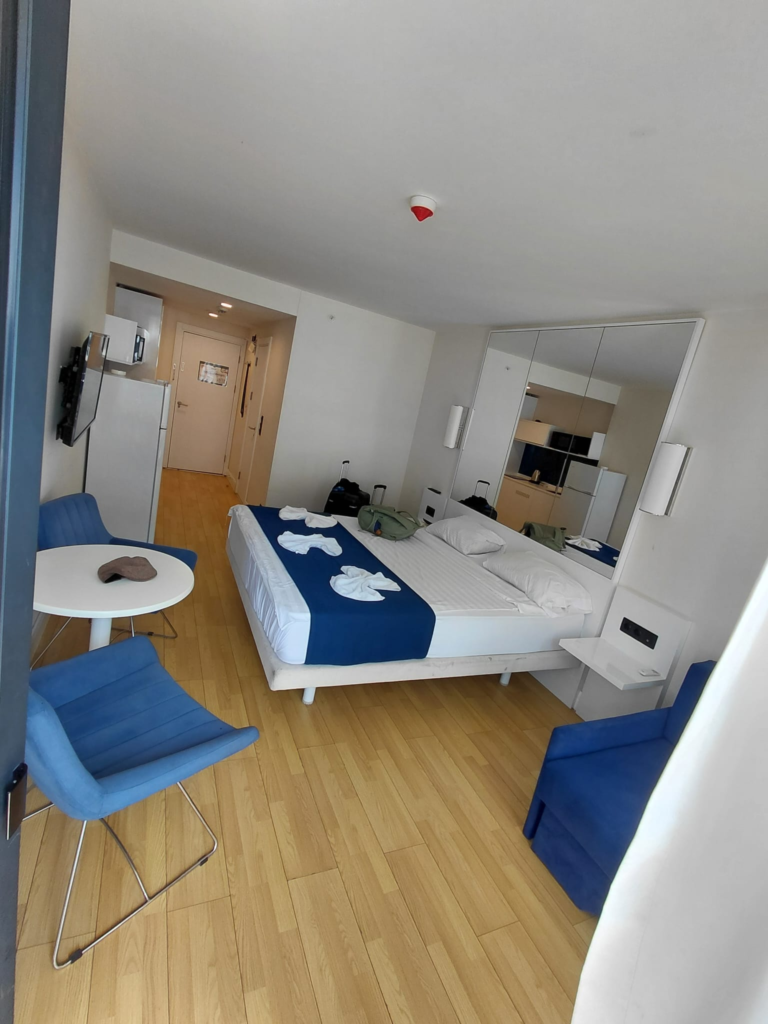
43rd floor of Obis City Tower B.
Room 4342.
A strange room.
I am an alien in a strange room in an unfamiliar city in an unknown land.
Ottoman shadows, Soviet infrastructure, casino capitalism, subtropical humidity, pipelines, cranes, football stadiums, and speculative towers all occupying the same narrow coastal strip.
Batumi is simultaneously aspiring metropolis and improvisation.
The “Las Vegas of the Black Sea” nickname feels both accurate and faintly desperate.
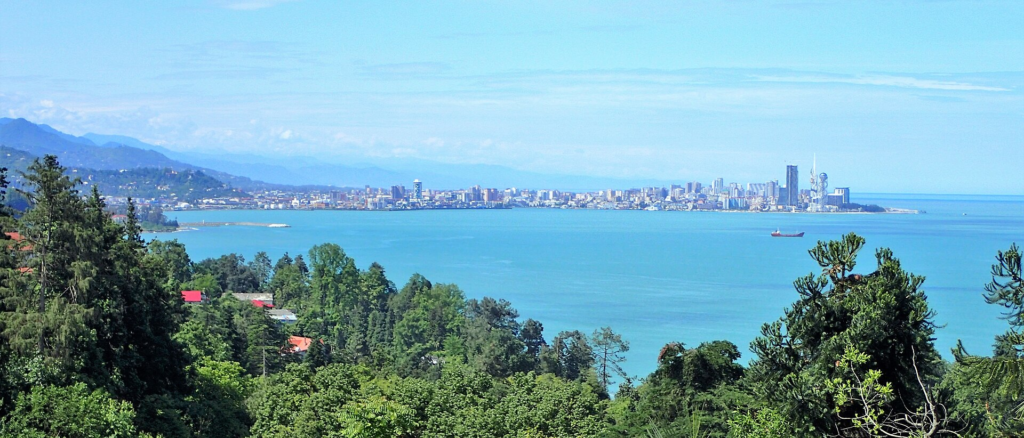
Above: Batumi, Adjara, Georgia
Shower, shave and all that jazz.
I am lead to believe that the first school on my list opens at 0900.
Ignore hunger and thirst.
Find my way.
Tourist map from Sarpi TIC.
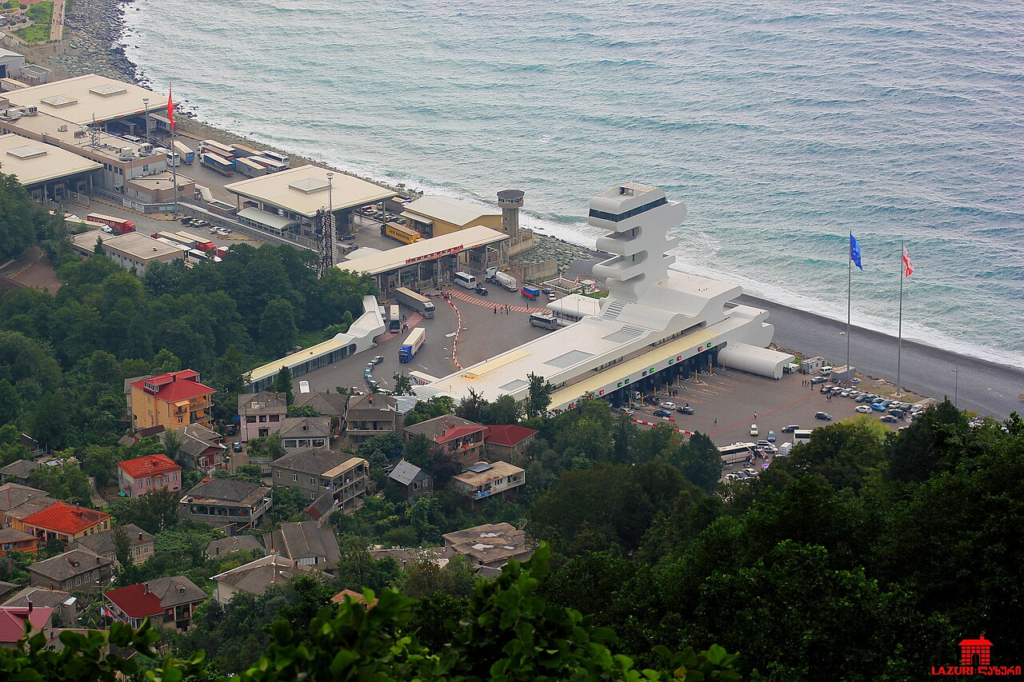
Above: Türkiye – Georgia border, Sarp – Sarpi
Dave: If you’ve ever seen the look on somebody’s face the day they finally get a job, I’ve had some experience with this, they look like they could fly.
And it’s not about the paycheck, it’s about respect, it’s about looking in the mirror and knowing that you’ve done something valuable with your day.
And if one person could start to feel this way, and then another person, and then another person, soon all these other problems may not seem so impossible.
You don’t really know how much you can do until you, stand up and decide to try.

Above: Kevin Kline (Dave Kovacs/President Bill Mitchell) – Dave (1993)
Today is a day of beginnings.
The beginning of the Georgian job search.
The beginning of a head cold.
And yes, the head cold makes complete sense.
My body has been pushed through airports, buses, emotional transitions, uncertainty, disrupted sleep, shifting climates from inland Turkey to the humid Black Sea coast, and the psychological strain of uprooting an entire chapter of life.
Often the moment movement stops, the immune system presents its invoice.
Not totally unexpected when considering the demands placed on mind and body this past fortnight.
En route to the first school to be visited on my list of Batumi schools, I photograph the Black Sea Gate (symbolic entrance to the Black Sea 35m high) and the Batumi (or Adjarabet) Stadium (a football stadium with a capacity of 20,035 people).
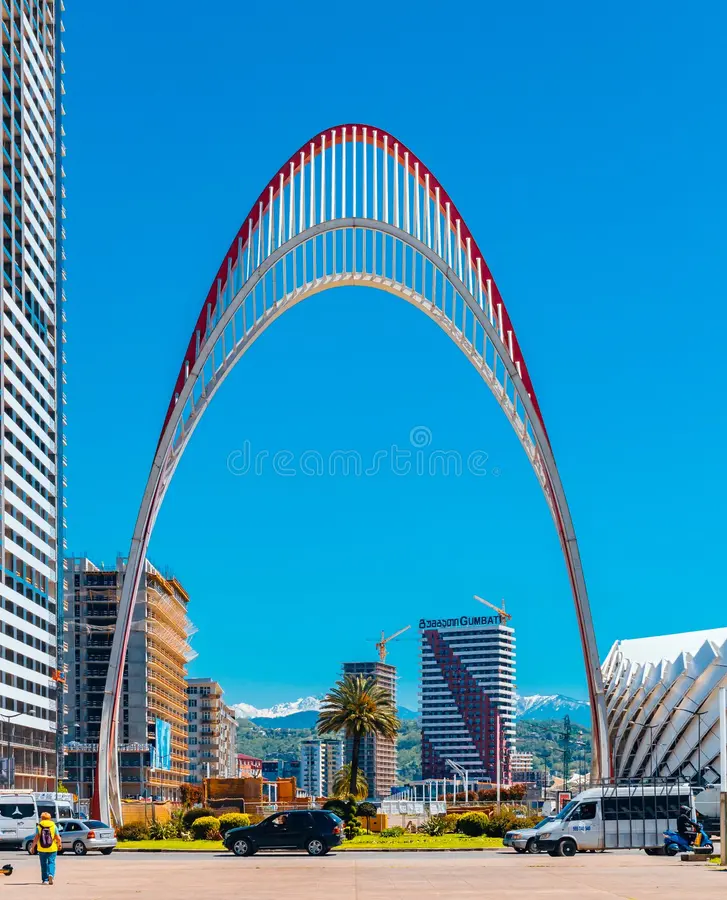
Above: Black Sea Arch, Batumi, Adjara, Georgia
The Black Sea Arch (often called the Black Sea Gate) is one of Batumi’s newer pieces of public art.
Standing about 35 metres (115 feet) high, it was conceived as a symbolic gateway to the Black Sea rather than as a historic monument.
It sits beside the seafront boulevard amid Batumi’s collection of modern landmarks, making it a popular photographic stop, especially after dark when it is illuminated.
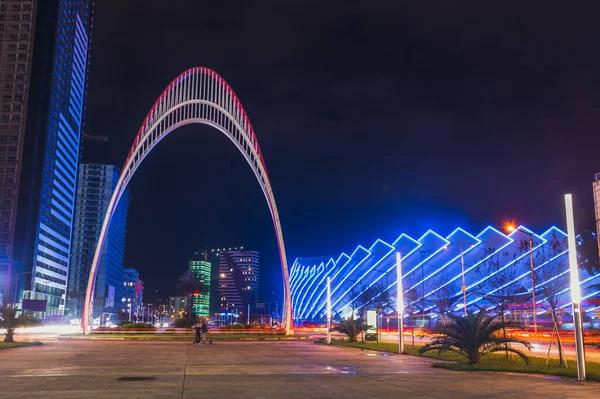
Above: Black Sea Arch
Unlike Batumi’s older monuments, the arch has no ancient legend or historical event attached to it.
It belongs to the wave of ambitious urban redevelopment that transformed Batumi during the 2000s and 2010s.
The city invested heavily in contemporary architecture —
The nearby Alphabet Tower, the moving Ali and Nino sculpture, and the futuristic skyline all belong to this same period of reinvention.
The Black Sea Gate serves more as a visual statement than a commemorative monument:
An invitation to imagine Batumi as Georgia’s maritime gateway between Europe and Asia.
Architecturally, it is intentionally minimalist.
Rather than imitating classical triumphal arches, it consists of a sleek steel frame that creates an open portal.
One walks beneath it rather than through a traditional gate, reinforcing the symbolic idea of entering the Black Sea world.
At night, coloured lighting gives it a different character, making it stand out against the dark sea and the illuminated hotels behind it.
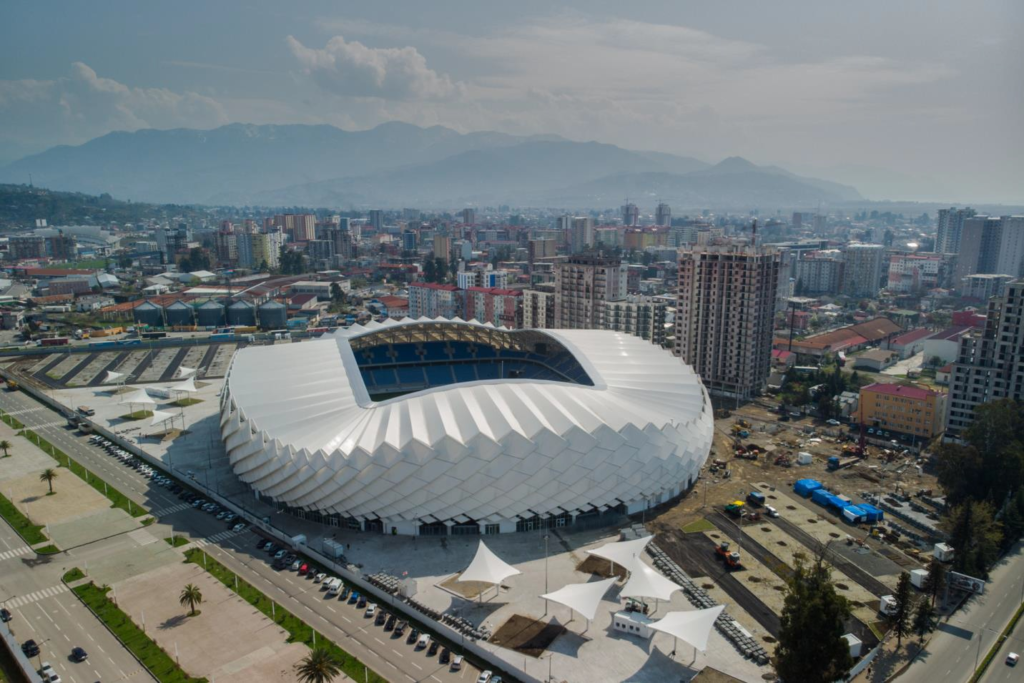
Above: Adjarabet Arena, Batumi
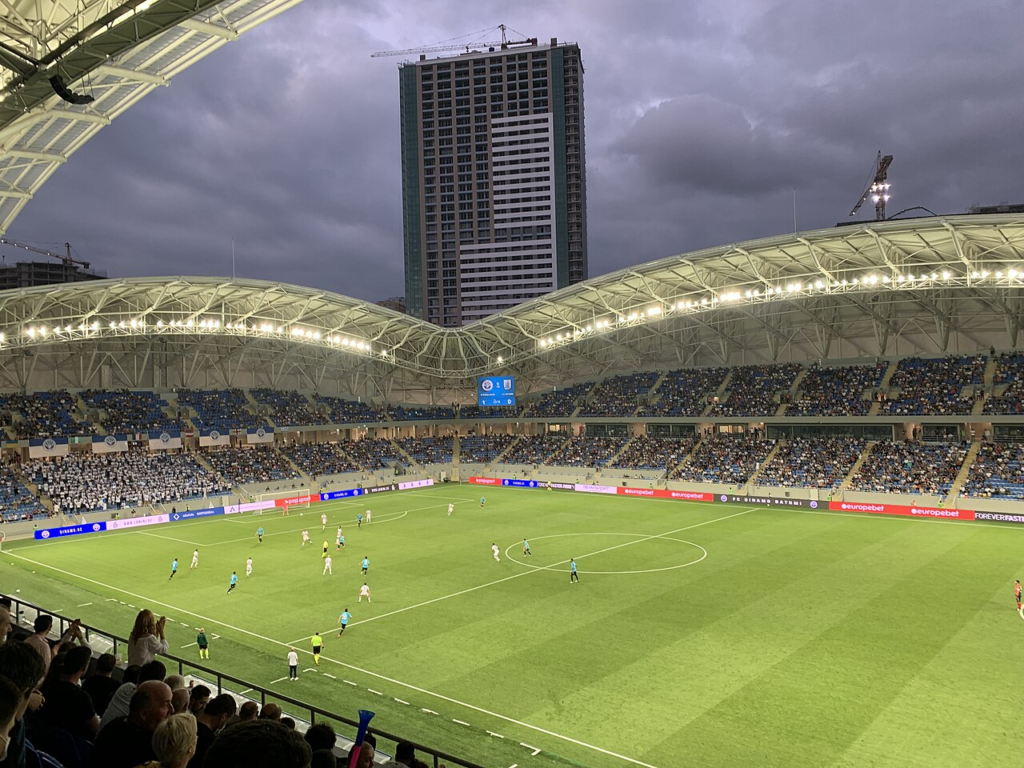
Above: Adjarabet Arena, Batumi
The Adjarabet Arena has a capacity of 20,000 seats and hosts FC Dinamo Batumi’s home matches.
Above: Football Club Dinamo Batumi Logo
It is a UEFA Category 4 Stadium and since 2021 has been occasionally hosting matches of the Georgian national football team.

Above: Logo of the Georgia National Football Team
The stadium was designed by the Turkish firm Bahadır Kul Architecture and cost about GEL 100 million (€ 35 million).
The exterior of the stadium, consisting of a series of panels arranged in the form of overlapping scales that can be illuminated at night, is inspired by the swirling effect of traditional Georgian dances, in particular Khorumi.
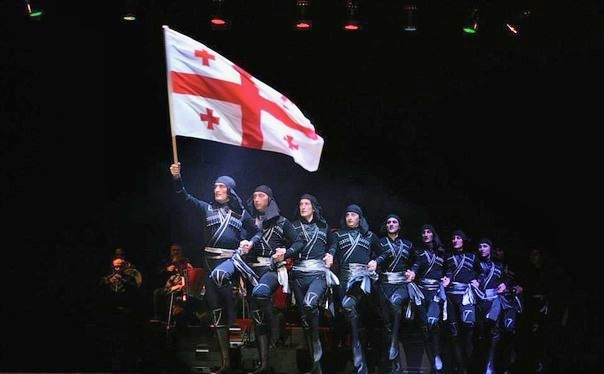
Above: Khorumi dance, Sukhishvili Georgian National Ballet
I visıt the British Centre on Luka Asatrani Street.
No one present except the cleaner, but my unsolicited exploration of the school reveals that it is a “British Centre” in name only.
A legitimate language school usually gives off signs of organized activity, even in off hours:
Posted schedules, staff presence, student traffic, clear branding, current materials.
Ten primary school classrooms and an absent staff does not necessarily mean the school is useless, but it does suggest caution before emotional investment in it as a serious opportunity.
Perhaps in the Caucasus, institutions survive almost entirely on appearance and old reputations.
In many countries, the cleaner is the true witness of institutions — arriving before management, leaving after teachers, silently observing the whole machinery.
Ten classrooms with desks that one finds in a primary school.
I tell the cleaner through gestures that I will return to the school after 1100, after waiting for 30 minutes for signs of life beyond the cleaner.
My gesture-conversation with her feels like the first tiny human exchange of the Georgian chapter.
No one comes.
Upon my return later, no one evident.
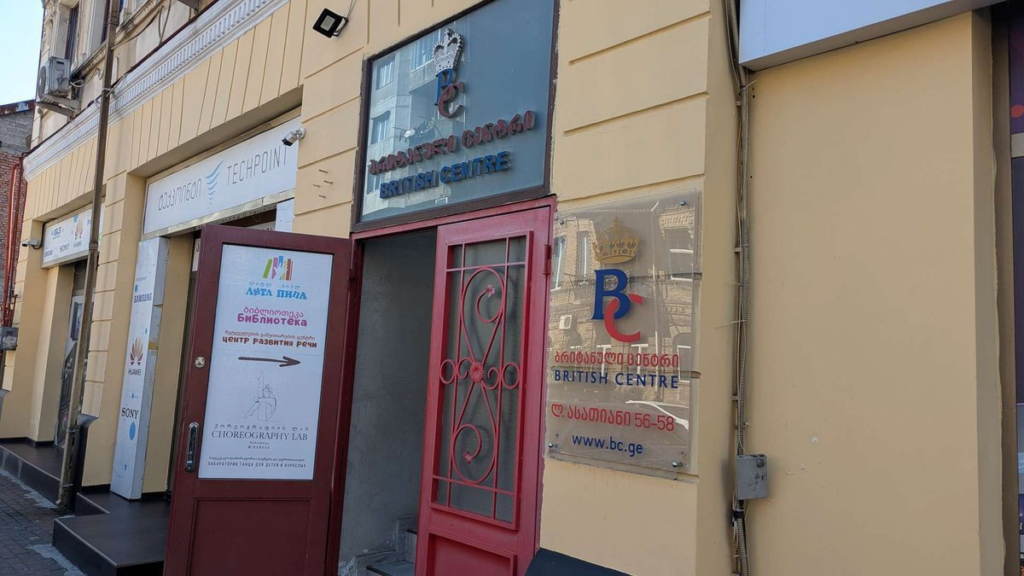
Above: British Centre, Batumi
I have arrived in a city marketed as a glittering crossroads of Europe and Asia, yet my first professional encounter is a silent building inhabited only by a cleaner and rows of tiny school desks.
There is something almost Gogolian about it.
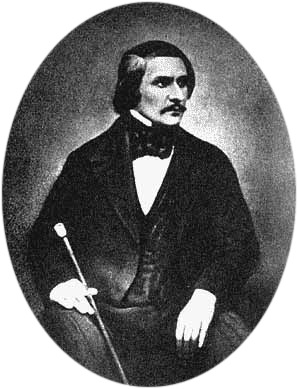
Above: Russian writer Nikolai Gogol (1809 – 1852)
To say something is Gogolian is usually to mean that it possesses some combination of these qualities:
The ordinary becomes absurd.
Everyday bureaucracy, minor inconveniences, or trivial events take on a surreal, almost dreamlike quality.
The comic and the melancholy coexist.
You laugh, but the laughter catches in your throat because the situation reveals something sad about the human condition.
People are trapped in systems that seem irrational but are accepted as normal.
The physical world reflects psychological reality.
A shabby staircase, a missing sign, an anonymous office, an overcoat, a nose — these are never just objects.
Characters pursue something perfectly reasonable through a world that stubbornly refuses to behave reasonably.
As for the school itself:
My instincts are probably correct.
A language school calling itself “British Centre” can mean anything from a serious IELTS/Cambridge operation to essentially a tutoring apartment with branding.
Ten primary-style classrooms suggests a children’s-heavy market rather than a robust adult or academic English program.
The absence of staff during nominal working hours is not encouraging either, though in post-Soviet space one occasionally discovers that “opening hours” are more philosophical than literal.
And yet — this is important — the beginning of a canvassing campaign often looks exactly like this.
Closed doors.
Empty offices.
Receptionists who are not there.
Numbers that do not answer.
Emails vanishing into silence.
Then suddenly, unexpectedly, one conversation changes everything.
Job searches abroad are rarely linear.
They are accumulative.
Every visit lays a thread.
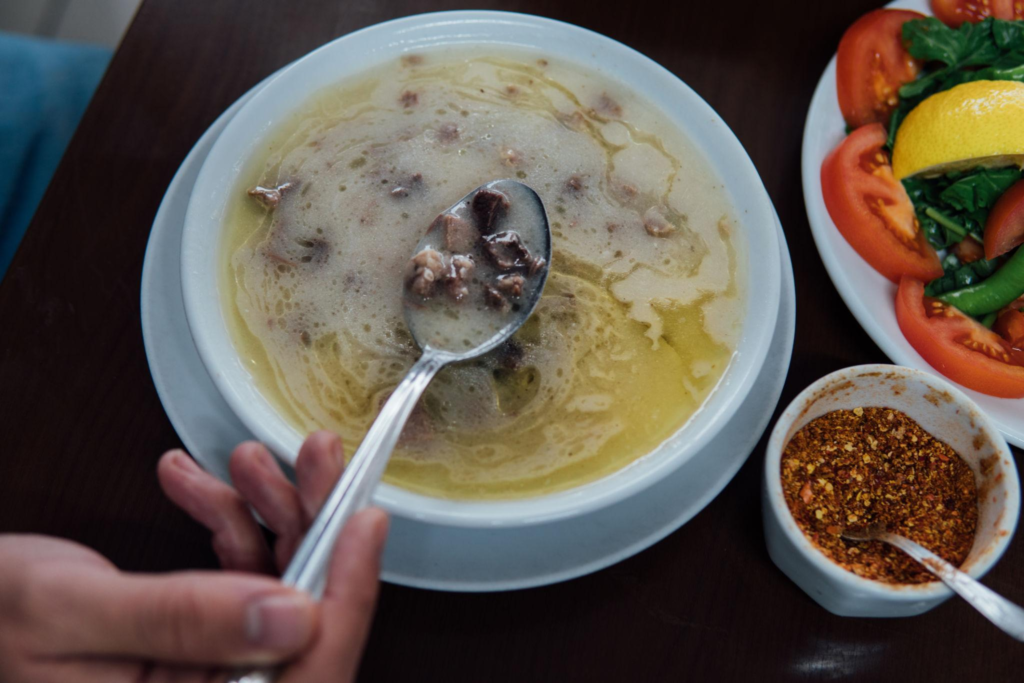
I have breakfast at the Karabak Restaurant (a Turkish establishment) at 39 Javjavadze Street:
Beef soup, plain omelet, medium sweet Turkish coffee.
I am hoping that beef soup plus sweet coffee can be an effective anti-cold combination.
The danger is not a cold itself but running myself down further while trying to establish momentum in a new country.
This is a real beginning.
I am no longer thinking abstractly about Georgia.
I am physically walking the streets, testing institutions, observing details, measuring possibilities against reality.
That transition matters.
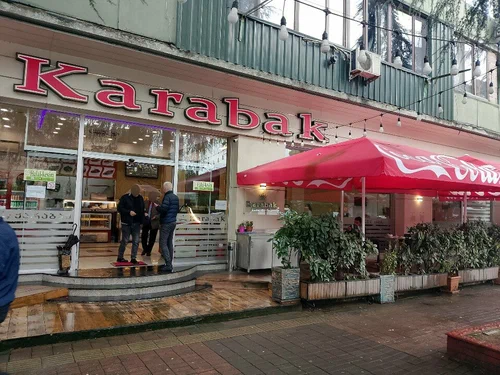
Above: Karabak Restaurant, Batumi
Breakfast is medicinal in the best Black Sea sense of the word.
Beef soup, eggs, strong coffee, sugar —
Less cuisine than field maintenance.
Across Turkey and the Caucasus there is a deep folk belief in hot broth as restorative force, and honestly there is probably wisdom in it:
Salt, fat, warmth, hydration, calories.
My body likely needs precisely that.
I read the news from Türkiye.
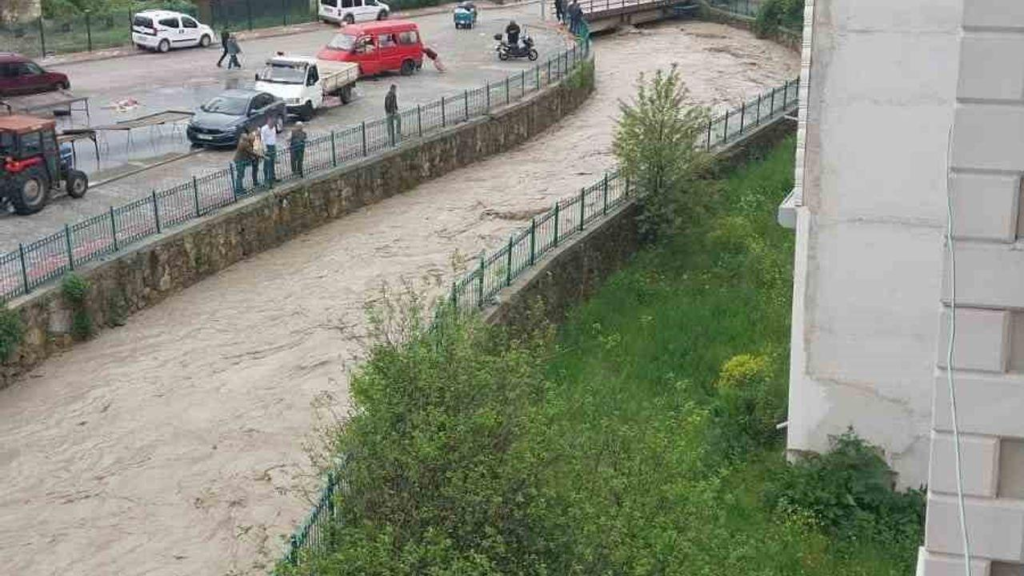
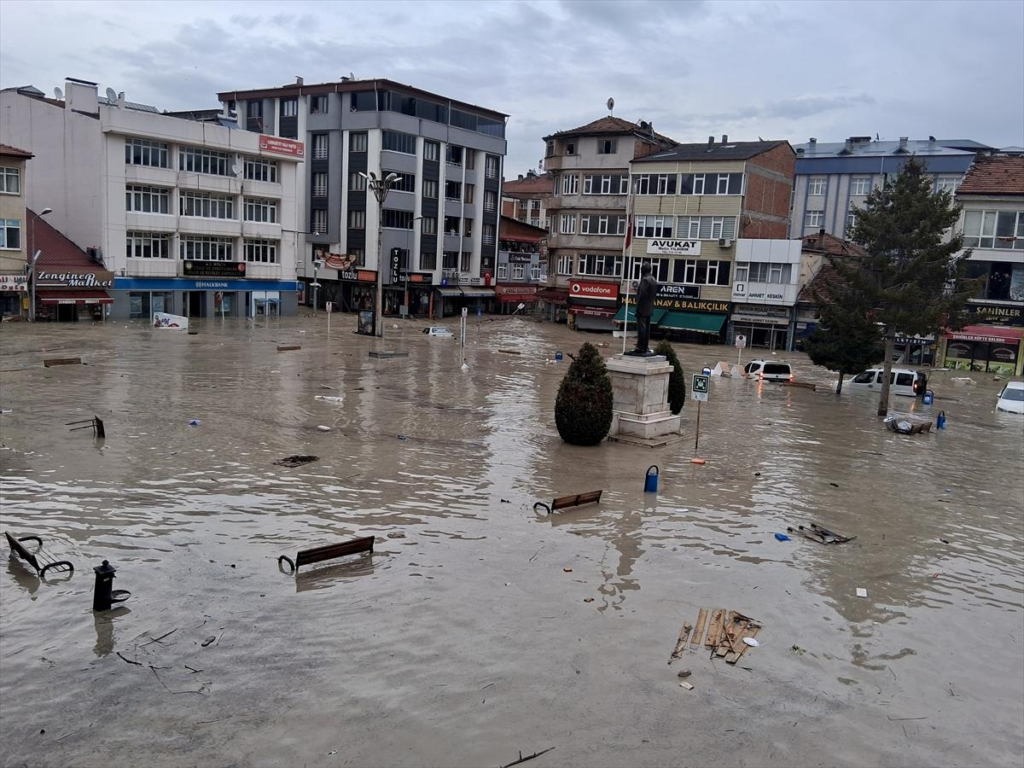
Heavy rainfall and flooding struck northern Türkiye, especially around Samsun Province.
In Havza, one of the local streams — Hacı Osman Deresi —has overflowed after the downpour.
Floodwaters damage homes and roads after rivers overflow.
Türkiye’s State Meteorological Service issues yellow weather warnings for 16 provinces as an unstable weather system moves across northern and central Türkiye.
Thunderstorms develop rapidly, bringing intense bursts of rain over already saturated ground.
Water pours into homes, shops, basements and the ground floors of buildings.
Several streets become rivers, carrying mud, debris, and even vehicles.
Images from the day show cars partly submerged and emergency crews helping stranded residents.
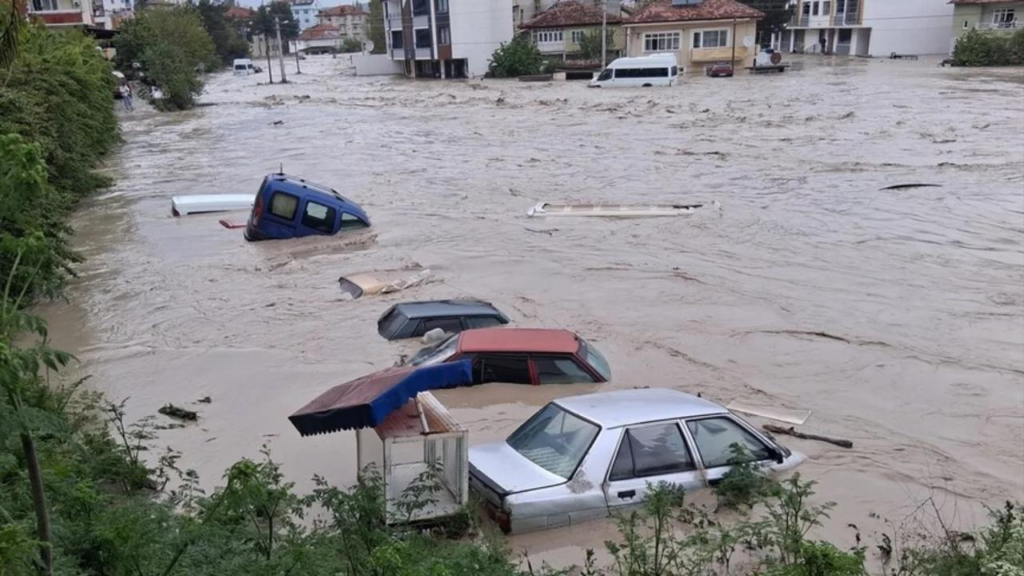
At least 12 people are treated in hospital with minor injuries, but fortunately there were no fatalities.
The response is extensive.
According to AFAD (Türkiye’s Disaster and Emergency Management Authority):
- over 1,500 emergency personnel were deployed,
- 196 AFAD volunteers assisted,
- 142 heavy machines were brought in,
- 122 motor pumps removed floodwater,
- dozens of trucks and additional pumping equipment were used
- support teams arrived from neighbouring provinces including Ordu, Tokat, Amasya, Çorum and Sinop.
- 70 homes sustained flood damage.
- 385 businesses were damaged, many of them small shops and workshops on ground floors.
- 137 flood-related emergency calls from Havza alone
- Across the affected provinces, 333 flood-related incidents were reported to emergency services.
- Approximately 10,000 decares (about 1,000 hectares or 2,470 acres) of agricultural land were affected.
- Officials reported losses of:
- 824 beehives
- five head of cattle (large livestock)
- around 10,000 decares of farmland

Above: Logo of Afet ve Acil Durum Yönetimi Başkanlığı / Disaster and Emergency Management Authority
The number of cattle lost may seem surprisingly small, but it reflects the nature of the flood.
This was a flash flood in and around a town, not a widespread river flood inundating large rural valleys for days.
Livestock owners often had enough warning to move most animals to higher ground.
The loss of 824 beehives particularly caught my attention.
To someone unfamiliar with rural Türkiye, that might sound minor.
It isn’t.
Northern Türkiye, including the Black Sea region, has a long tradition of beekeeping.
Bees are economically important both for honey production and for pollinating crops.
Losing hundreds of hives represents a significant setback for local beekeepers because rebuilding an apiary takes time, not just money.
While Havza is west of the classic “mad honey” area around Trabzon and Rize, beekeeping is nonetheless an established part of the rural economy across much of the Black Sea region.
So when officials counted 824 lost hives, they weren’t merely counting wooden boxes—
They were recording the loss of thousands of bee colonies and part of many families’ livelihoods.
For an individual family, the picture is entirely different.
Suppose a migratory beekeeper owns 300 hives.
If a flash flood destroys 100 of them, he has not merely lost honey.
He has lost:
- the colonies themselves
- queen bees
- brood
- wooden equipment
- future honey harvests
- pollination income
- and perhaps years spent building healthy apiaries
A hive is productive capital.
Replacing one isn’t like buying another shovel.
“824 beehives were destroyed” is a statistic.
“A beekeeper who had spent the spring preparing for the honey flow found his hives scattered by muddy floodwater” is a story.
One thing I find striking is how close — and yet how far— I was.
Since my journey took me from Trabzon to Rize and then across the Sarpi border into Batumi, I was well east of this disaster.
Samsun Province lies roughly 340 kilometres west of Trabzon.
Had I remained in Türkiye and continued west along the Black Sea coast, however, I would likely have encountered road closures, cleanup crews and extensive television coverage of the flooding.
If I had remained in Rize for a few more days, I probably would have seen Turkish television giving considerable coverage to the flooding.
But once I crossed into Georgia, my attention naturally shifted to Batumi.

Above: Flag of Georgia
Turkish news faded into the background.
That juxtaposition is one of the interesting things about travel:
While you are beginning a new chapter in one country, life — and sometimes disaster — continues just over the horizon in another.

Above: Flag of Türkiye
There is still some time after breakfast and before my promised return to the school to explore a wee bit.
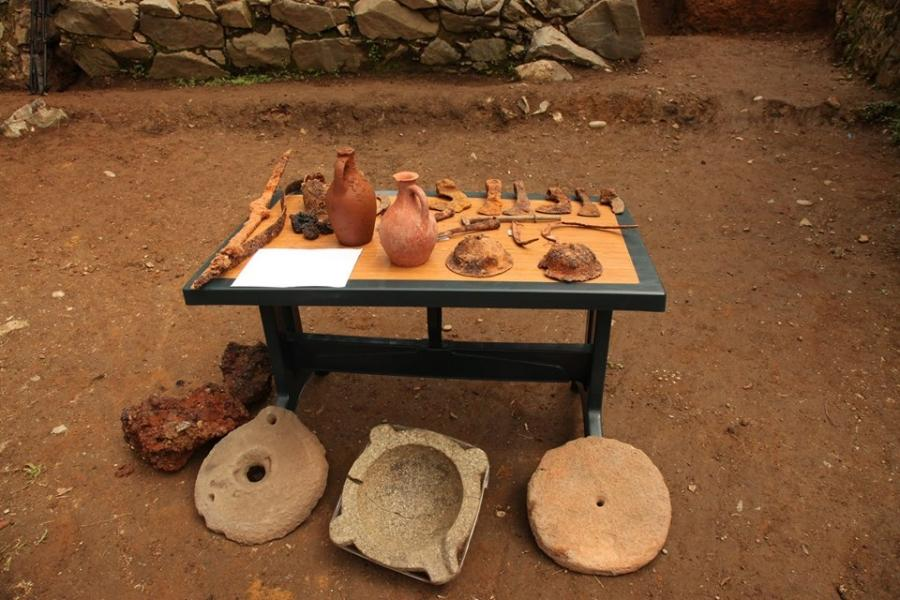
On the way to the school I had noticed the Archaeological Museum behind Soviet arches.
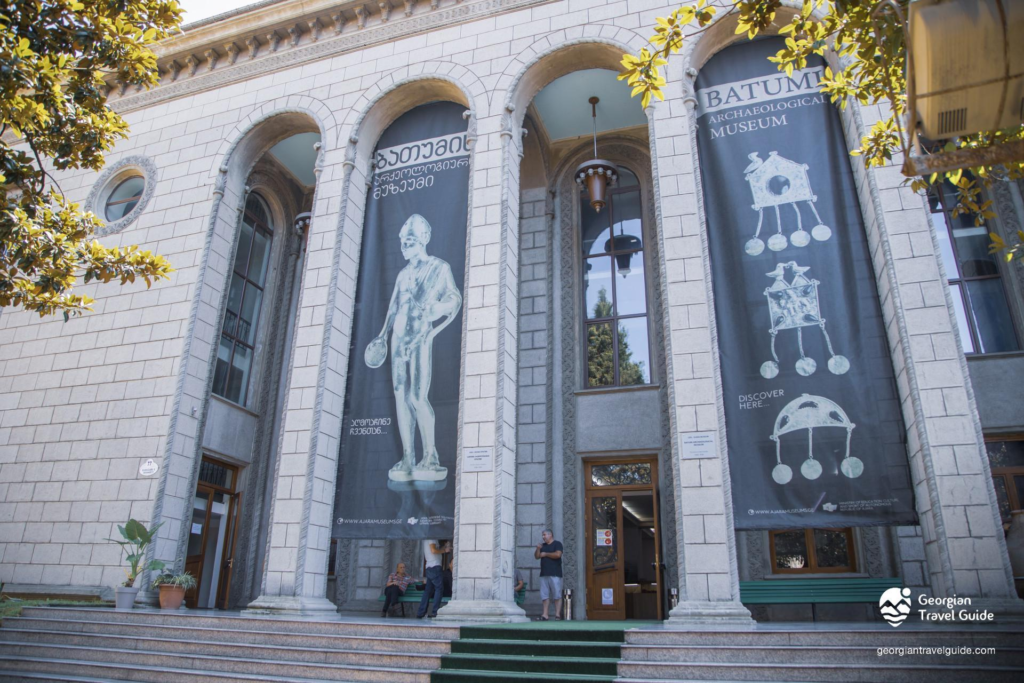
Above: Batumi Archaeological Museum
Lonely Planet Georgia, Armenia & Azerbaijan describes the place:
“This excellent museum showcases some of the many valuable archaeological discoveries made in Adjara, particularly at the Gonio Apsaros fortress (viewed on the way to Batumi after crossing the border at Sarpi).
The main room upstairs starts with the remains of hominids from between 1.7 and 1.8 million years ago – (It was a Tuesday.) – and moves through impressive Bronze Age daggers, Iron Age jewellery, Hellenistic pottery and Roman artifacts.
Downstairs is an impressive display of Byzantine gold.”
The Rough Guide to Georgia, Armenia & Azerbaijan tells me:
“The Archaeological Museum hosts a fair collection of local artifacts, beginning with the Stone Age, explained by good English labelling.
There are some particularly beautiful 5th century BC glass perfume vessels and some impressive examples of decorated Greek pottery.
The Museum is at pains to demonstrate ancient Georgia’s links with the Greek world.“
Do we infer from this that importance is measured not by who we are but rather who we associate with?
That dignity is measured by comparison rather than inherent?
I may never know.
As I was in this neighbourhood, I thought I would see if it was open, though its opening hours are said to be somewhat unpredictable.
It was not.
“Closed for renovation“, the sign says.
Unpredictability is practically part of the regional museum experience.
If it had been open, it might have helped reset my mind a bit before employment conversations begin.
Archaeological museums also tell us more about a place’s civilizational self-image than guidebooks can.
Places like the Batumi Archaeological Museum often reveal what a society chooses to remember about itself —
What continuity it claims.
Is it ancient?
European?
Caucasian?
Maritime?
Orthodox?
Cosmopolitan?
Frontier?
Museums quietly answer those questions.
It is genuinely disappointing that it is closed for renovation, though unpredictability seems almost endemic to regional museums.
One begins to suspect that “closed for renovation” is sometimes a metaphysical condition rather than a temporary one.
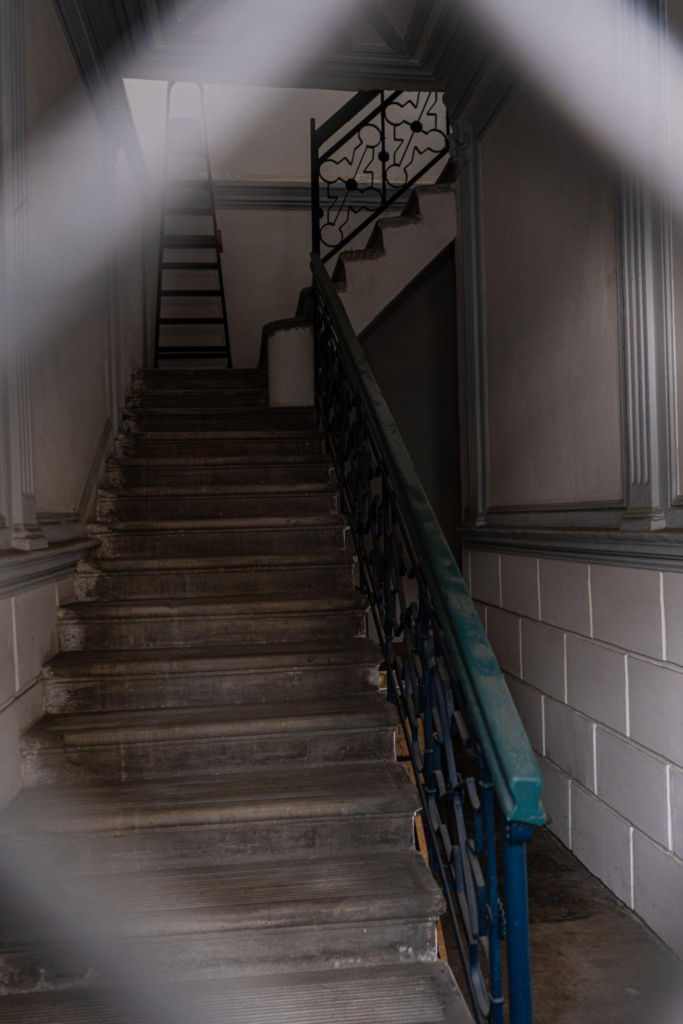
I return to the British Centre.
It remains closed.
The dimly-lit breakneck staircase does not add to my confidence in this institution.
Somehow, I don’t expect them to react to the CV I left on the reception desk before the cleaner locked me out.
Physically climbing staircases carrying a folders of CVs is real life.
My life at the moment.
Concrete.
Exhausting.
Humbling.
It strips abstraction away very quickly.
The country ceases to be an idea and becomes weather, distances, locked doors, soup, street names, fatigue and fleeting judgments about fluorescent lighting.
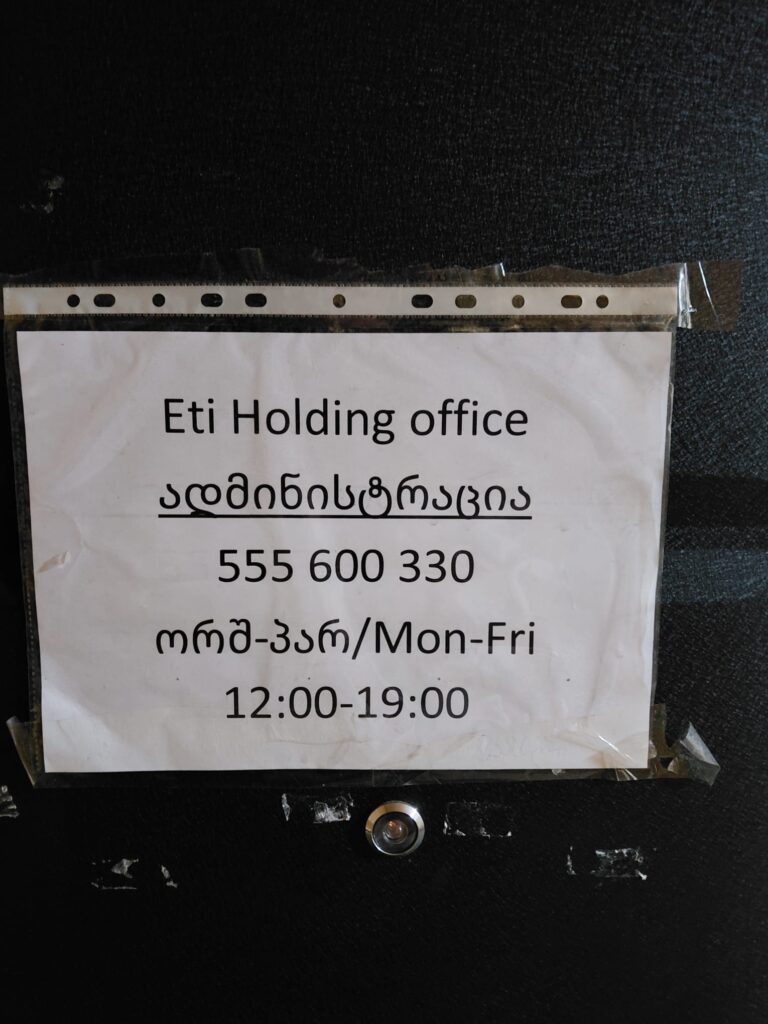
I then search for the ETI (English Teaching International) 2000 school at 136 Pannavaz Mepe.
Though there is a large sign on the pavement of the street, there is no signage inside the building to indicate on which floor (2nd floor) the school is.
Another locked door.
No answer to my knocking.
A printed paper covered by a plastic sheet on an otherwise anonymous door of another dimly-lit hallway reached by a depressing dingy staircase.
I leave my CV behind the door sign.
Again, I have my doubts that I will be contacted.
Not confidence-inspiring.
After much lost meandering through town, I find 39 Vaja Pshavela Street, the alleged location of the Chabor school.
But there is nothing there at this address to establish its existence before or now.

Above: Logo of Google Maps
Even allowing for regional informality, there is a difference between “slightly chaotic” and “institutionally ghostlike”.
A functioning school usually leaks evidence of life into the surrounding environment:
- whiteboards with schedules
- teachers arriving late
- children’s voices
- notices taped to walls
- recent posters
- administrative clutter
- coffee cups
- somebody answering a phone
What I encounter instead is spectral —
Organizations existing more as names in directories than as fully breathing institutions.
Perhaps some institutions survive partly on appearance and old reputations.
Sometimes the institution did once function properly.
The sign remains.
The website remains.
The social media remains.
But the actual operational core has hollowed out.
One learns to read stairwells and lighting as economic indicators.
The staircases themselves almost become characters in the chronicle.
Dim lighting.
Anonymous doors.
Plastic-sheet notices.
Descending through the infrastructural subconscious of post-Soviet urban life.
Where businesses exist in fragmented interiors hidden behind unmarked entrances.
It reminds me how different reality can feel from the polished online map of opportunities I initially researched.
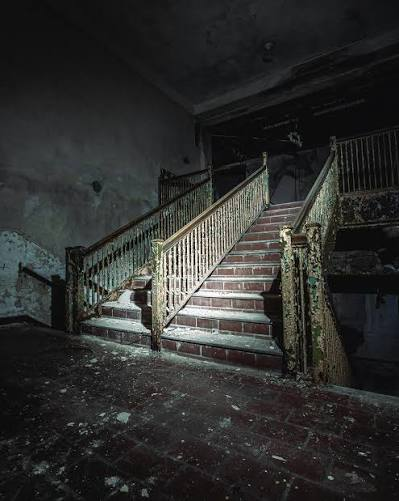
My ETI-2000 experience is even less reassuring than the British Centre.
A serious school generally wants to be found.
Hidden second-floor anonymity and locked silence during business hours do not project institutional health.
I nonetheless persisted, located the floor, and left a CV anyway.
Even disappointing reconnaissance has value:
I am building an internal map of Batumi’s educational landscape.
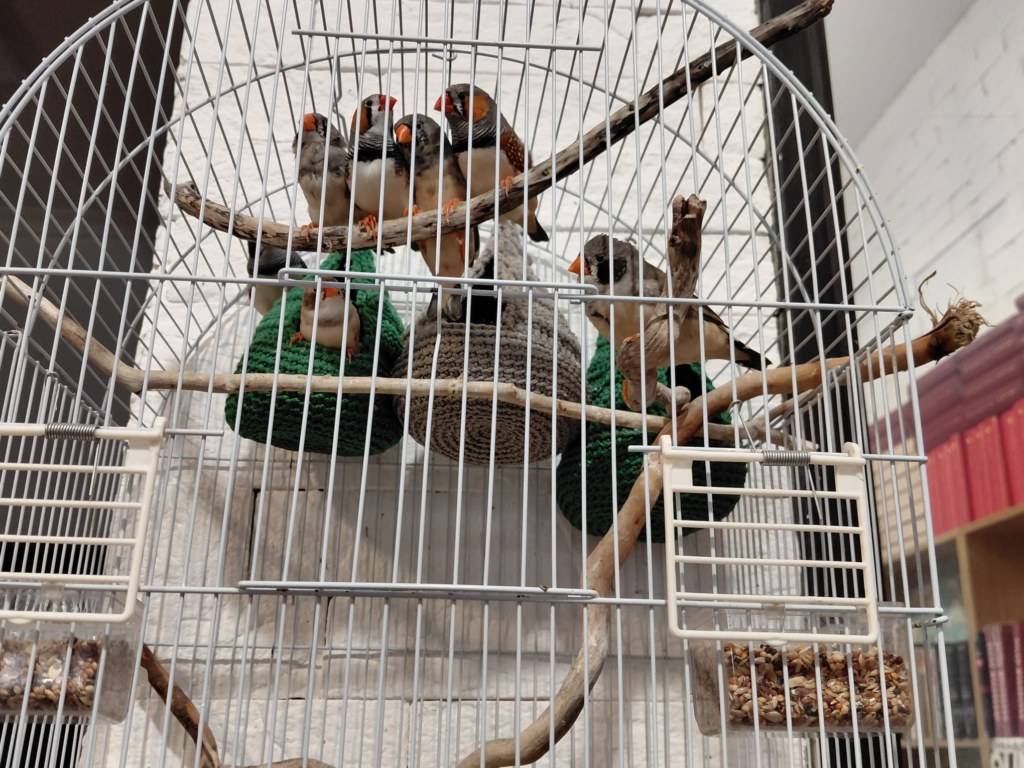
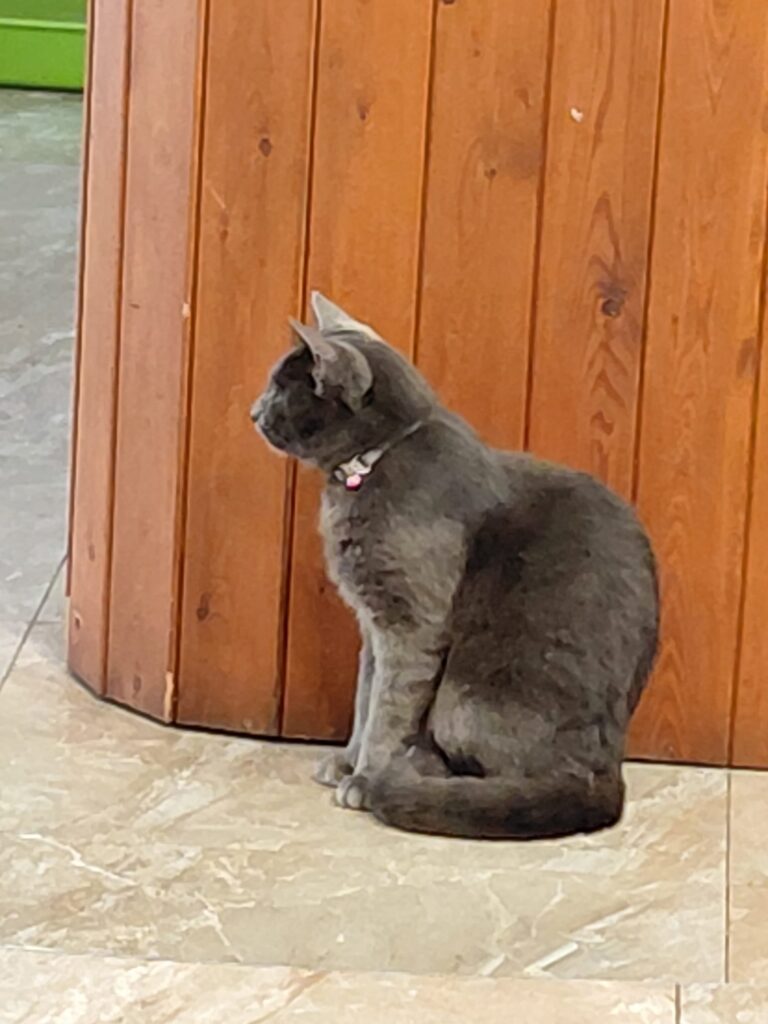
I stumble across the Galaxy Café and Bookshop, replete with a cage of chirping budgies, a café where the digitally prone linger, books for sale (old habits die hard), a grey Persian cat lacking eyes from which to see its beauty in the reflection of a water bowl.
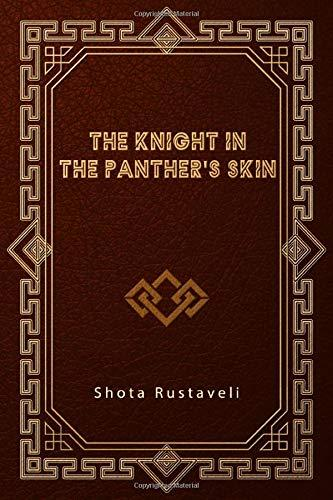
I buy Book 1 of 3 of The Knight in the Panther Skin: Avtandil’s Quest:
A man must battle himself and the world to overcome impossible odds and win the heart of his beloved.
Translated by H.J. Buell and Ana Gabunia, the original poem is from the 12th century, composed by Shota Rustaveli during the reign of Tamar Mepe.
A 12th-century Georgian epic about perseverance, impossible quests, emotional endurance, and wandering through dangerous worlds in search of meaning and loyalty —
Frankly, the book found me more than I found it.
The reign of Tamar Mepe still occupies an almost mythic place in Georgian historical consciousness, and reading Rustaveli while physically walking Georgian streets may deepen my sense of the country far more than tourist summaries ever could.
With every book purchase, the Galaxy offers a free drink.
I choose tea.
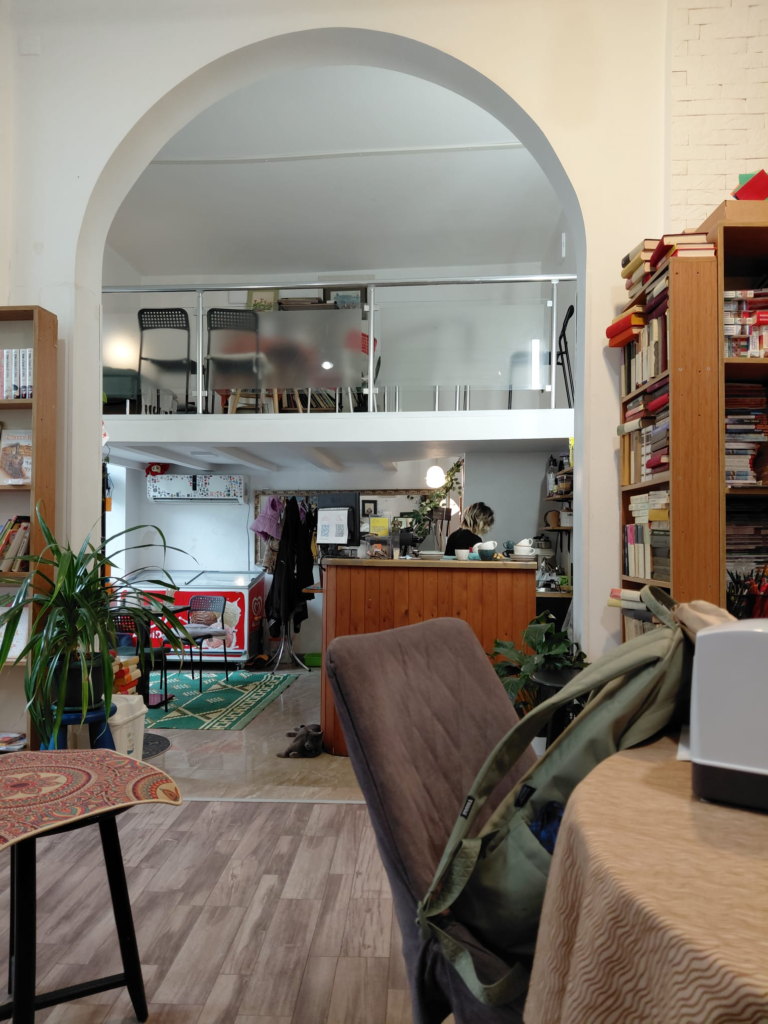
The appearance of the Galaxy Café and Bookshop feels narratively important.
Almost like an oasis hidden between spectral schools and concrete stairwells.
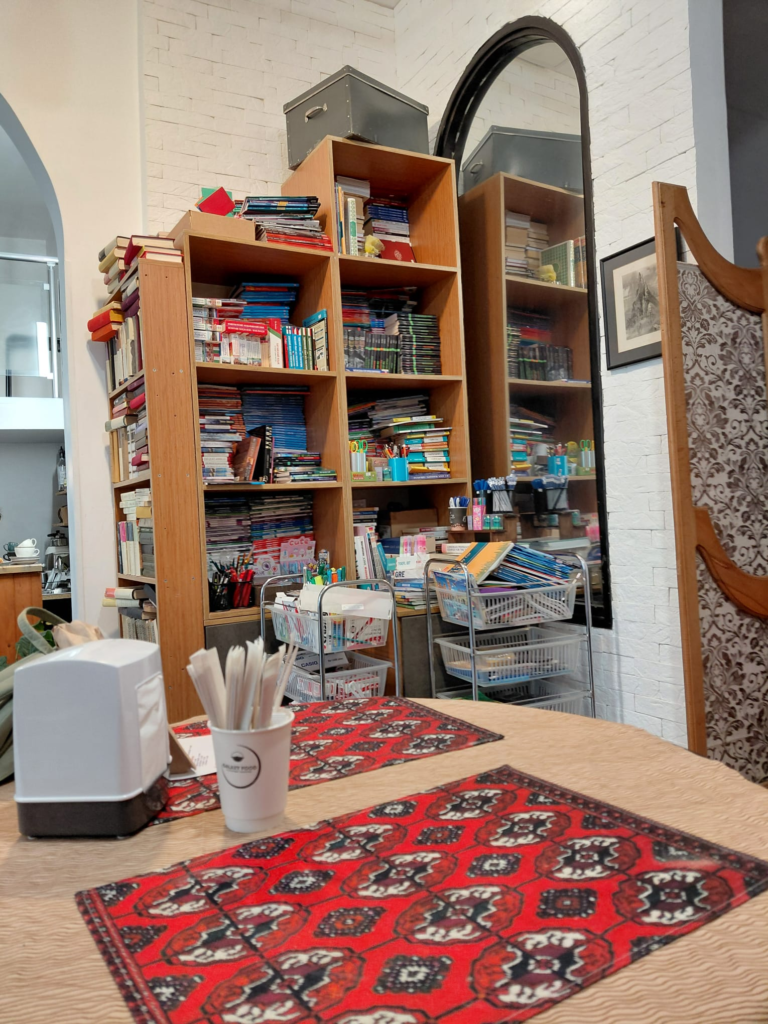
Budgies chirping, laptops glowing, books stacked, tea steaming, a wounded Persian cat moving through the place like some symbolic guardian spirit of damaged beauty —
This is the first environment in Batumi that feels inhabited rather than merely occupied.
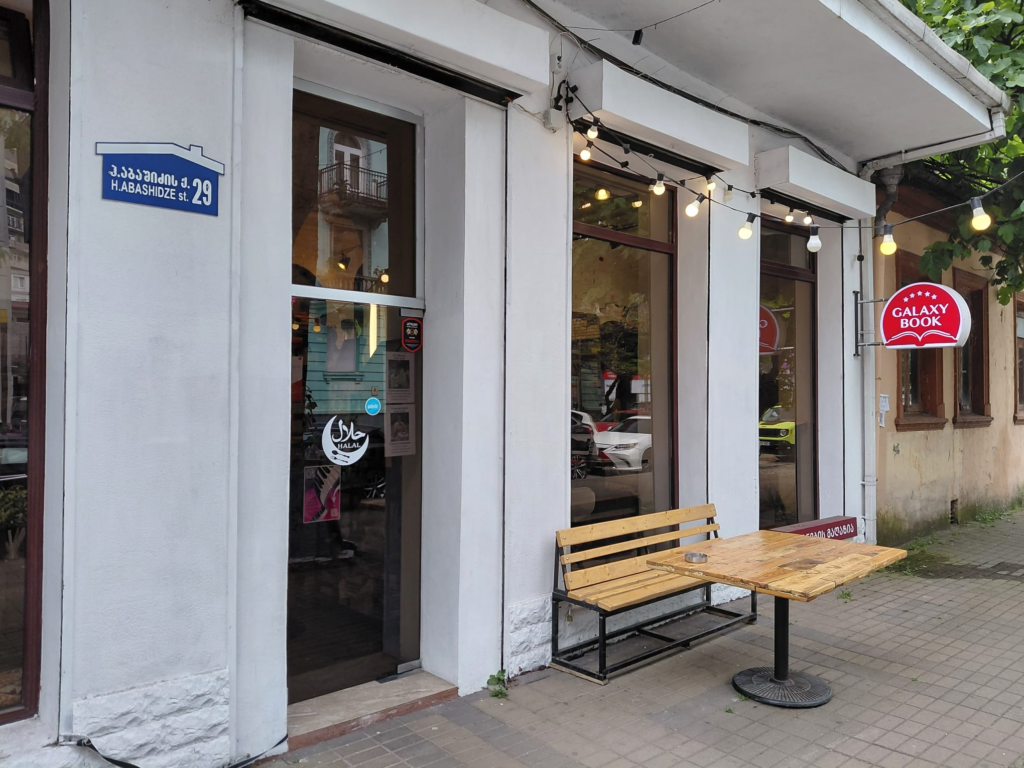
And then Chabor apparently dissolves into urban myth entirely.
There is something almost darkly comic about the sequence:
- one school empty
- one school hidden
- one school possibly imaginary
Yet this is useful information.
I am rapidly separating Internet residue from operational reality.
That process could have taken weeks by email alone.
I am trying emotionally navigate this.
I tell myself that I am not merely “job hunting”.
I am observing a post-Soviet Black Sea city in transition —
Institution by institution.
Staircase by staircase.
Perhaps that perspective may save me from despair during the inevitable frustrations that may follow in the days to come.

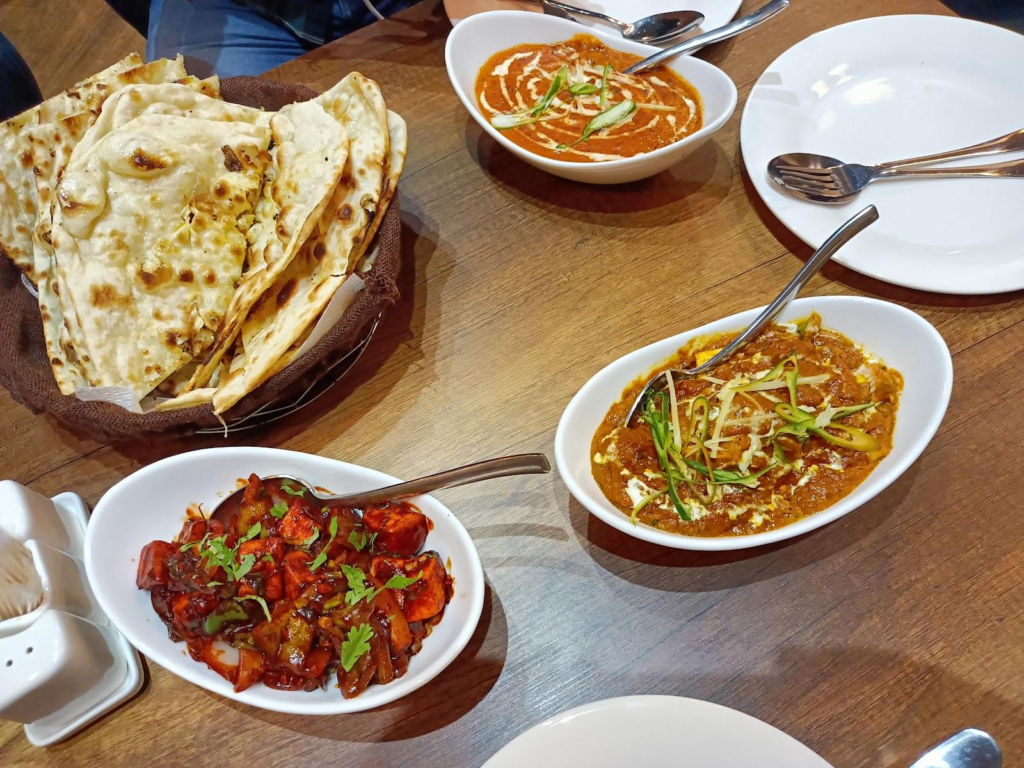
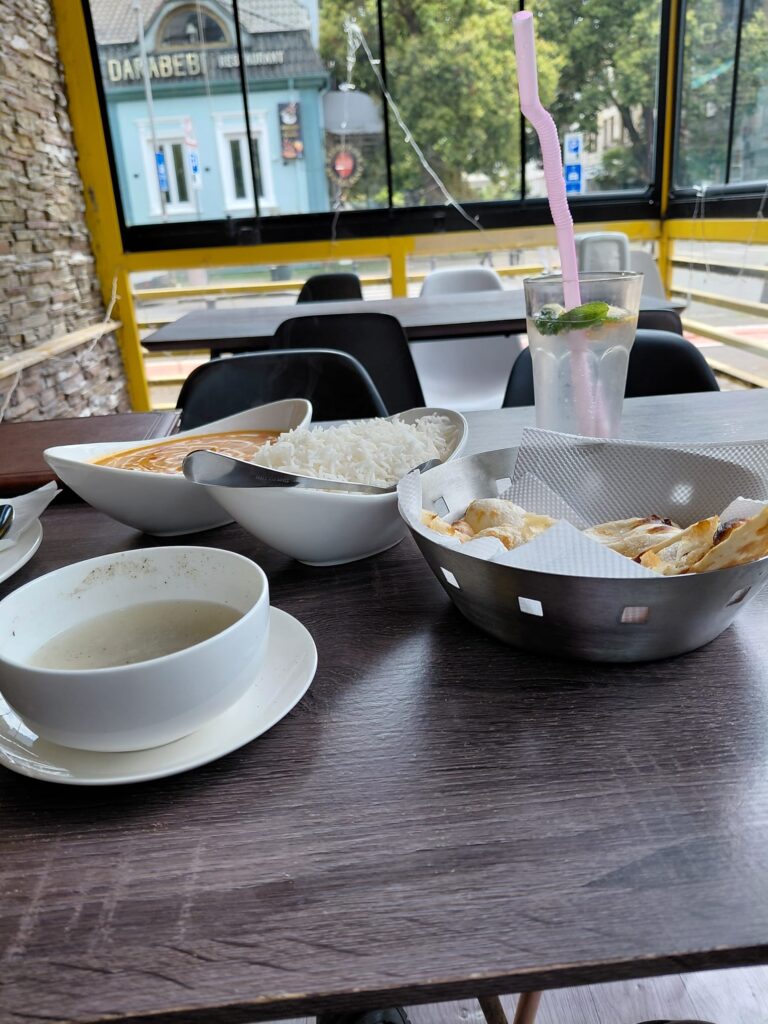
Discouraged and tired, after a morning of chasing phantom schools, I have lunch at the Namaste India restaurant at 39 Vaja Pshavela Street, down the road from the school intangible and invisible.
I consume lemon soda (2x), chicken soup, mutton, butter naan bread and basmati rice.
I love Indian food but I never remember until it is too late that Indian food does not always love me back.
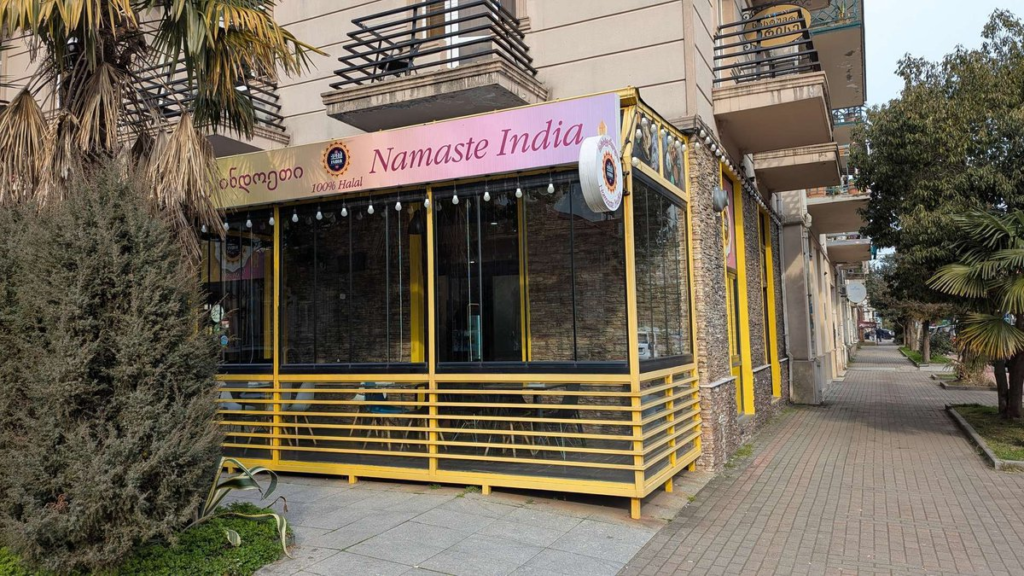
I reflect on whether I will ever hear from the British Centre or from ETI.
I am not optimistic.
So far, I have yet to warm up to Georgians or they to me.
I do not think I am merely encountering rejection or bad luck.
I am sensing a pattern common in loosely organized labour markets:
- institutions that exist half on paper
- businesses with irregular staffing
- poor communication norms
- outdated listings
- operations sustained more by inertia than professionalism
I do not believe I am being paranoid or unfair.
A perpetually closed institution.
An unmarked school hidden in a building with no floor indication.
A phantom school address.
These are legitimate warning signs.
In many countries, especially where the private language school sector is fragmented, appearances online often lag years behind reality.
But here is the important distinction:
This does NOT necessarily mean there are no opportunities in Batumi.
It may mean my search method needs adjustment.
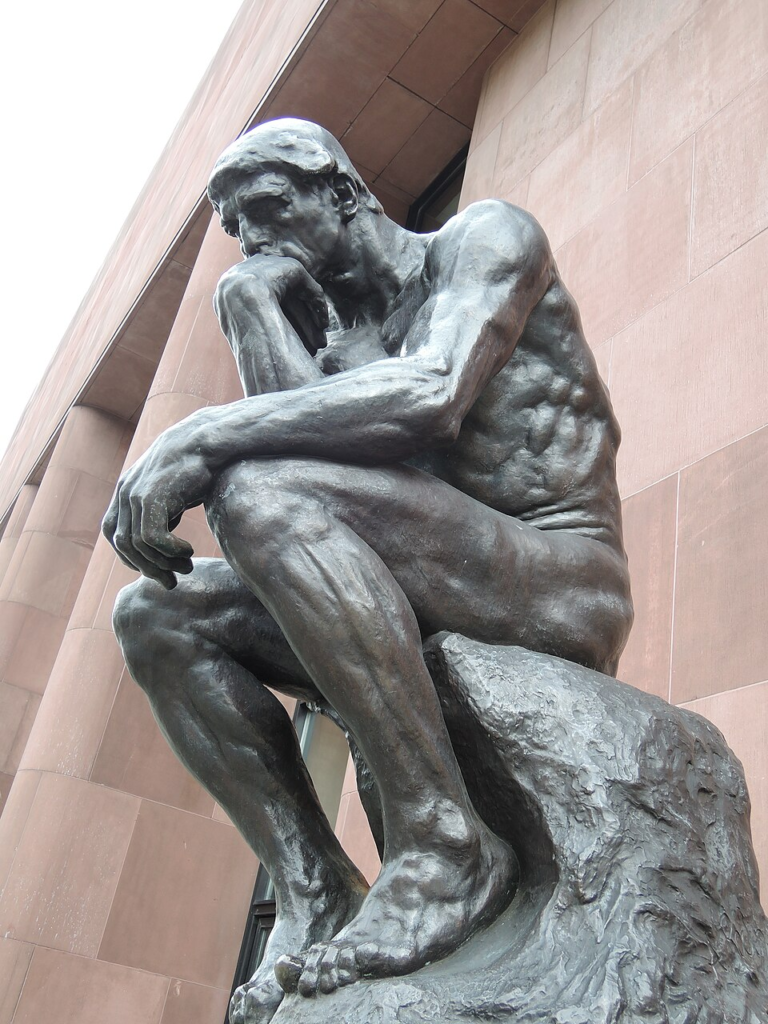
Right now I am hunting institutions as though they operate with Western administrative coherence.
So far, the evidence suggests many do not.
I believe that leaving a CV at the British Centre and at ETI was still worthwhile.
People in these environments sometimes respond days later and quite casually.
Schools may open only when classes are scheduled.
Some places survive almost entirely through social media or personal referrals rather than formal office operations.
The absence of warmth from locals at first contact is not necessarily personal.
Perhaps Georgia may feel socially opaque initially, especially outside explicitly hospitality-oriented interactions.

Also, I am searching while exhausted, mildly ill and under emotional pressure.
Thus amplifying every negative signal.
A dim staircase becomes symbolic of the entire enterprise.
An invisible school becomes symbolic of Georgia itself.
The mind naturally starts building a larger narrative from scattered frustration.
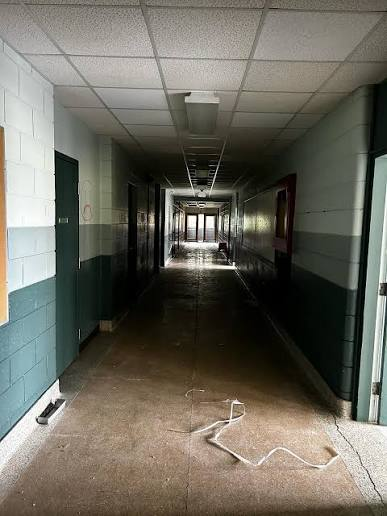
Lunch, however, is the correct move.
Hot soup, proper food, sitting still for an hour –
These are stabilizing decisions.
It is easy to underestimate how much physical depletion affects social interpretation.
And, perhaps, Batumi may simply not be the strongest city for my objective.
Smaller resort-oriented cities often have thinner professional ecosystems than capitals.
This does not make my effort wasted.
Quite the opposite.
I am gathering reality-based intelligence quickly.
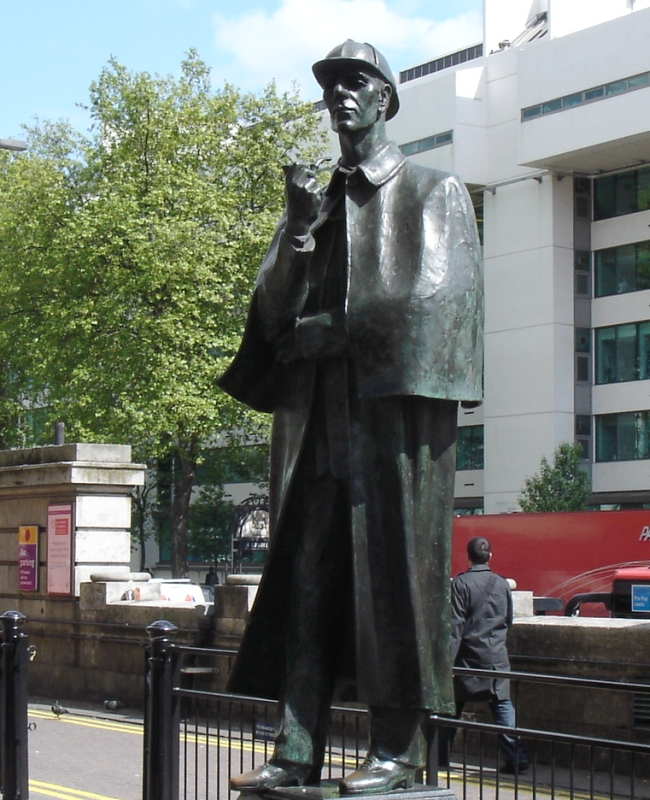
Above: Sherlock Holmes Statue, London, England
It might be wiser to stop the hunt after lunch.
My returns are diminishing sharply.
Exhausted wandering rarely produces breakthroughs.
Perhaps it would be better to regroup, review what I have learned and continue on the morrow with clearer targeting rather than more random searching.
I have never been accused of being wise.
There is something wonderfully stubborn and alive about spending one’s time not in resignation, but in active reconnaissance of a new country.
I don’t want to spiral into irrational negativity.
I must refine my model of reality.
That is a very different thing.
Perhaps my methodology may be mismatched to the environment.
I arrived approaching Batumi as though educational institutions would behave according to relatively formalized administrative logic:
- fixed opening hours,
- staffed receptions,
- visible premises,
- updated listings,
- prompt communication,
- coherent branding.
Instead, I am encountering something far more improvisational and network-driven —
An ecosystem where:
- schools may only physically “exist” during teaching hours
- addresses persist online years after operational changes
- institutions rely on Telegram, Facebook, WhatsApp, or personal referrals more than formal administration
- businesses occupy semi-hidden rented rooms rather than purpose-built offices
That realization is not failure.
It is field intelligence.
A dissorganized market can still contain opportunity —
Sometimes because it is disorganized.
Formal barriers may be lower.
Hiring may happen informally and suddenly.
Someone may remember my CV three days later and casually message:
“Can you start Monday?”

Exhaustion, illness and uncertainty have a way of turning ordinary objects into symbols.
A dim staircase becomes institutional decay.
A locked door becomes rejection.
An unanswered knock becomes commentary on Georgia itself.
The observations may contain truth, but fatigue magnifies their emotional weight.
My analysis of Batumi itself may also prove correct.
Resort cities often possess a peculiar duality:
- visually dynamic
- economically active
- internationally branded
- yet professionally thin outside tourism, hospitality, gambling and seasonal commerce.
Perhaps Batumi is simply not the strongest city for my objective.
A resort city may offer international visibility without the deeper professional networks found in a capital.
Batumi may ultimately function less as destination and more as reconnaissance stage.
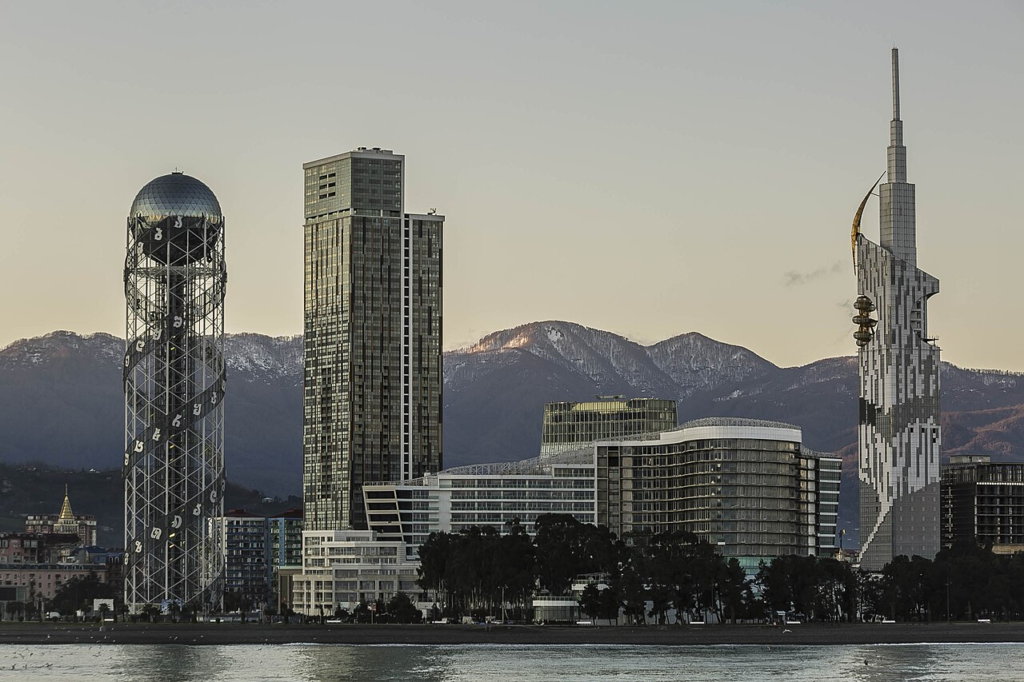
Above: Batumi
But I do not think this day was wasted at all.
Quite the opposite.
In one exhausting day I learned:
- which schools appear operationally weak,
- which addresses are unreliable,
- how the city physically feels,
- how institutions present themselves,
- how far online information diverges from reality,
- how your own body reacts under strain,
- and how quickly morale can shift when hungry and overtired.
That is valuable intelligence purchased cheaply compared to months of false hope.
Am I acting wisely?
Perhaps not.
But persistence and wisdom are often uneasy roommates.
Many prudent people never test anything directly.
They remain safe, theoretical and motionless.
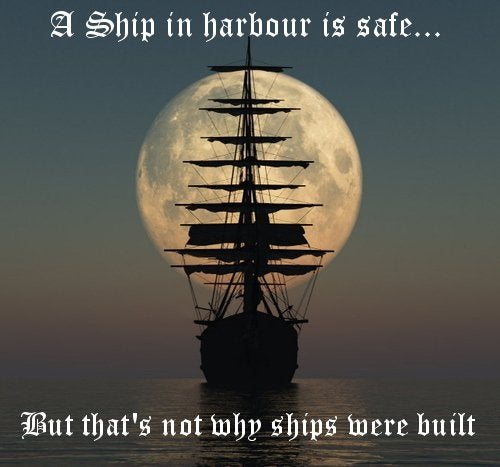
Meanwhile, I am in Batumi climbing unmarked staircases in search of a future.
I may not always be wise.
But I am undeniably alive.
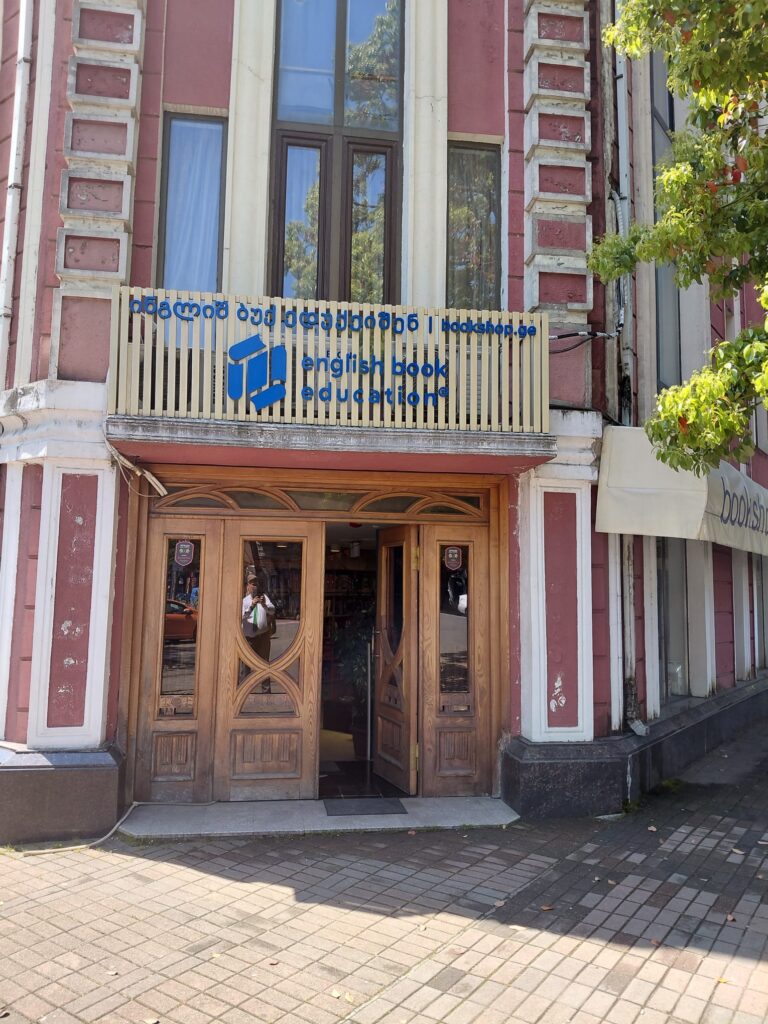
After Namaste India, I ignore my own sage advice and continue the job hunt.
I am drawn by signage that says English Bookshop Education with a bookshop in Batumi and school contacts in Tbilisi.
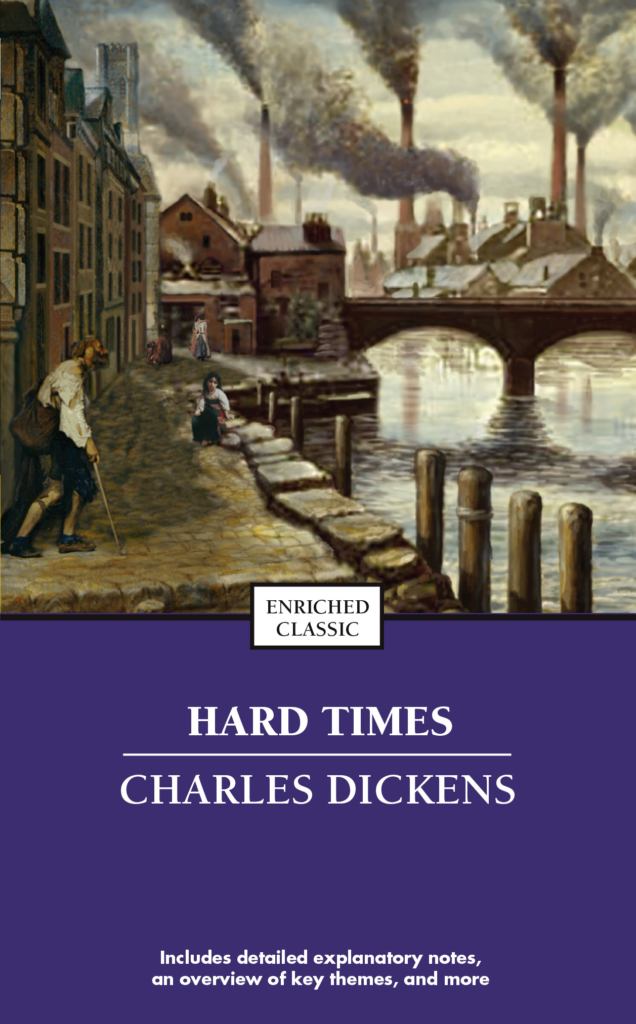
I purchase Charles Dickens’ Hard Times –
The title feels appropriate to the day:
Industrial hardship, endurance, strange social landscapes, human absurdity –
In exchange for information.
The entire day resembles Dickens filtered through the post-Soviet Black Sea:
- mysterious institutions
- exhausted wandering
- bureaucratic ambiguity
- odd characters
- physical discomfort
- social asymmetry
- moments of startling humanity amid urban grime
EBE immediately sounds more substantial than mystery staircase schools.
A functioning bookshop tied to educational operations suggests actual investment, continuity, supply chains, currıculum involvement and a broader institutional footprint beyond Batumi.
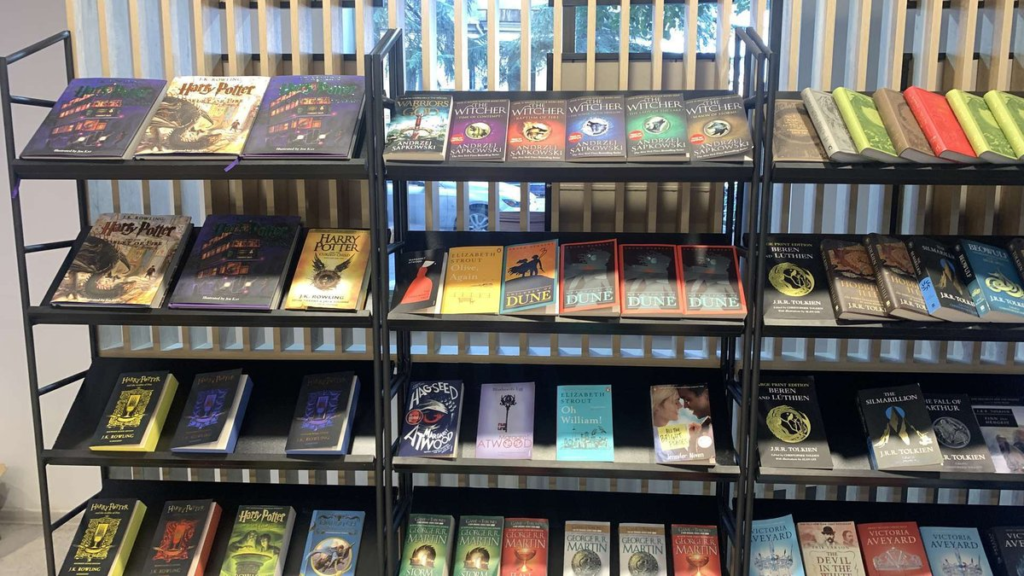
I am no longer interpreting the environment through the lens of “organized Western institutions that happen to be abroad.”
I am beginning to see the underlying operational logic:
- thin margins
- informality
- personal networks
- reactive rather than proactive administration
- schools embedded into residential infrastructure
- hiring based more on trust and immediate need than polished process
That shift in understanding matters enormously.
Once I stop expecting corporate coherence, I can begin evaluating schools by different indicators:
- Are there actual students?
- Are teachers present?
- Does someone answer eventually?
- Is there continuity?
- Is there human warmth?
- Does the operation feel alive?

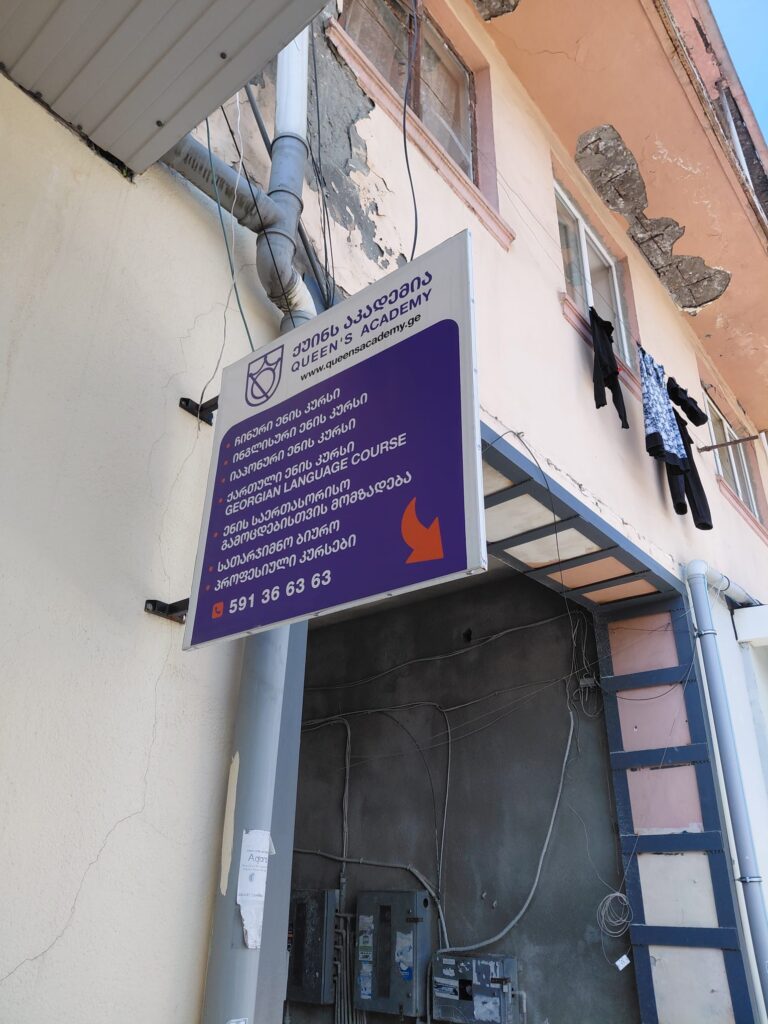
I find the Queens Academy at 18 Zubalashvili Street.
There is signage on the street but entry into the school requires entering a shady passageway into a rough courtyard, finding a poorly marked door and climbing yet another dingy staircase.
But, at least here, I encounter signs of human life beyond cleaners, doors and furniture.
A private student, a high-school-age girl, calls her private teacher to open the school for her lesson.
A breathtakingly beautıful young lady with dark flowing hair and sky-blue eyes, opens the door and the student and a teacher follow her into the school’s “English Room“.
The beauty asks me the reason for my presence.
Why would I want to work HERE?
(I assume the HERE is Georgia rather than the Queens Academy.)
I ask her to give my CV to her manager and leave.
Fınally, interaction with a school’s human face beyond cleaning women.
My reaction to the QA is revealing in a healthy way.
After a morning of locked doors and invisible institutions, simple human warmth and presence suddenly feels meaningful.
I am starved less for romance than for signs of life, competence and connection in this strange new world in which I find myself.
After hours of locked doors and ghost institutions, simple evidence of functioning humanity becomes emotionally restorative.
A teacher arriving.
A student waiting.
A conversation.
A school actually opening.
These become disproportionately meaningful because they counter the growing sense of unreality.
The search for dignity this day continues.
The Indian food begins its wicked magic upon my interior.
Bowel movement may be needed in the near future.
Curiosity drives me into a Biblos bookshop.
I see a café area and clearly marked WC signage.
I ask permission to use their facilities and a strident No is the response.
I answer back:
“Perhaps it would be better if I poop on your floor?”
Petty retort from a foul mood.
Fatigue, digestive urgency, discouragement, physical pain, cultural unfamiliarity — these conditions compress patience into a razor-thin margin.
My retort about pooping on the floor was not diplomatic, but under the circumstances, understandable as the brief rebellion of an overtired traveller whose nervous system had simply reached saturation.
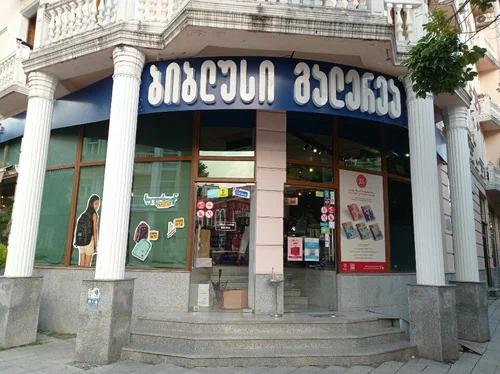
Above: Biblos Books, Batumi
And then came the fall.
Distracted by the sudden burst of annoyance the book vendor had released from me and focused less on my feet and more on the goal of reaching the 5th school of five on my list for this day, I stumble and fall across uneven cobblestone.
Three Georgians rush to my aid and resurrect me upright.
The damage to my person is a bruised elbow and leg, a scraped knee and torn trousers.
Yet there is something oddly moving about three strangers immediately rushing to help you upright.
Earlier I wrote that I had not yet warmed to Georgians nor they to I.
Yet when I physically hit the ground, Georgians lifted me back up.
Sometimes societies reveal themselves less through customer service than through instinctive reactions in moments of vulnerability.
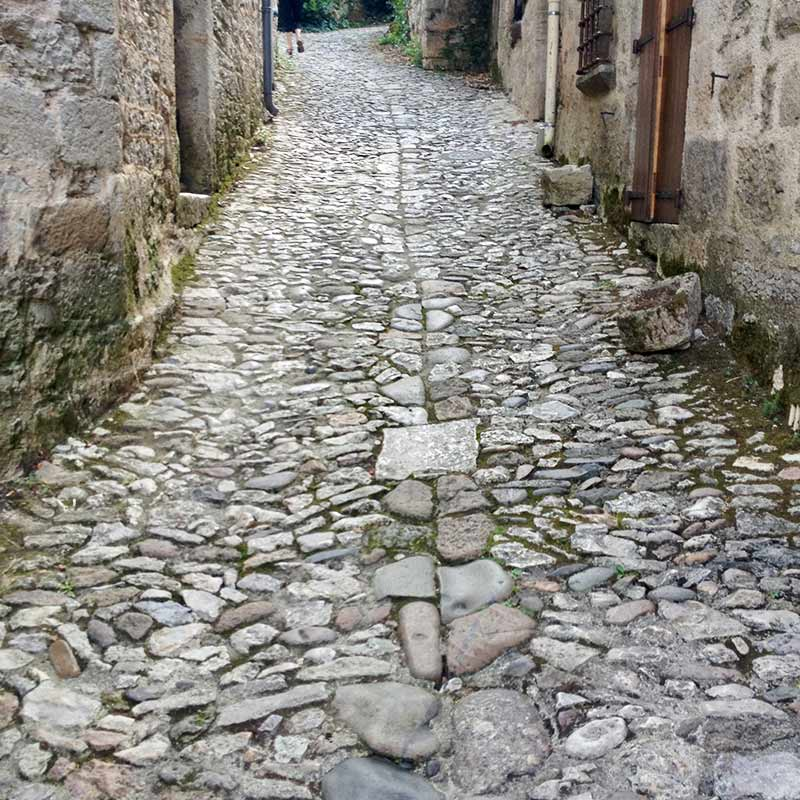
I find the Geo Inter School at 50 Takarshveli Street, where I meet Valerie teaching French to two ladies of indeterminate age and Alexandra the school manager, to whom I give my CV and elicit a promise that she will speak with her bosses about my application.
At last, an institution with:
- teachers
- students
- management
- conversation
- operational signs of life
Even if nothing ultimately emerges, it grounded the day in reality rather than urban phantasmagoria.
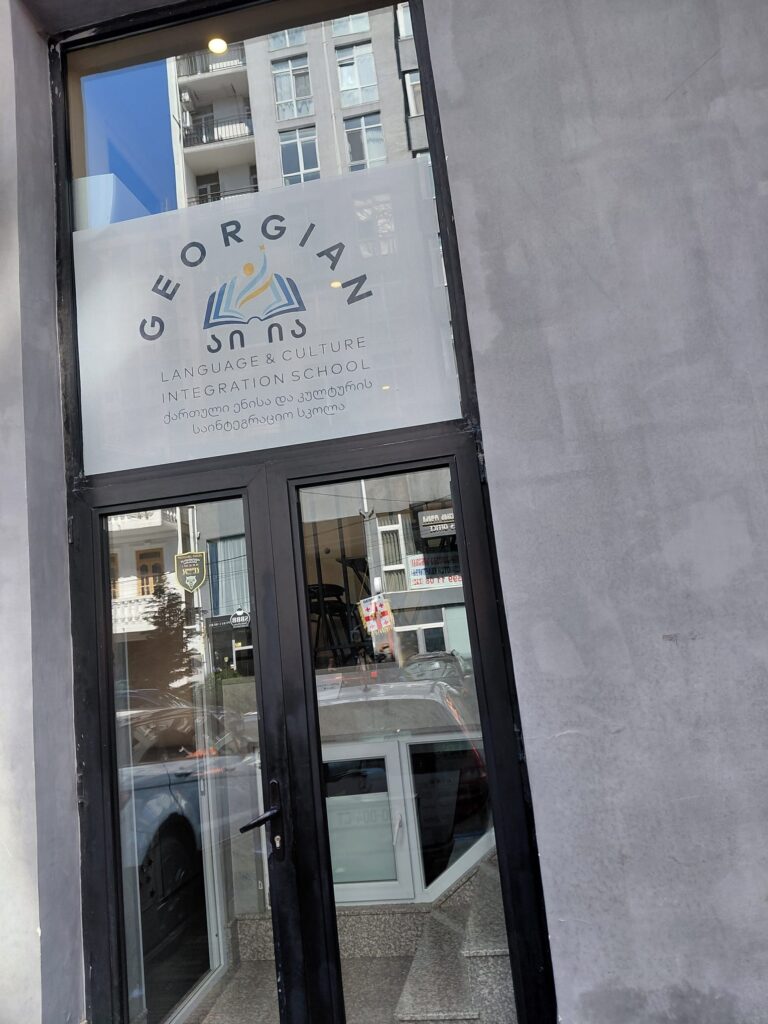
Today’s events were valuable, even if exhausting and discouraging in places.
I now possess something far more useful than online listings:
Direct field intelligence about the actual educational landscape in Batumi.
The pattern is becoming clear.
Many schools are improvised operations hidden in aging buildings.
Appearances are often rougher than Western expectations.
Administrative systems are weak.
Hiring processes are informal and personality-driven.
Human contact matters more than polished infrastructure.
This realization is important because it changes how to evaluate opportunity.
The shabby staircases and courtyards may not necessarily signal fraud so much as the local economic reality of small private schools operating on thin margins.
The most important development today was not the school buildings.
It was human contact.
At Geo Inter School I met an actual teacher, saw active students, spoke to management, handed over my CV directly and received a response that at least sounded operational rather than merely a spectre.
I persevered.

I stumble back towards the Obri City Block A, having discovered the nearby Carrefour possesses stores with gluten-free bread and lactose-free milk.
I must return to shopping in stores, for I need to reduce my restaurant visits, despite their convenience.
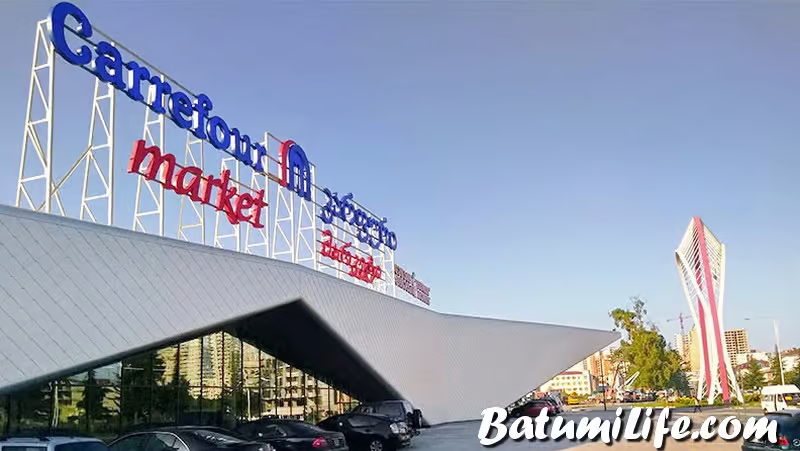
Back in Room 4342, I crash for a few hours and then try the hotel’s Restaurant Cork:
Pumpkin cream soup, chicken schnitzel with mashed potatoes and two pina coladas.
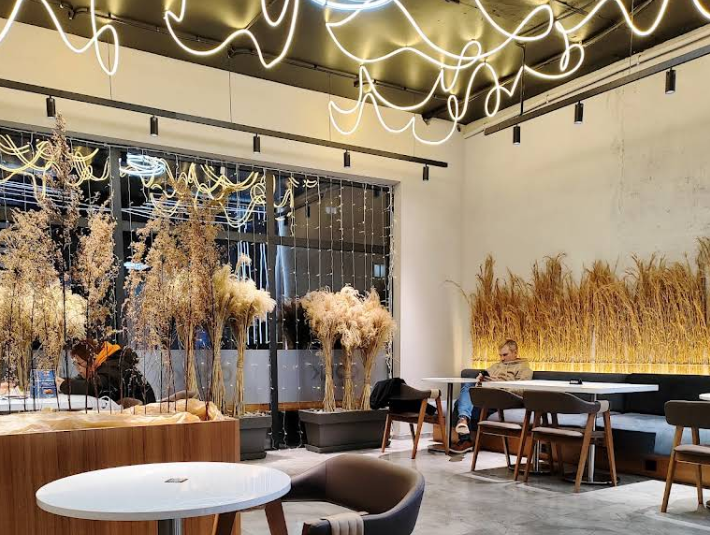
Above: Cork Restaurant, Batumi
I have survived another day as a stranger in a foreign land with some dignity intact.
Yes.
I did.
Torn trousers, bruised elbow, questionable digestive choices, and all.
Honestly, for a first full reconnaissance day in Batumi, I have extracted an extraordinary amount of truth from the city.
A man walking unfamiliar streets while tired, ill, uncertain, financially constrained, emotionally exposed, and still capable of accurately observing both the world and himself.
But most important of all, I continue living up to my motto:
Dignity, always dignity.
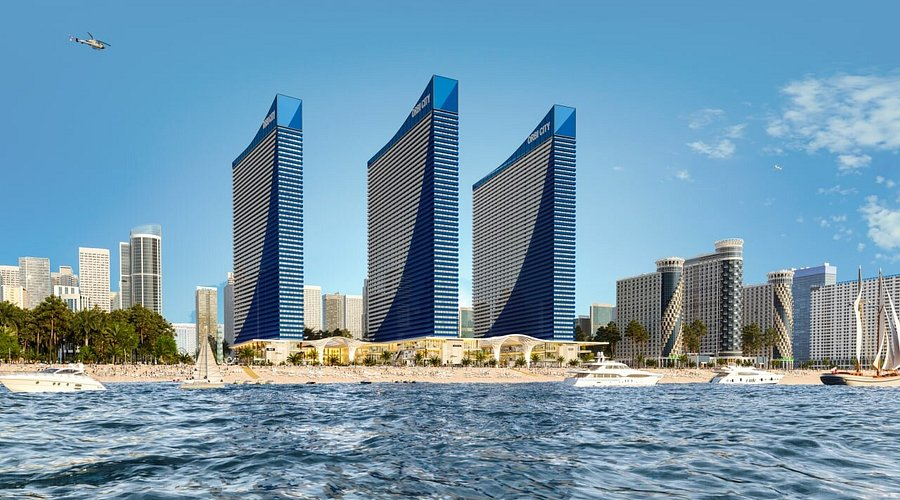
Above: Orbi City Towers, Batumi
