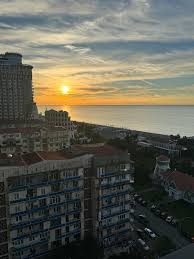
Monday 13 July 2026
Landschlacht, Canton Thurgau, Switzerland
I am caught between two systems that operate on completely different assumptions about time and responsibility.
On one side is my wife.
She values clarity, planning and decisions.
To her, “I don’t know yet” sounds like something that ought to be solved by asking harder, following up again, or pressing for an answer.
She is looking at the problem through a German cultural lens:
Uncertainty is something to reduce.
Above: Flag of Germany
On the other side are my Georgian contacts.
My impression from both research and my own experiences is that they are not necessarily being evasive.
In Georgia, organizations often make hiring decisions later than applicants would like.
People may genuinely not know until a director returns, a budget is approved, enrollment numbers become clear, or someone else higher up decides.
Saying “I can’t tell you yet” is often exactly what they mean.
Neither side is necessarily wrong.
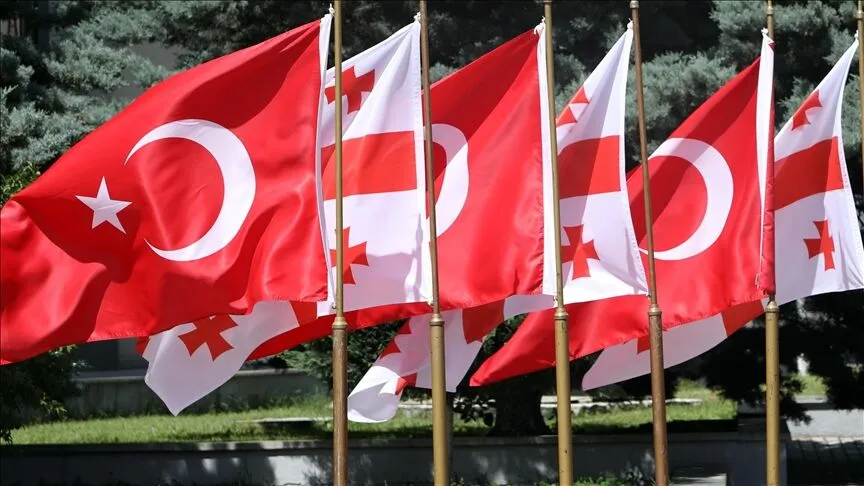
Above: Flag of Georgia
The difficulty is that I am standing in the middle.
Switzerland, Türkiye and Georgia are very different cultures.
Above: Flag of Switzerland
Something I began to learn upon crossing the border from Türkiye to Georgia….
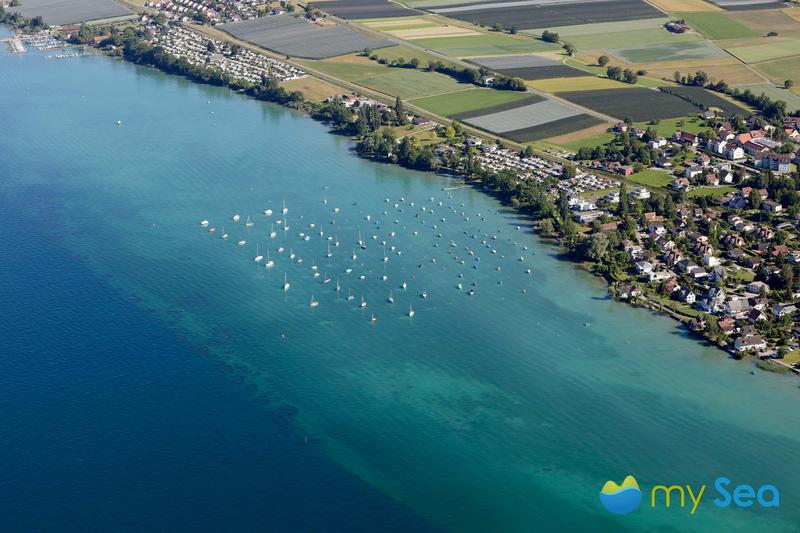
Above: Landschlacht, Canton Thurgau, Switzerland
Monday 11 May 2026
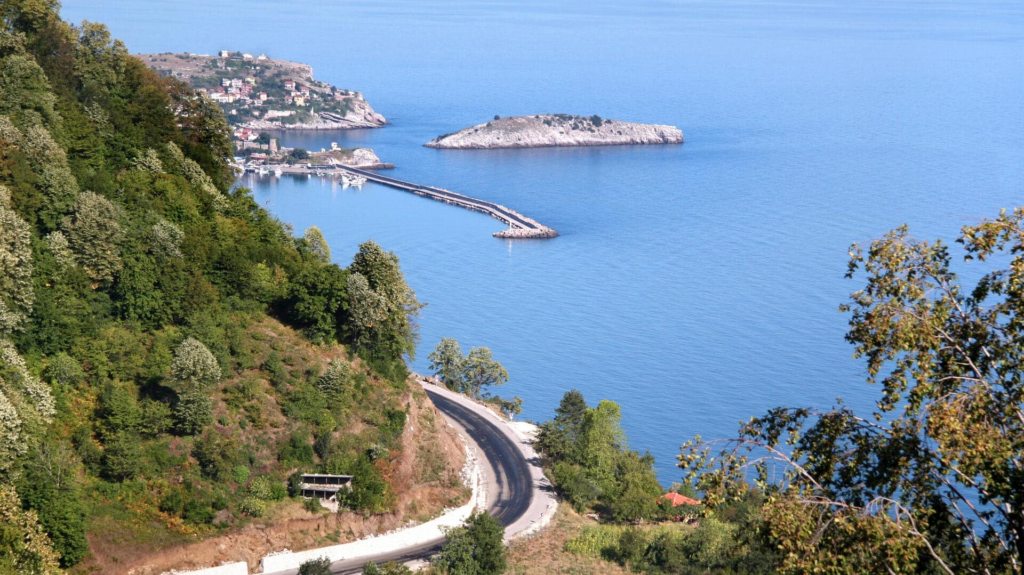
The 540 km Black Sea coastal highway continues for a final 20 km beyond the industrial port of Hopa, which holds a limited selection of decent accommodation to the Turkish – German border.
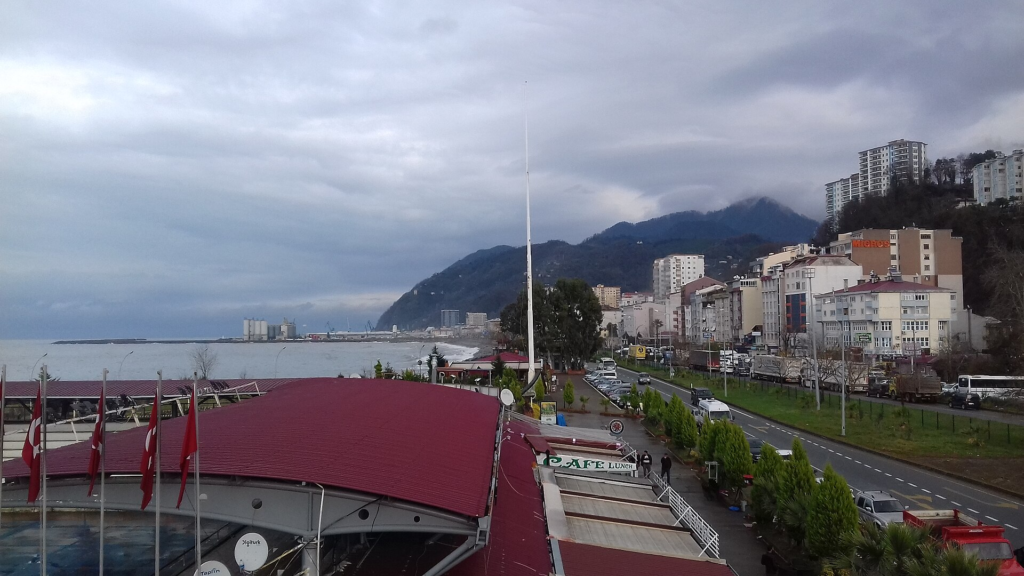
Above: Hopa, Artvin Province, Türkiye
Set by the Turkish and Soviet revolutionary governments in 1921, the crossing was virtually inactive between 1935 and 1988, a casualty of Stalinist, then Cold War, paranoia.
Above: Flag of the Soviet Union (1922 – 1991)
Since the gates have opened, and especially since a 2011 agreement that allows Georgians and Turkish citizens to cross passport-free, it has become a busy 24-hour waystation.
Above: Coat of arms of Georgia
The Turkish border post is in a modern building with a bank, insurance counter and a café-restaurant.
Above: Flag of Türkiye
Mini-buses and coaches on either side transport passengers to Hopa and beyond in Türkiye or to Batumi and Tbilisi in Georgia.
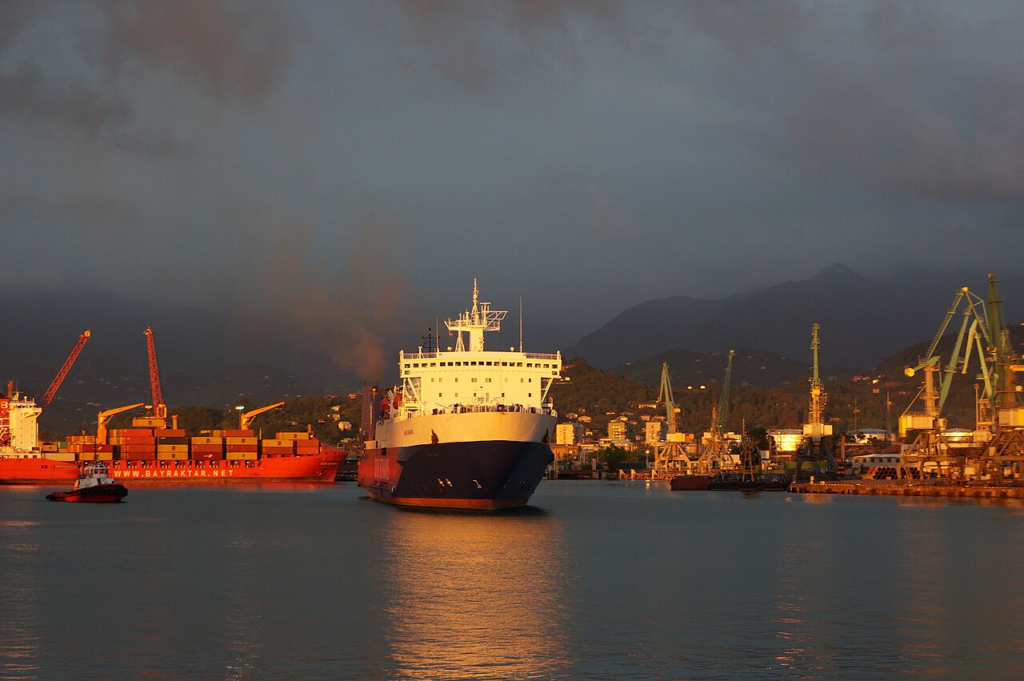
Above: Batumi, Adjara, Georgia
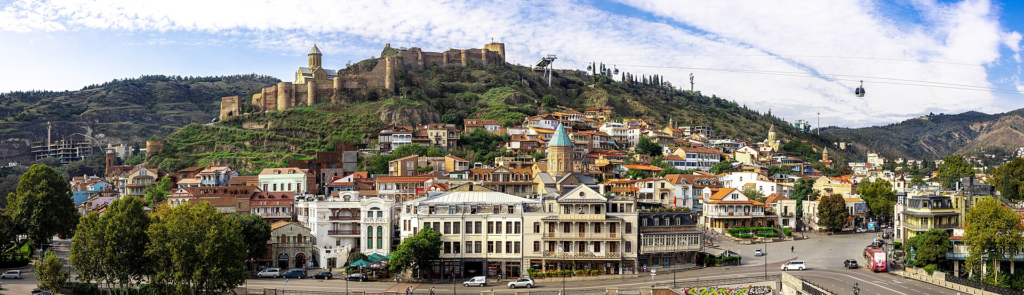
Above: Tbilisi, Georgia
Türkiye and Georgia today enjoy one of the closest and most pragmatic relationships in the Black Sea region.
Their partnership is based less on sentiment than on mutual economic and strategic interests.
Here are the main aspects.
Since Georgia regained independence in 1991, Ankara has consistently supported Georgia’s sovereignty and territorial integrity, including regarding the breakaway regions of Abkhazia and South Ossetia.
Georgia, in turn, sees Türkiye as an important regional partner and as its gateway to Europe and the Mediterranean.
Unlike Georgia’s difficult relationship with Russia, relations with Türkiye have remained remarkably stable.
Türkiye is regularly one of Georgia’s largest trading partners and among its biggest foreign investors.
Turkish companies have invested in:
- construction,
- banking,
- tourism,
- retail,
- manufacturing,
- logistics.
Walking through Batumi, you notice numerous Turkish businesses, Turkish-language signs, and frequent Turkish visitors.
That isn’t accidental.
Batumi has become an economic extension of northeastern Türkiye in many respects.
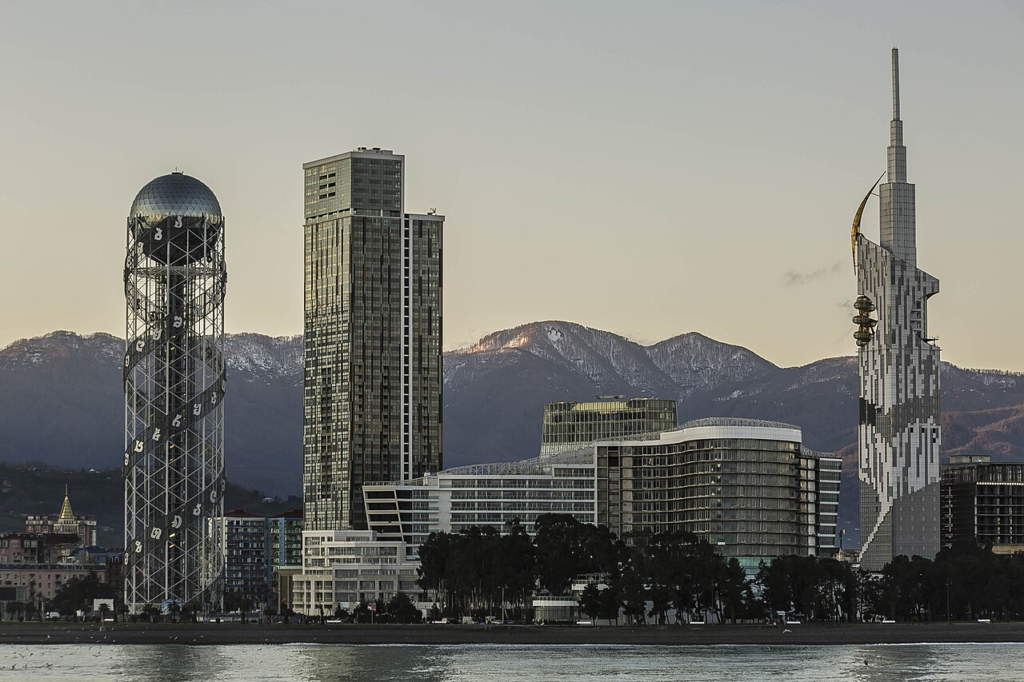
Above: Batumi
For someone travelling from Rize, Batumi feels surprisingly close.
The border at Sarpi Border Crossing is one of the busiest land crossings in the region.
Many Turks cross simply to:
- shop
- visit relatives
- conduct business
- enjoy a weekend away
Likewise, many Georgians travel to Trabzon, Rize and other Turkish cities for work, healthcare, education and shopping.
The border is an international frontier, but in everyday life it is also a bridge.
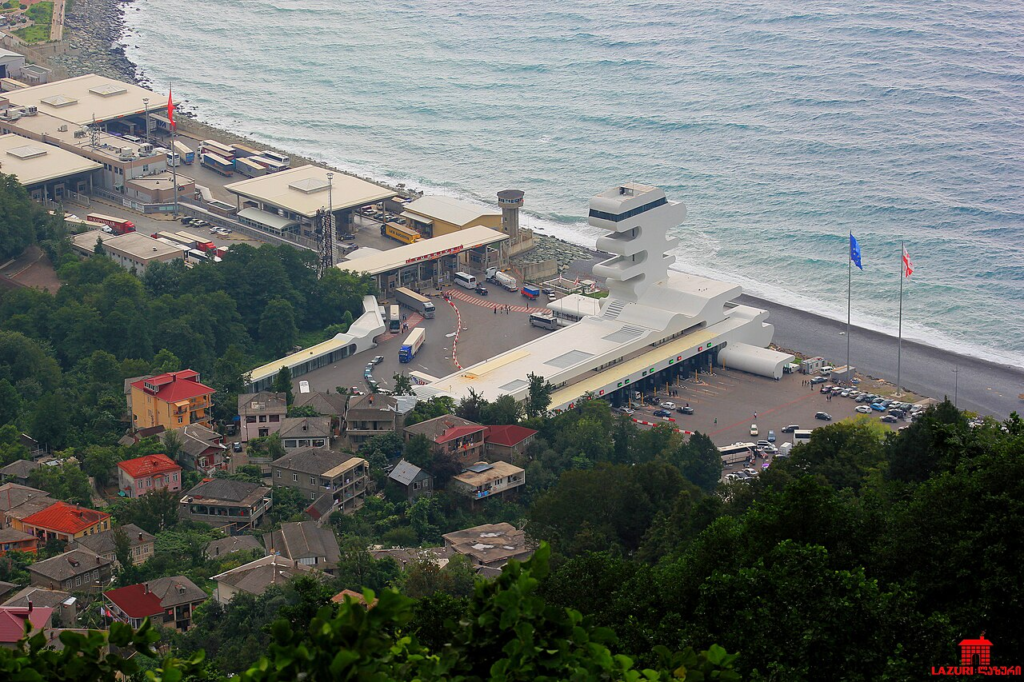
Above: Turkish – Georgian border
The two countries cooperate on major infrastructure projects.
Among the most important are:
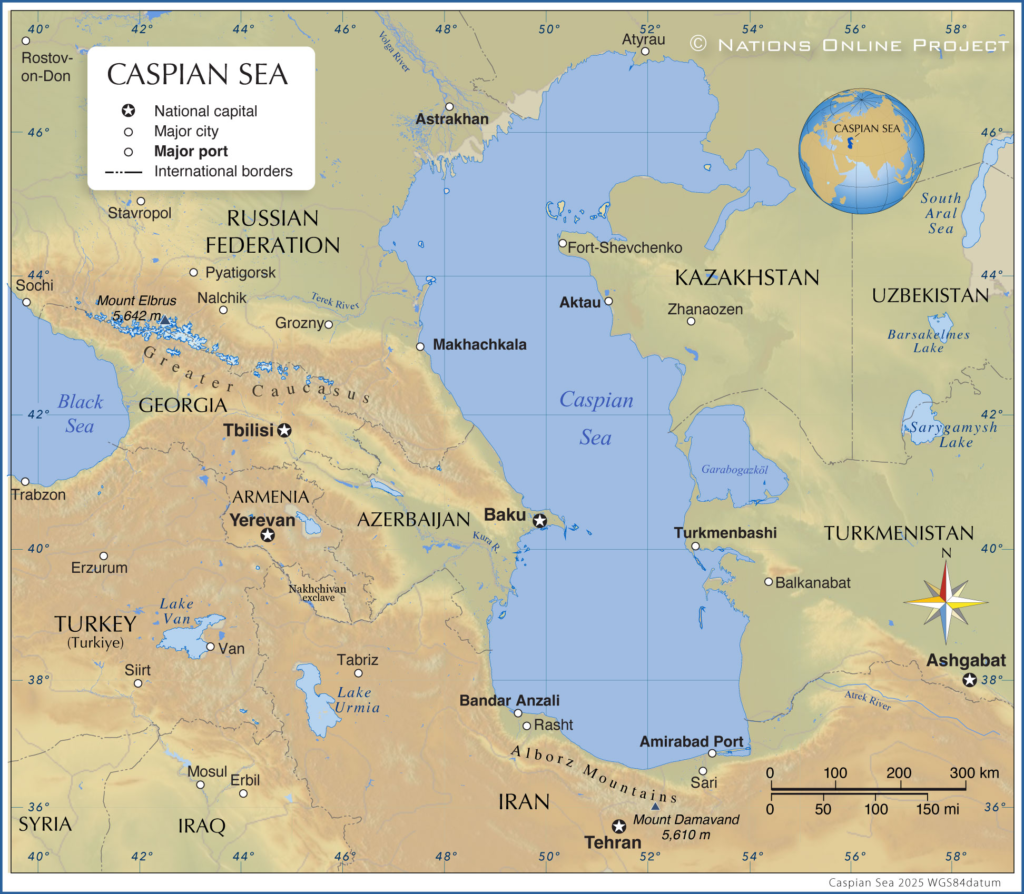
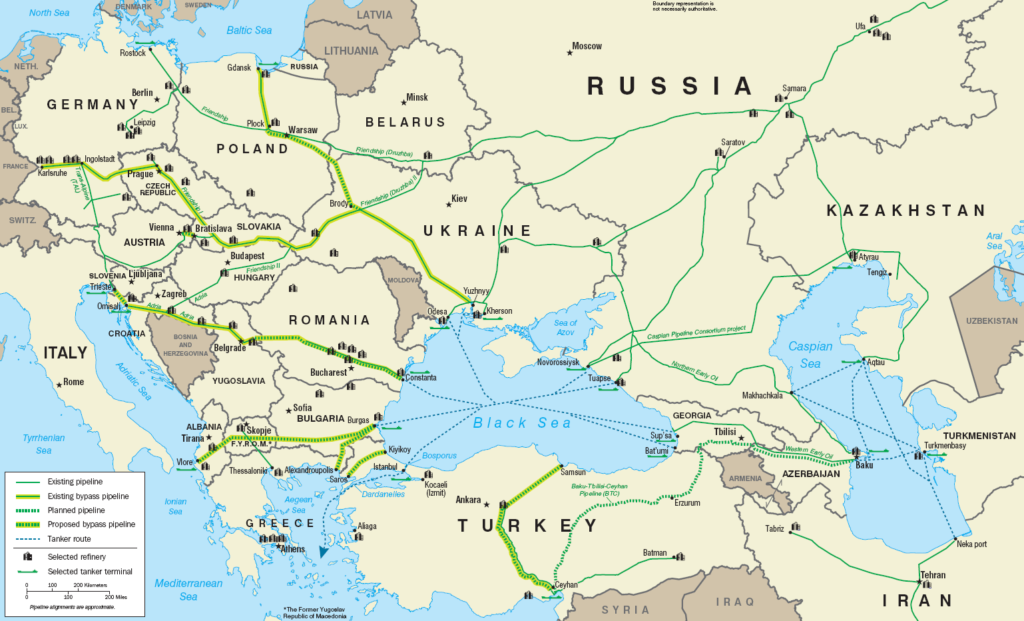
- the Baku–Tbilisi–Ceyhan pipeline
The Baku–Tbilisi–Ceyhan (BTC) pipeline is a major international crude oil pipeline linking the Caspian Sea region to the Mediterranean coast.
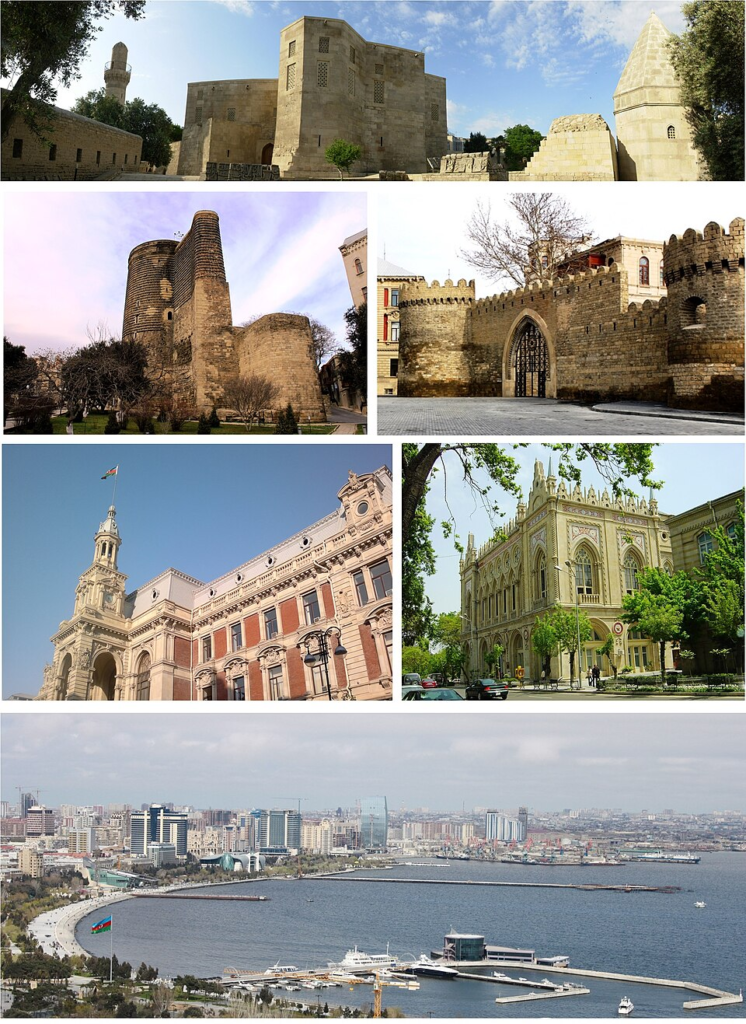
Above: Images of Baku, Azerbaijan
Running from Sangachal Terminal near Baku through Georgia to the Turkish port of Ceyhan, it has been a strategically important energy corridor since entering operation in 2006.
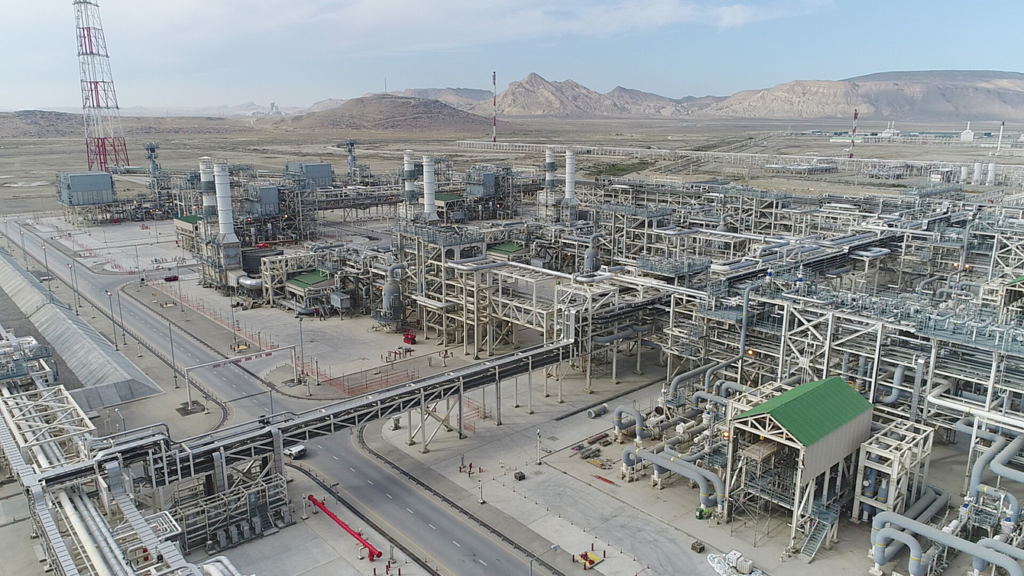
Above: Sangachal Terminal — located on the coast of the Caspian Sea, 28 miles south of Baku, Azerbaijan
The pipeline stretches approximately 1,768 km (1,099 miles) across Azerbaijan, Georgia and Türkiye, transporting crude oil primarily from Azerbaijan’s offshore Caspian oil fields.
Above: Flag of Azerbaijan
Designed to carry around 1 million barrels of oil per day, it terminates at the Mediterranean export terminal in Ceyhan, where oil is loaded onto tankers for shipment to global markets.
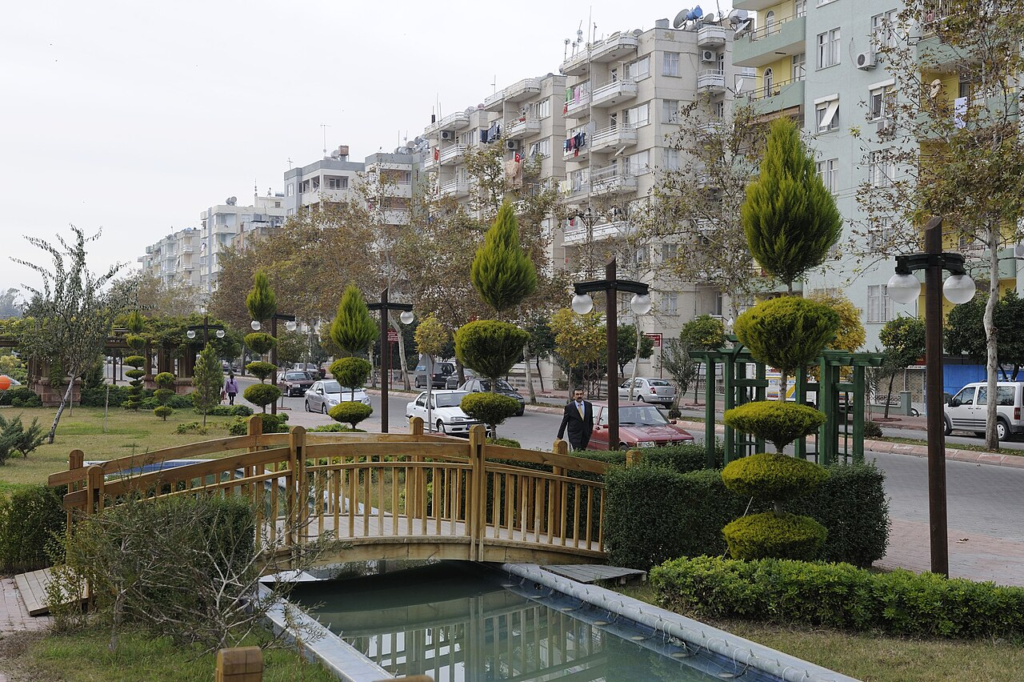
Above: Ceyhan, Adana Province, Türkiye
The BTC pipeline is significant because it provides an export route that bypasses both the Russian pipeline network and the Turkish Straits, diversifying energy transportation from the Caspian region.
It has played an important role in strengthening economic cooperation among Azerbaijan, Georgia and Türkiye while improving access to international markets for Caspian crude.
Planning accelerated during the 1990s, with intergovernmental agreements signed in 1999.
Construction began in the early 2000s.
The first oil reached Ceyhan in May 2006.
The project is owned by an international consortium of energy companies and has long been operated under the management of BP, although operational responsibilities have begun transitioning to SOCAR under existing contractual arrangements.
Beyond its engineering scale, the BTC pipeline has had substantial geopolitical and economic influence.
It encouraged investment in regional infrastructure, supported archaeological research during construction, and became one of the world’s best-known examples of a multinational energy corridor connecting inland hydrocarbon resources with global maritime trade routes.
- the South Caucasus Pipeline
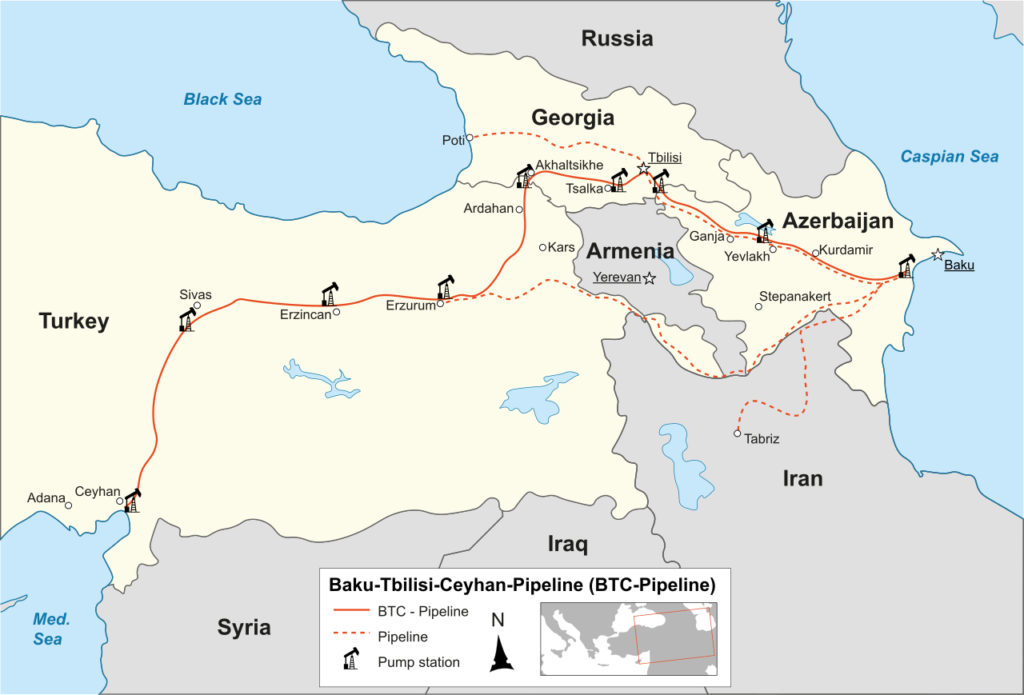
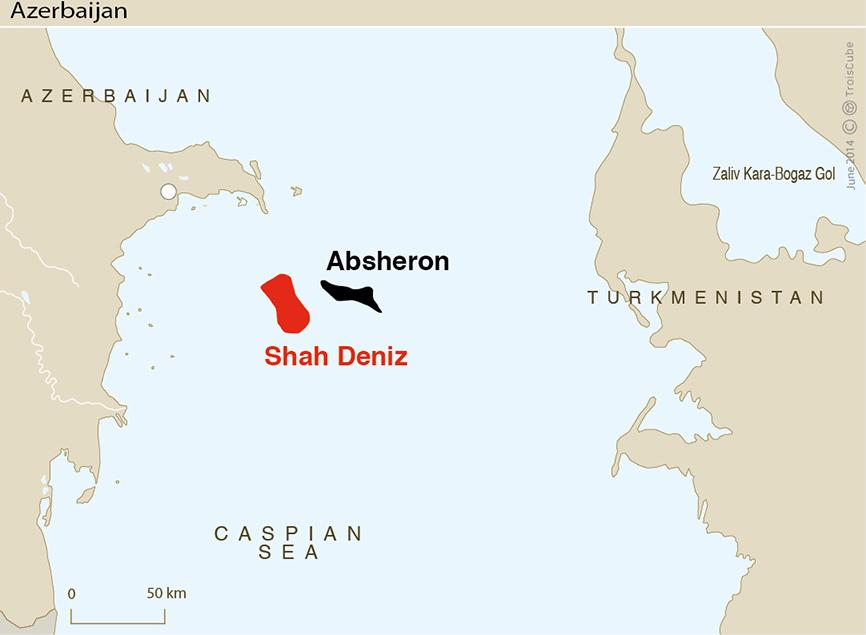
The South Caucasus Pipeline (SCP), also known as the Baku – Tbilisi – Erzurum (BTE) Pipeline, is a major natural gas pipeline that transports gas from Azerbaijan’s Shah Deniz field across Georgia to Türkiye.
It is a key piece of the Southern Gas Corridor, linking Caspian gas supplies to regional and European markets while strengthening energy connectivity across the South Caucasus.
The pipeline begins at the Sangachal Terminal near Baku, follows a corridor through Azerbaijan and Georgia, and reaches the Turkish city of Erzurum, where it connects with Türkiye’s gas network.
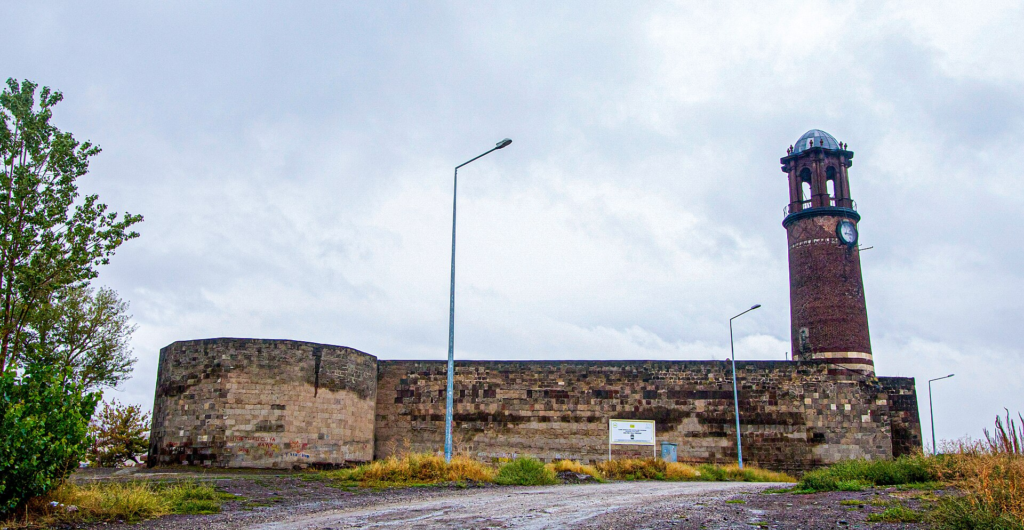
Above: Erzurum Citadel, Erzurum, Türkiye
For much of its route, it runs alongside the Baku – Tbilisi – Ceyhan (BTC) oil pipeline.
The line is approximately 692 km (430 mi) long, with about 442 km in Azerbaijan and 249 km in Georgia.
The SCP was built primarily to export natural gas from the Shah Deniz field, one of the Caspian Sea’s largest gas developments.
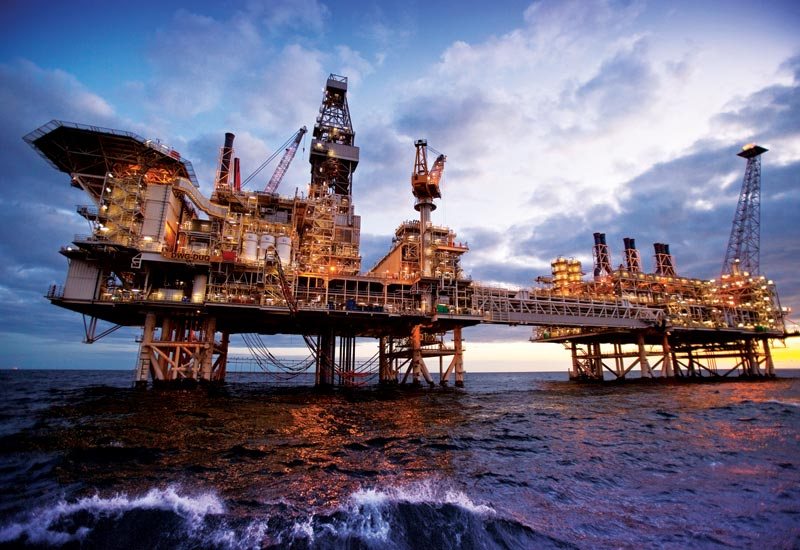
Above: Shaz Deniz oil platform
Beyond supplying Azerbaijan, Georgia and Türkiye, it serves as the eastern segment of the Southern Gas Corridor.
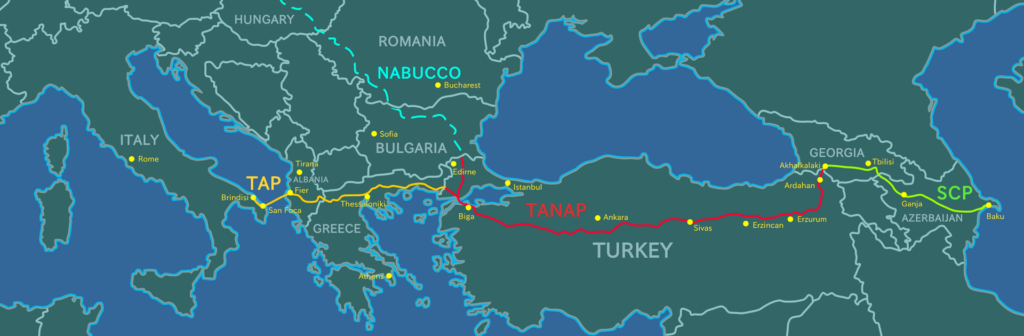
Above: The Southern Gas Corridor
Gas transported through the SCP continues west via the Trans-Anatolian Natural Gas Pipeline (TANAP) and then the Trans Adriatic Pipeline (TAP), helping diversify natural gas supplies to Europe.
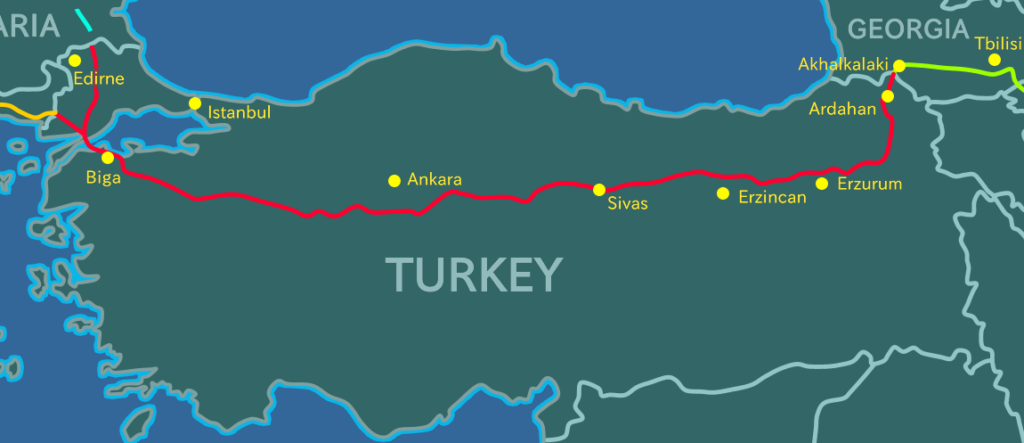
Above: Map of Trans-Anatolian Natural Gas Pipeline
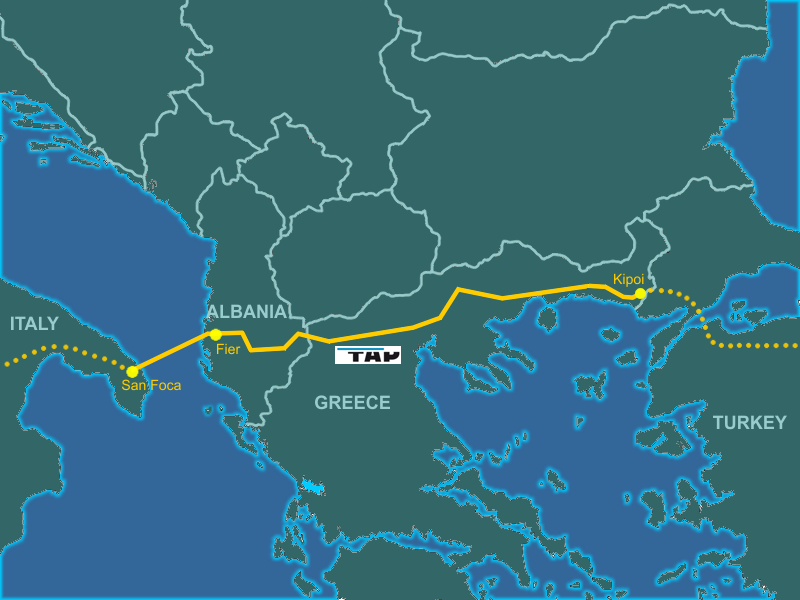
Above: Map of the Trans Adriatic Pipeline
Construction was completed in the mid-2000s, with commissioning beginning in 2006 and commercial deliveries starting later that year.
The pipeline was subsequently expanded through the South Caucasus Pipeline Expansion (SCPX) project, which added compressor stations and looping sections to significantly increase its transport capacity in support of the second phase of the Shah Deniz development.
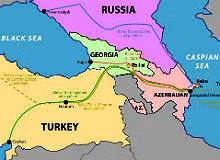
Above: South Caucasus Pipeline expansion
The South Caucasus Pipeline is one of the most significant cross-border energy infrastructure projects in the Caucasus.
It strengthens economic ties between Azerbaijan, Georgia and Türkiye, generates transit revenues for countries along its route, and plays an important role in European energy security by providing an alternative source of natural gas outside traditional supply routes.
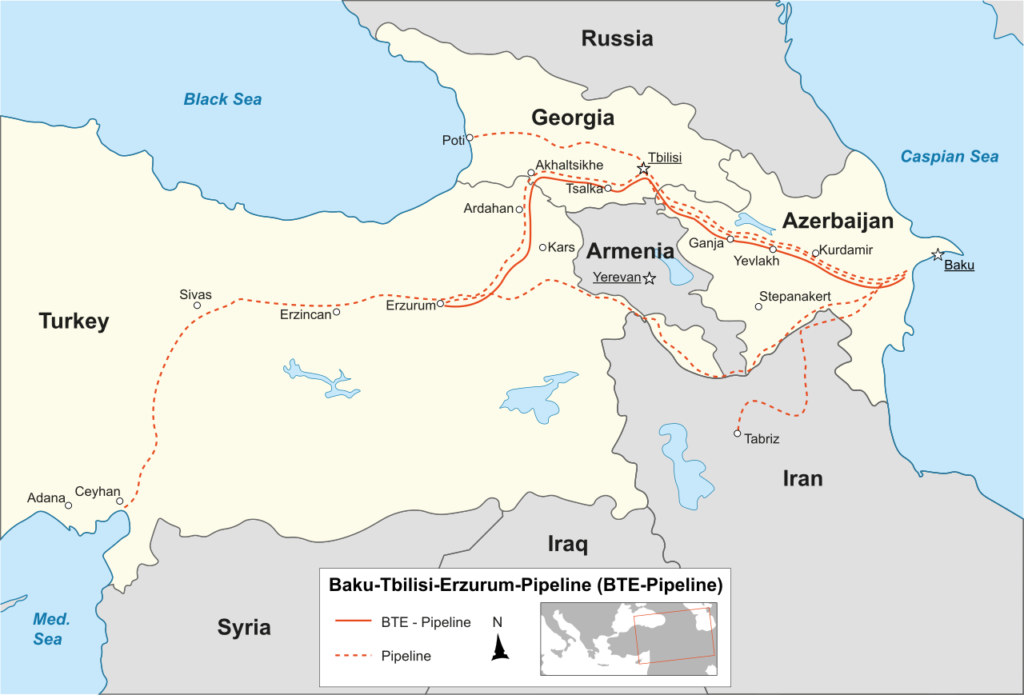
- the Baku–Tbilisi–Kars railway
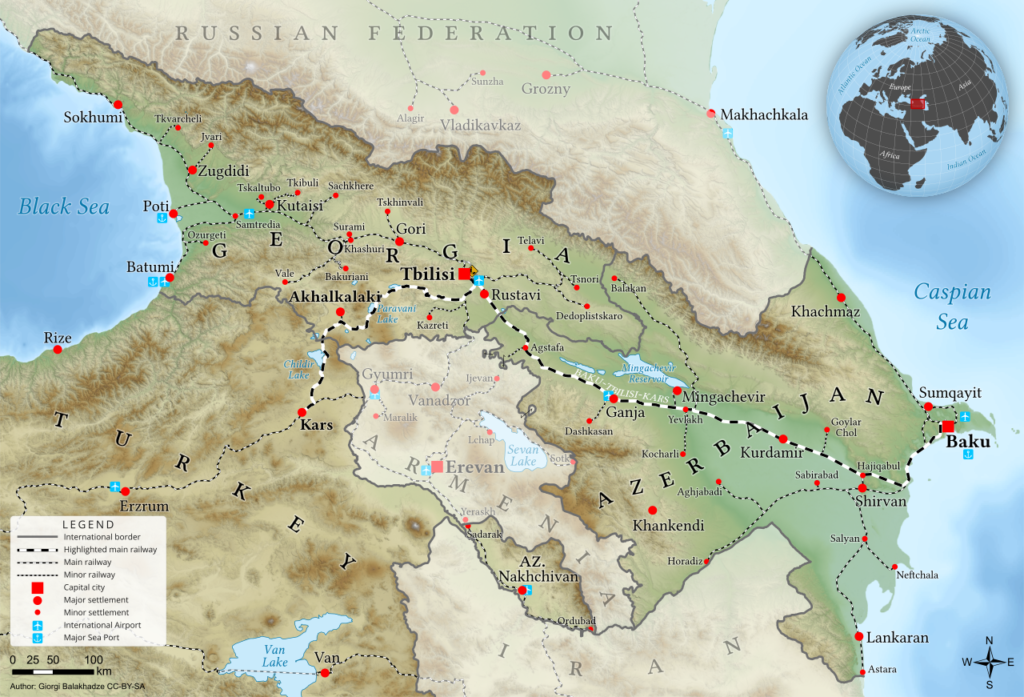
The Baku – Tbilisi – Kars (BTK) railway is an international rail corridor linking Azerbaijan, Georgia and Türkiye by connecting the cities of Baku, Tbilisi and Kars.
Opened in 2017, it has become an important freight route between the South Caucasus and Europe while also supporting regional passenger services and strengthening transport links across Eurasia.
These projects connect the Caspian region with Europe while bypassing Russia.
The railway stretches for roughly 846 kilometers (526 miles) across the three countries, combining upgraded existing track with a newly built cross-border section between Akhalkalaki in Georgia and Kars in Türkiye.
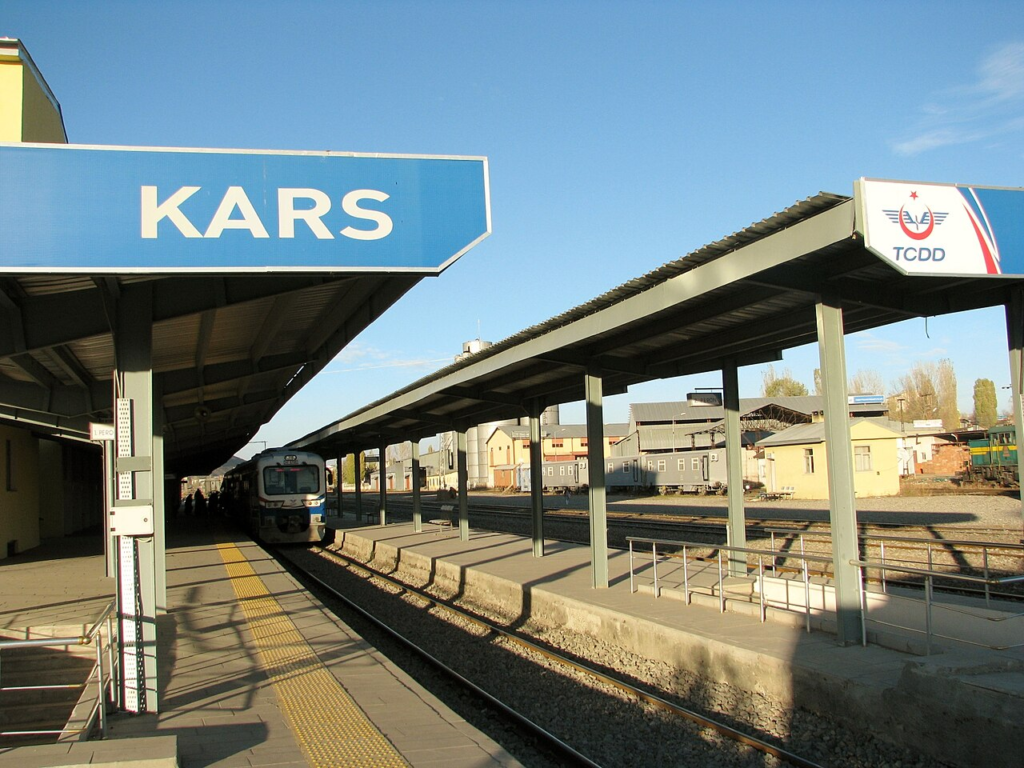
Because the former Soviet rail network uses a broader gauge than Türkiye’s standard-gauge network, Akhalkalaki serves as a key transfer point where freight is transshipped or rolling stock is adapted for onward travel.
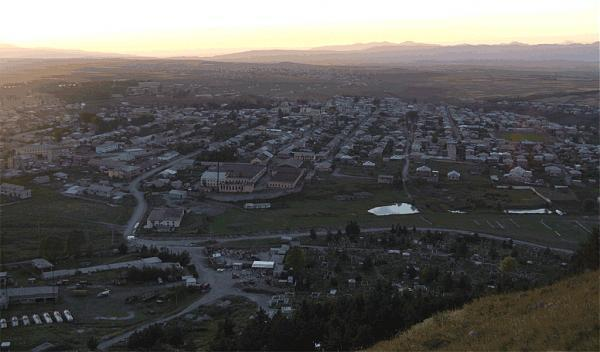
Above: Akhalkalaki, Samtskhe-Javakheti, Georgia
The BTK railway is a major component of the Middle Corridor, a trade route connecting East Asia, the Caucasus, and Europe while bypassing routes through Russia.
Its role has grown as governments and logistics companies have sought diversified overland transport options for containers and bulk cargo.
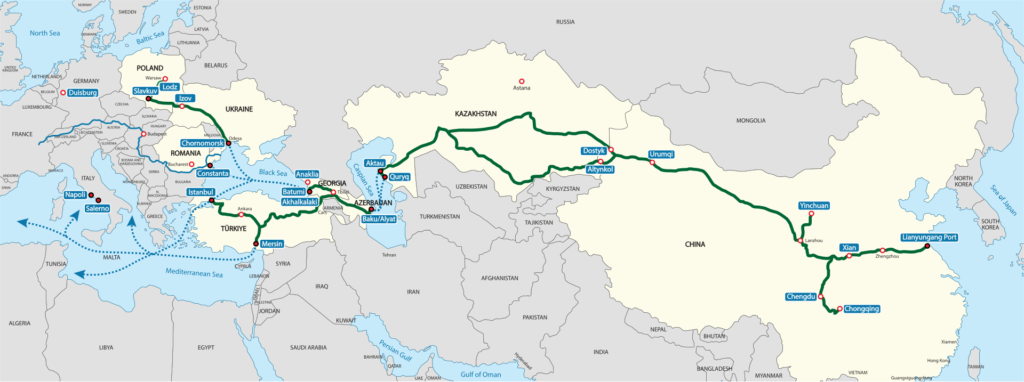
Above: The Middle Corridor / Trans-Caspian International Transport Route
Beyond freight, the railway enhances regional economic cooperation, improves access to ports on the Caspian and Black Seas, and supports broader infrastructure development across the South Caucasus.
Today, the BTK railway primarily serves international freight, carrying containers and other cargo between Central Asia, the Caucasus, Turkish and European markets.
Although passenger operations have been more limited than originally envisioned, the corridor remains a strategically significant piece of regional transport infrastructure because it expands cross-border rail connectivity and provides an alternative route for Eurasian trade.
Although Georgia is not a NATO member, Türkiye has consistently supported Georgia’s Euro-Atlantic aspirations.
Above: Logo of the North Atlantic Treaty Organization
Turkish military cooperation includes:
- officer training,
- joint exercises,
- defence cooperation.
Again, this is less about ideology than regional stability.
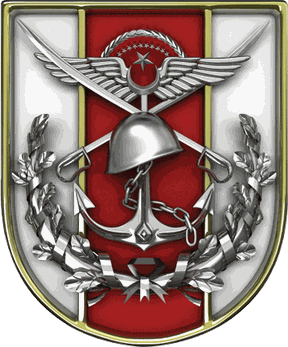
Above: Seal of the Turkish Armed Forces
The relationship wasn’t always this cordial.
For centuries, parts of southwestern Georgia belonged to the Ottoman Empire.
The regions around Batumi and Adjara changed hands several times between the Ottoman and Russian Empires.
As a result:
- many Georgians have ancestors who lived under Ottoman rule;
- many Turkish families in Artvin and Rize have Georgian ancestry;
- cultural influences flow in both directions.
The modern relationship, however, is forward-looking rather than dominated by historical grievances.
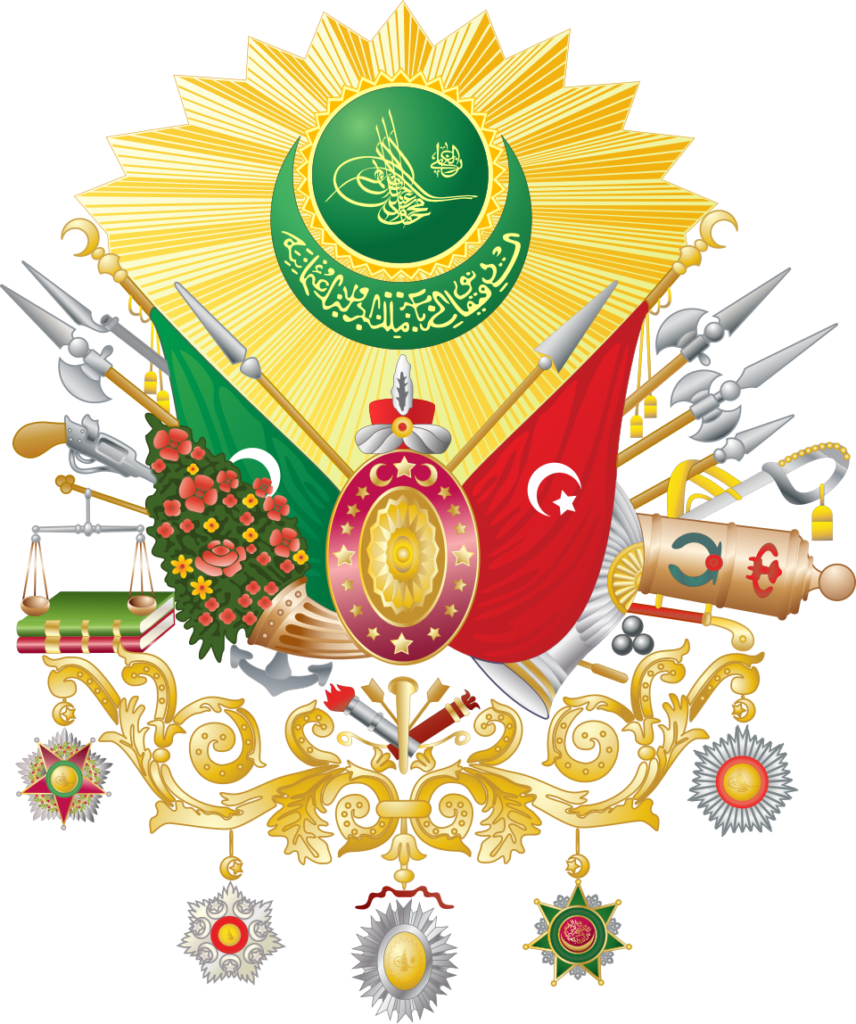
Above: Coat of arms of the Ottoman Empire (1299 – 1922)
My bus ride from Rize to Batumi crossed far more than a political frontier.
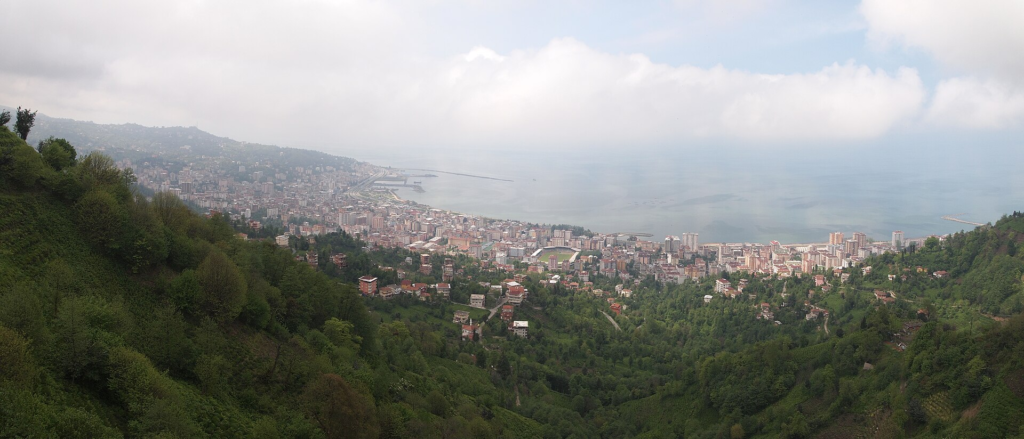
Above: Rize, Rize Province, Türkiye
On the Turkish side, I was leaving a country where the call to prayer, Turkish flags, and portraits of Atatürk formed the familiar landscape.
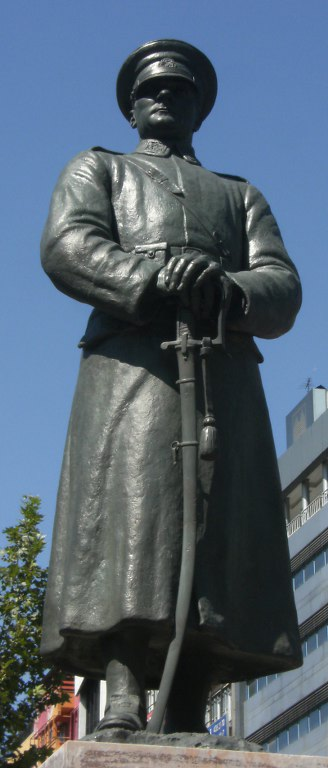
Above: Statue of Atatürk, Ankara, Türkiye
Within minutes of crossing into Georgia, the atmosphere shifted.
The language changed.
The script became the graceful curves of the Georgian alphabet.
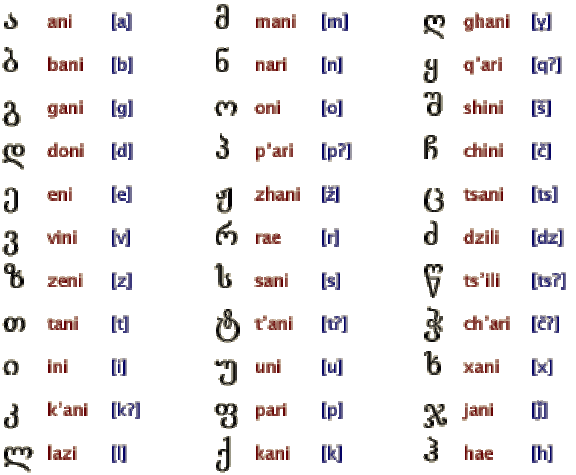
Above: The Georgian alphabet
The dominant churches became Orthodox rather than mosques.
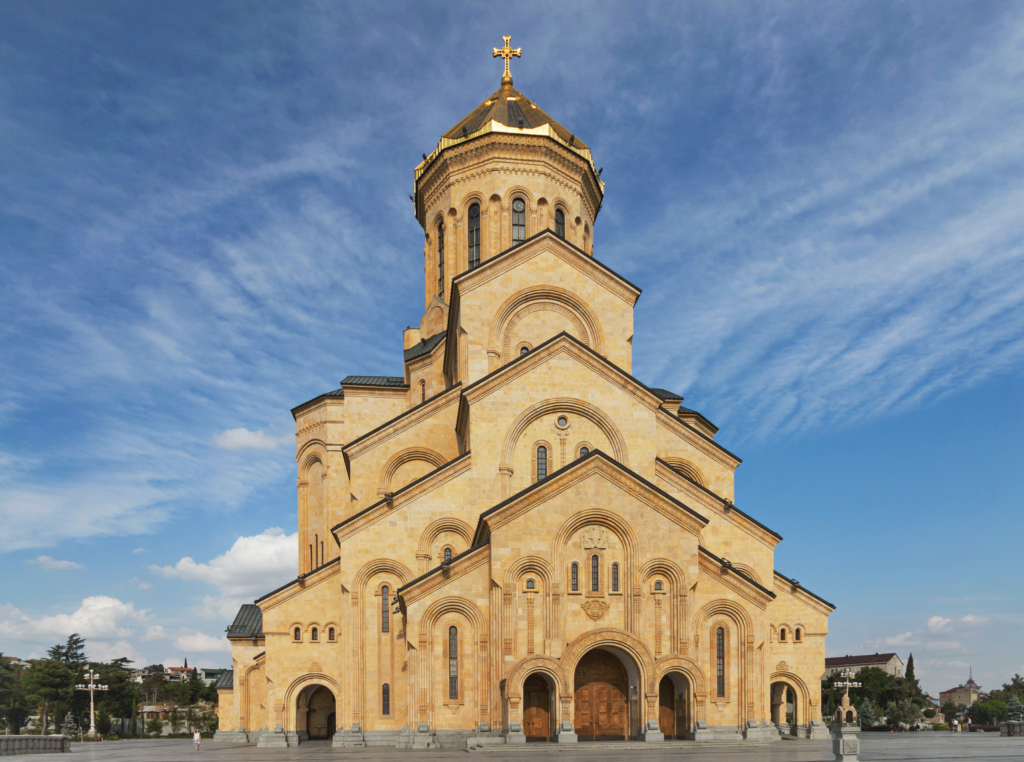
Above: Georgian Orthodox Holy Trinity Cathedral, Tbilisi, Georgia
The architecture and rhythms of public life subtly altered.
Yet economically, the two sides remain deeply intertwined.
That’s one of the fascinating paradoxes of the Sarpi border:
It separates two distinct civilizations while connecting two closely cooperating neighbours.
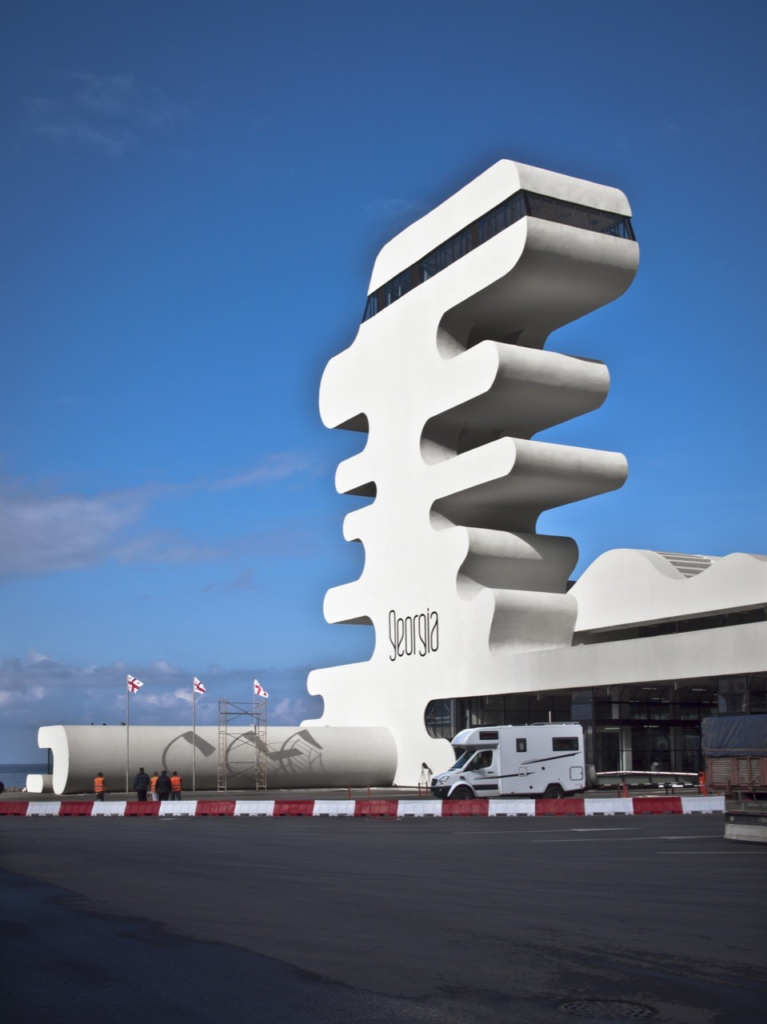
Above: Sarpi Border Crossing
As someone travelling by bus, I experienced both realities in the space of half an hour.
That paradox captures something that borders often do:
They divide identities while simultaneously creating places of exchange.
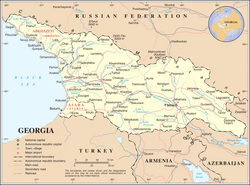
The Sarpi Border Crossing is the principal land crossing between Georgia and Türkiye on the Black Sea coast, located in the village of Sarpi about 12 km south of Batumi.
It is one of the busiest international gateways in the South Caucasus, serving tourists, freight traffic and cross-border commuters while connecting Georgia with northeastern Türkiye.
Situated where the European route E70 reaches the Georgian–Turkish frontier, the crossing links Sarpi, Georgia with Sarp, Türkiye.
Because of its coastal location and proximity to Batumi, it is the primary road connection between the two countries and an important route for regional trade and tourism.
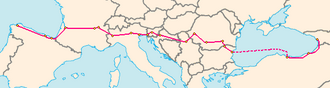
Above: European route E70 is an A-Class West-East European route, extending from A Coruña in Spain in the west to the Georgian city of Poti in the east.
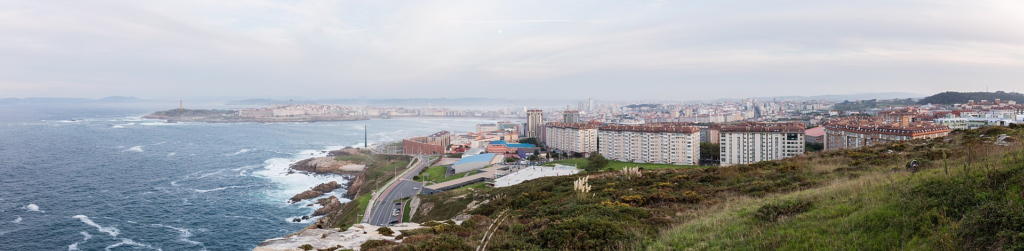
Above: A Coruña, Galicia, España
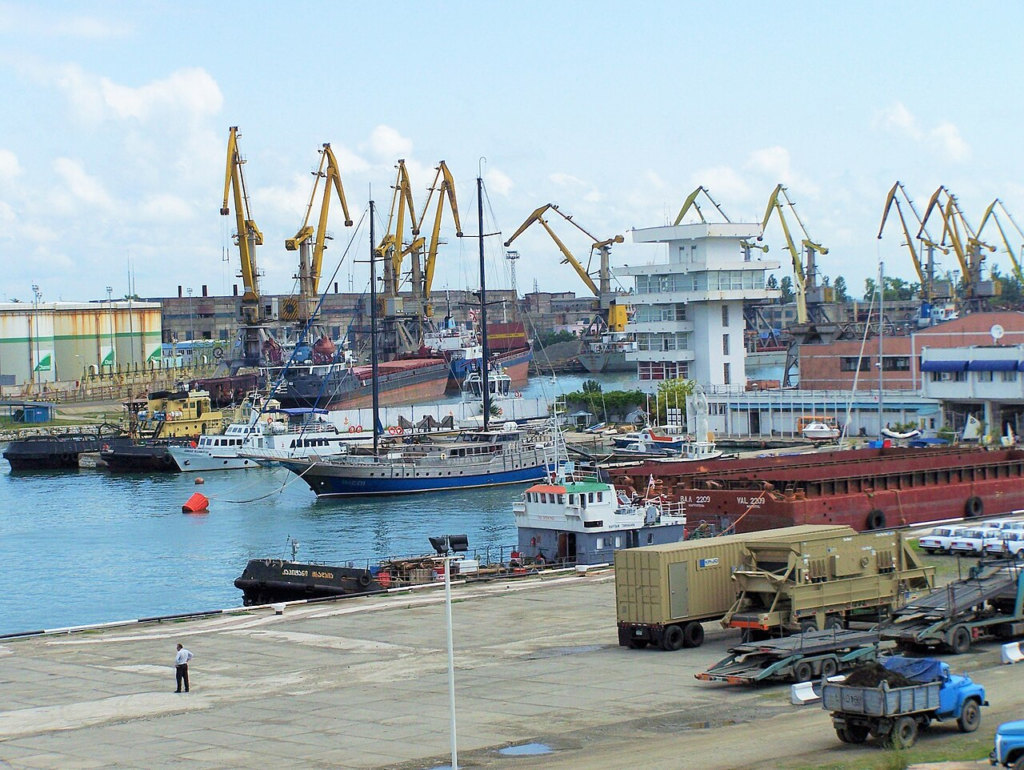
Above: Poti, Samegrelo-Zemo Svaneti, Georgia
Ugly administration buildings split the border between Sarp, Türkiye and Sarpi, Georgia.
Everyone is ordered to disembark and take all our belongings with us.
It feels like a scene from a recruitment movie or a prison picture.
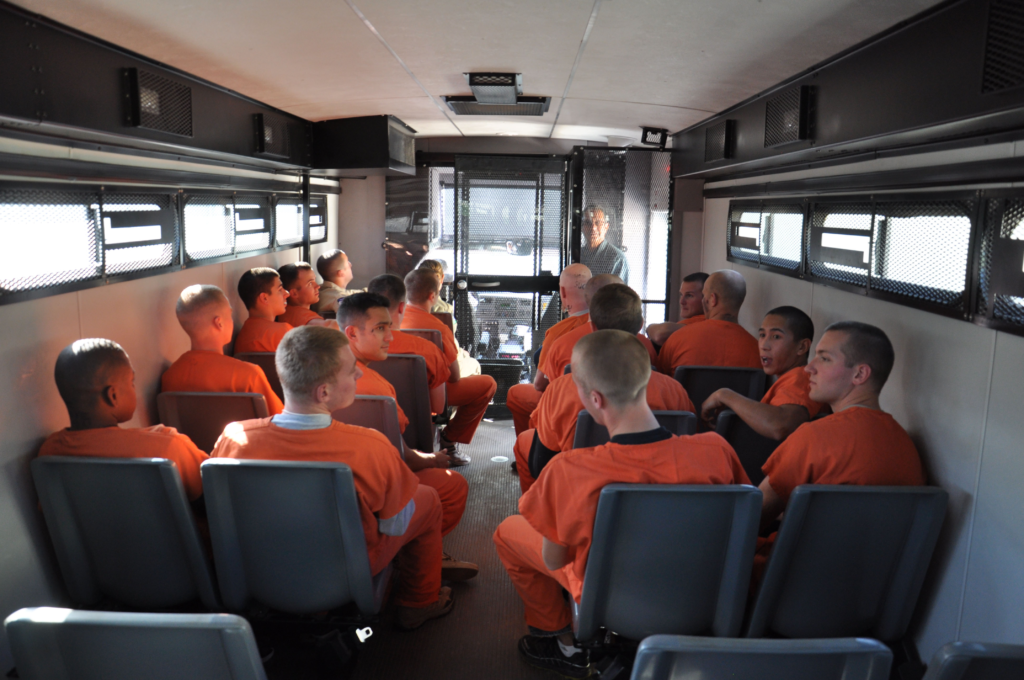
Take everything you own.
Beyond the bus doors, your fate awaits.
We march into doorways, up and down sets of stairs, ride moving inclines that function and walk those that don’t.
And then, the moment of truth.
Will the Turkish border guard give me grief?
He does.
Above: Logo of Turkish Customs
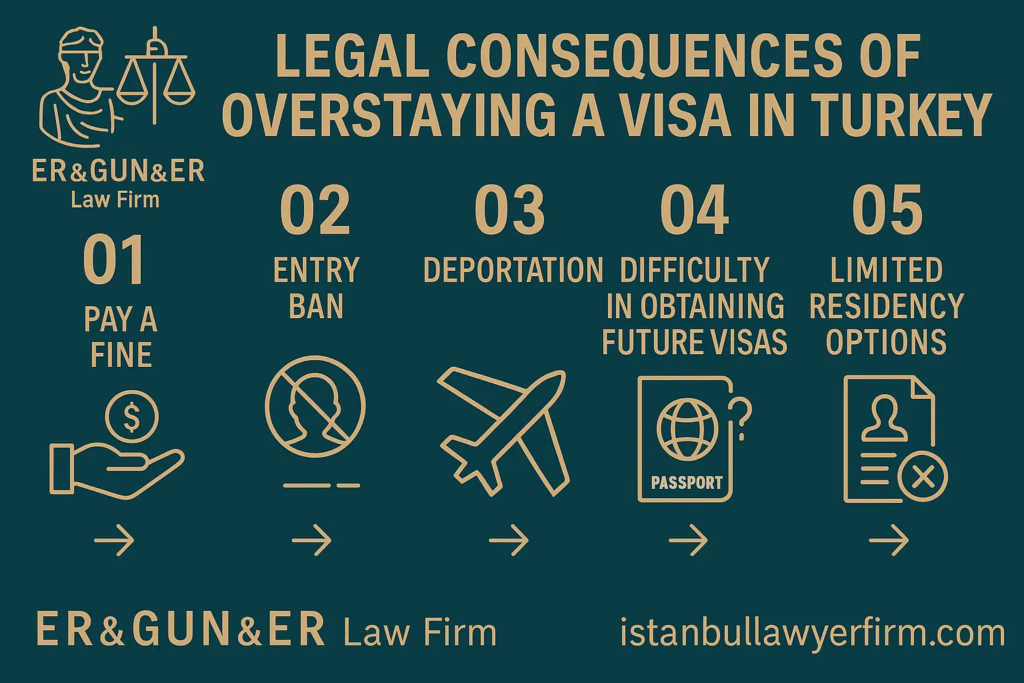
I am told to march to a door with the words “Visa Violation Office“.
I protest.
“But I am a tourist until 13 May.
Today is 11 May.”
I knock on a locked door that goes unanswered.
How long will I have to wait?
I don’t know.
Will I have to pay another TL 13,000 fine?
Something I had to do twice before.
I don’t know.
Ten minutes pass.
The customs officer dashes over to me and apologizes.
He had made a mistake.
I am free to leave without penalty, though I am reminded that I am allotted 90 days every 180 days in Türkiye, meaning I need to wait 90 days beyond my birthday (14 May) before I can re-enter the country.
I am relieved.

In this grey nether zone between nations a duty-free shop stands.
I am not in the mood for shopping.
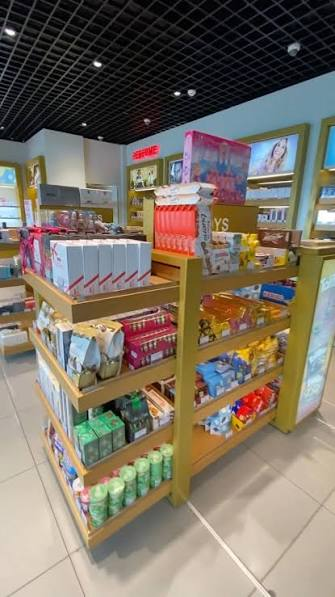
Above: Mini Duty Free shop, Sarp / Sarpi Border
I approach the Georgian customs officer.
I am ready.
Passport in one hand.
My phone open for showing my travel insurance policy that was officially required and duly worried and purchased.
The passport is stamped with no fanfare.
A viewing of the policy is not requested.
I am now in Georgia.
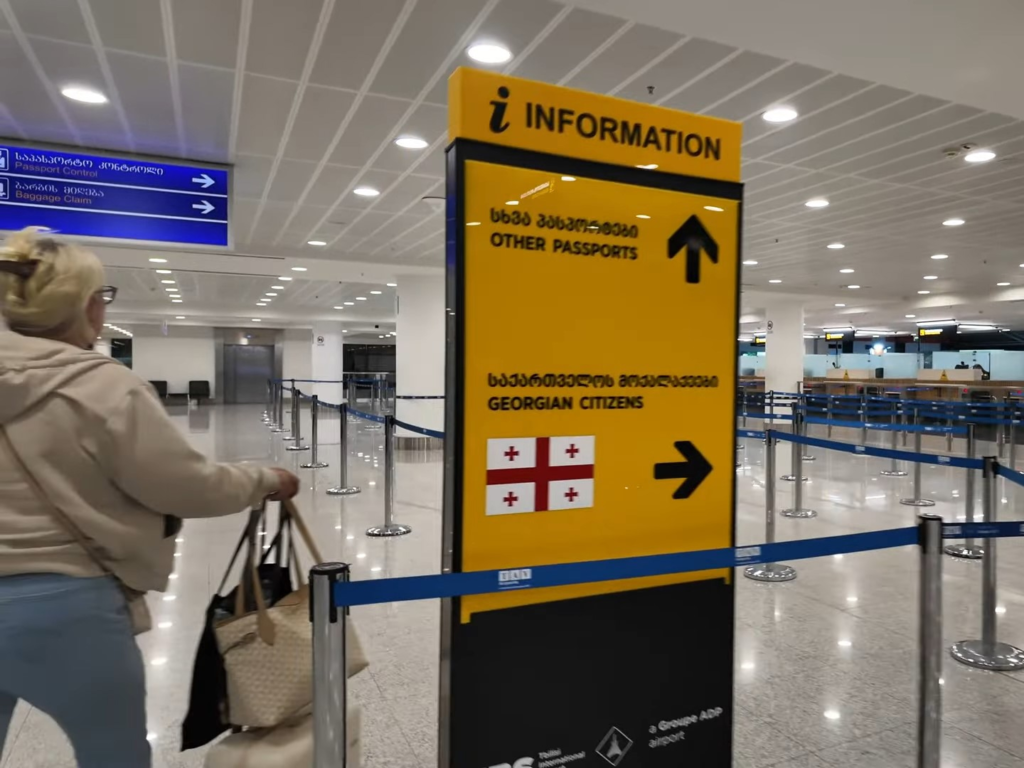
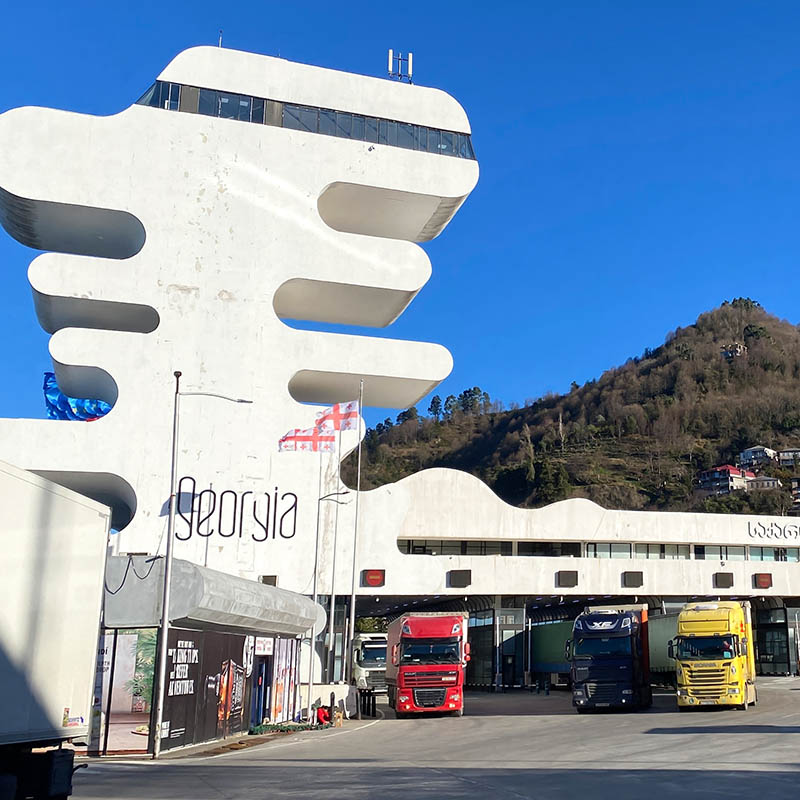
The Georgian customs terminal is notable for its striking contemporary design by German architect Jürgen Mayer, making it recognizable even to travelers who are simply passing through.
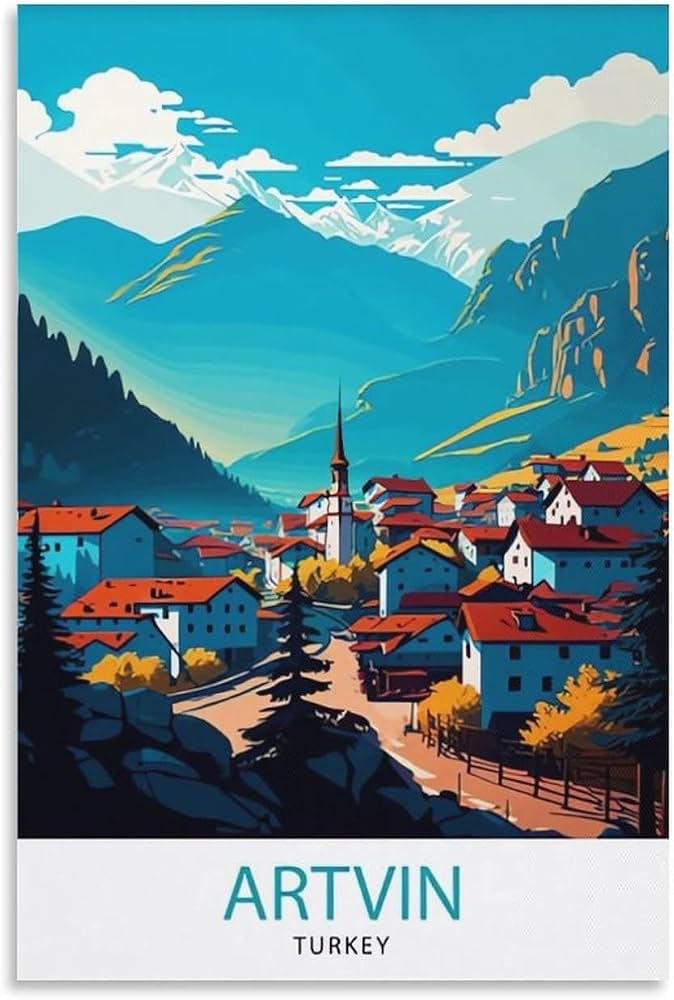
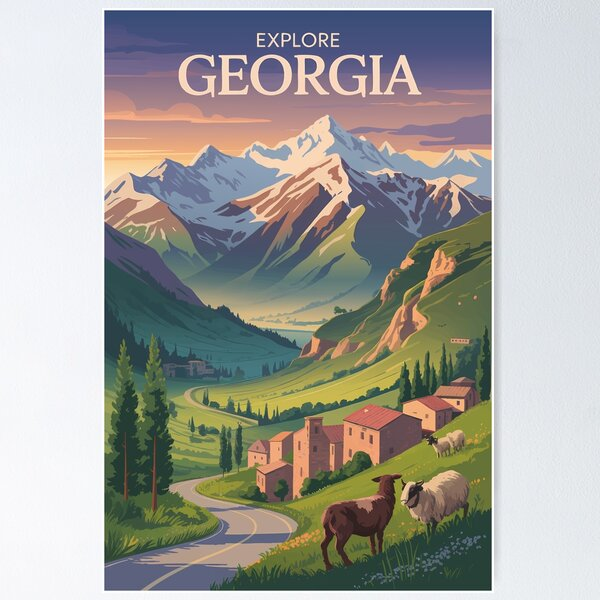
Where before posters of the majesty of Artvin led me to Turkish customs, now posters heralding the glory of Georgia lead away from Georgian customs.
I emerge into Sarpi.
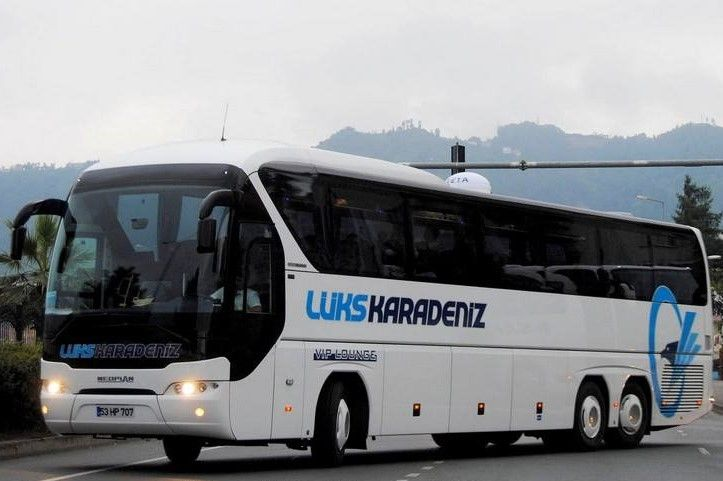
Where Sarp was a giant mosque and people herding around the entrance of the admin building, here Sarpi displays a huge cross, a multitude of taxis and money exchange kiosks and another Luks Karadeniz bus waiting for what straggling passengers may emerge from the bowels of bureaucracy.
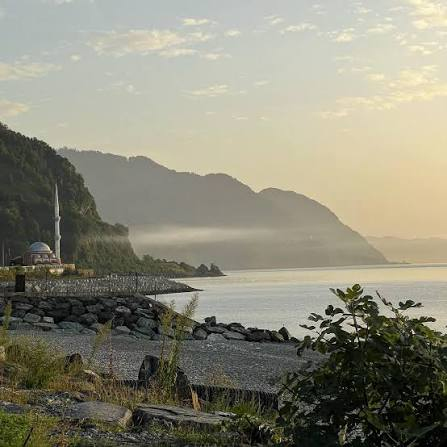
Above: Sarp seen from Sarpi
I show my e-ticket, sit in the same seat (19) and release my breath.
The crossing operates around the clock.
Pedestrians as well as vehicles can cross here, making it a popular option for day trips between the Georgian cities of Batumi or Tbilisi and the Turkish cities of Rize or Trabzon.
The checkpoint sits directly beside the Black Sea, giving it an unusual setting where a beach lies only a short walk from the international border.
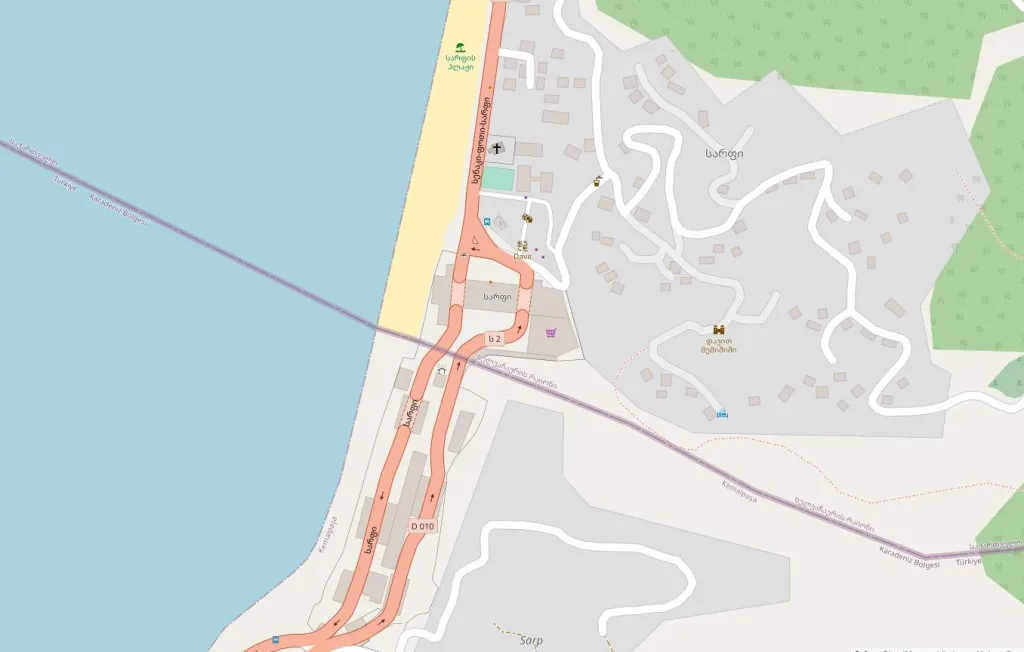
Nearby attractions include Sarpi Beach, the Andrew the First-Called Waterfall, and the village’s Laz cultural heritage.
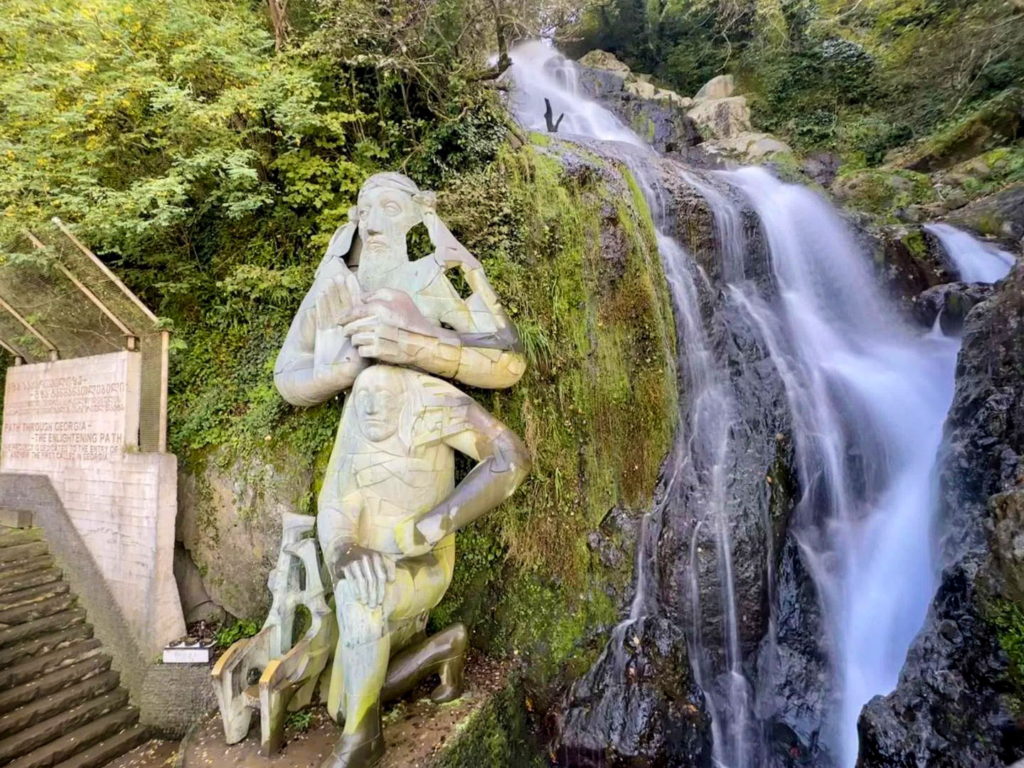
Above: Andrew the First-Called Waterfall, Sarpi
From the Georgian shoreline, visitors can often see the Turkish coastline and nearby settlement across the frontier.
Unlike many remote border posts, Sarpi combines modern infrastructure, distinctive architecture, and a scenic coastal setting.
Its location makes it both a practical transportation gateway and an interesting stop for travellers exploring Georgia’s Black Sea coast or traveling overland between Georgia and Türkiye.
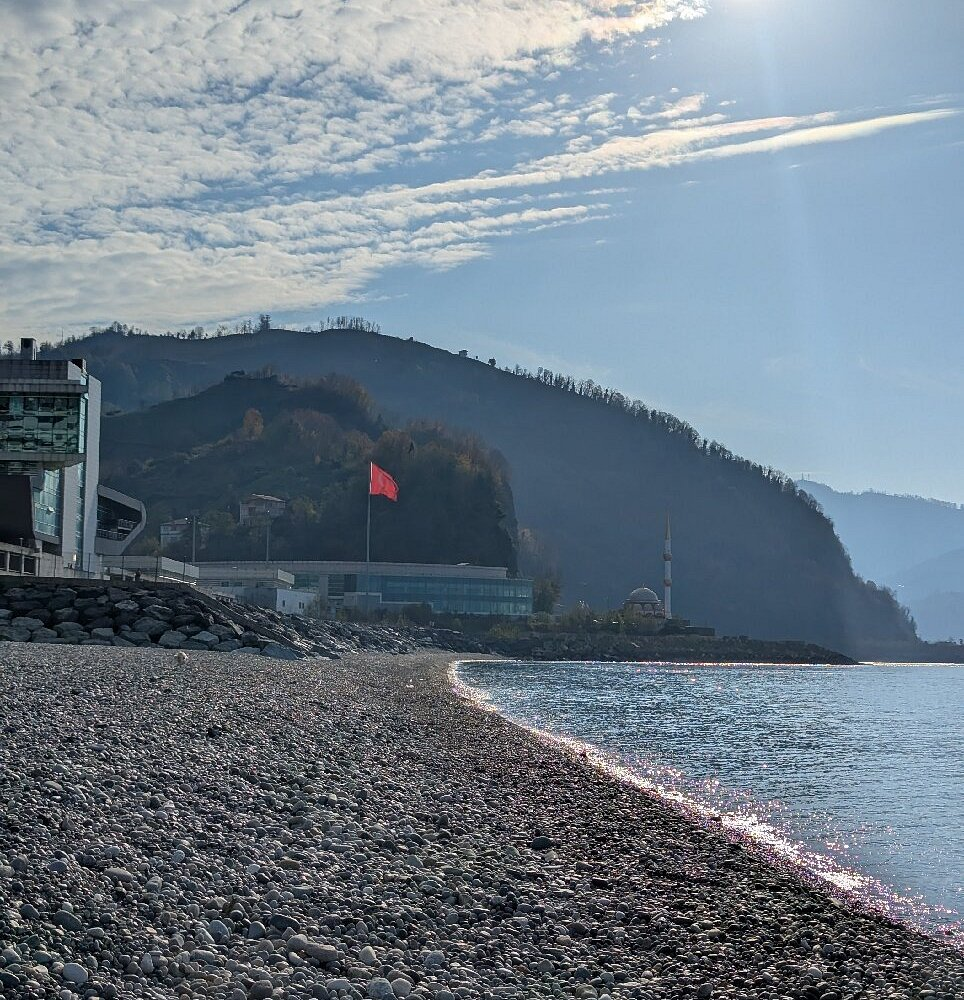
Above: Sarpi Beach, Georgia
What is the same and what is different about the two countries?
Hospitality
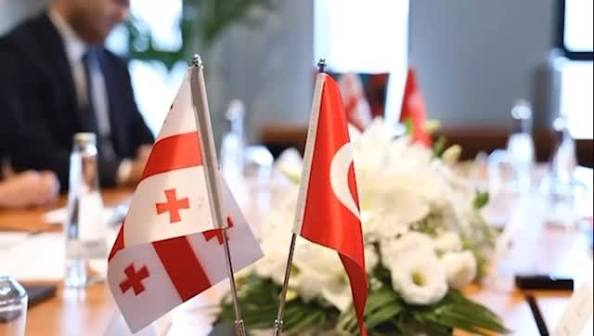
Both Turks and Georgians generally take pride in welcoming guests.
The forms differ, but the instinct is similar.
In Türkiye, hospitality often expresses itself through endless offers of tea, food, and conversation.
In Georgia, hospitality has a more ceremonial quality, reaching its highest expression in the supra, where the guest occupies a place of honour.
In both countries, relationships often matter more than formal rules.
Family
Both societies place considerable importance on family.
Parents remain influential well into adulthood.
Extended families are closer than in much of northern Europe.
Respect for elders remains a visible social expectation.
Religion
The religions differ, but both countries are shaped by faith.
Türkiye’s landscape is marked by mosques.
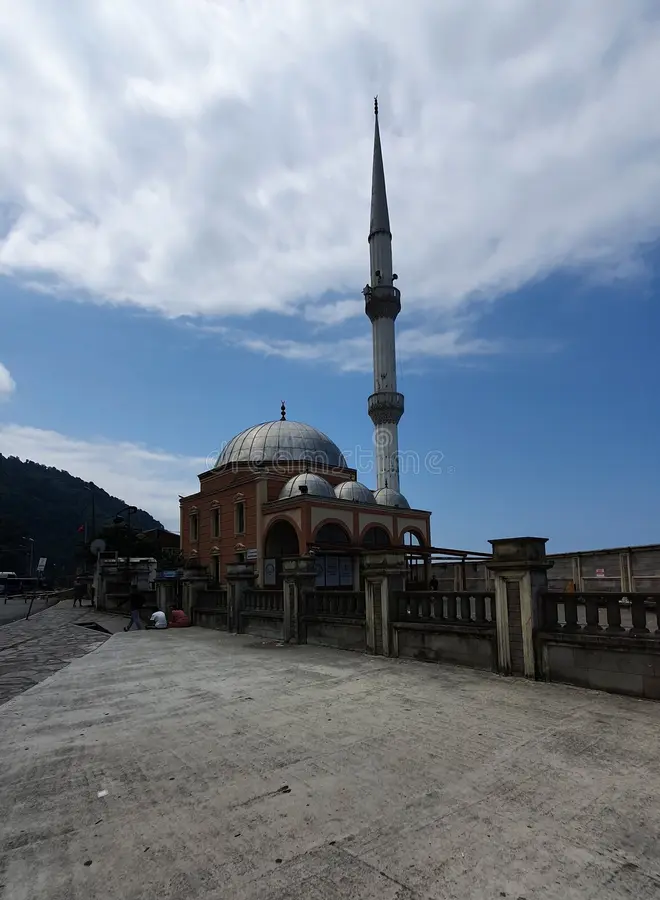
Above: Mosque (camii), Sarp, Türkiye
Georgia’s landscape is marked by Orthodox churches, monasteries, and roadside crosses.
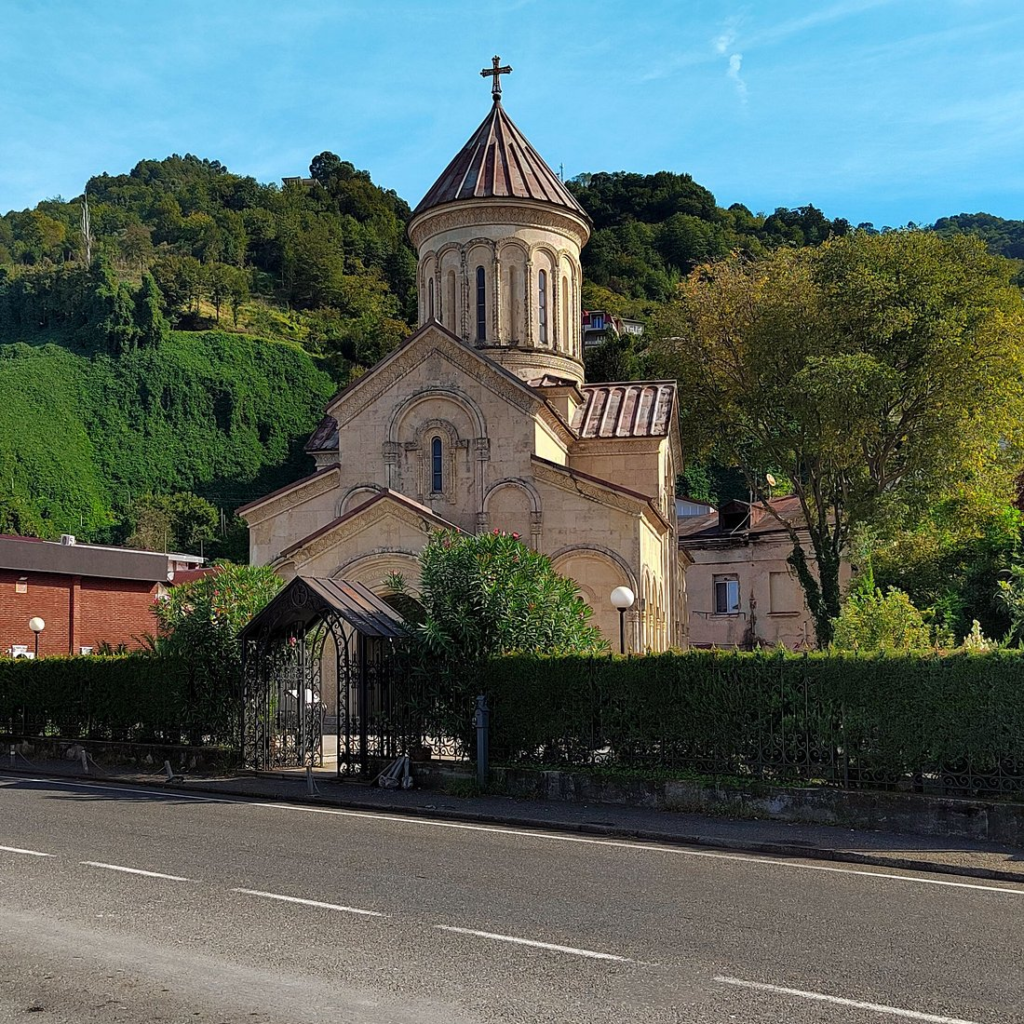
Above: St. Andrew the Apostle Georgian Orthodox Church, Sarpi
Even among less observant people, religion often functions as part of national identity.

Above: Icons of various religions – Hinduism, Buddhism, Jainism, Sikhism, Judaism, Christianity and Islam.
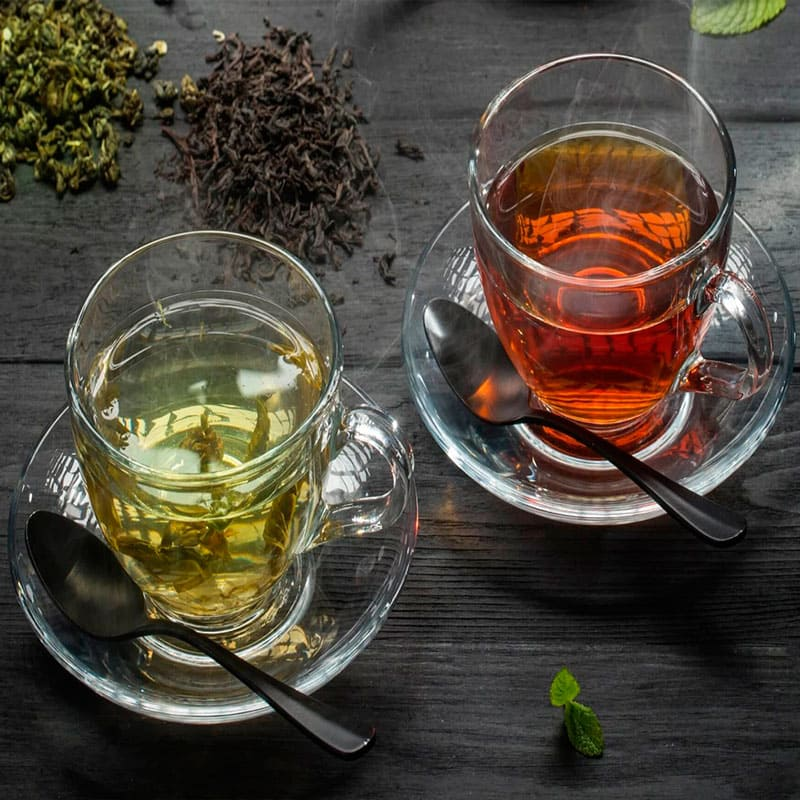
Tea
Rize is synonymous with tea.
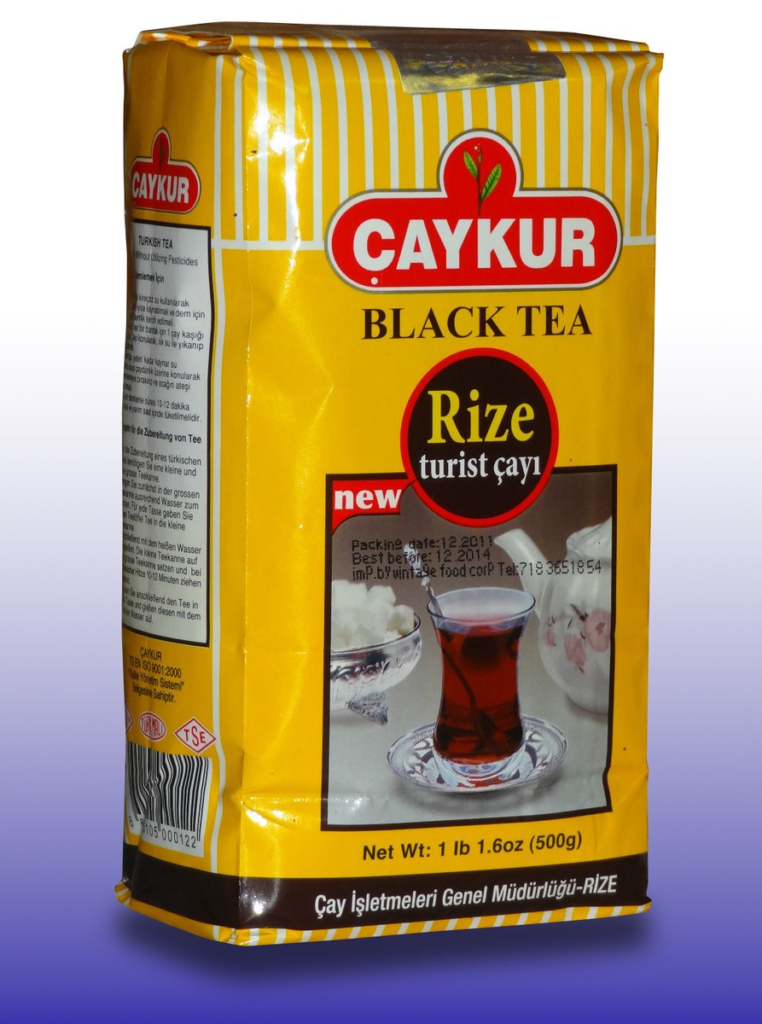
Western Georgia also drinks tea, much of it historically grown around Batumi and Ozurgeti.
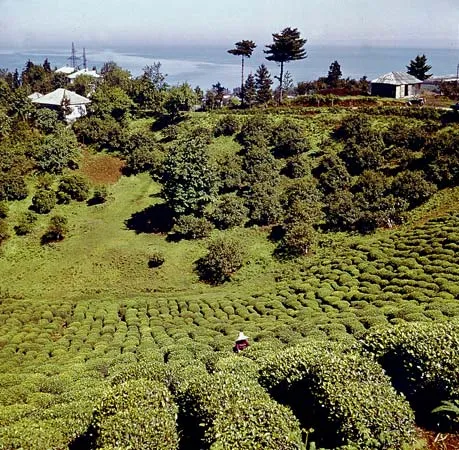
Above: Batumi tea plantation
Tea is not merely a beverage.
It slows conversation.
Mountains
The mountains shape both peoples.
The eastern Black Sea coast of Türkiye and western Georgia share remarkably similar geography:
- steep valleys,
- dense forests,
- heavy rainfall,
- villages clinging to hillsides.
Nature doesn’t recognize political frontiers.
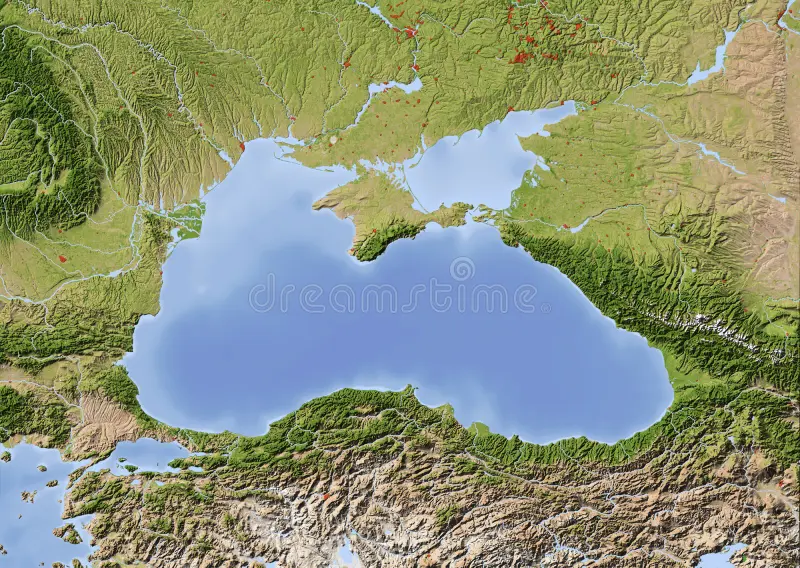
Above: Black Sea topographical map
The rhythm of life
This is perhaps the greatest difference.
Türkiye often feels energetic.
Markets buzz.
Traffic pushes forward.
Commerce is constant.
Georgia, by contrast, often feels slower.
People linger.
Meals last longer.
Waiting is accepted more readily.
That contrast became very personal for me during my job search.

Public order
Switzerland trains your eye to notice order.
Türkiye often combines order with intensity.
Georgia, in comparison, sometimes feels improvisational.
Things frequently work — but not always according to written procedures.
This can be charming or frustrating, depending on the situation.

National temperament
This is, of course, a broad generalization.
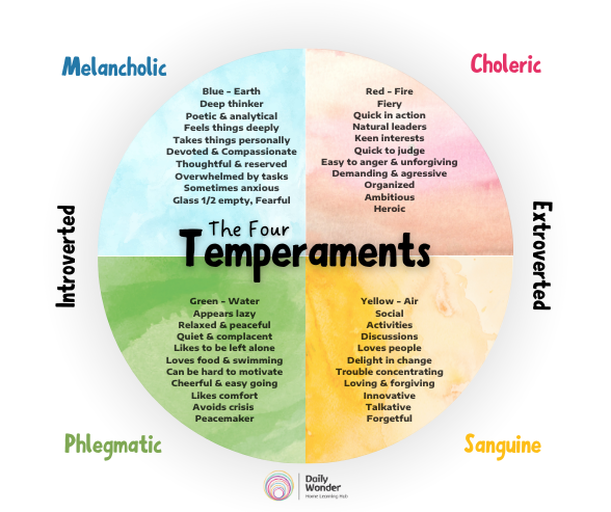
Turks often appear expressive, proud, energetic and quick to debate.
Georgians often seem quieter at first meeting, more reserved, but capable of extraordinary warmth once trust develops.
I would notice this myself during my visits to schools.
Historical outlook
Türkiye is the successor state to the Ottoman Empire.
It carries memories of imperial greatness.
Georgia carries a different historical consciousness.
Its story is one of preserving identity despite repeated domination by larger neighbours.
That history helps explain the prominence of national heroes, churches and language in Georgian public life.
Urban atmosphere
Batumi and Trabzon feel different.
Turkish cities often possess a certain commercial intensity.
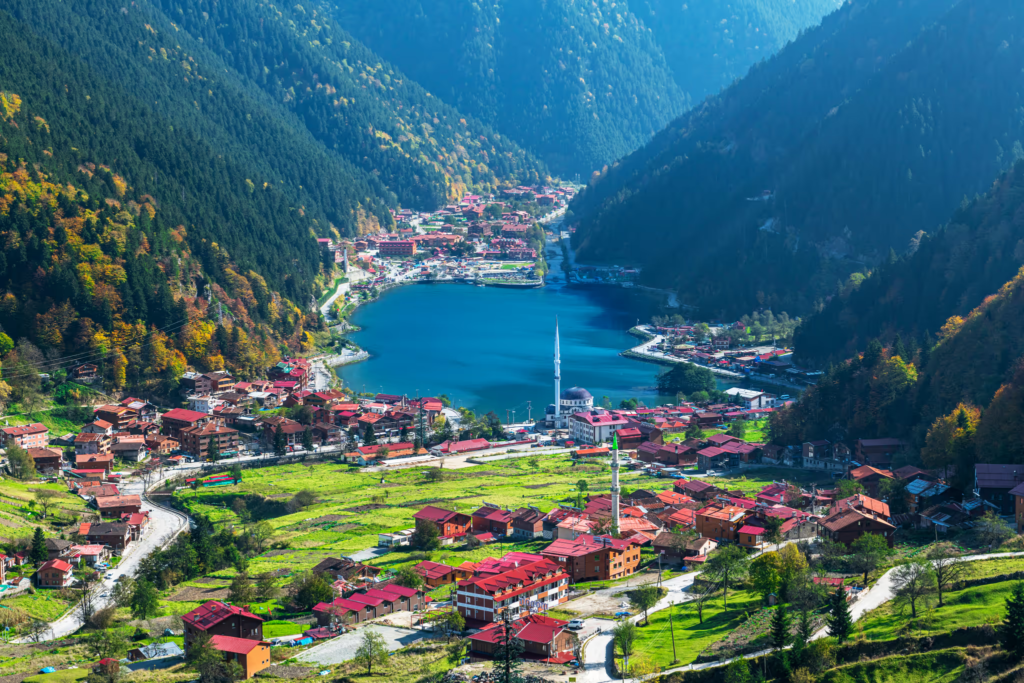
Above: Trabzon, Türkiye
Batumi feels more leisurely, almost theatrical in places — a city of promenades, cafés and sea air.
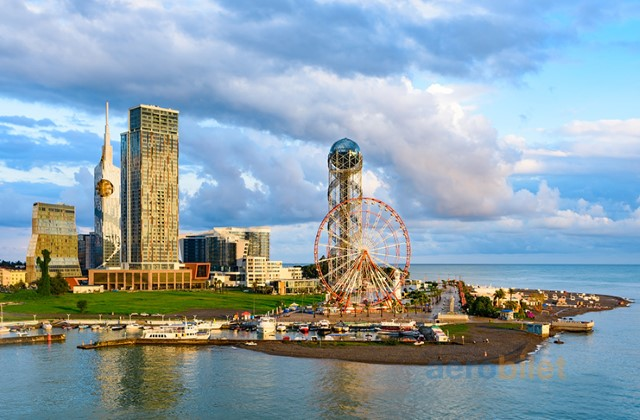
Above: Batum,, Adjara, Georgia
Tbilisi differs even more, with its blend of medieval lanes, Soviet apartment blocks, Art Nouveau façades and modern glass architecture.
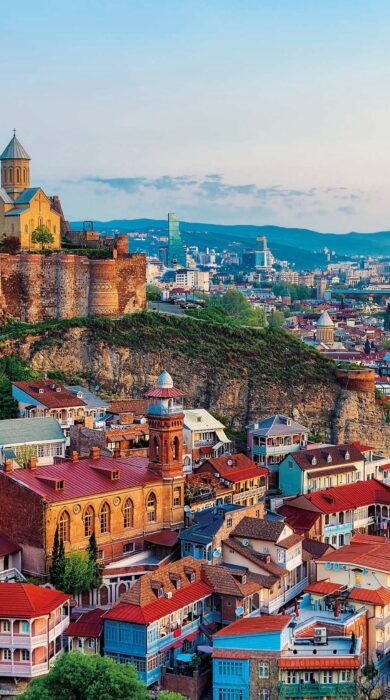
Above: Tbilisi, Georgia
Language
Turkish sounds rhythmic and flowing.
Georgian sounds unlike almost anything else.
Its unique script immediately tells you that you have entered another cultural world.
As a traveller, that visual transition is one of the most striking moments after crossing the border.
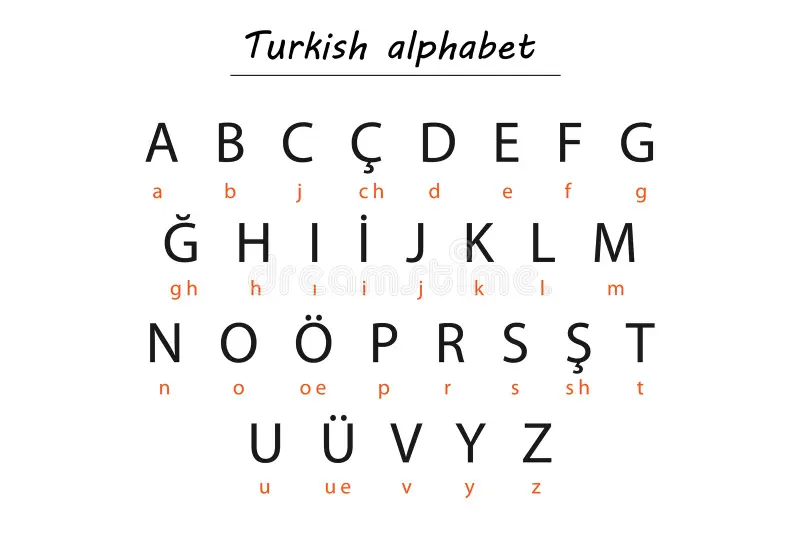
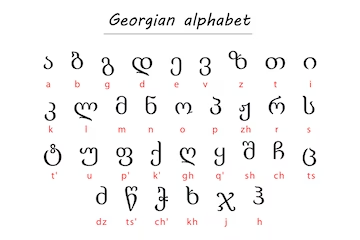
The greatest border isn’t geographical.
It is psychological.
I left a country where, despite the frustrations you experienced, you knew how everyday life worked.
I understood the unwritten rules.
Crossing into Georgia meant becoming a beginner again — not only in language, but in expectations, bureaucracy and social rhythm.
That experience gave my journey a depth that many tourists never encounter.
Borderline Playlist
The Doors – Break on Through
Willie Clayton – That Wall
AKB48 – River
Studio Killers – Ode to the Bouncer
The KVB – White Walls
Duckworth Lewis Method – Mason on the Boundary
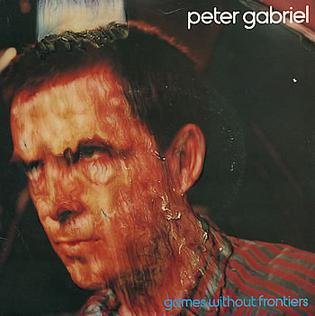
Peter Gabriel – Games Without Frontiers
The Invitations – Written on the Wall
Todd Snider – Prison walls
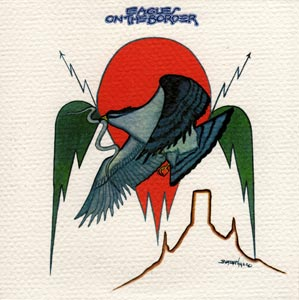
The Eagles – Desperado
Al Stewart – On the border
Bruce Springsteen – Matamoras banks
Dorantes – Sin muros ni candados
PJ Harvey – A Line in the Sand
“Everyone has the right to freedom of opinion and expression. This right includes freedom to hold opinions without interference and to seek, receive and impart information and ideas through any media and regardless of frontiers.”
United Nations, Universal Declaration of Human Rights
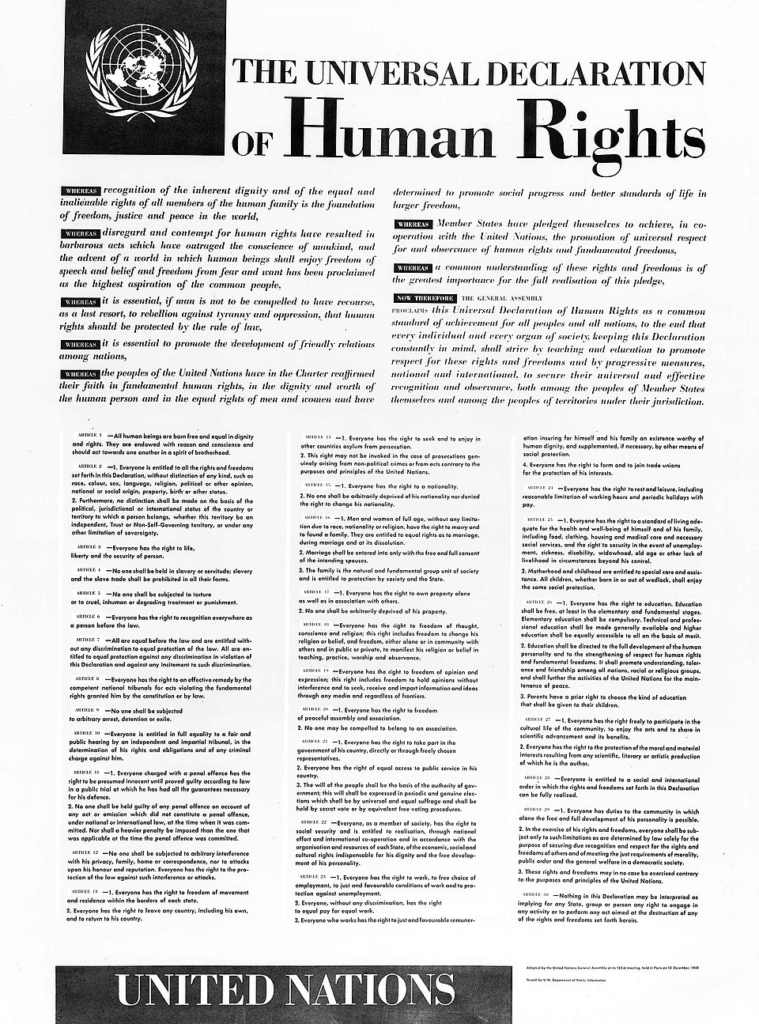
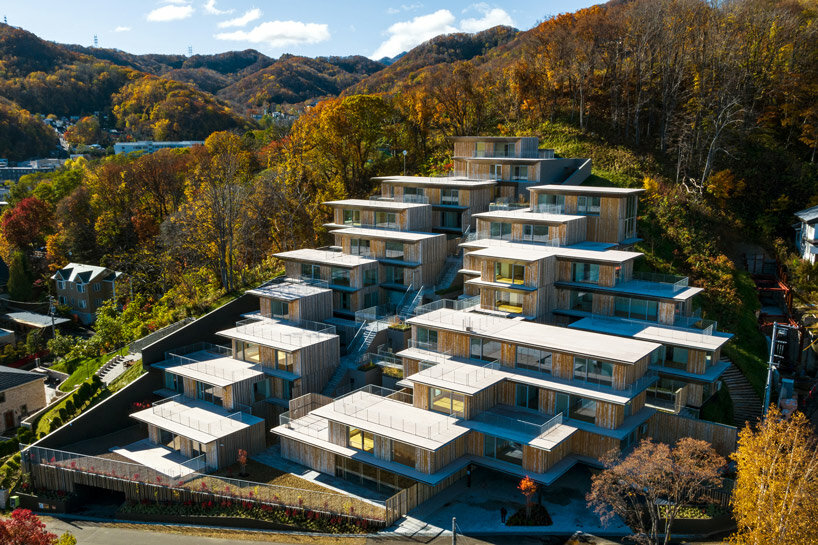
Türkiye and Georgia resemble two neighbouring houses built on the same mountainside.
They share the same rain, the same forests, and many of the same guests, yet each family has decorated its home according to a very different history.
On the level that mattered at the border and the different customs officials, what is the same and what is different about visas in Türkiye and Georgia?
This is an excellent question because it gets at something that many travellers overlook.
A visa is not simply a bureaucratic document.
A visa reflects how a state sees foreigners.
Both countries are sovereign.
The customs and immigration officers have one primary responsibility:
To determine whether you have the legal right to enter.
Their first concern is not whether you’re a teacher, a tourist or a writer.
It is simply:
“Are you entitled to cross this border today?”
Everything else comes afterwards.
Both record your movements.
Every entry and exit is recorded electronically.
Neither country simply waves people through.
Whether travelling from Switzerland, Canada or elsewhere, the state knows when you entered and when you departed.
The officer exercises discretion.
Even when the rules appear straightforward, the officer at the booth has some discretion.
A traveller who is polite, prepared, and able to answer questions calmly usually finds the process smoother than someone argumentative or evasive.
That is true almost everywhere in the world.
Türkiye distinguishes quite carefully between:
- tourists
- residents
- students
- workers
If you wish to stay beyond the permitted tourist period, you generally need the correct residence or work authorization.
My own difficulties arose precisely because my legal status changed from a simple tourist matter into a residence and employment matter.
Once that happened, immigration law became much more detailed and less flexible.
Georgia has deliberately adopted a much more liberal approach toward visitors from many countries, including Canada.
For Canadians, entry is generally straightforward, with a generous visa-free period for tourism and many other short-term purposes.
The country has used this openness as part of its strategy to encourage tourism, business and foreign investment.
For someone arriving at Sarpi, the process can therefore feel remarkably uncomplicated.
That simplicity was probably one of the first things I noticed after the months of immigration worries in Türkiye.
Working is a separate matter.
This is the important distinction.
Entering Georgia is relatively easy.
Working legally is another question.
The border officer is interested primarily in your right to enter.
Your future employer is interested in whether you can be employed legally under Georgian labour and immigration rules.
Those are different processes.
When I crossed from Türkiye into Georgia, I wasn’t simply presenting a passport.
I was leaving behind months of anxiety over visas, residence permits, work permits, ministries, deadlines and fines.
At Sarpi, the Georgian officer represented something quite different.
Instead of asking:
“Why are you still here?“
The implicit question became,
“Welcome. How long do you intend to stay?“
That is a profoundly different emotional experience.

The Turkish officer studied my passport carefully, as though reading the final chapter of a long story.
A few minutes later, his Georgian counterpart opened it, stamped a fresh page, and handed it back with barely a word.
The formalities were over in moments.
It struck me that borders are crossed not only by buses and travellers, but by expectations.
On one side, I was leaving behind months of immigration anxiety.
On the other, at least for the moment, I was simply a visitor.
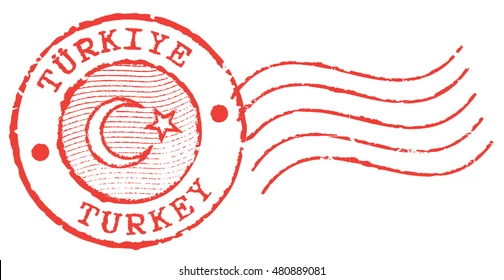
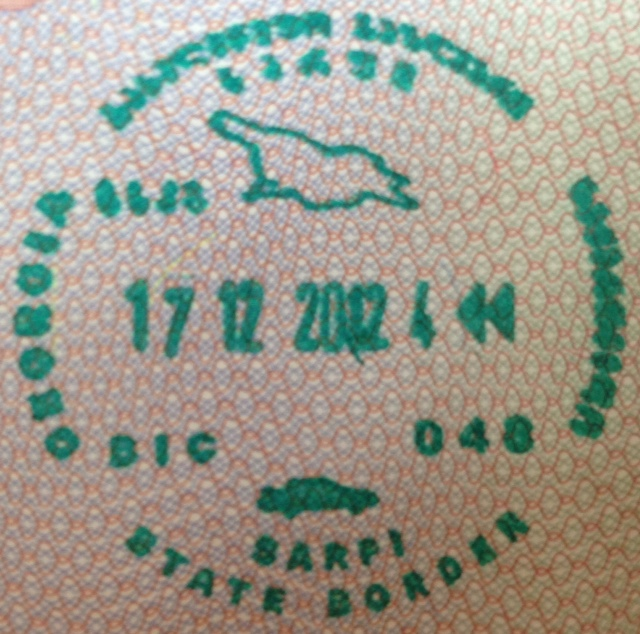
Sarp (Turkey) is the Turkish village in Artvin Province.
It is the last settlement before leaving Türkiye.
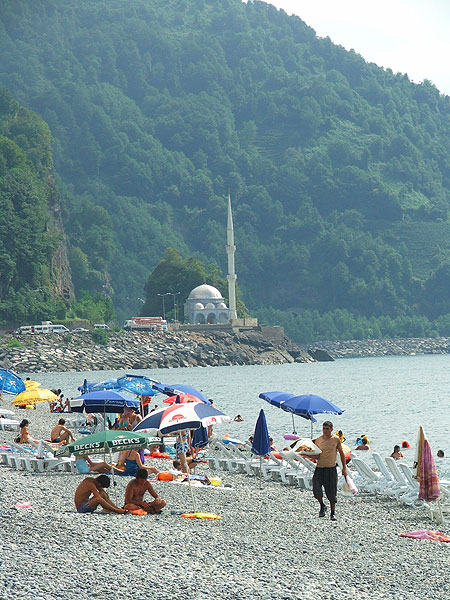
Above: Sarp, Türkiye
Sarpi (Georgia) is the Georgian village in Adjara.
It is the first settlement after entering Georgia.
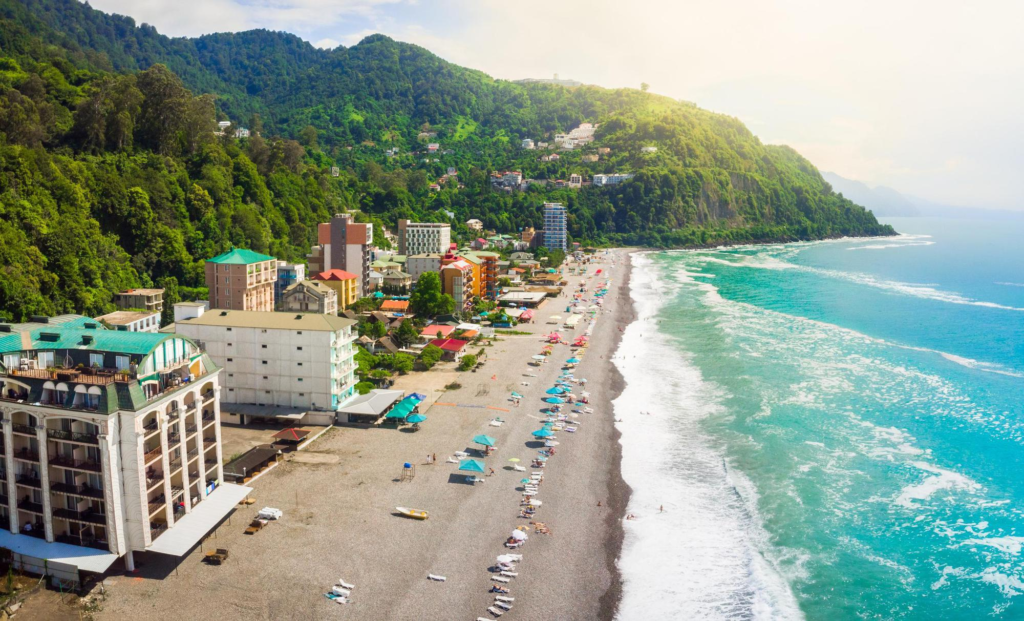
Above: Sarpi, Georgia
The border crossing itself is known as the Sarpi Border Crossing, although Turkish sources often refer to it as the Sarp Border Gate.
The difference is primarily linguistic.
In Turkish, the place is called Sarp.
In Georgian, it is სარფი, transliterated as Sarpi.
This is similar to how:
- München becomes Munich in English.
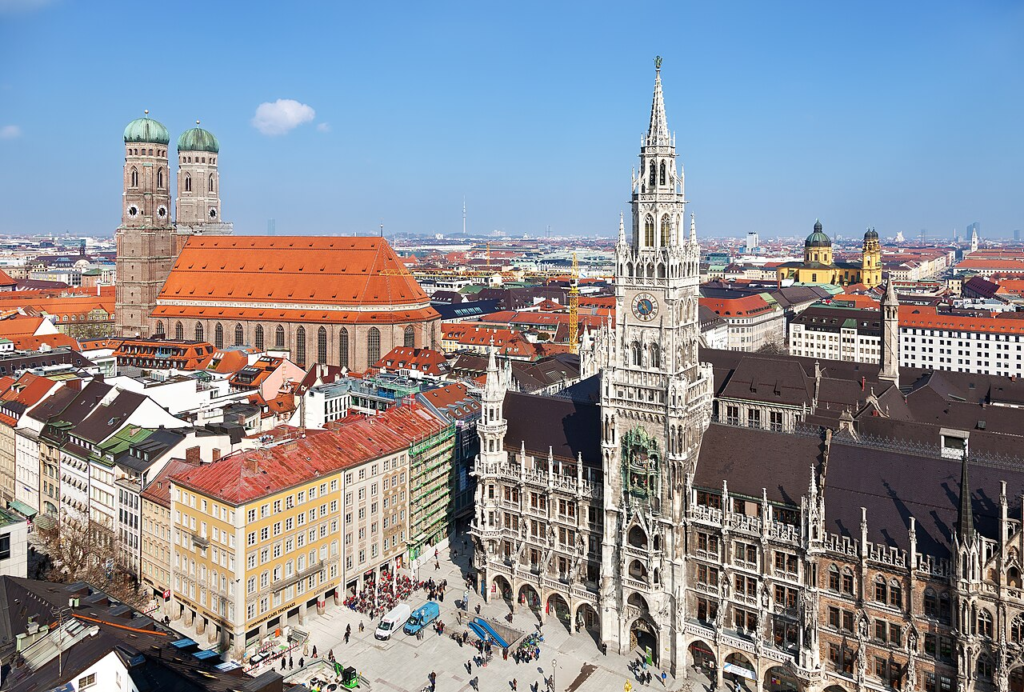
Above: München (Munich), Bayern (Bavaria), Deutschland (Germany)
- Wien becomes Vienna.
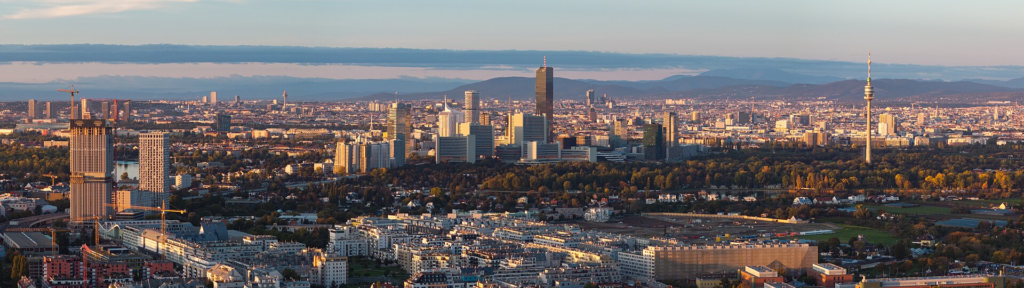
Above: Wien (Vienna), Österreich (Austria)
- Köln becomes Cologne.
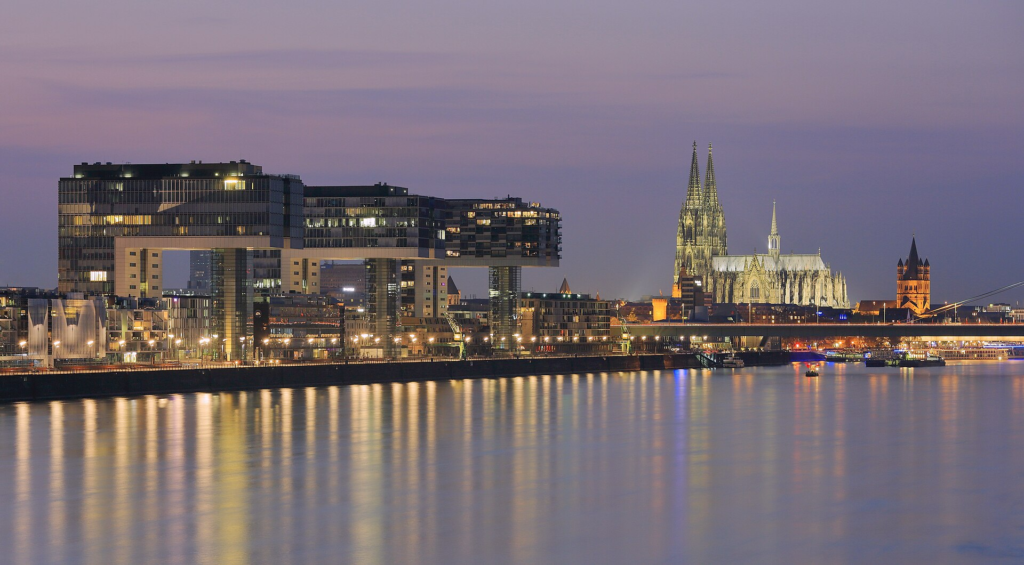
Above: Köln (Cologne), Nordrhein-Westphalen (North Rhine-Westphalia), Deutschland (Germany)
The place is essentially the same.
The language changes the name.
Although only a few metres separate Sarp from Sarpi, a surprising amount changes.
| Sarp (Türkiye) | Sarpi (Georgia) |
|---|---|
| Turkish language | Georgian language |
| Latin alphabet | Georgian script |
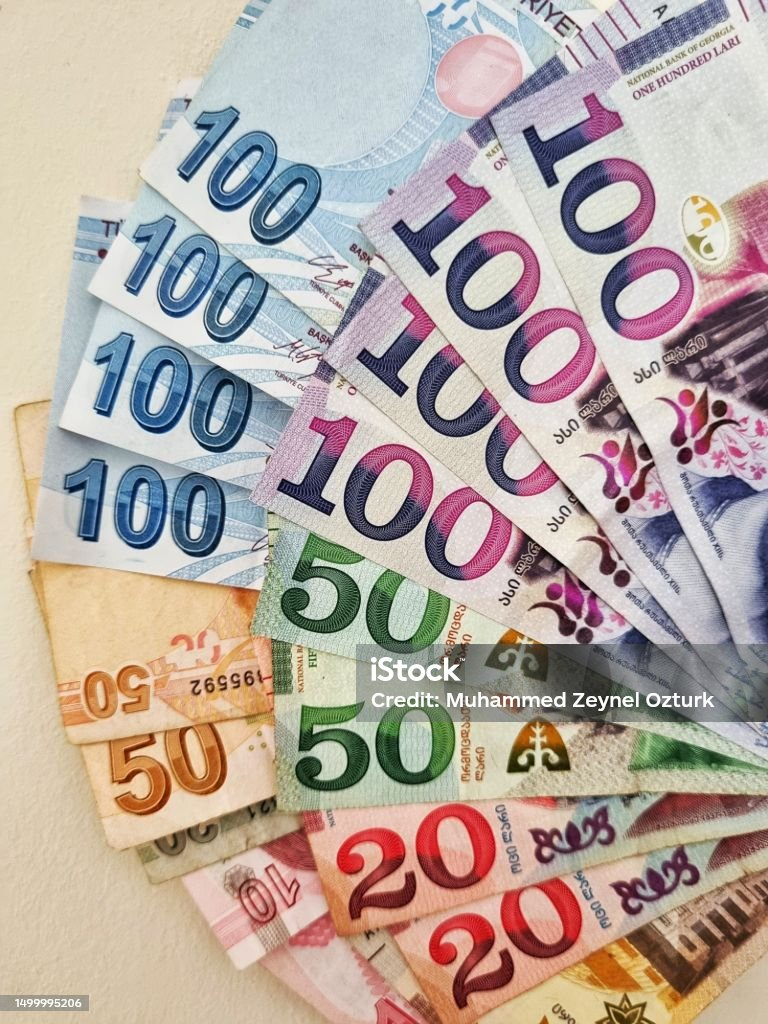
| Turkish lira | Georgian lari |
| Mosques more prominent | Orthodox churches more prominent |
| Turkish administrative system | Georgian administrative system |
Yet the landscape hardly changes at all.
The same humid Black Sea climate, the same steep green mountains, and the same waves continue on both sides of the frontier.

One bus left me at Sarp.
Another collected me at Sarpi.
One letter had been added, yet I had crossed from one civilization into another.
The mountains remained the same.
The Black Sea remained the same.
Only the language — and everything that came with it — had changed.
The bus did not climb a mountain pass or cross a great river to reach the border.
It simply slowed before a gate beside the sea.
On one side was Sarp.
On the other was Sarpi.
The names differed by a single letter.
The world beyond them differed by centuries of history.”

Sarp is a village in the Kemalpaşa district of Artvin province.
It was divided into two villages in 1921 when the Turkey – Soviet Union border was drawn.
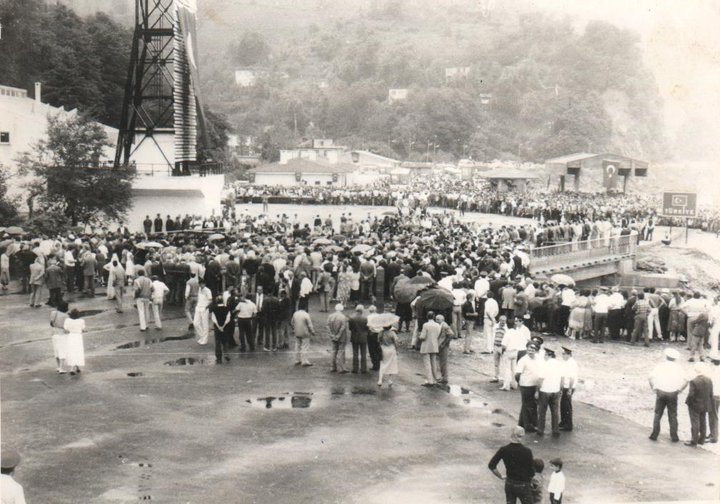
Above: Turkish – Soviet border, Sarp
The part of the village that remained in Georgia is called Sarpi.
The Sarp Border Crossing between Turkey and Georgia is located between these two villages.
In the 1835 Arhavi Population Register, its name is recorded as “Sarp“.
After the 1877-1878 Ottoman-Russian War, it remained within the borders of Tsarist Russia.
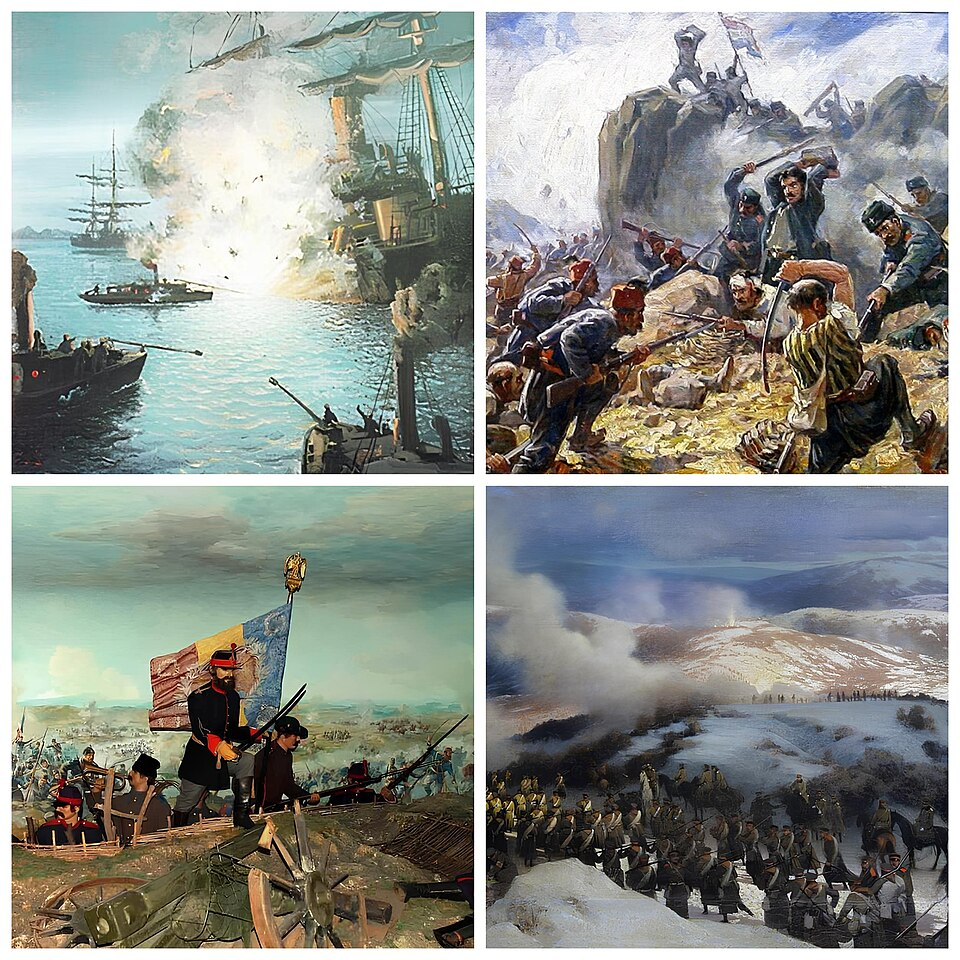
Above: Scenes from the Russo-Turkish War (1877 – 1878)
Between 1918 and 1921, it was within the borders of the Democratic Republic of Georgia.
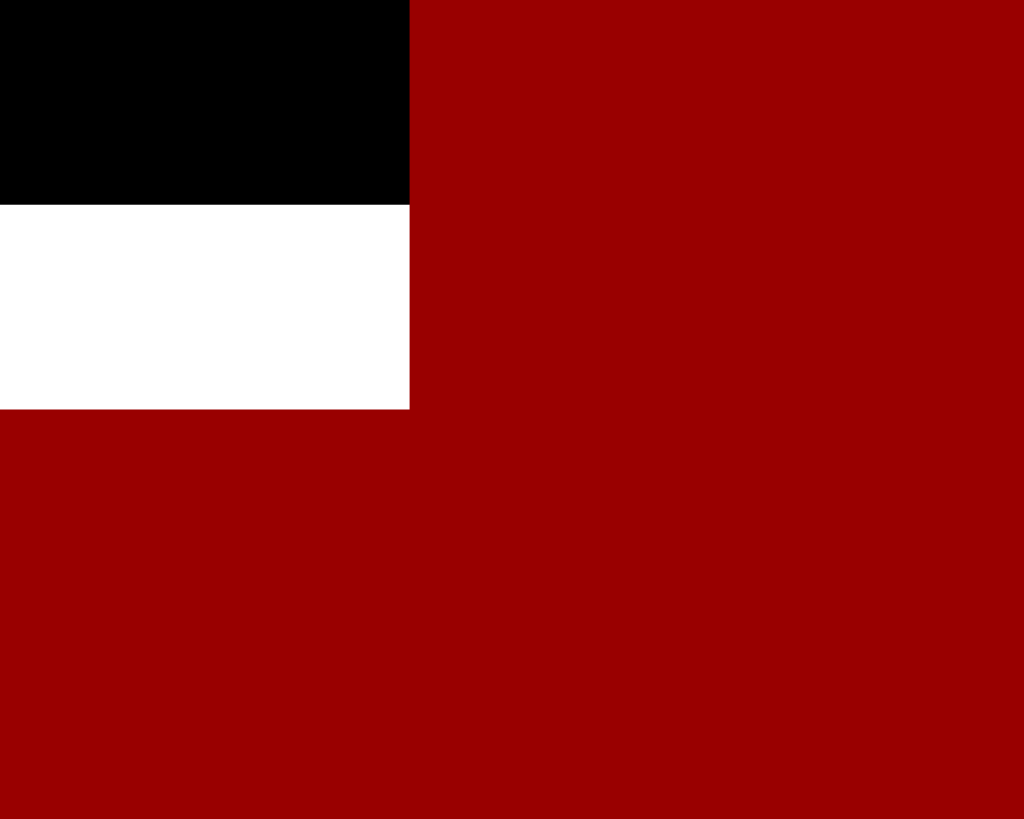
Above: Flag of Georgia (1918 – 1921)
In 1921, when the Turkey-Soviet Union border was determined, the village was divided into two.
The village on the Turkish side was named Sarp, and the village on the Georgian side was named Sarpi.
The Tibaşi Stream was used as a reference for the border when the village was divided.
With the division of the village, some members of the same family remained in Turkey, while others remained in the Soviet Union.
The 1,400-acre registered land of three families, Şahinoğulları, Battaloğulları, and Tuzcuoğulları, remained on the Soviet Union side of the border.
From 1921 to 1937, villagers could cross to the other side of the border with a Pasavan document.
With the deterioration of relations between the Soviet Union and Turkey in 1937, communication between the families living in Sarpi and Sarp villages was completely cut off.
Wire fences three meters high were erected on both sides of the Tibaşi Stream.
Three watchtowers were added on each side.
Looking at each other and greeting each other with a hand gesture were forbidden between the villages.

A track field, approximately five meters wide, was made behind the barbed wire fence in the Soviet Union to be used for detecting footprints.
The communication ban between the villages of Sarp and Sarpi continued until 1988.
The border crossing between Turkey and Georgia, which opened in 1989, is named after these two villages.
The village of Sarp (صارپ) was listed in the Ottoman village list of 1928 as being in the Kemalpaşa district of the Hopa sub-district of the Rize province.
In the 1935 general census, it had the same administrative status within the Çoruh province, which was established later.
The population of the village at that time was 428 people.
Sarp was located in Hopa district, but in 2017 it was annexed to Kemalpaşa , which became a district by decree.
Sarp village is five kilometres from Kemalpaşa district center and 86 km from Artvin city center.
Sarp is a fascinating place because it is not a grand border landscape in the sense of deserts, walls or fences.
It is almost intimate:
A small coastal settlement squeezed between the Black Sea and the green mountains of Artvin.
The village sits directly beside the Georgian border, with Sarpi on the other side.
This is a world where the mountains do not gently rise in the distance —
They press immediately against the sea.
The border gate itself is much more modern and industrial than the surrounding village.
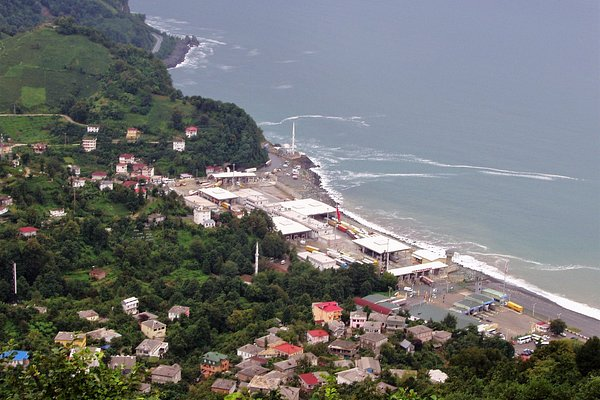
Above: Sarp, Türkiye
A traveller might expect a dramatic geographical change at a border.
At Sarp/Sarpi, the surprise is the opposite:
The landscape barely changes, but the human world changes completely.
There is also a beautiful historical irony here.
The village was not originally “two places“.
It was one community divided by the Turkey–Soviet border.
Today, the border is crossed daily, but the hills and families remember an older unity.
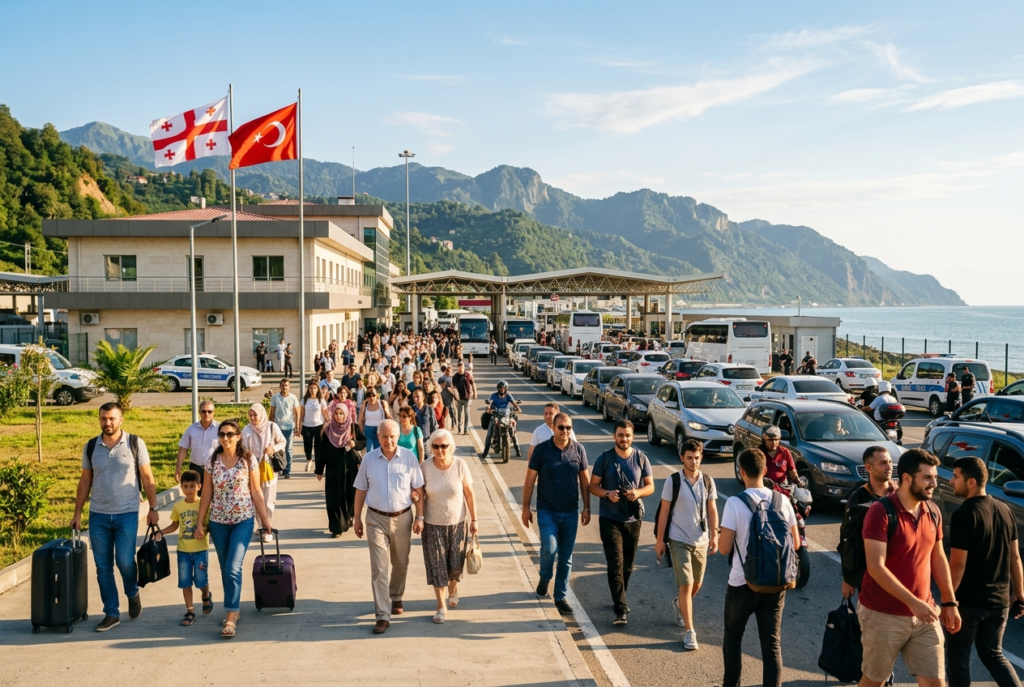
Sarp Border Gate is a border crossing between Türkiye and Georgia on the Black Sea coast.
It takes its name from the border village of Sarp in the Kemalpaşa district of Artvin.
The name of the border village on the Georgian side is also Sarpi.
This border gate was opened in 1989.
It is located 252 meters above sea level.
Located 15 km east of Hopa district, Sarp Border Gate is important not only as a gateway to Georgia, but also as a border gate on the land route to all of the Caucasus and Central Asian countries.
Sarp Border Gate, which is a gateway to the Adjara Autonomous Republic of Georgia, is approximately 20 km from Batumi, the administrative center of Adjara.
It has a total area of 36,000 m².
Since 10 December 2011, Turkish and Georgian citizens have been able to enter Turkey and Georgia with only their national identity card without needing a passport.
In 2018, 6,912,356 passengers and 598,658 vehicles entered and exited through the Sarp Border Gate.
In December 2024, 37,615 trucks passed through.
Throughout 2024, 5,555,125 passengers passed through the Sarp Border Gate.
Due to the corona virus, Turkey and Georgia announced that the Sarp Border Gate was closed to passenger traffic, for a while.
Unlike many international frontiers, the checkpoint is literally on the shoreline.
The striking modern customs building, designed by German architect Jürgen Mayer, has become something of a landmark in its own right.
Sarpi (Georgian and Laz : სარფი) is a village in Georgia, on the Black Sea coast, near the border between Turkey and Georgia.
It was divided into two villages in 1921 when the Turkey – Soviet Union border was drawn.
The part of the village that remained in Turkey is Sarp village.
During the Soviet era, special permission was required to enter the Sarpi area.
This regime was in effect until 1995.
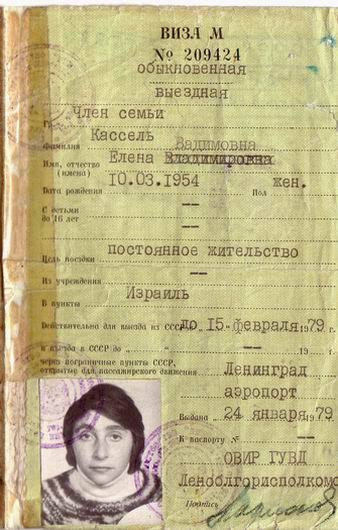
Above: Soviet exit visa
(Is Laz the same as Georgian?
No.
But they are close relatives.
Both Laz and Georgian belong to the Kartvelian language family, a small and distinctive language family native to the Caucasus.
The main Kartvelian languages are:
- Georgian (Kartuli) — the national language of Georgia
- Mingrelian (Megruli)
- Laz (Lazuri)
- Svan (Svanu)
So the relationship is something like this:
Georgian and Laz are not dialects of the same language.
They are sister languages.
A Georgian speaker and a Laz speaker would recognize that they belong to the same linguistic family, but they would not normally understand each other without learning the other language.
Historically, the Laz lived along the southeastern Black Sea coast in a region known as Lazeti or Lazistan.
Their homeland stretched roughly from:
- the area around modern Rize and Artvin in Türkiye
- eastward toward Adjara and southwestern Georgia
Today, most Laz people live in Türkiye, particularly around:
- Rize
- Arhavi
- Fındıklı
- Pazar
- Hopa
A smaller Laz community lives in Georgia, especially around:
- Sarpi
- Batumi
- parts of Adjara
This is why the journey from Rize to Sarpi is so interesting:
It is travelling through a region where the modern border cuts through an older cultural landscape.
Are the Laz people Georgians?
This depends on whether you mean linguistically, historically, or nationally.
Linguistically, they are Kartvelian, like Georgians.
Historically, they have been connected to Georgian kingdoms at various times, especially through the medieval Georgian world.
Nationally, this is more complicated.
A Laz person in Georgia may identify as Georgian.
A Laz person in Türkiye may identify as Turkish and Laz.
Identity in this region is layered.
A person may simultaneously say:
“I am Turkish.”
“I am Laz.”
“My ancestors are from this coast.”
Those statements do not necessarily contradict each other.)
The Sarp Border Gate is located between these two villages.
In Turkey, Sarp village is located in the Kemalpaşa district of Artvin Province.
Sarpi village is the southernmost corner of the Adjara Autonomous Republic.
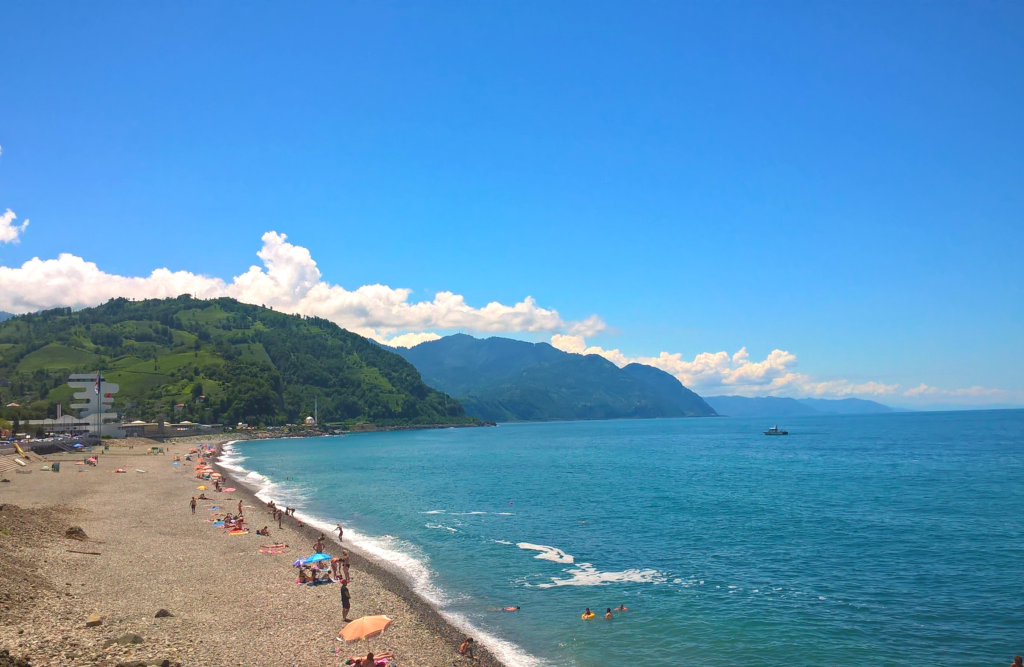
Above: Sarpi Beach
(Why “the Adjara Autonomous Republic“?
This is one of the most interesting political legacies of the region.
Adjara Autonomous Republic is an autonomous republic within Georgia, with its own parliament and government.
The reason goes back to history.
For centuries, much of southwestern Georgia was under Ottoman influence.
Unlike eastern Georgia, which had a stronger Orthodox Christian continuity, Adjara experienced significant Islamization during Ottoman rule.
Many Adjarians became Muslim, while retaining Georgian language and cultural connections.
This created a distinctive identity:
- ethnically and linguistically Georgian,
- historically connected to the Ottoman world,
- religiously different from many other Georgians.
When the Soviet Union incorporated Georgia in the 1920s, it created the Adjarian Autonomous Soviet Socialist Republic.
Officially, the reason was to protect the rights of the Muslim population of Adjara.
In reality, Soviet nationality policy was complicated.
Moscow often created autonomous regions partly to manage ethnic and political differences.
When Georgia became independent in 1991, Adjara retained its autonomous status.
Here is the fascinating part.
Adjara was granted autonomy because it was seen as a distinct Muslim Georgian region.
But today:
- many Adjarians are Orthodox Christians,
- many are secular,
- Batumi is one of Georgia’s most cosmopolitan cities.
The autonomy survived even as the original justification became less central.
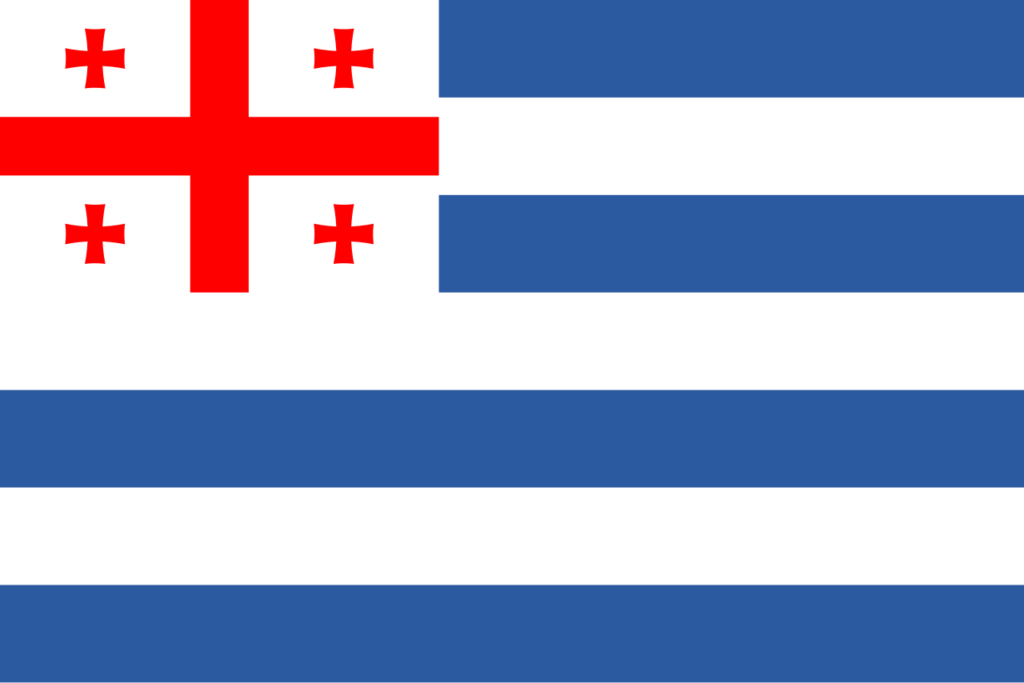
Above: Flag of Adjara
During the Ottoman period, the village was within the borders of the Lazistan Sanjak.
These border villages are 20 km from Batumi and 12 km from Hopa.
All the inhabitants of this village are Laz and speak Laz as their mother tongue.
However, with the increase in intermarriage and in the post-Soviet period, Georgian has also begun to enter daily life.
In addition, the Laz people of Sarpi have started to learn Turkish after the opening of the border gate.
In the last few years, especially among the youth, but generally among the entire population, there have been conversions to their “old religion“, Christianity.
In 2003, 300 Laz people in the village were baptized.
A church is also being built on the hill of the village.

Above: Borjgala – ancient Laz/Georgian symbol of the Sun related to the Mesopotamian/Sumerian symbols of eternity and the Sun.
The grave of Hasan Helimişi, a Laz poet and painter from Hopa,
is in Sarpi village.
Helimişi is remembered with great respect and affection among the Laz people of Sarpi.
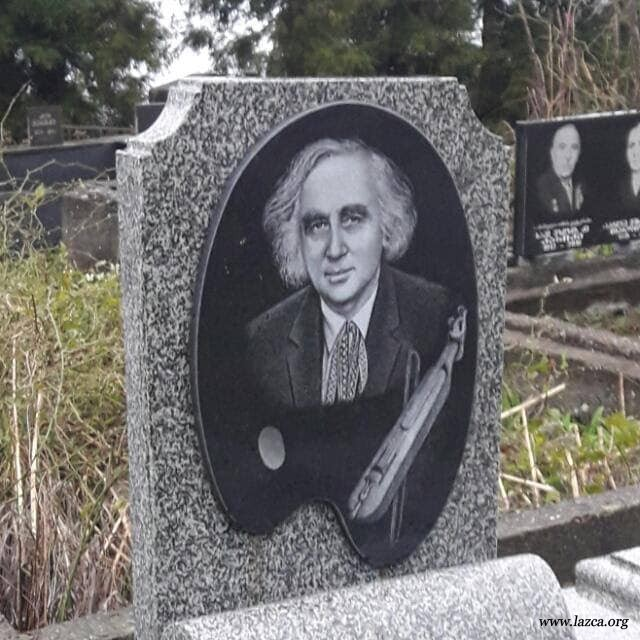
Above: Grave of Hasan Helimişi
Hasan Helimişi (Georgian : ჰასან ჰელიმიში)(1907 – 1976) was a Laz painter and poet.
He is known for his poems written in Laz and Turkish, and his paintings based on Laz motifs.
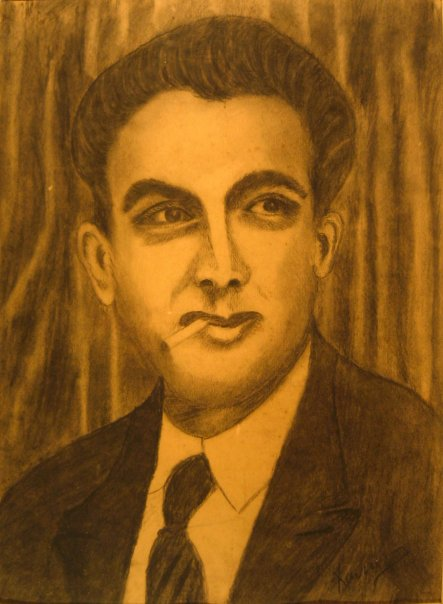
Above: Hasan Helimişi
Hasan Helimişi, a Laz painter and poet, was born in the village of Ortahopa in the Ottoman Empire.
He completed his primary, secondary, and high school education in Turkey.
Between 1925 and 1931, he collected folklore from Laz villages between Hopa and Pazar.
In 1932, due to his membership in the Turkish Communist Party (TKP), he was summoned to the Soviet Union and went to
Batumi.
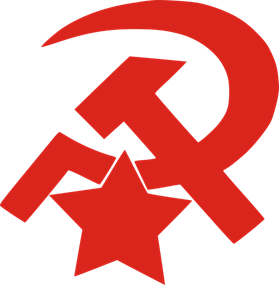
Above: Emblem of the Turkish Communist Party
That same year, he was sent to the USSR Institute for National Minorities in Leningrad, where he received training in dance, music, and theater.
In Leningrad, he founded a horon (traditional Turkish dance) group called “Lazuri Grupa“.
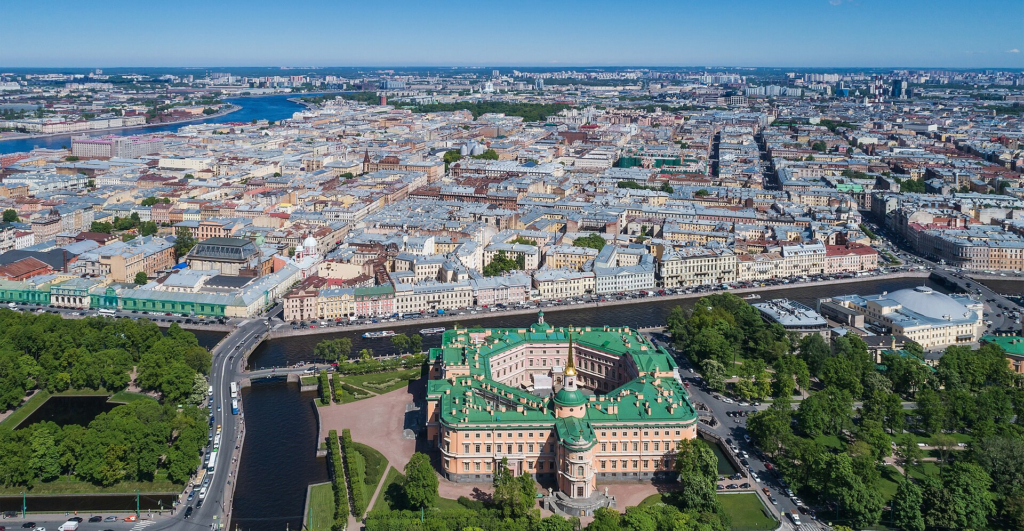
Above: St. Petersburg (formerly Leningrad), Russia
In 1935, Helimişi lost his right leg in a tram accident.
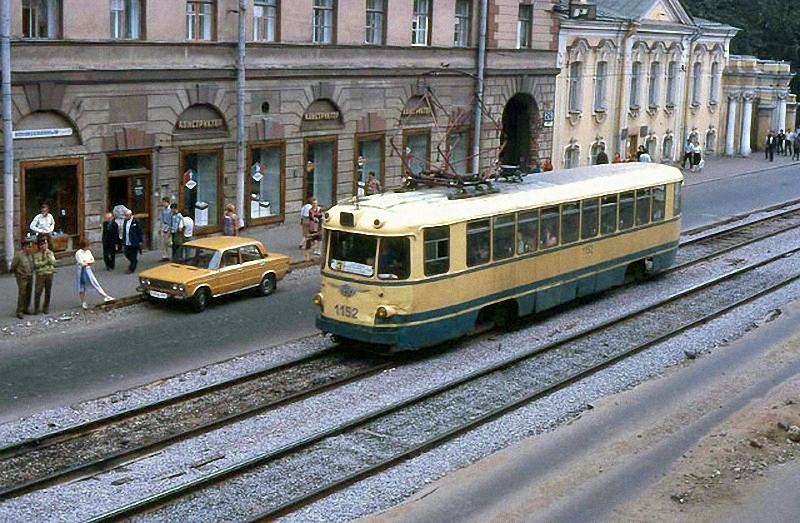
He was forced to return to Batumi.
He married while in Batumi.
During his time in Batumi, he earned a living as a shoemaker, his father’s profession, until he was imprisoned without cause in 1938.
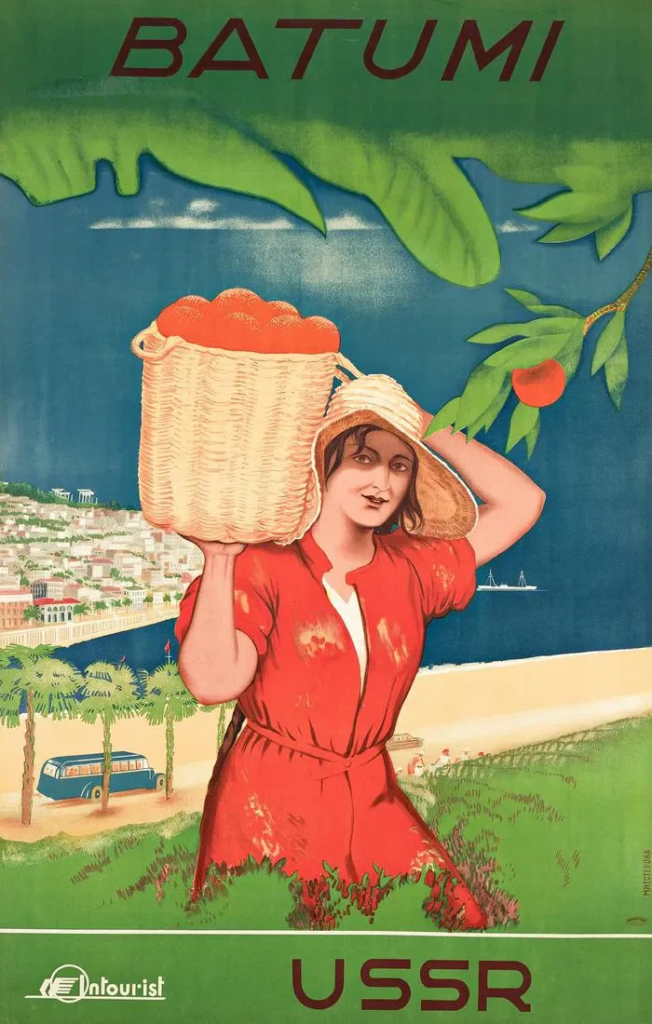
After spending three months in Batumi Prison and some time in a prison in Tbilisi, he was released after it was stated that “a mistake had been made“.
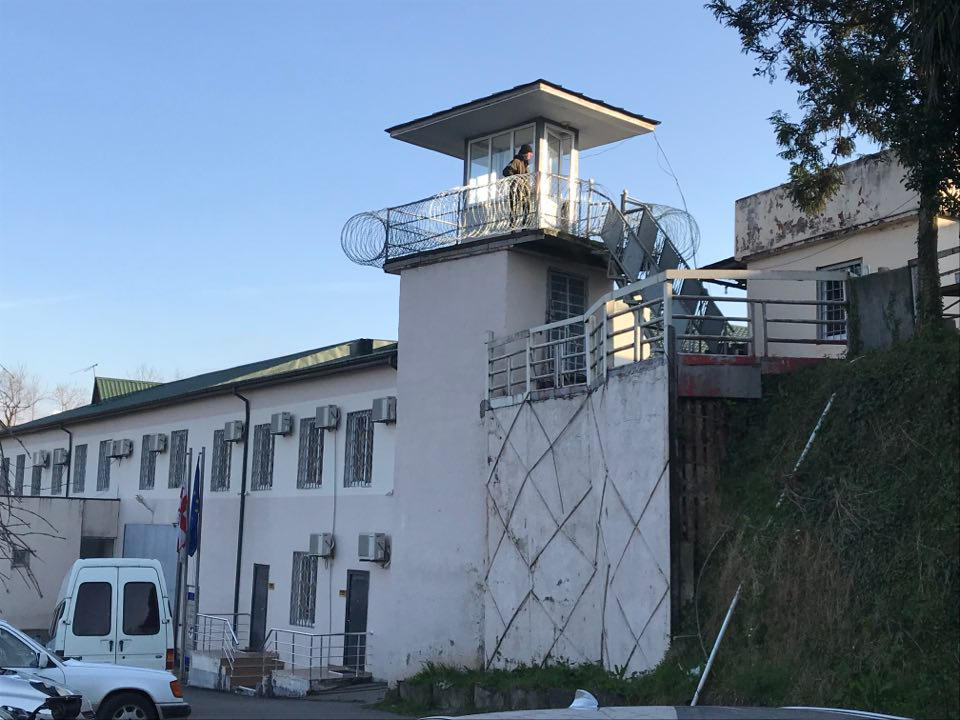
Above: Batumi Prison
Between 1949 and 1954, he was sent to Vasünggan (Tomsky District) in Siberia because he was considered unreliable and “suspicious“.
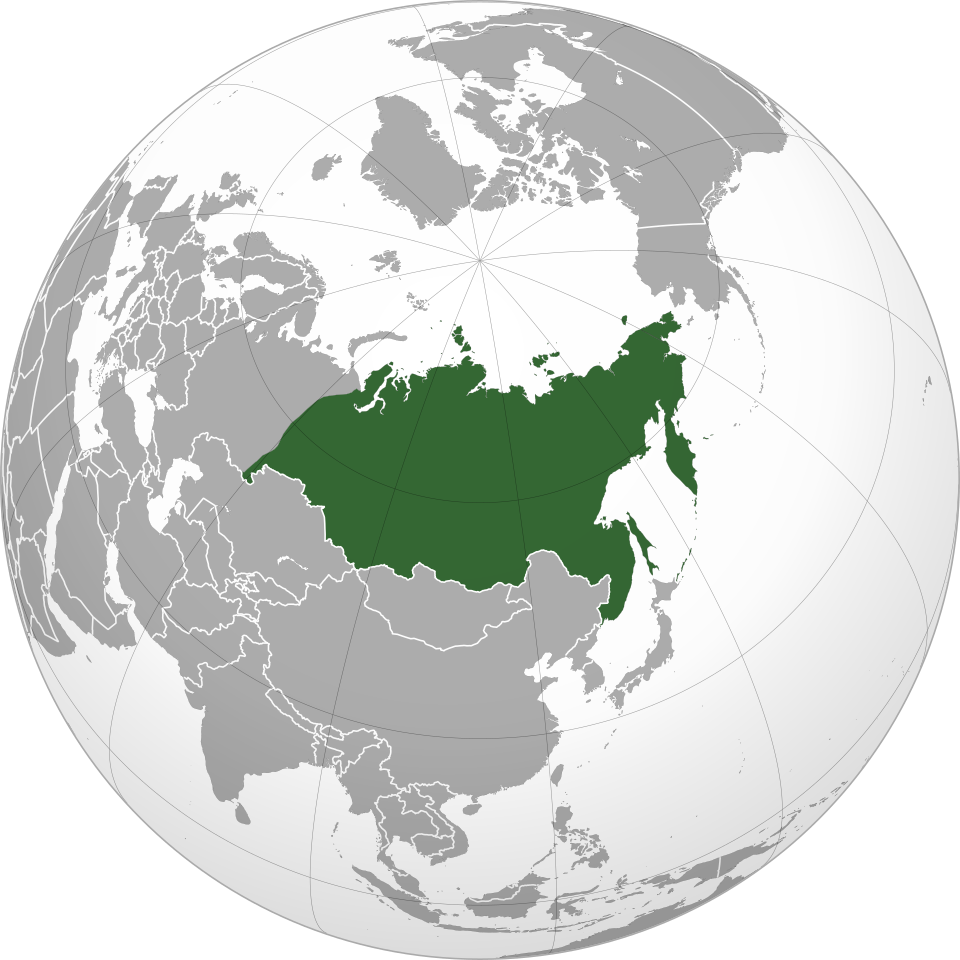
Above: (in green) Siberia, Russia
From 1961 to 1967, he taught Turkish at the Faculty of Oriental Studies of Tbilisi State University (TSU).
Above: Logo of Tbilisi State University
Helimişi, who died on 2 March 1976, at the age of 68, was taken to Sarpi village and buried there.
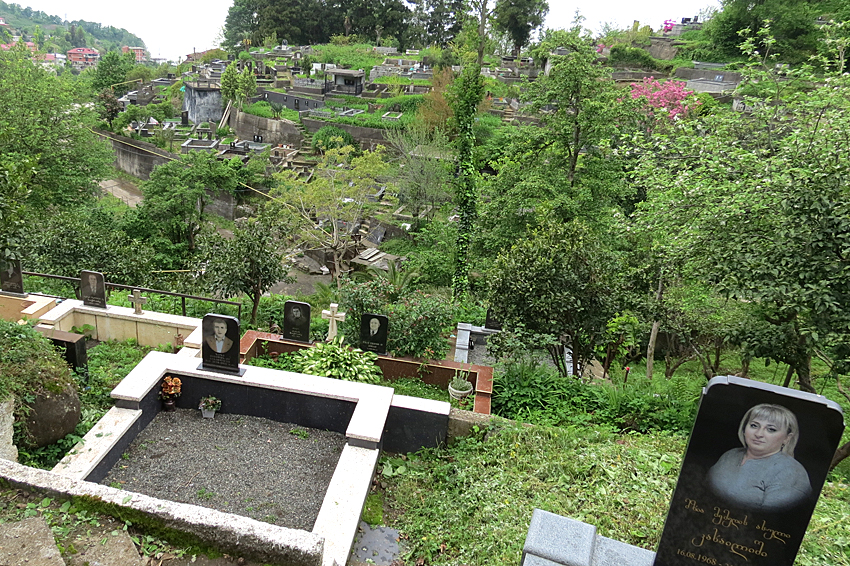
Above: Sarpi Cemetery
The poems of Hasan Helimişi, who wrote in Laz and Turkish, were published at different times by Arnold Çikobava and Sergi Cikia, who conducted research on the Laz people, along with other texts.
All his poems were included in the book Laz Poetry (ლაზური პოეზია) / Lazuri Poezia (2007)(edited by Tea Kalandia) within the “100 Poems” series of the Intelekti publishing house.
One of the main themes in Hasan Helimişi’s poetry is Lazistan, his birthplace.
He frequently addresses his childhood and youth in his poems.
Helimişi, a representative of the minstrel tradition, describes himself as a sorrowful nightingale whose nest has been destroyed, due to his distance from his people and his longing for his hometown Hopa, in his poem “I Am a Lover”.
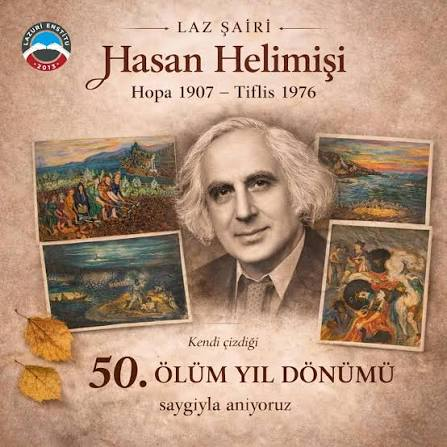
Hasan Helimişi, who painted mostly based on Laz motifs, was recognized as a painter after his death in 1979, when art historians from Tbilisi came to Batumi and saw his paintings preserved in the library in Sarpi.
In the same year, his paintings were exhibited at the Georgian State Art Museum.
This exhibition attracted great attention.
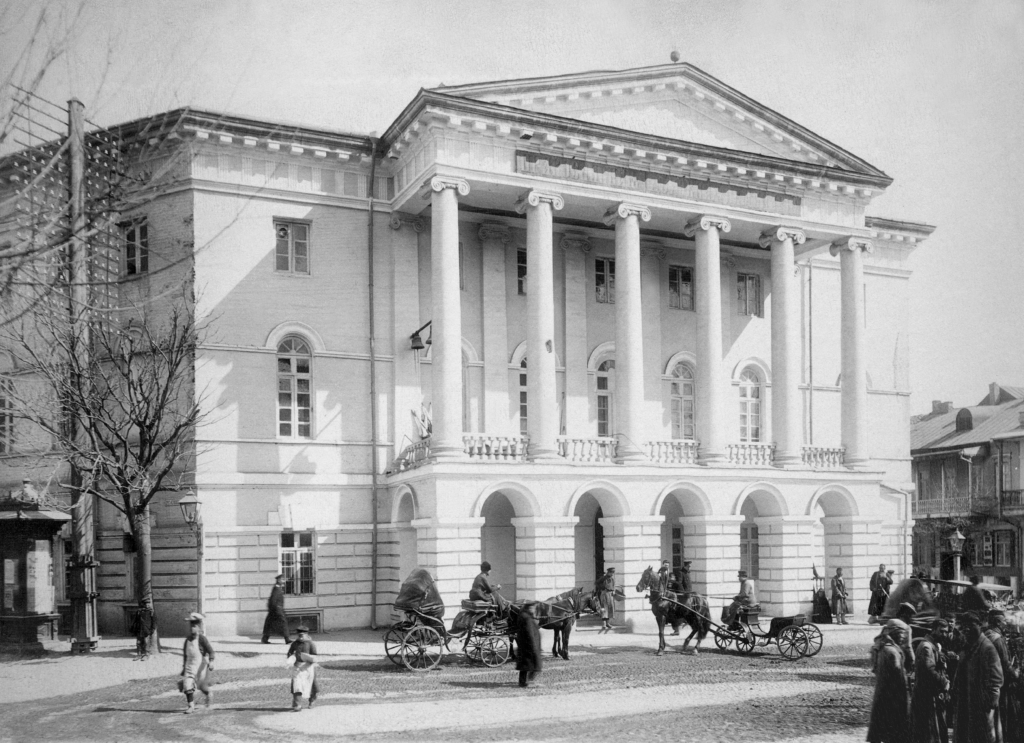
Above: Georgian State Art Museum, Tbilisi
Helimişi’s paintings are currently exhibited in the Sarpi Secondary School Exhibition Hall in the village of Sarpi.
In addition, many of his paintings are in the collections of collectors.
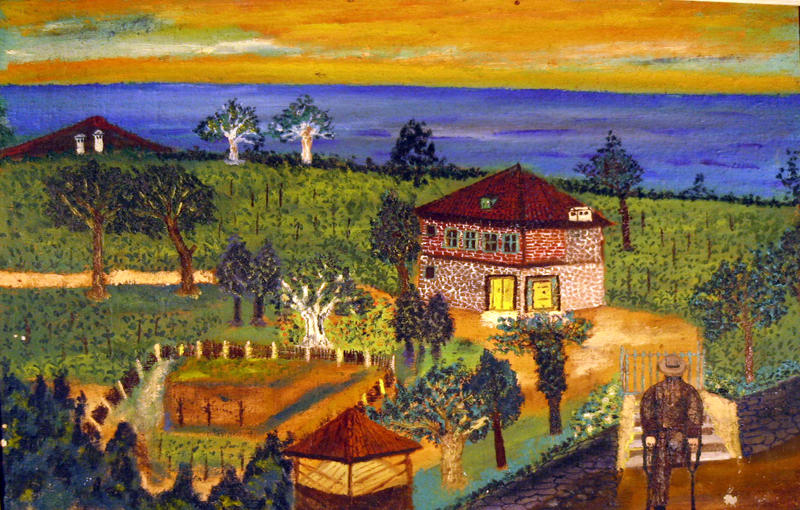
Above: The truth will set you free, Hasan Helimişi
In 2008, a statue of Saint Andrew was erected next to the waterfall in the village.
The Monument to the Apostle Andria is a statue located in the Laz village of Sarpi in Georgia.
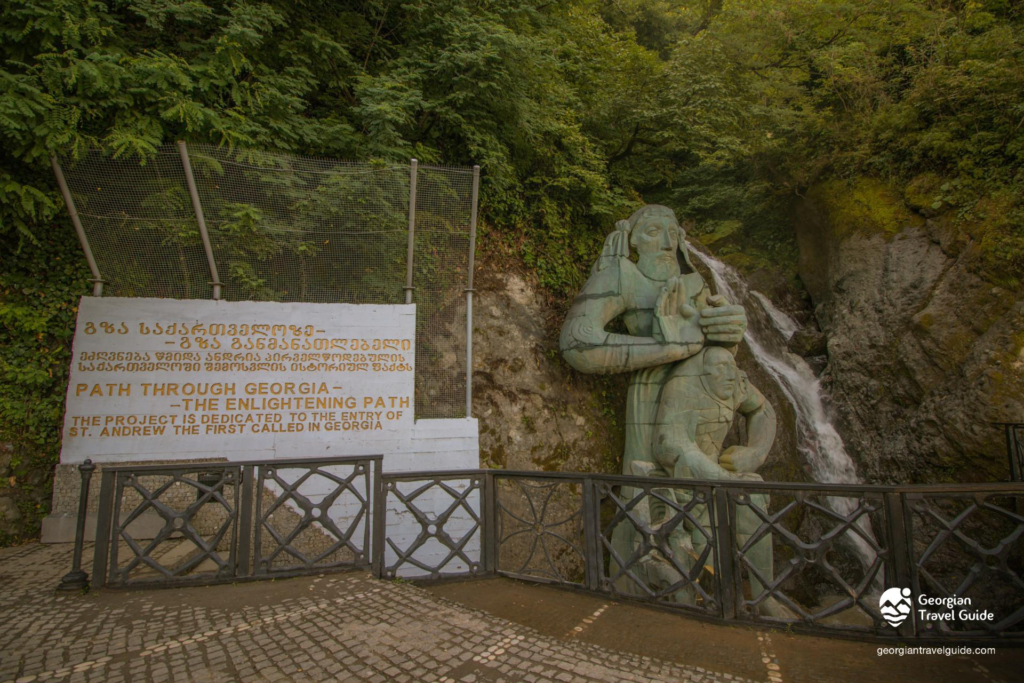
Above: The Monument to the Apostle Andrew, Sarpi, Georgia
Situated next to the Sarpi Waterfall, the statue is dedicated to the Apostle Andrew (Andria in Georgian culture), who is believed to have brought Christianity to Georgia.
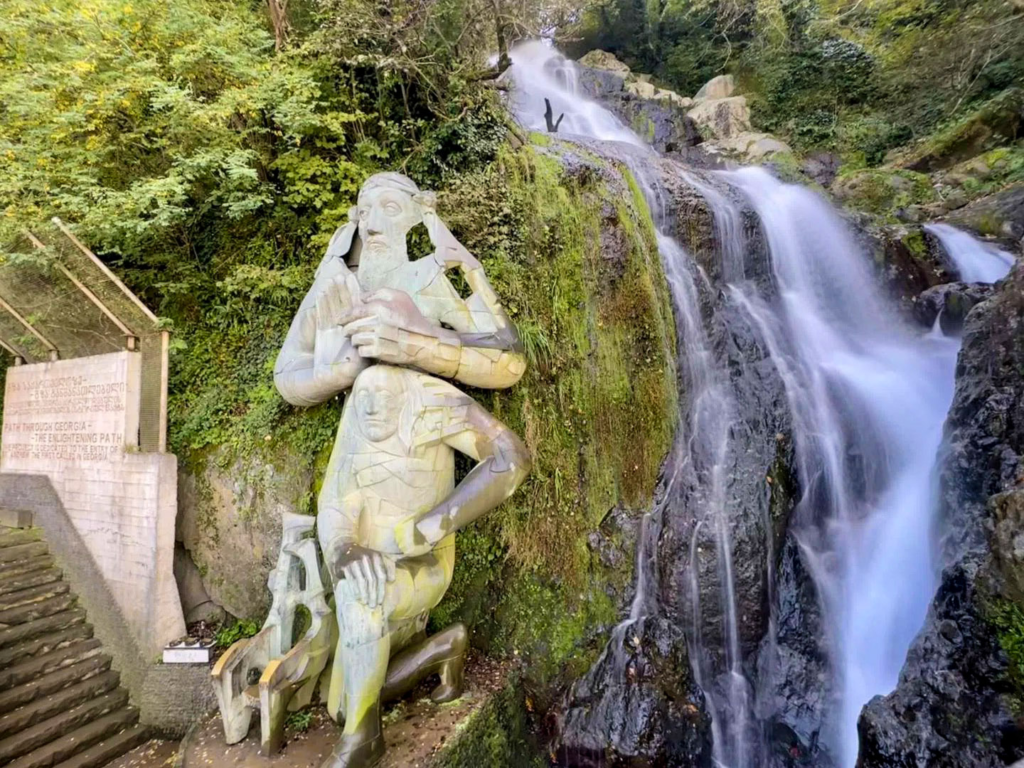
Above: The Monument to the Apostle Andrew, Sarpi, Georgia
Completed in 2008, the statue’s unveiling ceremony was attended by former Georgian President Mikheil Saakashvili and former Ukrainian President Viktor Yushchenko.
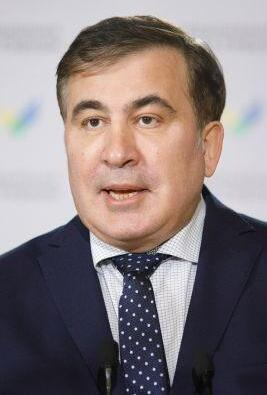
Above: Georgian President Mikheil Saakashvili (r. 2004 – 2007 / 2008 – 2014)
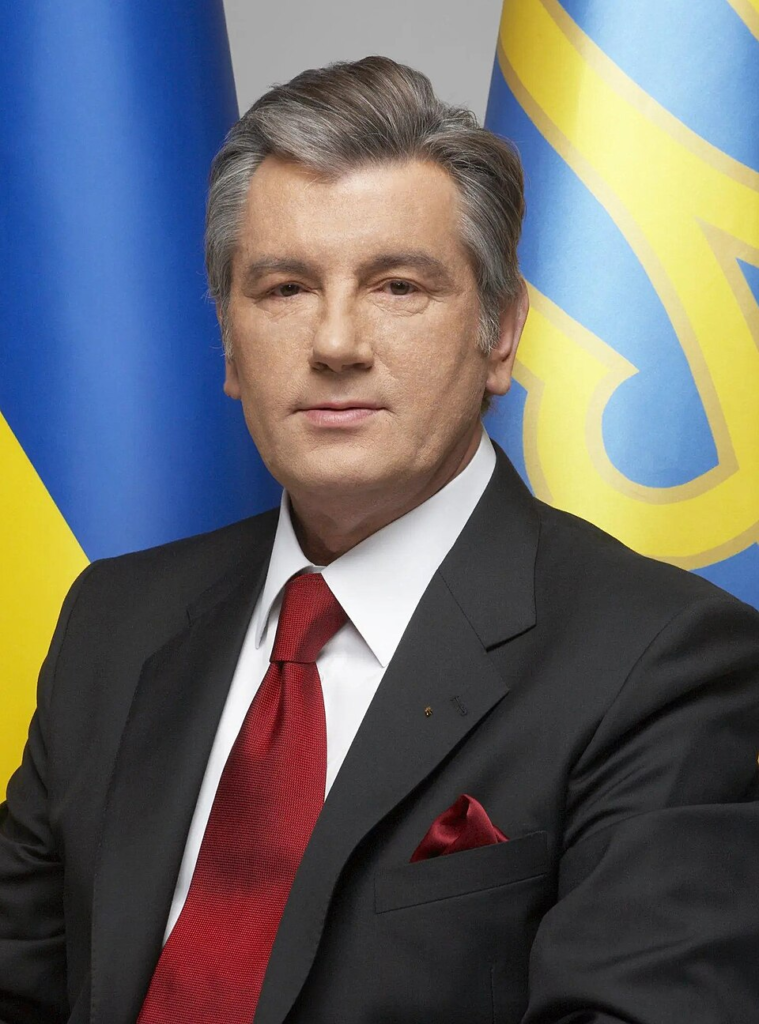
Above: Ukrainian President Viktor Yushchenko (2005 – 2010)
Because Christianity spread to Georgia from Adjara, the statue was erected in the village of Sarpi on Georgia’s southwestern border.
According to the villagers, the statue protects Georgia from invaders.
A sign next to the statue reads:
“The road from Georgia passes through enlightenment.
The project is dedicated to Andrew’s arrival in Georgia.”
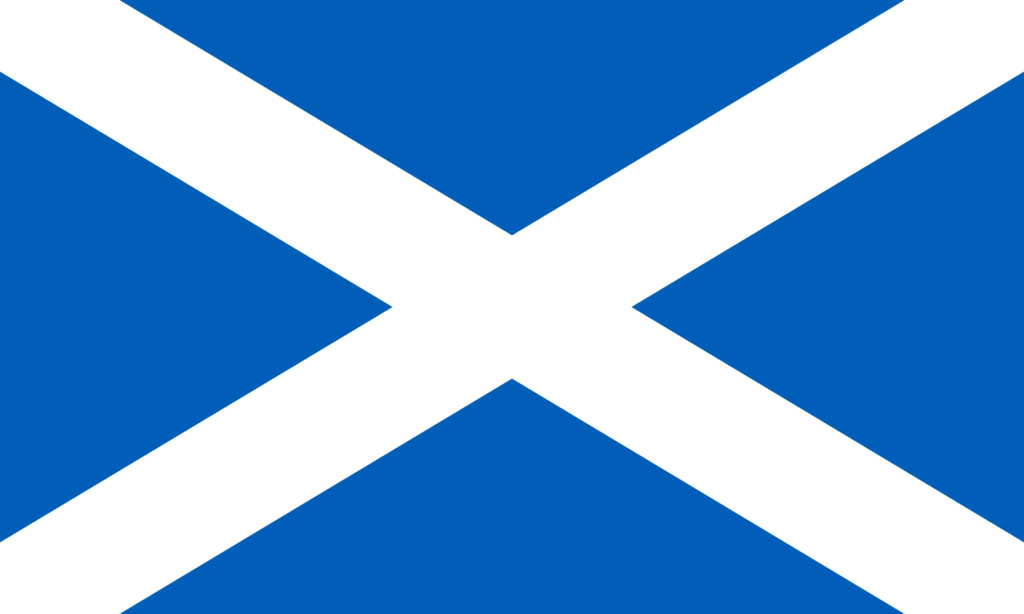
Above: The cross of St. Andrew / flag of Scotland
Right behind the gate of the customs area is a tourist information kiosk with helpful English-speaking staff who can book beds in Sarpi, Kvariati or Gonio as well as Batumi.
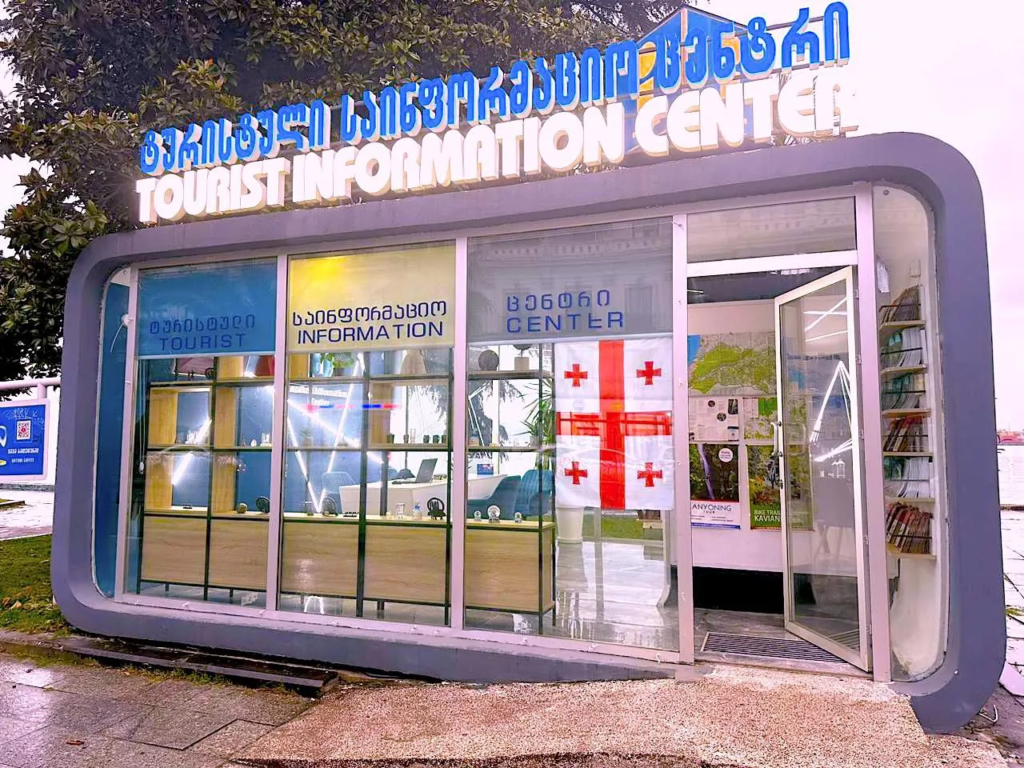
You can exchange money, get a SIM card or gamble in a slot club, all 24 hours a day.
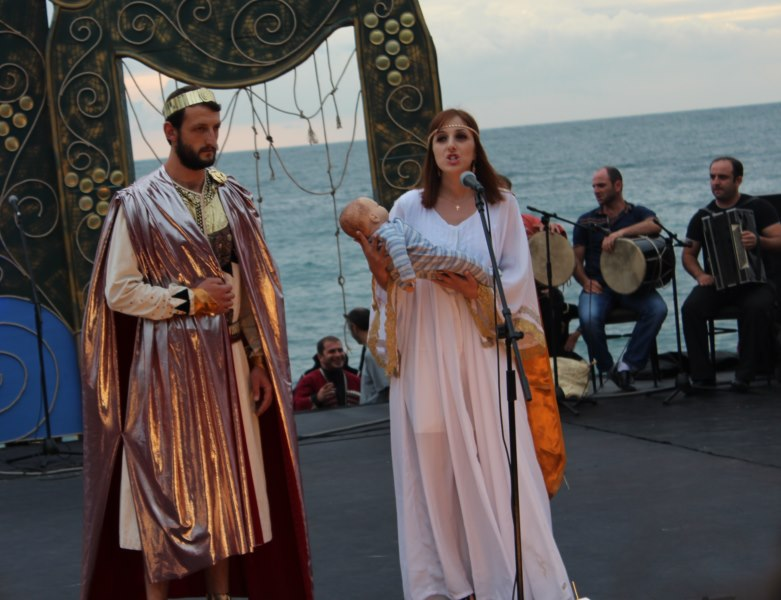
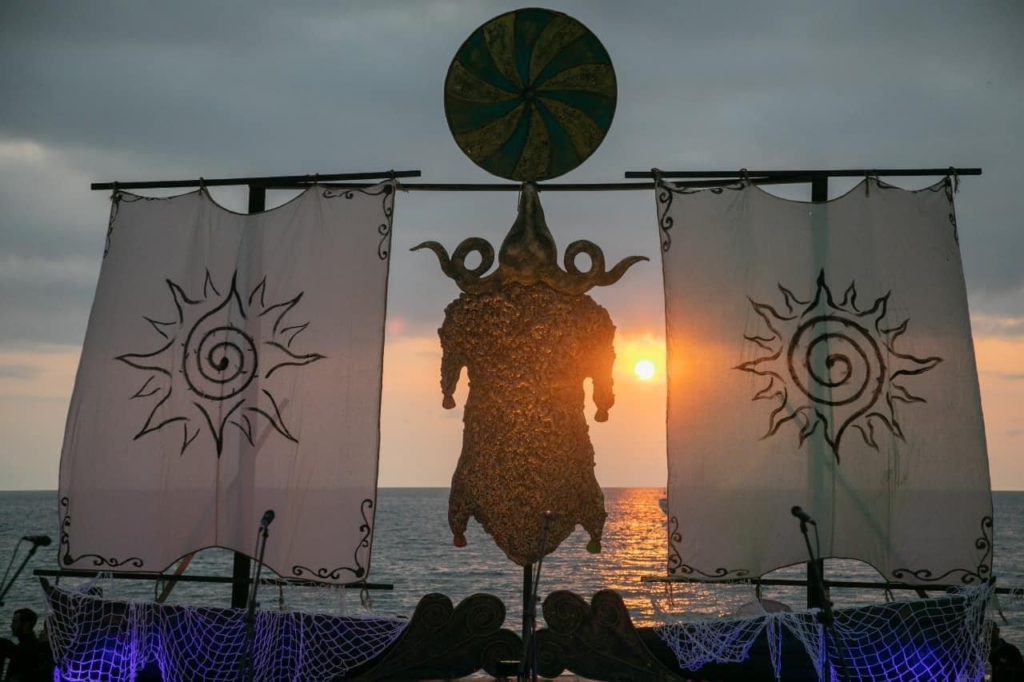
Sarpi holds the Kolkhoba Festival in August, a Laz festival based on the legend of the Golden Fleece.
Kolkhoba is a small coastal village where Greek mythology, Laz identity, Georgian nationalism, Ottoman history, and the modern Turkish-Georgian border all meet.
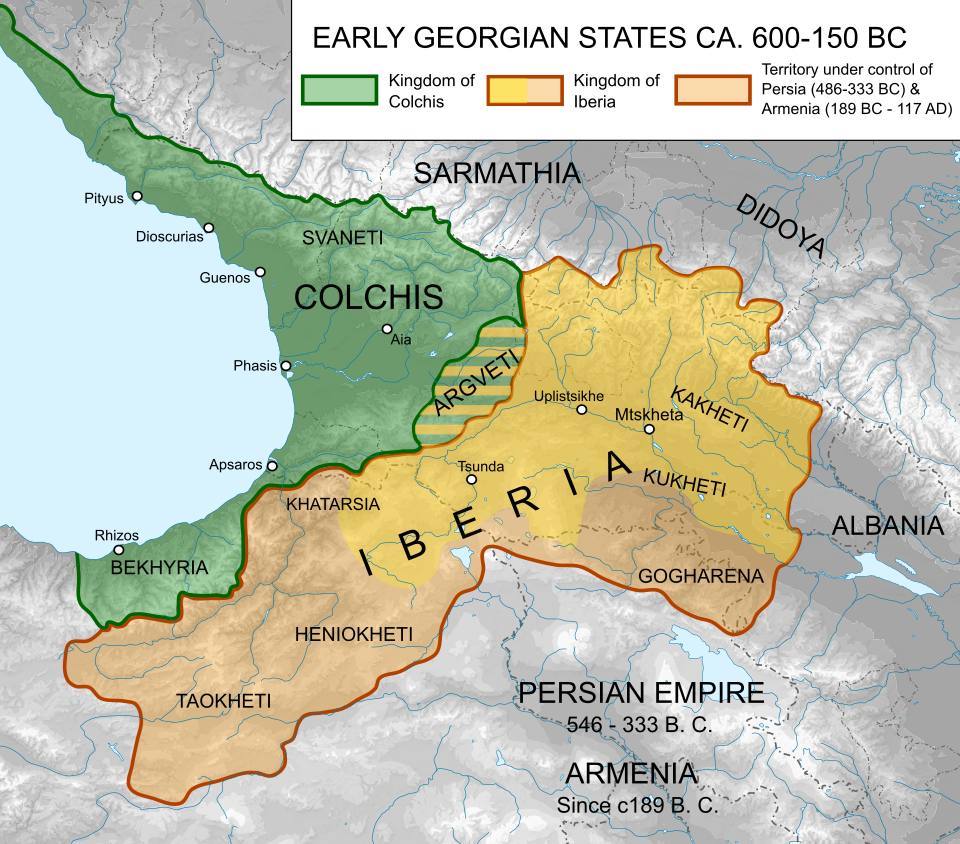
The name comes from Colchis (Kolkheti in Georgian), the ancient kingdom of the eastern Black Sea coast.
The festival is held in Sarpi, the Laz village immediately north of the Turkish border.
Sarpi is one of the few places where the Laz identity remains especially visible today.
At its heart, Kolkhoba celebrates:
- Laz heritage
- the ancient land of Colchis
- the relationship between the people and the Black Sea
- the legend of Jason and the Argonauts searching for the Golden Fleece
According to Greek myth, Jason and the Argonauts sailed to Colchis in search of the Golden Fleece, which was guarded by King Aeëtes.
With the help of Medea, the king’s daughter, Jason obtained the fleece and escaped.
The ancient Greeks placed Colchis somewhere around the eastern Black Sea — roughly modern western Georgia and parts of northeastern Türkiye.
So when a festival in Sarpi celebrates the Golden Fleece, it is making a very old claim:
“This coastline was not at the edge of the ancient world.
It was a destination.”
That is a powerful idea.
The Greeks did not sail to a forgotten corner.
They sailed to a wealthy, mysterious land beyond the sea.
The Golden Fleece is the famous story, but it is not the whole story.
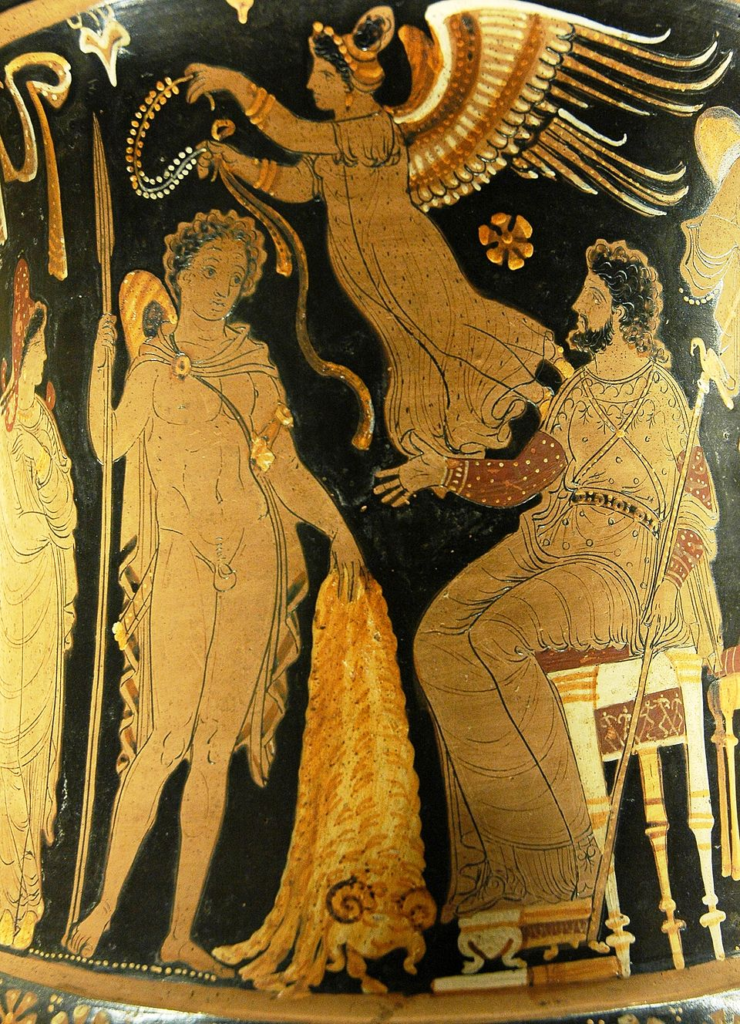
Above: Jason returns with the Golden Fleece
Traditional Laz celebrations were connected to the sea itself.
Historical accounts describe gatherings along the Laz coast involving communal celebrations and swimming rituals.
The festival was revived in modern form in 1978 in Sarpi.
The modern festival therefore combines several layers:
Ancient layer
- Colchis
- Greek mythology
- the Argonauts
Laz layer
- coastal traditions
- music
- dance
- food
- language
Modern Georgian layer
- regional identity
- tourism
- cultural heritage
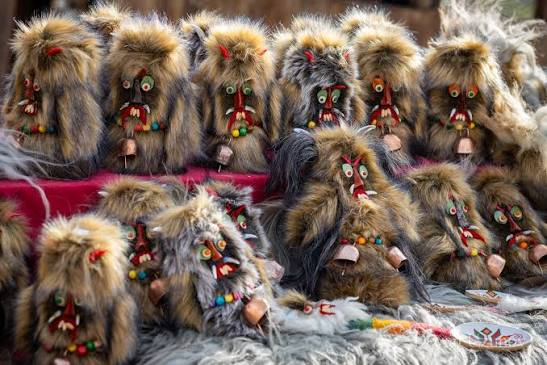
The Laz are a Kartvelian-speaking people related linguistically to Georgians, but with their own distinct identity.
Historically, Lazeti stretched along the southeastern Black Sea coast, including areas now divided between Türkiye and Georgia.
This is what makes Sarpi such a remarkable place.
A person standing on Sarpi beach can look south toward Türkiye and see not simply a foreign country, but part of a broader historical homeland of Laz culture.
The modern border divides what was once a connected cultural region.
There is an interesting historical irony.
The modern Kolkhoba festival began in the Soviet period, in 1978.
Soviet authorities supported the revival of Laz cultural identity partly because it could serve wider political purposes, including distinguishing Laz communities in Türkiye from the Turkish state.
Later, after the Soviet collapse, the festival continued but increasingly became framed as a celebration of Colchis and Georgian cultural heritage.
So even a folk festival has layers of politics beneath it.
That is very much the Caucasus:
Nothing is ever only one thing.
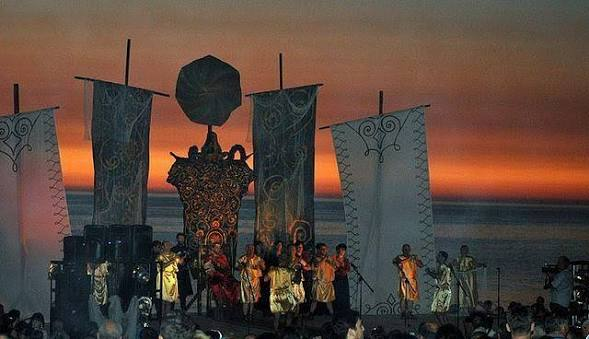
Had I arrived on Kolkhoba Day what would I have seen?
Probably:
- traditional Laz music
- folk dancing
- performances of the Argonaut legend
- Georgian and Laz food
- handicrafts
- speeches
- people gathering on the beach
The sea becomes the stage.
That is important.
This is not a festival in a town square.
It belongs to the coastline.
Sarpi is a surprisingly beautiful little place.
It sits where the Caucasus Mountains tumble into the Black Sea, with the Georgian border post almost touching the beach.
Sarpi is renowned for having some of the clearest water on Georgia’s Black Sea coast.
Even Batumi residents often come here to swim because the water is cleaner and more transparent.
Like much of this stretch of the Black Sea, the beach is made of smooth stones rather than sand.
Water shoes are almost essential if you plan to swim.
The village is hemmed in by lush, steep hills.
The landscape pays no attention to the political frontier.
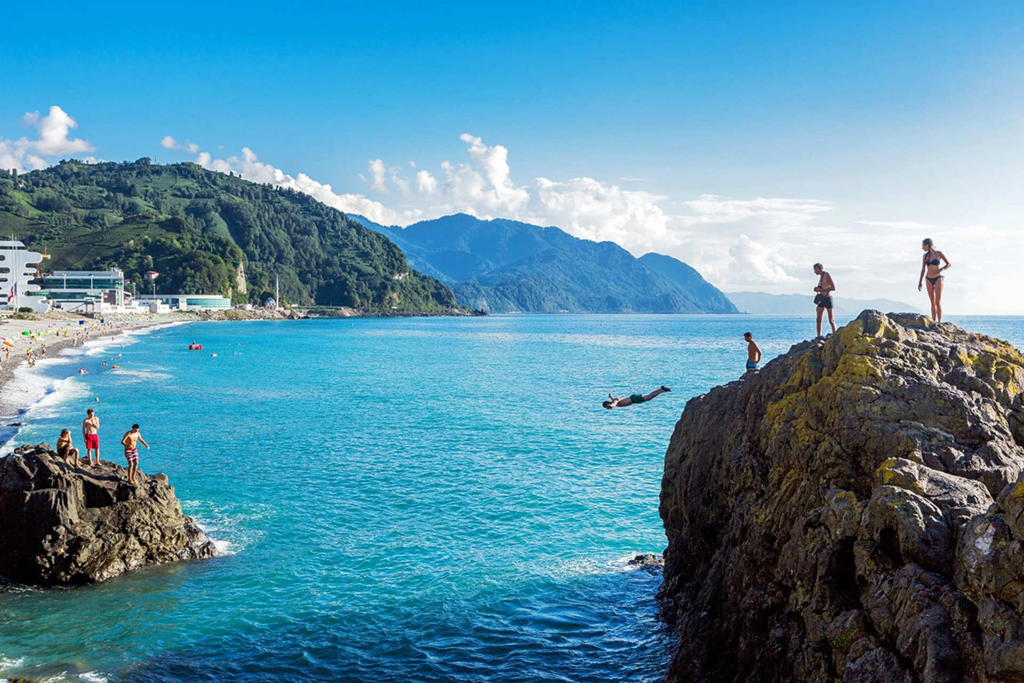
Above: Sarpi, Georgia
From Sarpi Beach, on a quiet day, you can actually see a Turkish mosque across the border and hear the call to prayer drifting over the water, even though you’re standing in Georgia.
At the same time, behind you are Georgian Orthodox churches and the Georgian language.
Few places make the meeting of two cultures so tangible.
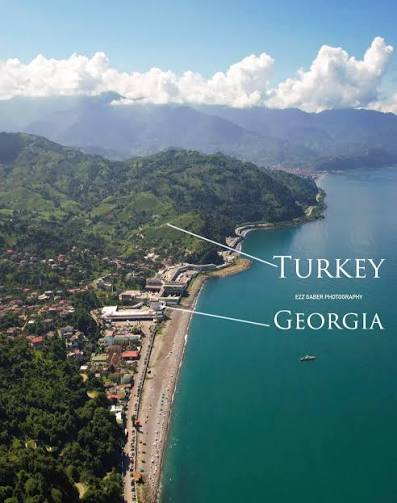
At Sarpi, the border guard saw my passport.
The sea saw something older.
Long before Türkiye and Georgia divided this coast, the Greeks called this land Colchis.
Here, they believed, Jason came in search of the Golden Fleece.
The myth may belong to another age, but the idea remains:
This was never merely a place between countries.
It was always a place where worlds met.

At Sarpi, the border divides countries but not histories.
The passport belongs to the modern world.
The mountains, the language and the sea belong to a much older one.
The 20 km between Sarpi and Batumi are, in my opinion, among the most beautiful in the Black Sea region.
What strikes many travellers is not simply the scenery but its continuity.
You have not crossed from one climate into another.
The tea plantations could almost continue across the border.
The rain still hangs over the mountains.
The sea remains the same sea.
Yet every road sign is now in Georgian.
The churches replace the mosques.
The currency in your pocket has changed.
The bus conductor speaks another language.
The landscape whispers continuity.
The culture quietly announces change.
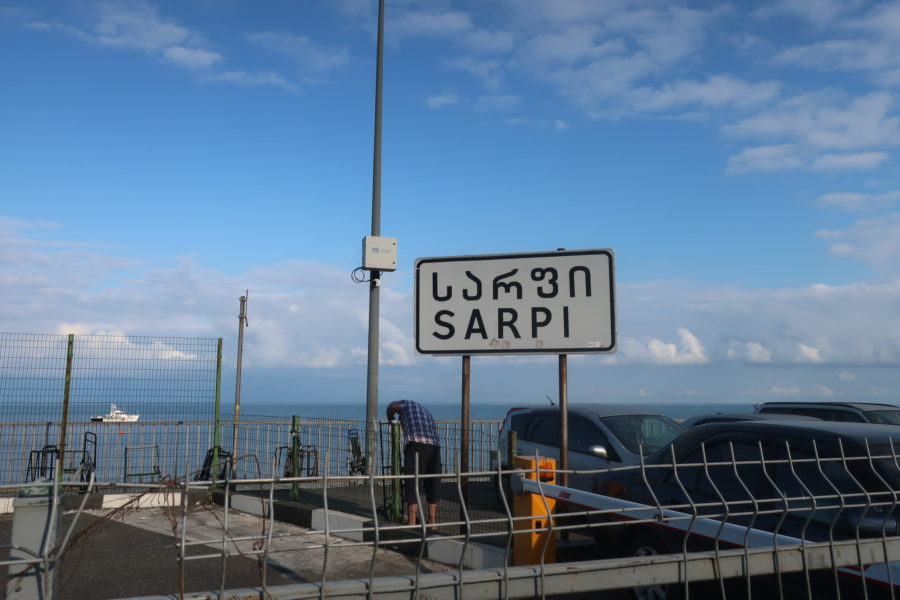
Kilometre 0
The border is soon behind you.
For a few moments, you are still conscious that Türkiye lies only a few hundred metres away.
Looking back, the mountains seem to fold over the frontier, as if nature refuses to acknowledge it.
Ahead, the road bends north and begins to follow the Black Sea.
The sea is on your left.
The mountains are on your right.
There is nowhere else for the road to go.
Kilometres 2 – 5
Kvariati is the first resort village after Sarpi.
Here the sea is remarkably clear.
The pebble beaches attract swimmers who prefer them to the busier beaches of Batumi.
The mountains seem almost to plunge directly into the water, creating one of the most dramatic coastal landscapes in Georgia.
This stretch has a Mediterranean feel, yet the vegetation is distinctly Colchian —
Lush, almost subtropical.
Kvariati is a small seaside village and resort on Georgia’s Black Sea coast in the Adjara region, close to the Turkish border.
It is known for its pebble beach, the meeting of forested mountains with the sea, and its quieter atmosphere compared with nearby Batumi, making it a popular destination for beach holidays and relaxation
Kvariati’s defining feature is the dramatic meeting of the Lesser Caucasus Mountains with the Black Sea.
The village sits about 16 km south of Batumi, where lush hills descend almost directly to the shoreline, creating scenic views and opportunities for both seaside recreation and short mountain hikes.
The resort is best known for its long pebble beach, generally recognized for clear water and a more peaceful atmosphere than the beaches in central Batumi.
Swimming, sunbathing, snorkeling, scuba diving and seaside dining are among the main attractions, while hotels, guesthouses and restaurants line much of the waterfront.
Kvariati offers a slower-paced coastal experience centered on nature rather than nightlife.
Its combination of mountain scenery, sea views and proximity to Batumi allows visitors to enjoy a quieter resort while remaining within easy reach of the city’s attractions and the nearby Georgian – Turkish border.
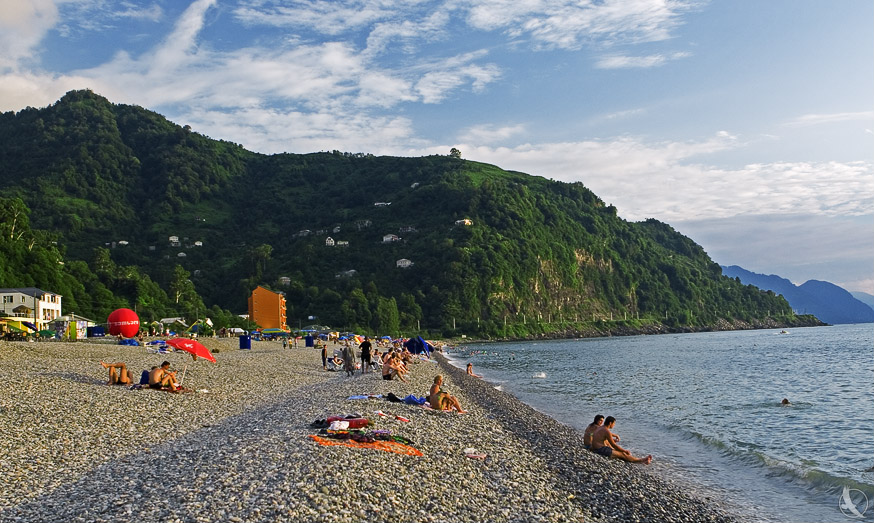
Above: Kvariati Beach, Georgia
Kilometres 6 to 10
Soon you arrive at Gonio Fortress.
This Roman fortress has stood here for nearly two millennia.
It guarded the route between Anatolia and the Caucasus long before there was a border between Türkiye and Georgia.
Tradition even associates it with the Apostle Matthias.
As your bus passes, you may barely notice its ancient walls.
Yet they have watched Roman legions, Byzantine officials, Ottoman soldiers, Russian troops, Soviet border guards, and now tourists carrying smartphones.
History passes more slowly than buses.
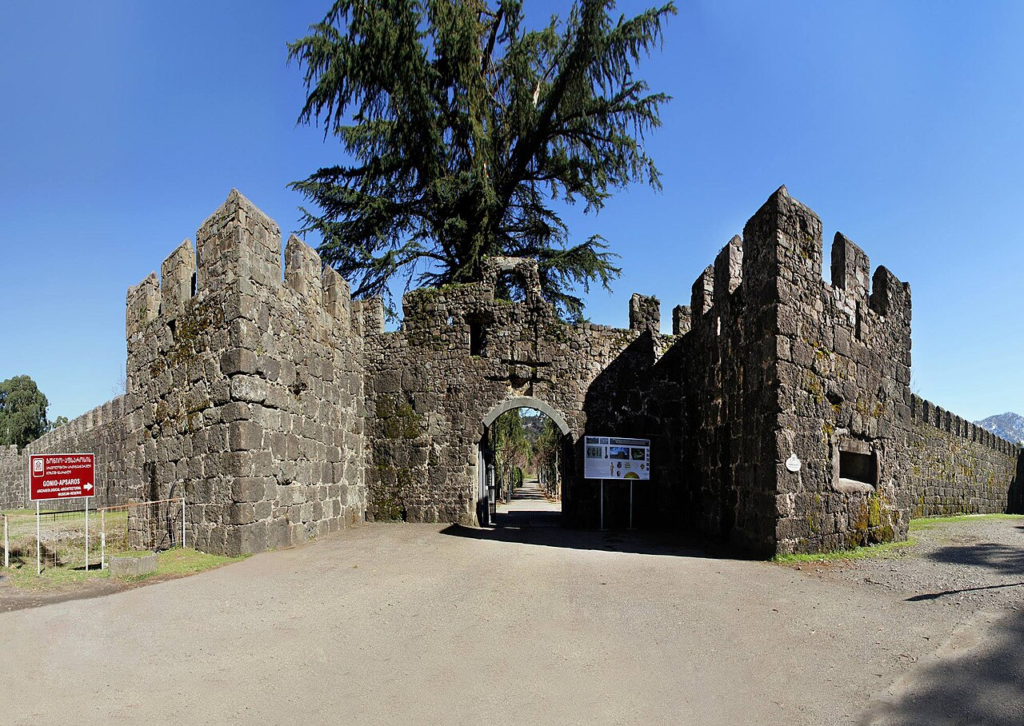
Above: Gonio Fortress entrance
Gonio Fortress is a remarkably well-preserved Roman-era fortress on Georgia’s Black Sea coast in the village of Gonio, just south of Batumi.
This Roman fort was home to five cohorts or 1,500 men until it was abandoned in the 4th century.
It has served successive Roman, Byzantine and Ottoman powers over nearly two millennia and today functions as both an archaeological site and museum, making it one of Georgia’s most significant historic landmarks.
Built in the 1st century as the Roman fort of Apsaros, the fortress occupied a strategic position guarding the mouths of the Chorokhi and Adjaristskali river valleys and key coastal trade routes.
Over the centuries it passed through Roman, Byzantine, and Ottoman control, reflecting the region’s importance as a crossroads between Europe and Asia.
What is seen now is the outer wall of the Byzantine (540s) and Ottoman (after 1548) fort of Asparunt.
It is a square of about 200 metres, with oranges,plums, strawberries and palms being grown inside and mature eucalyptus trees outside, against a backdrop that is reminiscent of the gentler parts of the Nepalese foothills, with luxuriant vegetation.
The fortress retains its impressive rectangular defensive walls and numerous surviving towers, enclosing an archaeological park where ongoing excavations continue to reveal Roman military buildings and later historical layers.
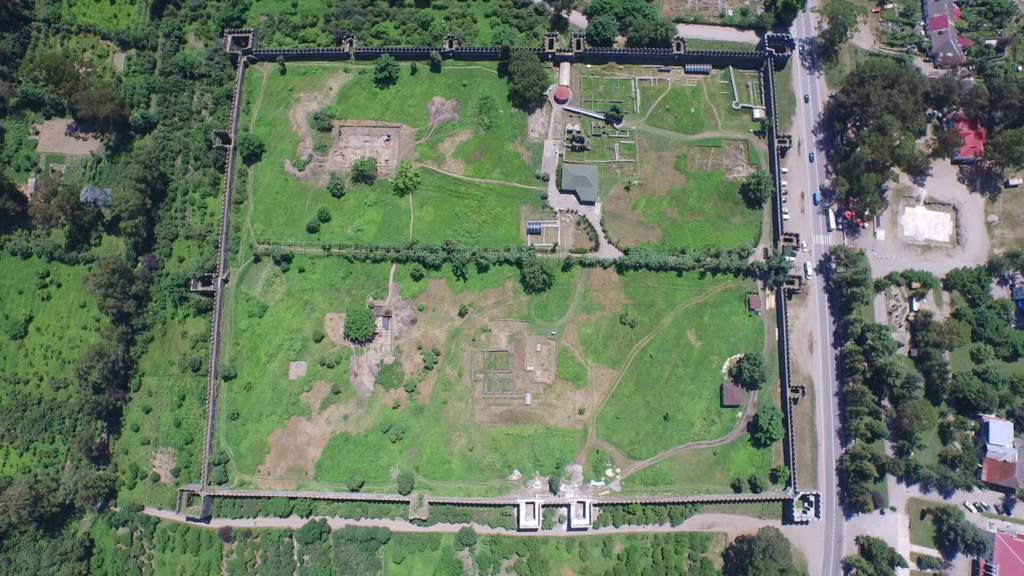
Above: Gonio Fortress (aerial view)
Within the grounds is a symbolic tomb traditionally associated with Saint Matthias, one of the Twelve Apostles, although its authenticity has not been archaeologically confirmed.
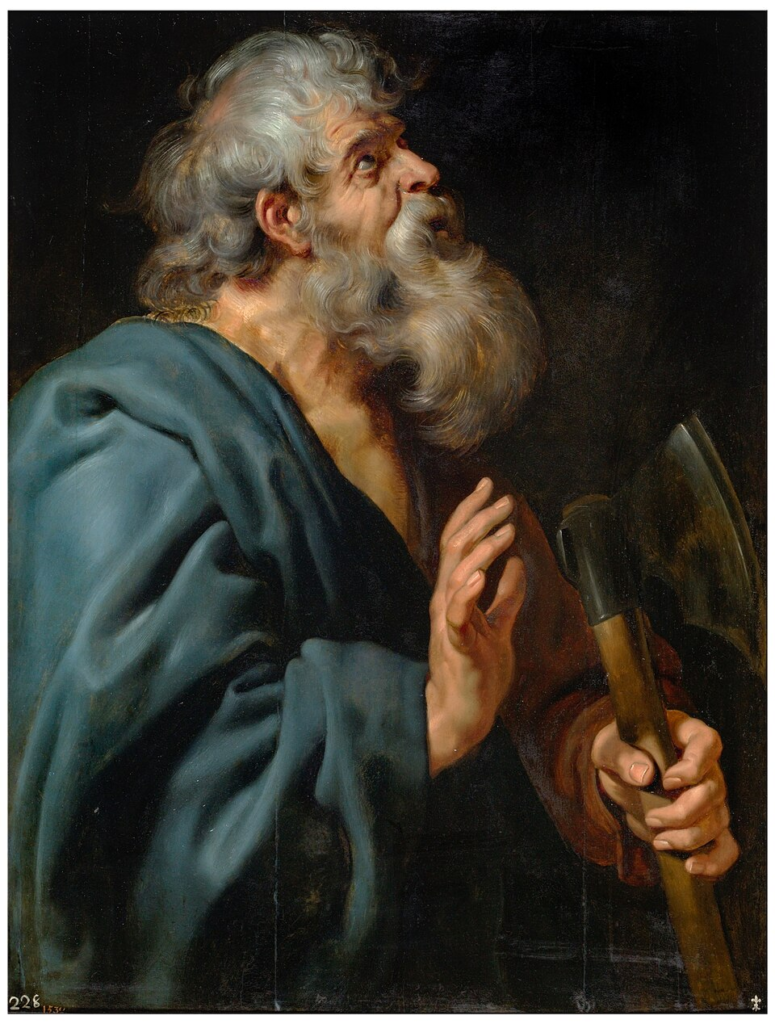
Above: St. Mathias
Today the site operates as a museum-reserve with walking paths, exhibits, and interpretive displays that explain its long history.
Visitors can stroll along the ancient walls, explore the excavated remains, and enjoy views of the surrounding mountains and Black Sea coastal plain.
There is a ticket kiosk and toilets inside the gate, from where a paved path leads to the centre, where there is a museum (with poor English captions) and a souvenir shop.
The earliest finds are from the 8th century BC.
You can see sling/catapult stones, amphorae and coins, and photos of the wonderful 2nd century AD Colchian goldsmithery of the Gonio Treasury, found in 1974 and now in the Archaeological Museum in Batumi.
Nearby are the remains of Roman baths (with mosaic floors) and barracks (with underfloor heating) and perhaps a temple.
In the southwestern corner are the remains of Roman handmills and a kiln.
Excavations by the south gate have revealed lots of Roman, Byzantine and Ottoman pipework.
Outside the south wall a 5th century burial site has been found as well as a theatre and hippodrome from the 2nd century.
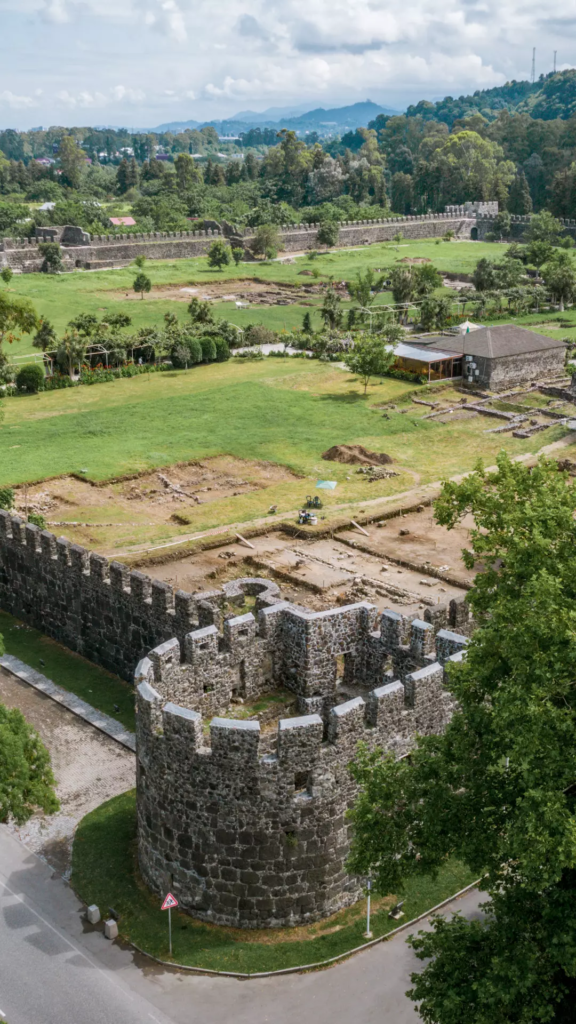
Above: Gonio Fortress
The grave of St. Matthew the Apostle is said to be by the cross to the left of the museum.
Matthew was one of the 70 Minor Apostles who replaced Judas and came to Georgia with St. Andrew the First-Called and Simon the Zealot.
It is possible to climb up onto the five-metre-high walls behind the ticket office and walk around the square, with 18 of the original 22 towers surviving.
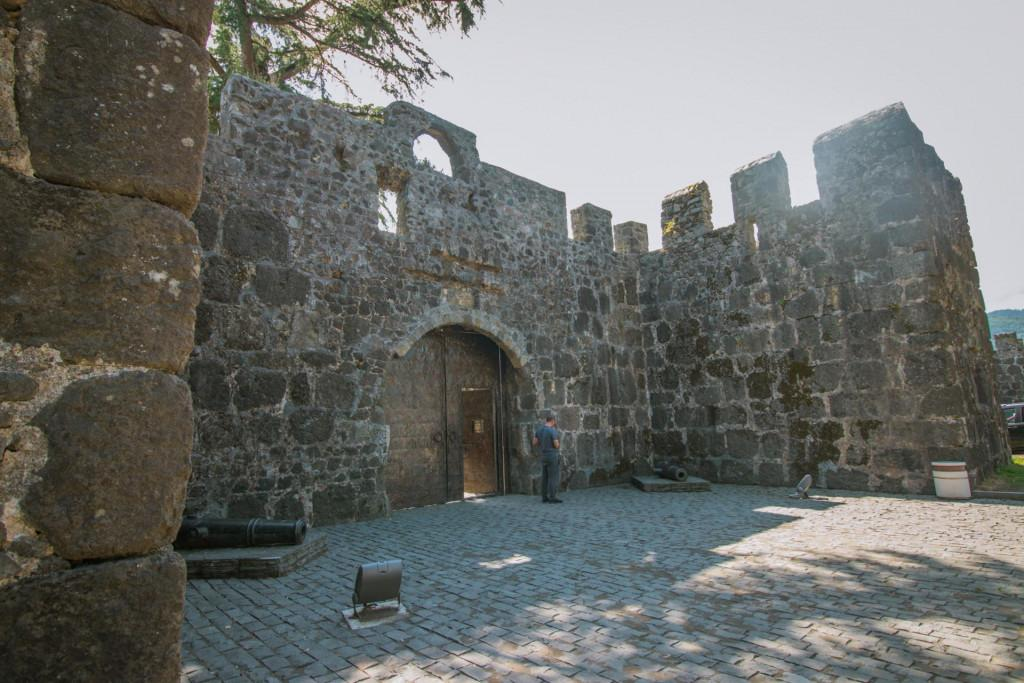
Above: Gonio Fortress
The fortress is located about 12–15 km south of Batumi, making it a popular half-day excursion.
The gate to the fortress of Gonio is on the right, with a mini-fort aptly placed in a playground across the road.
If you’re not expecting it, it is surprisingly easy to miss, especially from a moving bus.
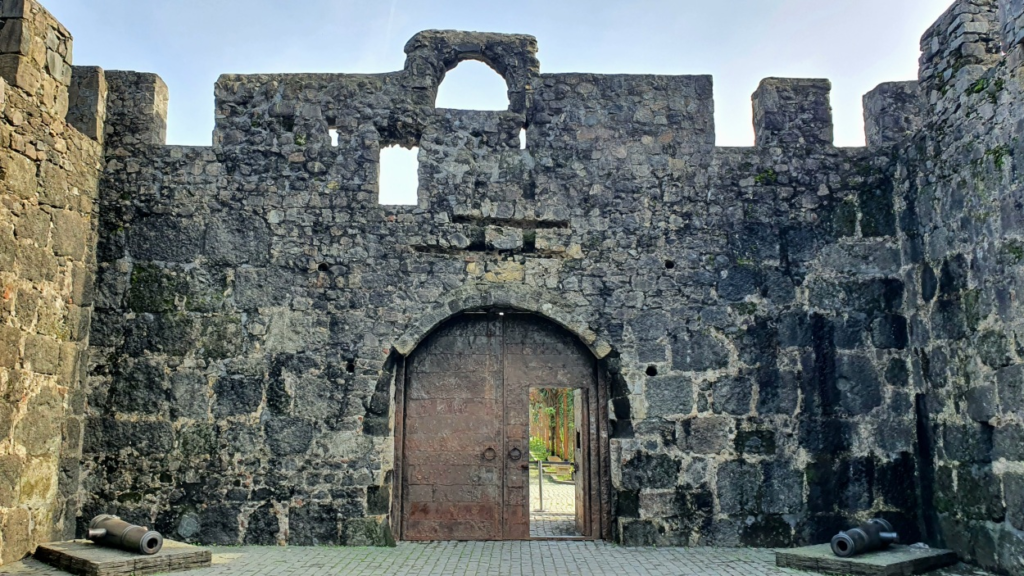
Above: Gonio Fortress
There is a beach at Gonio but it is not that attractive – a bit of pebbly wasteland with wrecked Soviet-period bunkers, grazing cows and frogs splashing about in ponds.
It has been known for its Uzbek prostitutes.
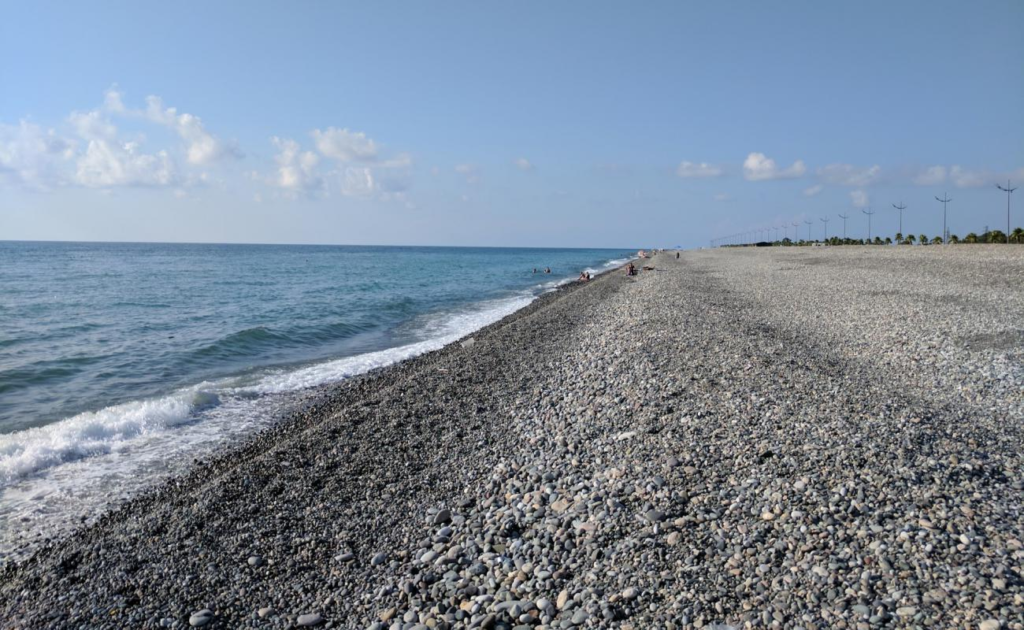
Above: Gonio Beach
Certainly we are contrasting Gonio with the postcard image many tourists expect of a Black Sea beach.
Wrecked Soviet-period bunkers are historically plausible.
During the Cold War, this stretch of coast was strategically important because it lay immediately adjacent to the Turkish border, which was also the border between NATO and the Soviet Union.
Military installations, observation posts and defensive works were common along the coast.
Many later fell into disrepair after the Soviet Union collapsed.
The image of abandoned bunkers beside holiday beaches is one of those curious juxtapositions the former Soviet world often presents.
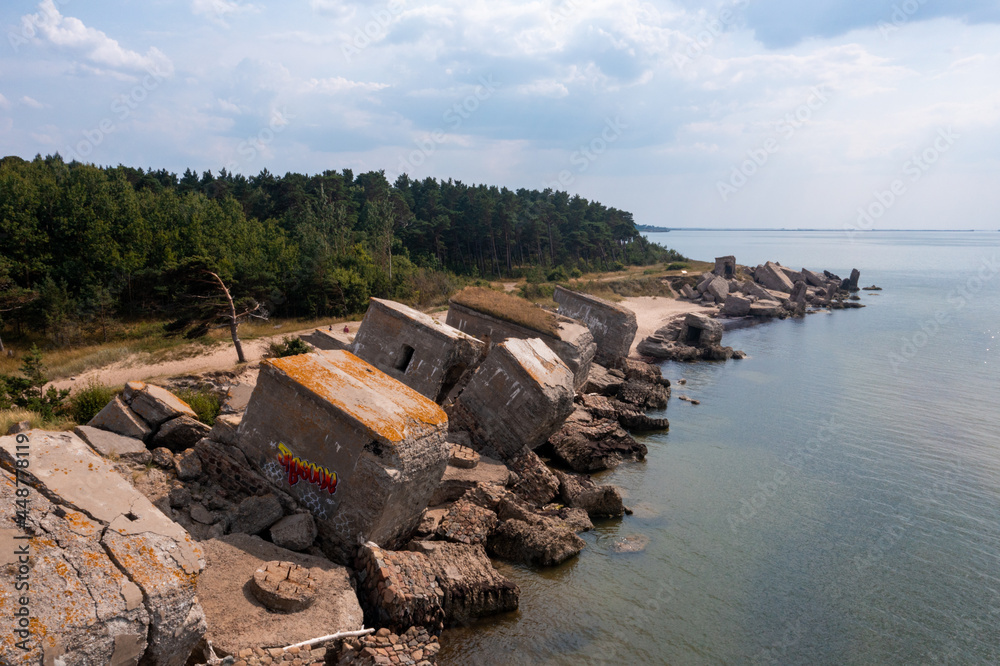
Above: Soviet bunkers
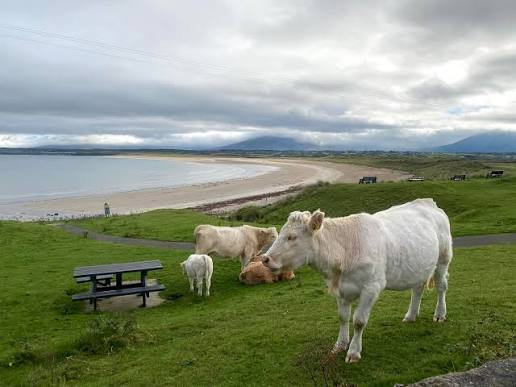
Grazing cows?
Entirely believable — and rather Georgian.
One of the charming surprises for many visitors is that cattle often wander quite freely, even near roads and beaches.
It is a reminder that rural and urban life coexist much more visibly than in many Western European countries.
Uzbek prostitutes?
There was a phenomenon that existed for a period, particularly in the 1990s and early 2000s, when parts of the Batumi – Gonio area developed a reputation for roadside prostitution.
Women from several former Soviet republics — including Uzbekistan— were reported to be working there, often driven by severe economic hardship after the breakup of the Soviet Union.
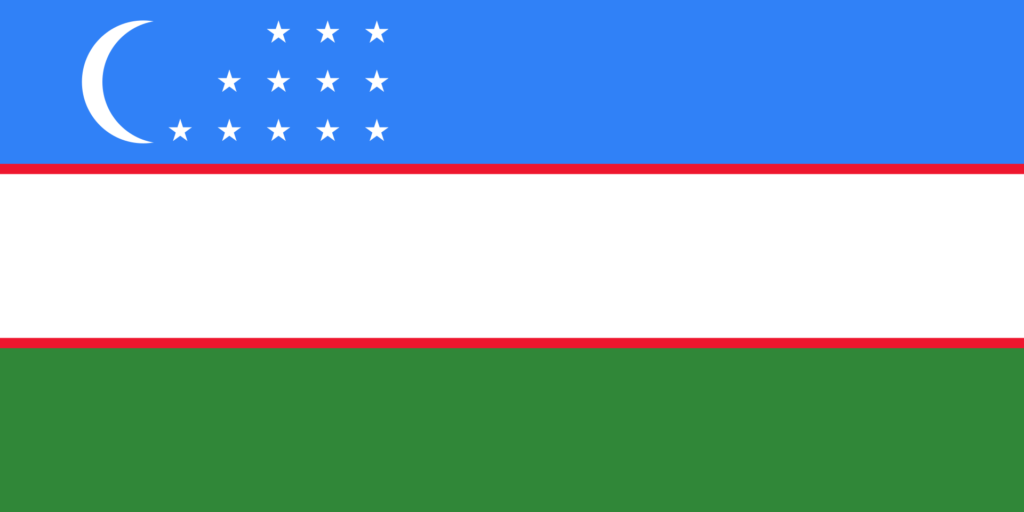
Above: Flag of Uzbekistan
This should NOT be read as meaning:
- Gonio is populated by Uzbek people
- Uzbek women generally are prostitutes
- Prostitution defines Gonio today

Is it still true?
This is where guidebooks age.
Batumi and its southern coast have changed dramatically over the past two decades.
The Georgian government has invested heavily in tourism, infrastructure, and policing.
Much of the overt roadside sex trade that older guidebooks mention has reportedly diminished, although, as in many countries, prostitution has not disappeared altogether.
So if you visited today, that line of work might no longer reflect the dominant impression of the area.
After the collapse of the Soviet Union in 1991, Georgia experienced a severe economic crisis.
There were:
- widespread unemployment
- weak state institutions
- corruption
- poor policing
- civil conflict in parts of the country
Batumi was not immune.
The road south toward Gonio and the Turkish border developed a reputation for informal trading, smuggling, casinos and visible prostitution.

Women from several former Soviet republics — including Uzbekistan, Ukraine, Russia, and elsewhere in Central Asia — were among those who came seeking work or were exploited by criminal networks.
The Turkish border, with its constant movement of people, created demand.
This was not unique to Georgia.
Similar developments occurred in parts of Eastern Europe and the former Soviet Union during that period.
The major change came after the Rose Revolution.
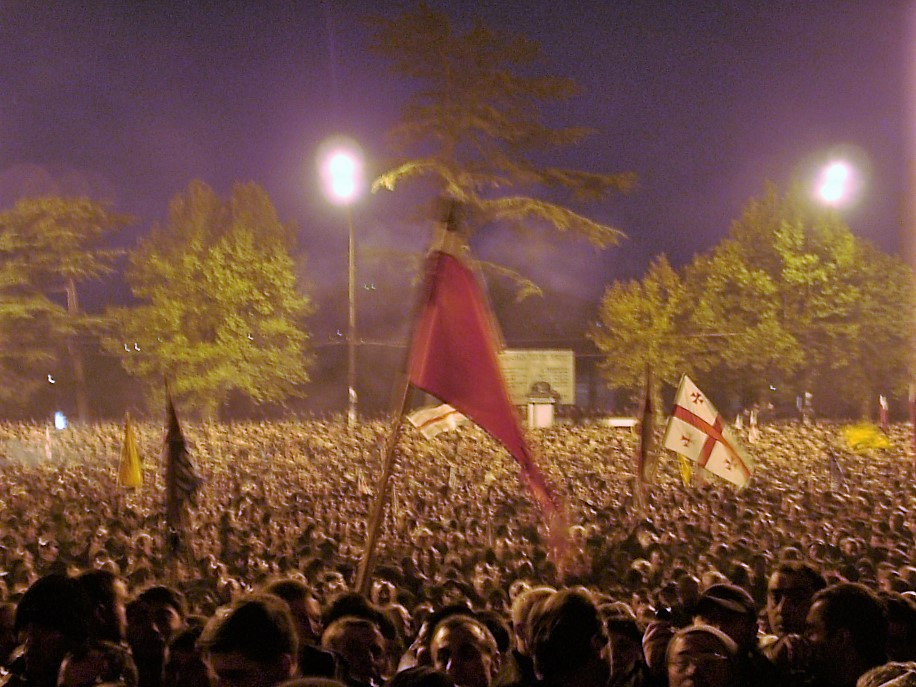
Above: Rose Revolution, Tbilisi
(The Rose Revolution was a largely nonviolent popular uprising in Georgia that took place from 3 to 23 November 2003.
Triggered by widespread allegations of fraud in the 2003 parliamentary elections, it culminated in the resignation of President Eduard Shevardnadze, ending an era of post-Soviet leadership and ushering in a new political direction under Mikheil Saakashvili and his allies.
Following Georgia’s independence from the Soviet Union, the country faced economic hardship, corruption, weak state institutions, and political instability.
By 2003, public confidence in Shevardnadze’s government had declined sharply.
Parliamentary elections held on 2 November 2003 were criticized by domestic opposition groups and international observers, leading to mass protests over alleged electoral fraud.
The protests were led by opposition figures Mikheil Saakashvili, Nino Burjanadze and Zurab Zhvania.
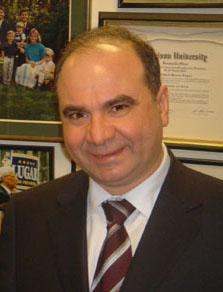
Above: Georgian Prime Minister Zurab Zhavnia (1963 – 2005)
The revolution’s defining image came when demonstrators entered the parliament building carrying red roses, symbolizing peaceful resistance, while Shevardnadze was addressing lawmakers.
Rather than escalating into widespread violence, the political crisis concluded with Shevardnadze’s resignation on 23 November 2003, after mediation efforts and mounting public pressure.
Following the resignation, snap presidential and parliamentary elections were held.
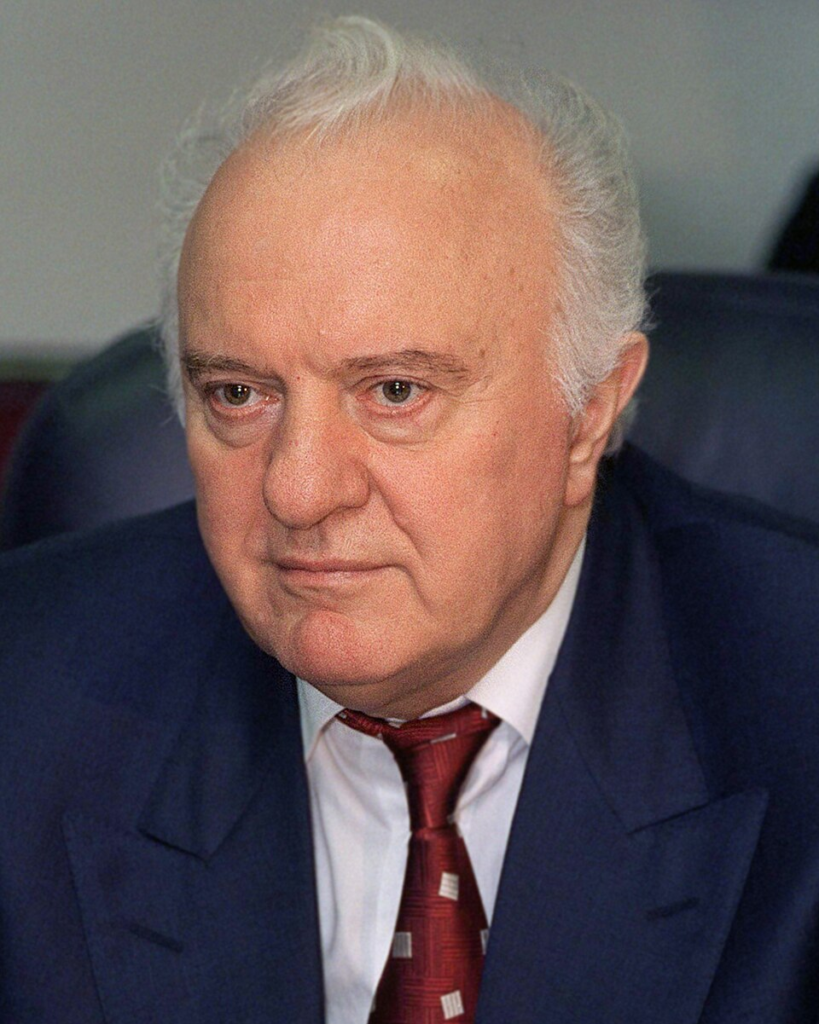
Above: Georgian President Eduard Shevardnadze (1928 – 2014)
Saakashvili won the presidency in early 2004 and launched an ambitious reform program focused on reducing corruption, strengthening state institutions, modernizing public services, and pursuing closer ties with Europe and the West.
Supporters credit these reforms with significantly improving government effectiveness, while critics argue that later years of his administration saw increasing concentrations of executive power and concerns about democratic practices.
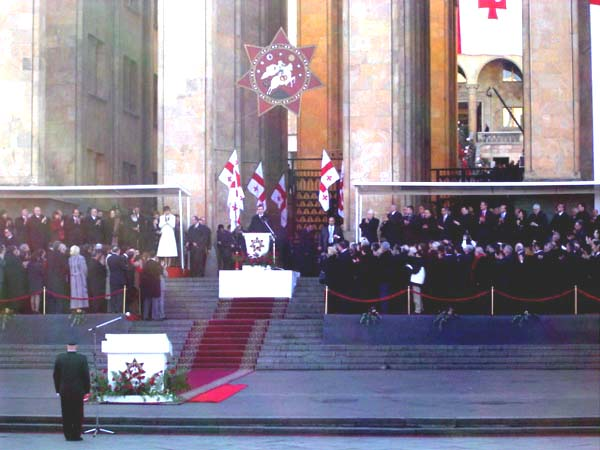
Above: Saakashvili’s inauguration as President of Georgia, 25 January 2004
The Rose Revolution is widely regarded as one of the first major “Color Revolutions“ in the post-Soviet region.
Some of these movements have been successful in their goal of removing the government, its peaceful methods and successful transfer of power influenced later protest movements such as:
- Federal Republic of Yugoslavia’s Bulldozer Revolution (2000)
Above: Flag of Yugoslavia (1992 – 2003) / Flag of Serbia and Montenegro (2003 – 2006)
- Ukraine’s Orange Revolution (2004)
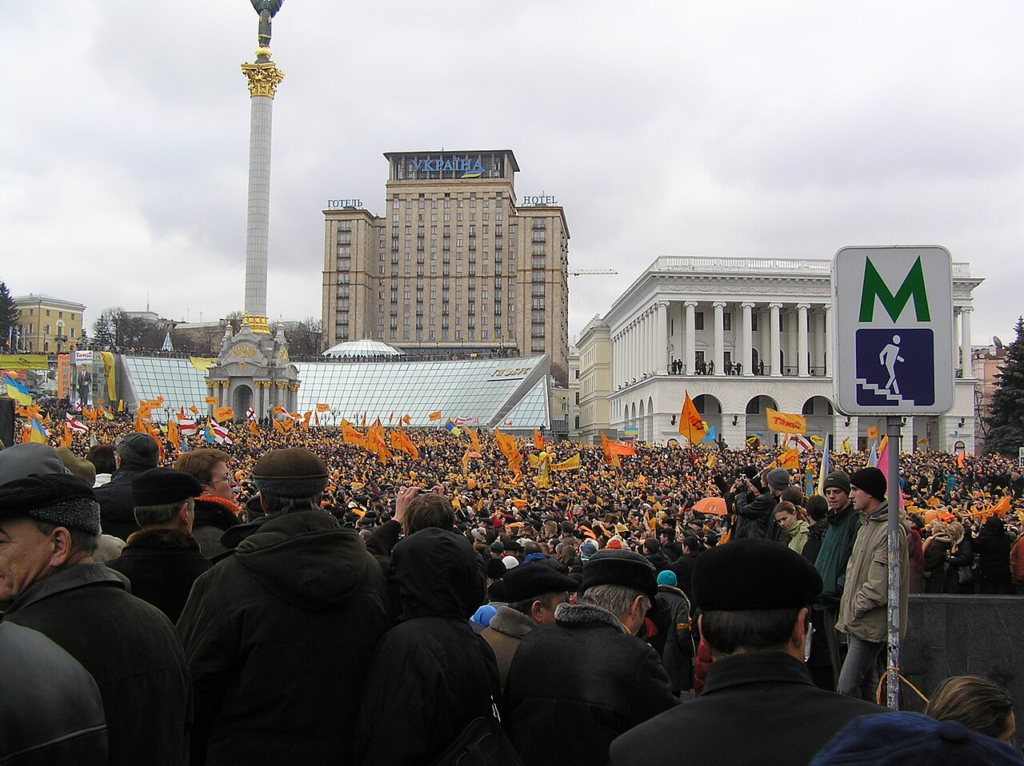
Above: Orange-clad demonstrators gather in Independence Square in Kyiv, Ukraine on 22 November 2004
- Kyrgyzstan’s Tulip Revolution (2005)
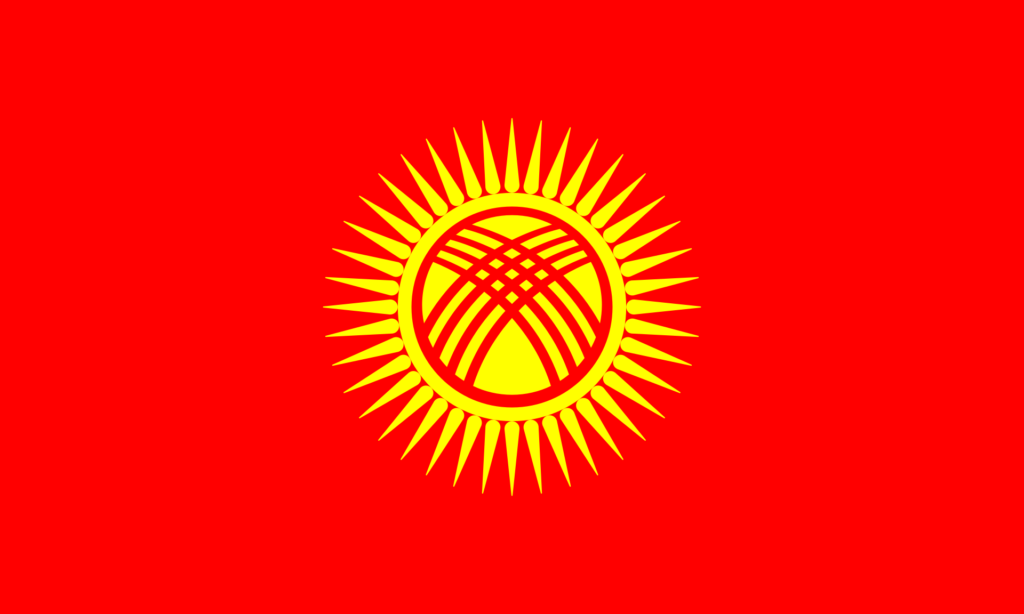
Above: Flag of Kyrgystan
- Armenia’s Velvet Revolution (2018).
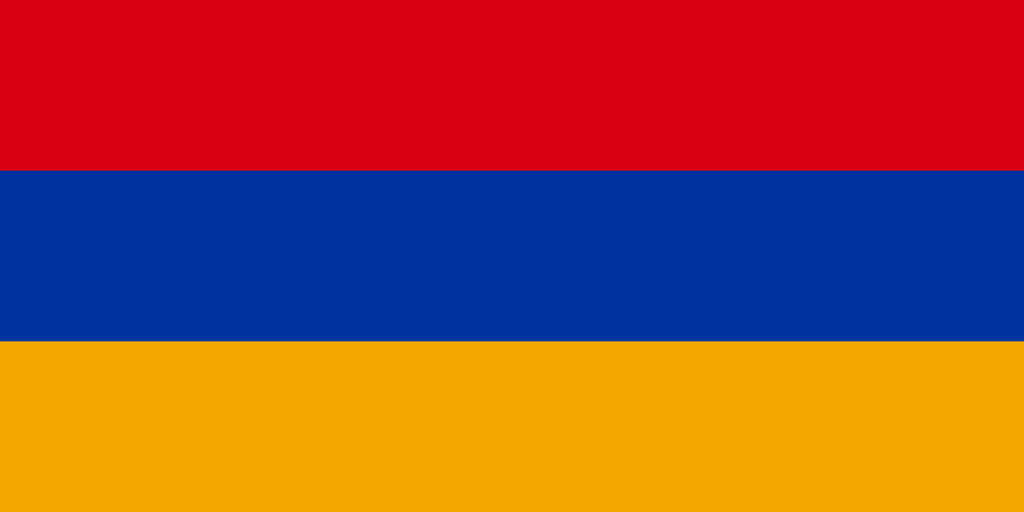
Above: Flag of Armenia
More than two decades later, it remains a defining event in modern Georgian political history and continues to shape debates about democracy, governance, and the country’s geopolitical orientation.
The new government under Mikheil Saakashvili made state reform a priority.
Among its goals were:
- reducing corruption
- professionalizing the police
- improving public order
- encouraging foreign investment
- making Georgia attractive to tourists
Batumi became one of the showcase cities for these reforms.
Large sums were invested in:
- modern roads
- hotels
- the seaside boulevard
- public parks
- lighting
- the airport
- new apartment buildings
The government wanted Batumi to compete with Black Sea resorts elsewhere in the region.
An area known internationally for visible street prostitution would have undermined that image.
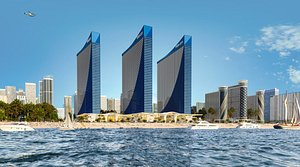
Above: Batumi
What happened to the prostitution?
This is where nuance matters.
There is an important distinction between visible street prostitution and prostitution itself.
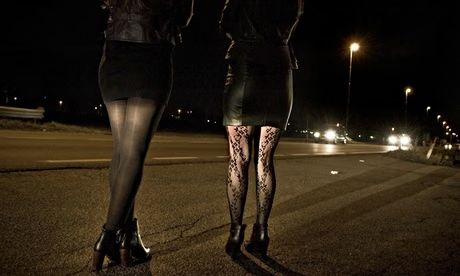
Visible street prostitution involves women openly soliciting customers on roadsides or in public places.
When policing becomes more active, this often becomes much less visible.
That does not necessarily mean prostitution disappears.
Instead, it may move:
- indoors
- to bars or nightclubs
- to hotels
- to private apartments
- or be arranged online rather than on the street
This pattern has been observed in many countries.
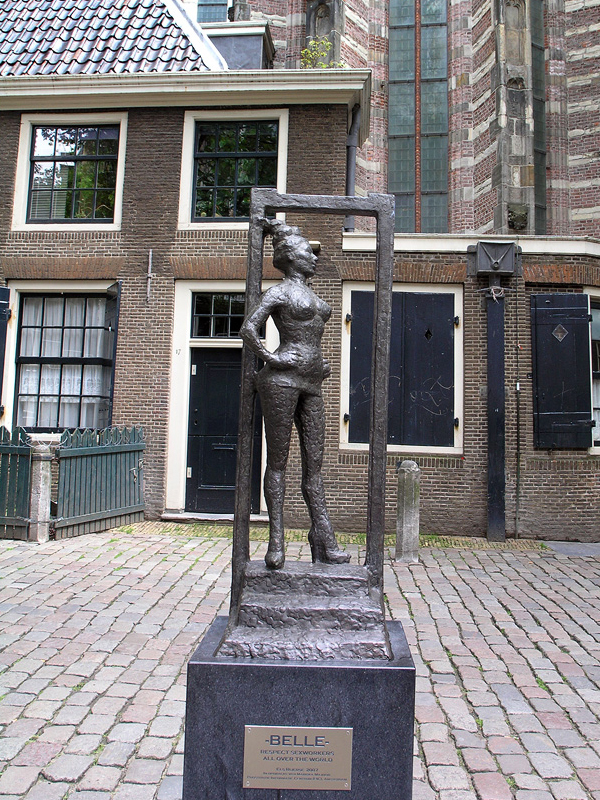
Above: Statue to honor the sex workers of the world. Installed March 2007 in Amsterdam, Oudekerksplein, in front of the Oude Kerk, in Amsterdam’s red-light district De Wallen. Title is Belle, inscription says “Respect sex workers all over the world.“
Travel writers who visited Gonio in the 1990s or early 2000s often remarked on the visible roadside prostitution.
More recent accounts are much less likely to mention it.
Instead, they focus on beaches, cafés, the fortress and tourism.
That suggests the phenomenon is far less prominent in the public landscape than it once was.
However, it would be inaccurate to conclude that commercial sex no longer exists in the Batumi area.
Like many tourist destinations, it likely continues in less visible forms.)
Kilometres 10 to 15
A few kilometres later you cross the broad Chorokhi River.
This river begins high in northeastern Türkiye before flowing into Georgia and emptying into the Black Sea just south of Batumi.
The Chorokhi River (known as the Çoruh in Türkiye) is a major transboundary river that flows through northeastern Türkiye into southwestern Georgia before emptying into the Black Sea.
Rising in the Mescit Mountains of northeastern Türkiye, the river flows through the provinces and cities of Bayburt, İspir, Yusufeli and Artvin before crossing into Georgia’s Adjara region.
It reaches the Black Sea just south of Batumi after a total course of about 438 km, with only the final stretch lying within Georgia.
The river’s drainage basin covers roughly 22,100 km², most of it in Türkiye.
The Çoruh – Chorokhi Valley forms part of the Caucasus biodiversity hotspot, one of the world’s most biologically rich regions.
Its forests, river valleys, and mountain slopes support numerous endemic plant species and provide important habitat for birds and other wildlife, making the basin a priority area for conservation.
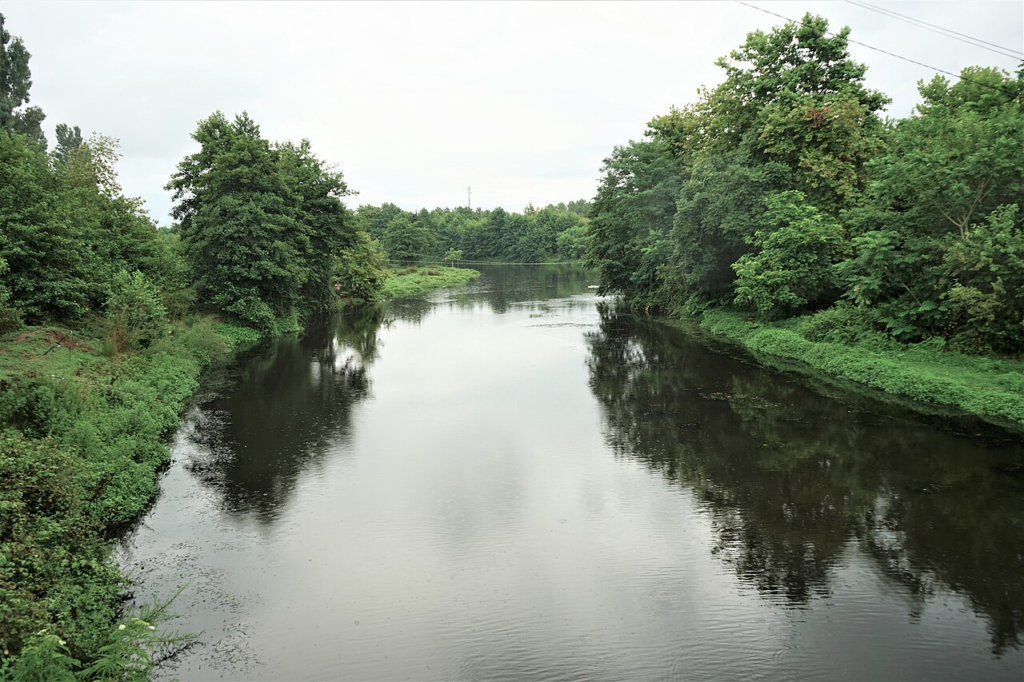
Above: Chorokhi River, Georgia
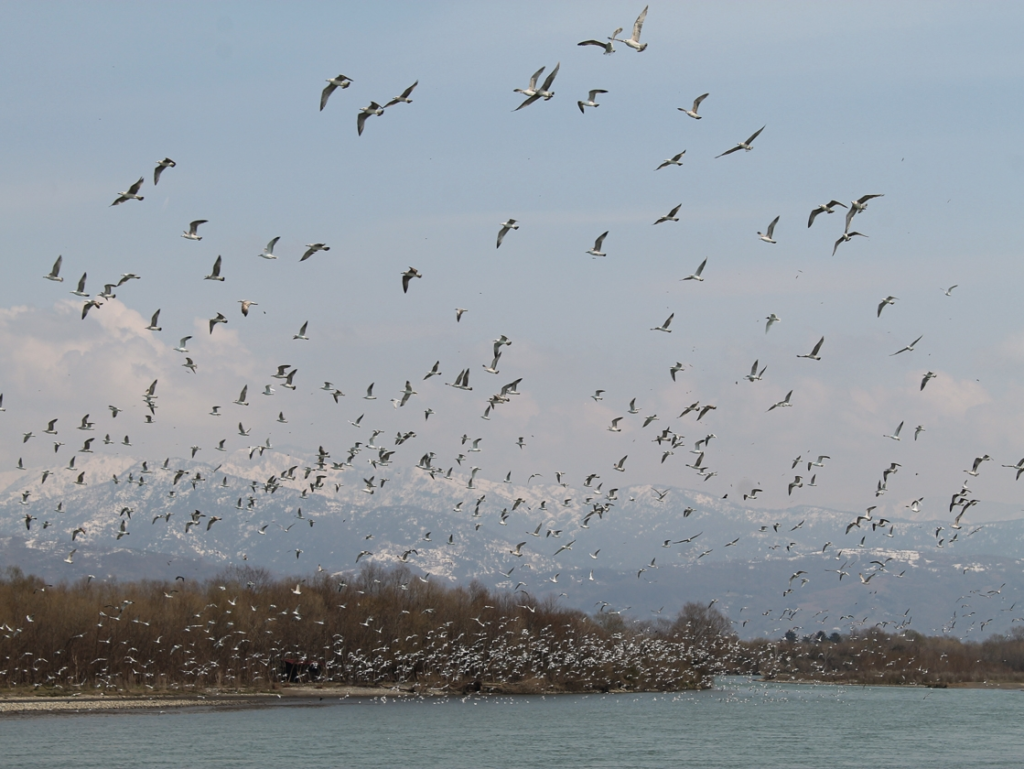
Guidebooks mention birdwatching because the river mouth forms one of the most important migration corridors between Europe and Asia.
In spring and autumn, thousands of birds of prey pass overhead.
For a naturalist, this is one of the finest bird migration sites in the Caucasus.
The river is famous for its fast-flowing waters and has long been a destination for whitewater rafting.
It is renowned for its steep mountain gorges, exceptional biodiversity, and importance for hydropower, rafting and the ecosystems of the eastern Black Sea coast.
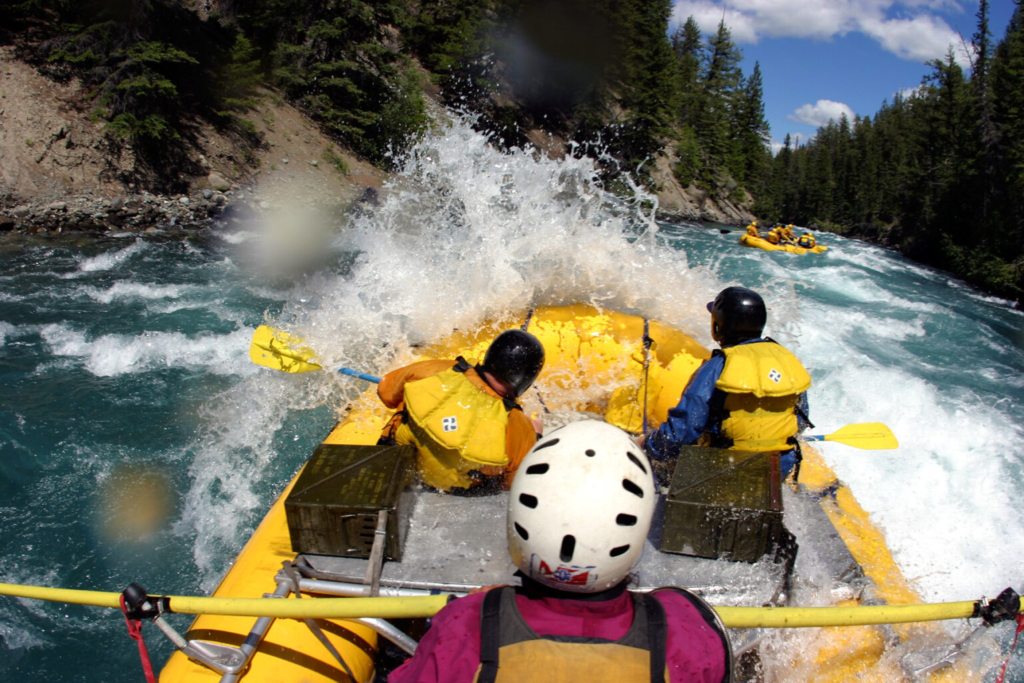
In recent decades, multiple large dams have been constructed along the Turkish section for hydroelectric power generation.
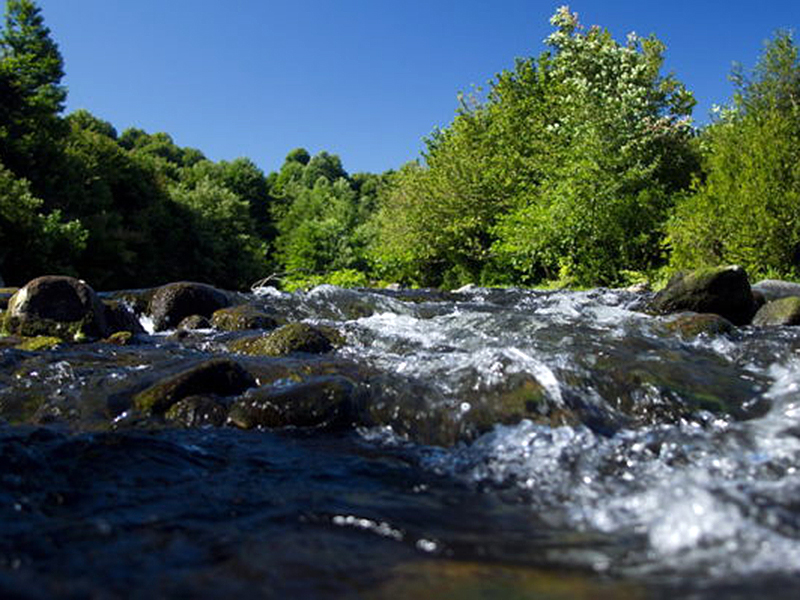
While these projects produce renewable electricity, they also trap much of the river’s sediment, contributing to increased coastal erosion near the river’s delta and the Batumi coastline in Georgia.
The Chorokhi receives several important tributaries, including the Acharistsqali and Machakhelistsqali in Georgia.
In antiquity, Greek and Roman writers referred to the river as Acampsis, reflecting its long-standing role as a geographic landmark connecting the Caucasus and northeastern Anatolia.
Immediately after crossing the river, the road passes the entrance to Batumi International Airport.
It is remarkably close to the highway.
Look inland, you may even see aircraft parked on the apron.
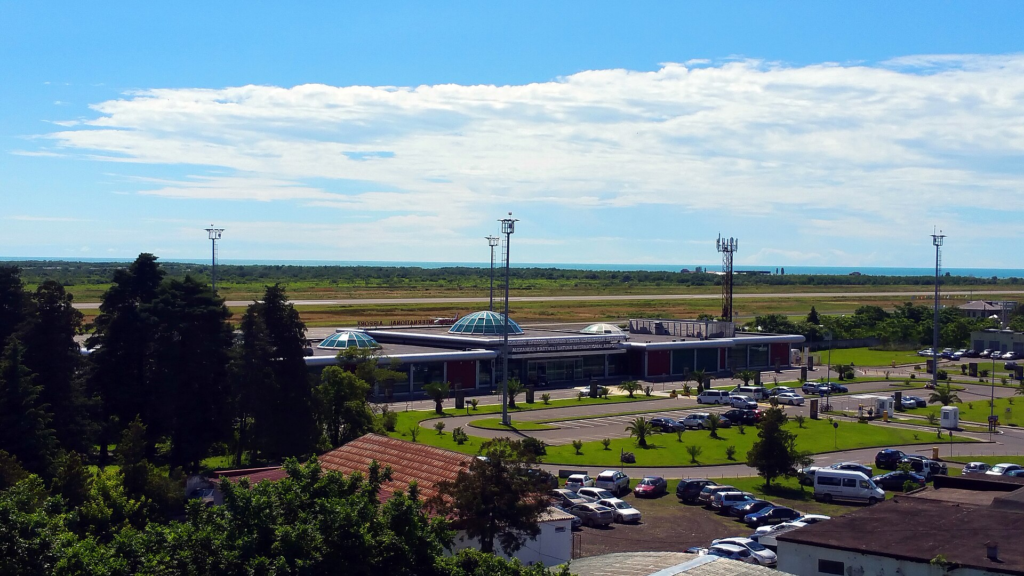
Above: Batumi International Airport
The valley begins to broaden.
Traffic increases.
Turkish trucks and businessmen in black SUVs race up and down the main road from Batumi to the border.
Apartment buildings appear.
Hotels become more frequent.
The villages merge almost imperceptibly into the southern suburbs of Batumi.
The journey changes from countryside to city without a dramatic announcement.
The city quietly gathers around you.
Without any dramatic moment, you have arrived.

Kilometres 15 to 20
Then, almost unexpectedly, the skyline appears.
Glass towers.
Hotels.
Construction cranes.
The Ferris wheel.
The modern silhouette of Batumi rises from the shoreline.
After the intimate scale of Sarpi and Kvariati, Batumi feels cosmopolitan and ambitious.
It is Georgia looking outward —
To Europe, tourism and the wider Black Sea.
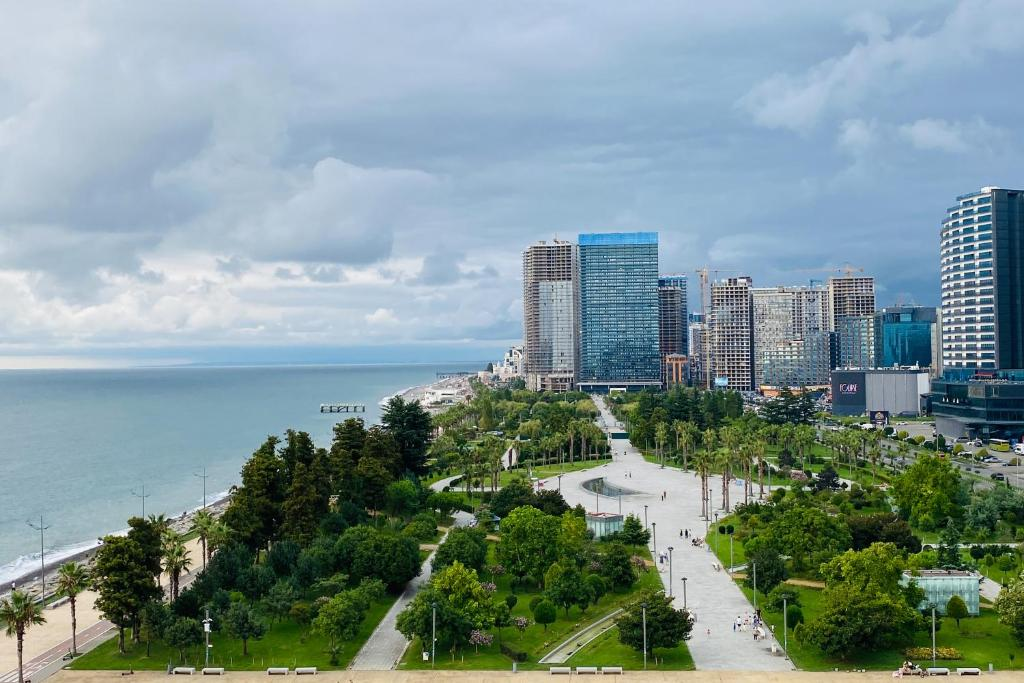
Above: Batumi
The twenty kilometres from Sarpi to Batumi were less a journey than a gentle introduction.
The Black Sea remained faithfully on my left, the mountains faithfully on my right.
Nature seemed determined to convince me that nothing had changed.
Yet every kilometre carried me farther into another language, another history, another way of seeing the world.
The border had lasted only a few minutes, though felt much longer.
Outside the city limits of Batumi, the bus stops and everyone changes Turkish liras into Georgian leri.
What cash I had in liras is now GEL 30 and change.
I see skyscrapers in the distance.
Batumi and what may lay beyond…